How to Compare Container Delivery Companies
Comparing container delivery companies is about more than finding the lowest drop-off fee. A professional delivery partner should help you choose the right container, confirm the grade, match the unloading method to your property, and prevent the expensive surprise of a failed delivery.
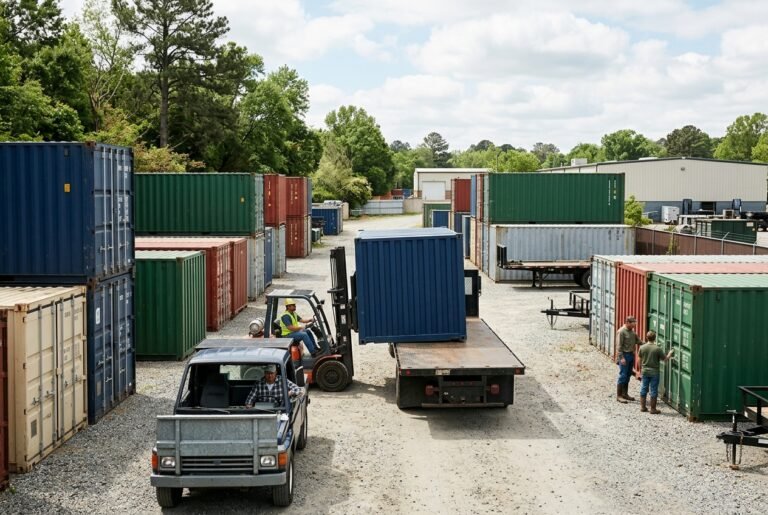
That matters whether you are a general contractor staging materials in Raleigh, a small business expanding inventory space, a farm owner adding secure storage, or a logistics manager buying a Cargo Worthy unit for transport. Shipping containers are heavy ISO freight assets built with Corten Steel, corner castings, steel crossmembers, and marine-grade flooring. If the company does not understand container condition and delivery constraints, a low quote can turn into damaged pavement, misaligned doors, rescheduling fees, or a unit that does not fit your use case.
The best comparison is total delivered value: the right container, clearly graded, safely placed, and priced with no hidden assumptions.
What a professional container delivery company should handle
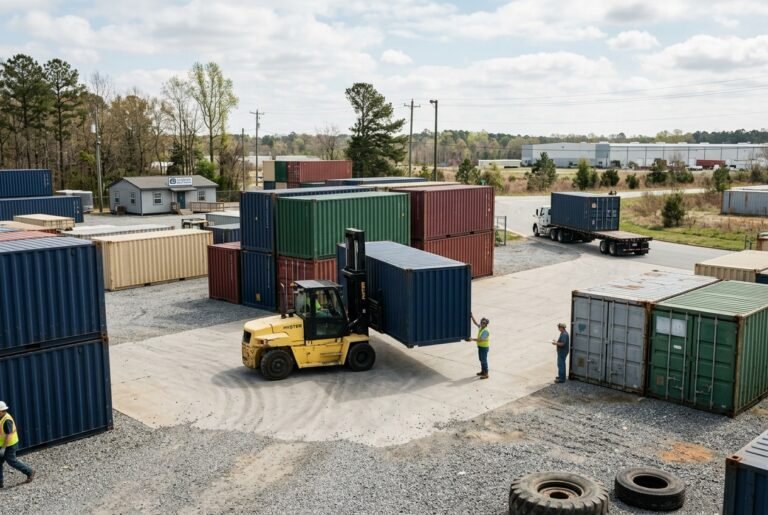
A reliable provider should do more than dispatch a truck. The company should ask what you are storing, how often you need access, whether the unit will be modified, what your site looks like, and whether you need ground-level placement or a chassis-mounted unit.
Strong container delivery companies typically help with four decisions: container selection, condition grade, delivery equipment, and site readiness. If a seller only quotes a container price and tells you to figure out delivery later, you are not comparing a complete service.
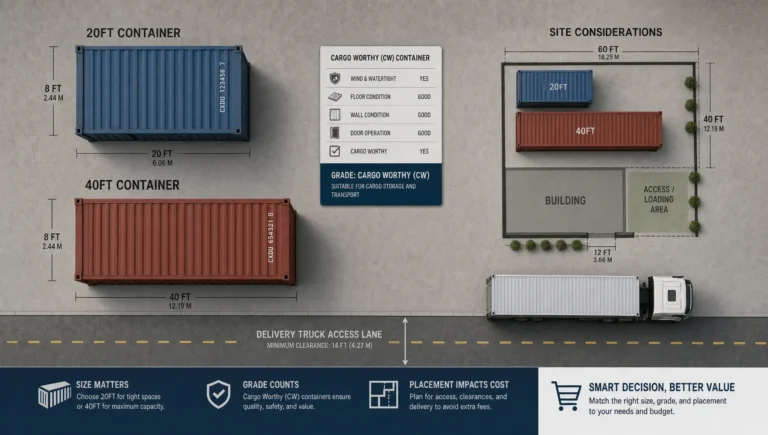
For example, a 20ft unit may be easier to place in a tight residential driveway, while a 40ft High Cube may be more cost-effective for jobsite storage or palletized inventory. The right answer depends on access, door orientation, pad preparation, and truck maneuvering space.
Start by comparing the same container specifications
Before you compare prices, make sure every quote is based on the same container. A cheap quote for a standard-height Wind & Watertight container is not comparable to a One-Trip High Cube delivered and placed on a prepared pad.
Use the same details when requesting quotes from multiple companies:
- Container size, such as 20ft, 40ft, or 40ft High Cube
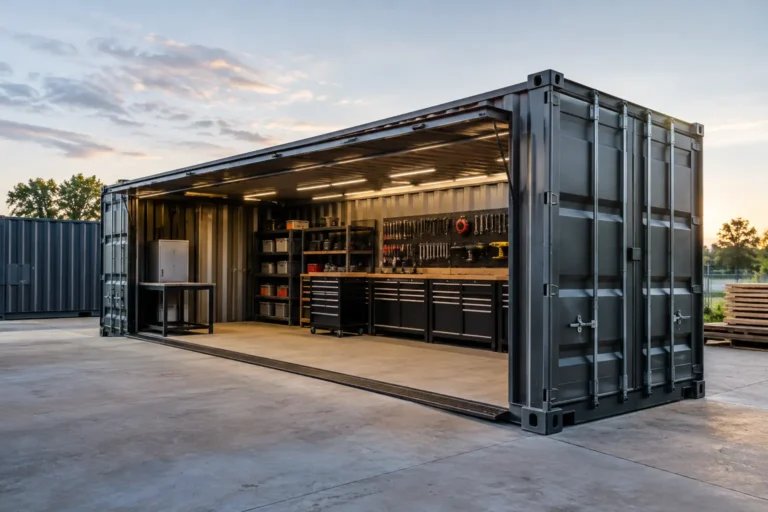
- Container type, such as standard dry container, refrigerated reefer, open side, or office conversion shell
- Grade, such as One-Trip, Cargo Worthy, or Wind & Watertight
- Delivery ZIP code, final placement location, and unloading method
- Site access details, including driveway width, slope, surface type, and overhead clearance
- Timing requirements, including jobsite deadlines or restricted delivery windows
If you are still choosing between 20ft containers and 40ft containers, review usable space, access limits, and total delivered cost before locking in a quote. For many Raleigh and Southeast buyers, the truck access path is just as important as the container footprint.
Verify container grades before comparing prices
Container grade is one of the biggest reasons two quotes may look different. A professional company should define the grade clearly and explain whether the unit is suitable for storage, export, modification, or long-term site use.
| Grade | Practical meaning | Best fit | What to confirm |
|---|---|---|---|
| One-Trip | A container that has typically made one loaded ocean voyage and is close to new condition | Customer-facing projects, offices, retail, long-term storage, clean inventory | Confirm cosmetic condition, factory paint, door seals, floor condition, and whether it is standard or High Cube |
| Cargo Worthy | A used container considered structurally suitable for cargo transport, often with CSC-related documentation when needed | Export, regional transport, heavy storage, buyers needing stronger structural assurance | Ask whether certification is current, whether a survey is available, and if the CSC plate is readable |
| Wind & Watertight | A used container that should keep out wind and water but may not be certified for cargo transport | Static storage for tools, farm supplies, household goods, and jobsite materials | Inspect roof, gaskets, doors, floors, rust areas, and light leaks |
The phrase used container is not enough. A Wind & Watertight unit may be a smart budget choice for stationary storage, while a Cargo Worthy unit is better when structural performance or transport eligibility matters. A One-Trip container costs more upfront, but it can be the better fit for modifications, visible commercial use, and projects where appearance matters.
For a deeper breakdown of used container condition, review this guide to used containers and container grades.
Compare delivery methods, not just delivery prices
Delivery method changes cost, risk, and feasibility. A professional provider should recommend equipment based on your site, not force every delivery into one method.
| Delivery method | How it works | Best for | What to confirm |
|---|---|---|---|
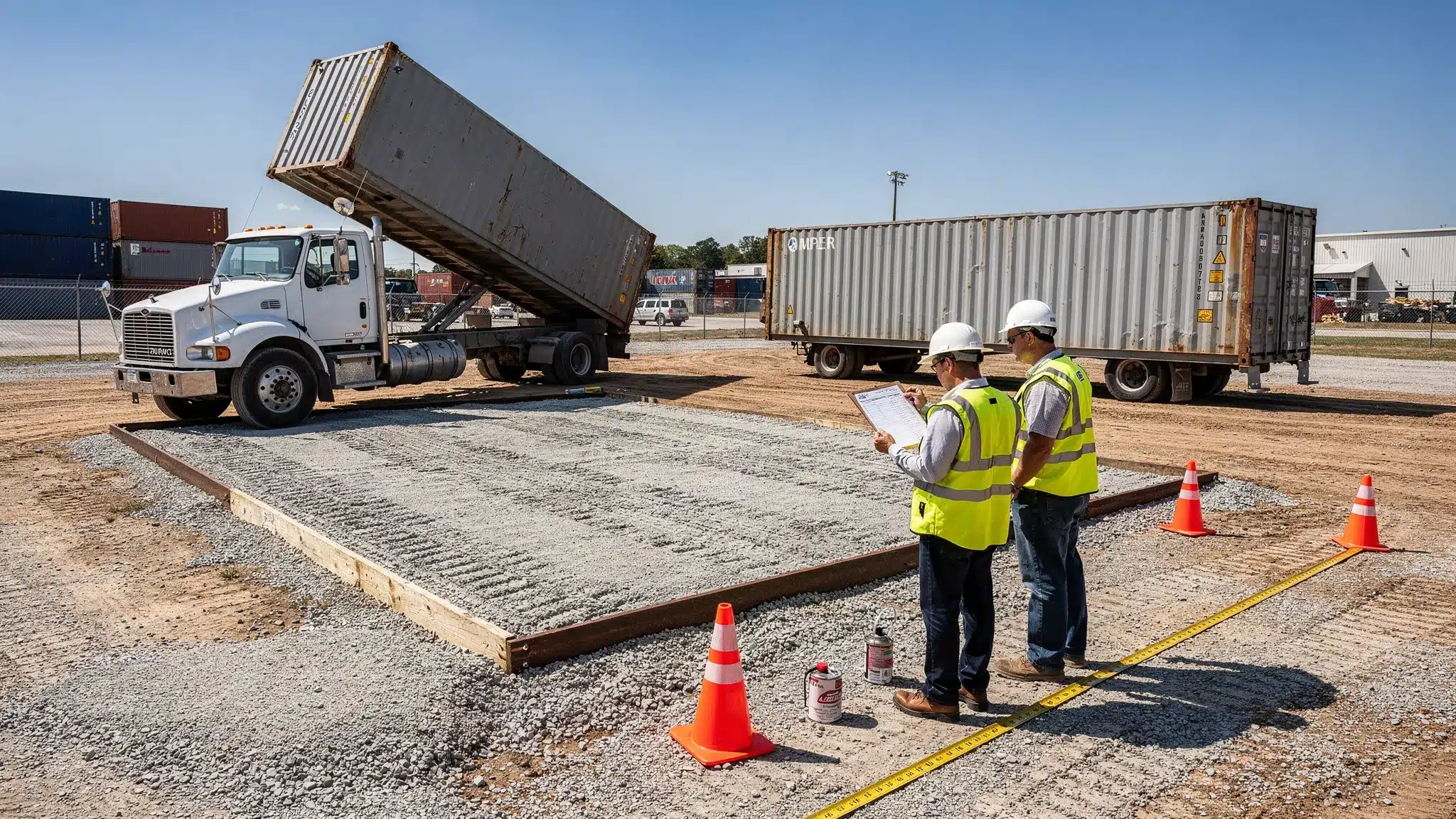
| Tilt-bed or roll-off | Trailer tilts and slides the container onto the ground | Many 20ft and 40ft ground-level placements | Requires straight-line clearance and stable ground |
| Flatbed with crane or forklift | Container is lifted from the truck and set in place | Tight sites, obstacles, precise placement | Requires lift equipment, safe reach, and overhead clearance |
| Side-loader | Container is unloaded from the side of the truck | Some restricted sites or parallel placement needs | Requires side clearance and suitable ground conditions |
| Chassis delivery | Container remains on a trailer chassis rather than being placed on the ground | Temporary storage or logistics operations | Confirm rental terms, access height, and whether ground placement is included |
Ground-level delivery means the container is placed on your prepared base. Chassis delivery means the container may remain elevated on wheels. Those are very different outcomes, especially for contractors, farms, and small businesses that need easy daily access.
High Cube containers require extra attention because they are 9 ft 6 in tall externally, one foot taller than standard units. That added height is valuable for storage and modifications, but it affects overhead clearance under tree limbs, power lines, awnings, and jobsite entrances. If you are considering extra height, review High Cube container dimensions before scheduling delivery.
Demand transparent delivered pricing
The lowest listed price is rarely the lowest real cost if delivery assumptions are missing. Ask every company for a delivered-and-placed quote based on your ZIP code and actual drop location.
A complete quote should identify the container price, delivery charge, unloading method, taxes or fees, fuel-related charges, wait-time policy, failed-delivery policy, and any extra cost for difficult access. It should also state whether the company is quoting the exact container shown in photos or a representative unit from the same grade.
Be cautious if a quote is vague about final placement. A container dropped at the curb is not the same as a container placed behind a building, beside a barn, or inside a fenced construction site. In Raleigh, Wake County, and across the Southeast, driveway turns, wet clay soil, drainage swales, and low tree canopies can all affect delivery difficulty.
Look for Raleigh and Southeast delivery experience
Local knowledge matters. A company that regularly delivers containers in Raleigh, North Carolina understands common regional issues: humid summers, soft red clay after heavy rain, HOA restrictions, narrow neighborhood streets, wooded lots, and site drainage challenges.
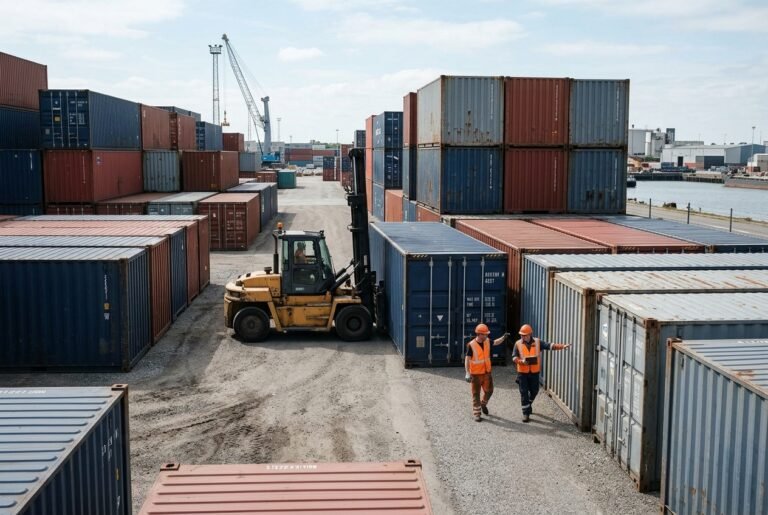
For commercial buyers, local experience can also help with jobsite coordination. General contractors often need container placement that does not block equipment paths, interfere with staging, or violate site safety plans. Small businesses may need delivery after receiving landlord approval or confirming storefront access. Farms and rural properties may need extra planning around soft shoulders, gates, ditches, and unpaved lanes.
Nationwide reach is valuable too, especially for businesses buying multiple containers across different locations. The key is coordination. A national delivery promise should still come with local carrier knowledge, clear scheduling, and site review before dispatch.
Check documentation and communication
A professional container delivery company should be easy to verify. Look for a real business presence, written quotes, clear payment terms, responsive communication, and specific answers about grade and delivery method.
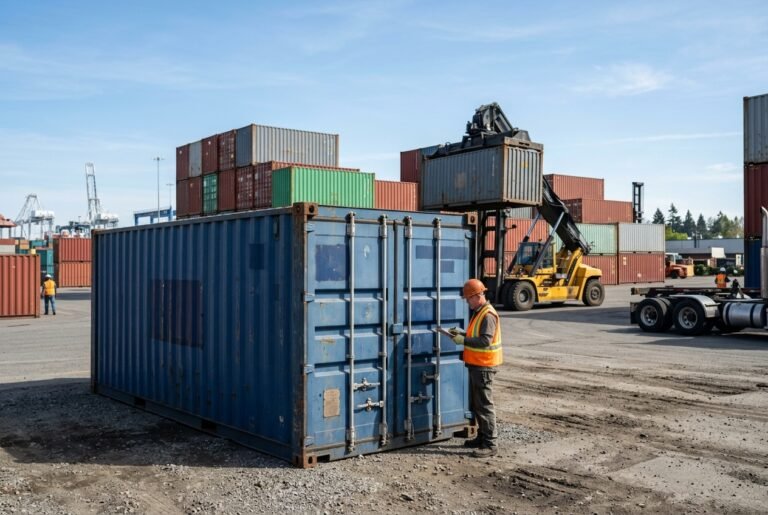
For Cargo Worthy containers, ask about the CSC plate and whether a current survey or certification is available if you need the unit for export or intermodal transport. For Wind & Watertight units, ask how the company checks for leaks, door function, floor condition, and rust. For One-Trip units, ask about cosmetic marks, factory paint, door gaskets, and whether photos show the exact unit.
Avoid sellers who cannot explain grade differences, pressure you into immediate payment, refuse to discuss site access, or advertise prices that seem far below the market with unclear delivery terms. In the container industry, a good deal should still come with a clear paper trail.
Pro-Tip: Prepare your site before you book delivery
The easiest way to compare container delivery companies is to give each one the same site information. Take photos of the route from the street to the drop spot, measure gate openings, note slopes, identify overhead branches or wires, and mark the desired container corners on the ground.
For long-term placement, a compacted gravel pad with good drainage is often a practical choice in North Carolina. It helps reduce standing water, supports the container corners, and limits settling. Concrete pads, piers, or heavy-duty blocks may be better for permanent installations, modified offices, or sites with weak soil. Whatever base you choose, it should be level enough to keep the doors operating properly.
Before digging, contact 811 to mark underground utilities. Also check city, county, HOA, or jobsite requirements before delivery. Some properties in Raleigh and Wake County may have zoning, setback, or temporary placement rules. For a full planning checklist, review Lease Lane Containers guide to shipping container delivery requirements.
A practical scorecard for comparing companies
Use this scorecard when reviewing container delivery companies. The strongest choice is usually the company that gives clear answers before payment, not the company with the shortest email.
| Factor | Strong sign | Red flag |
|---|---|---|
| Grade transparency | Explains One-Trip, Cargo Worthy, and WWT clearly | Uses vague terms like good condition without details |
| Delivery planning | Reviews site photos, access, pad, slope, and clearance | Quotes delivery without asking about the property |
| Equipment match | Recommends tilt-bed, crane, side-loader, or chassis based on site | Assumes one truck type works everywhere |
| Pricing clarity | Provides delivered-and-placed pricing with fee policies | Lists a low unit price but separates unknown delivery costs |
| Documentation | Provides invoice, grade details, photos, and terms | Requests rushed payment with limited company information |
| Local knowledge | Understands Raleigh, Southeast weather, soil, and access constraints | Cannot answer regional delivery questions |
| Communication | Gives realistic scheduling and preparation instructions | Goes quiet after payment or avoids specific questions |
Questions to ask before hiring a container delivery company
A short phone call can reveal whether a company understands your project. Ask direct questions and listen for practical, specific answers.
- What container grade are you quoting, and how do you define it?
- Is this a One-Trip, Cargo Worthy, or Wind & Watertight unit?
- Is the quote for ground-level placement at my final drop spot?
- What delivery equipment will be used, and how much clearance does it need?
- What happens if the driver arrives and the site is too soft or too tight?
- Are photos of the exact container available before delivery?
- Do I need permits, HOA approval, or site access documentation?
- What fees could change the final invoice?
If the company can answer these questions clearly, you are more likely to have a smooth delivery. If the answers are vague, the low price may not be worth the risk.
When paying more for delivery is worth it
Cheaper delivery can be fine when the site is flat, accessible, dry, and close to the depot. A straightforward Wind & Watertight storage container placed on a prepared gravel pad may not require complex equipment.
Paying more can be the smarter choice when the site is tight, the container is a 40ft High Cube, the delivery needs a crane, the project requires a clean One-Trip unit, or the container must be Cargo Worthy for transport. The same is true for modified containers, office builds, retail pop-ups, refrigerated reefers, or any project where placement accuracy affects the final build.
For first-time buyers, it can help to review a complete shipping container buyers guide before comparing quotes. A well-planned purchase includes size, grade, delivery method, pad preparation, and permits, not just the container shell.
Frequently Asked Questions
What is the most important thing to compare between container delivery companies? Compare the total delivered-and-placed scope. Make sure each quote includes the same container size, grade, delivery method, site assumptions, and fee policies.
Are all used shipping containers the same? No. Used containers can range from Cargo Worthy to Wind & Watertight to As-Is. Cargo Worthy units are generally held to a higher structural standard, while WWT units are typically best for stationary storage.
Is a One-Trip container worth the higher price? It can be, especially for offices, retail uses, modifications, customer-facing projects, and long-term storage where appearance and lower wear matter.
Can every company deliver a 40ft High Cube container? Not necessarily. A 40ft High Cube requires the right trailer, route clearance, turning space, and drop-zone preparation. Always confirm overhead clearance and access before booking.
Do I need a permit for container delivery in Raleigh, NC? It depends on property type, duration, zoning, HOA rules, and use. Check local requirements before delivery, especially for residential placement, commercial sites, and modified containers.
What causes most failed container deliveries? The most common issues are soft ground, inadequate turning space, low overhead obstructions, unclear door orientation, and unprepared pads. Site photos and measurements help prevent these problems.
Ready to compare container delivery companies with confidence? Contact Lease Lane Containers LLC for clear pricing, grade guidance, and delivery planning in Raleigh, across North Carolina, throughout the Southeast, and nationwide. Email sales@leaselanecontainers.com or visit our Raleigh office to talk with a local team that can help you choose the right container and plan the drop spot before delivery day.