Container Purchase Checklist for First-Time Buyers
Buying your first shipping container is easier when you treat it like a construction material, storage asset, and delivery project all at once. The container itself matters, but so do the grade, the site, the truck access, the pad, the paperwork, and the seller behind the quote.
This container purchase checklist is built for first-time buyers in Raleigh, North Carolina, the Southeast, and anywhere in the U.S. where a clean, secure ISO shipping container needs to arrive on-site without surprises. Use it before you request quotes, compare units, or schedule delivery.
1. Define what the container must do
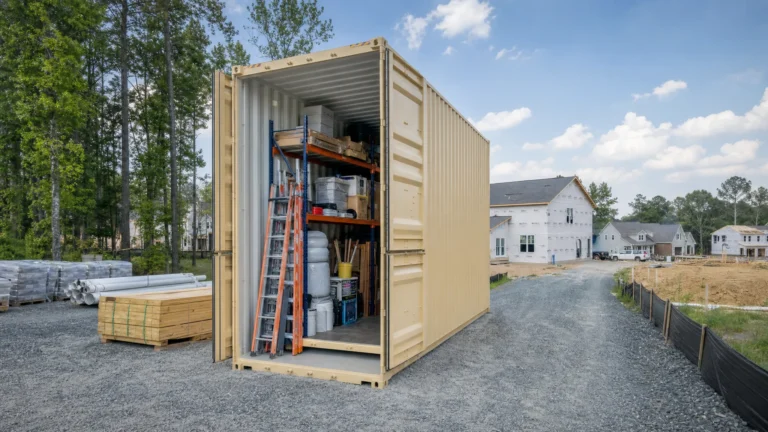
Before choosing size or price, write down the job your container must perform. A general contractor storing tools on a Wake County jobsite has different needs than a small business building a retail pop-up, a farm storing feed, or a logistics manager buying a cargo-worthy unit for transport.
A container built from Corten Steel is tough, weather-resistant, and designed around ISO standards for intermodal handling. Still, not every container is right for every purpose. The more specific you are upfront, the easier it is to choose the right size, grade, and delivery method.
| Use case | Common fit | Grade priority |
|---|---|---|
| Construction site storage | 20ft or 40ft standard container | Wind & Watertight or Cargo Worthy |
| Homeowner or farm storage | 20ft, 40ft, or High Cube | Wind & Watertight or Cargo Worthy |
| Retail pop-up or mobile office | 20ft or 40ft High Cube | One-Trip or clean Cargo Worthy |
| International shipping | 20ft or 40ft ISO container | Cargo Worthy with valid CSC considerations |
| Cold storage | 20ft or 40ft refrigerated container | Tested reefer condition and power compatibility |
| Modular conversion | High Cube container | One-Trip or structurally strong Cargo Worthy |
If the container will sit in a visible location, serve customers, or be converted into an occupied space, condition and appearance matter more. If it will store equipment behind a fence on a jobsite, a strong used unit may deliver better value.
2. Choose the right size and height
Most first-time buyers narrow their choice to 20ft and 40ft containers. The right choice depends on how much you need to store, how often you need access, and how much room your property has for delivery.
20ft containers are popular for residential properties, small contractors, farms, and tight sites because they are easier to place and maneuver. They provide practical storage without requiring the long straight-line access that a larger truck and trailer may need.
40ft containers are better when volume matters. Contractors storing ladders, pipe, lumber, scaffolding, or large inventory often prefer the extra length. Small businesses with overflow stock may also find a 40ft unit more efficient than buying two smaller units.
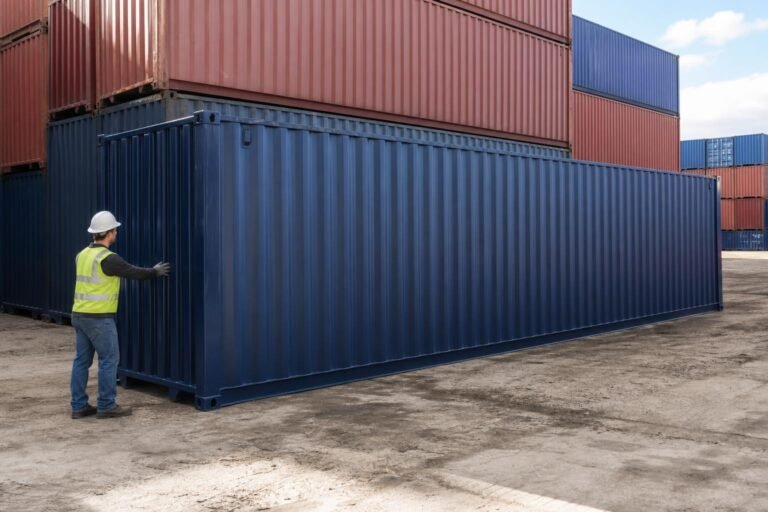
A High Cube container adds one extra foot of exterior height compared with a standard unit. Standard containers are typically 8ft 6in tall on the outside, while High Cube containers are typically 9ft 6in tall. That extra height can be valuable for shelving, palletized goods, insulation, HVAC runs, lighting, and office conversions.
Do not choose High Cube only because bigger sounds better. Confirm overhead clearance for delivery, local visual restrictions, and whether the extra interior height improves your actual layout.
3. Understand container grades before comparing prices
The biggest first-time buyer mistake is comparing container quotes without confirming grade. A low quote may be for a more worn unit, an As-Is container, or a unit that is not suitable for your intended use.
Lease Lane Containers LLC emphasizes transparent grading because grade affects structure, lifespan, price, resale value, and whether the unit can be used for shipping or only static storage.
| Grade | What it means | Best for | What to confirm |
|---|---|---|---|
| One-Trip | A nearly new container that has typically made one loaded voyage from the factory | Customer-facing storage, offices, modular builds, long-term ownership | Factory paint condition, door operation, floor condition, minor handling marks |
| Cargo Worthy | A used container considered structurally fit for cargo transport when properly inspected | Export, stacking, high-value storage, industrial use | CSC plate status, frame integrity, corner castings, doors, roof, floor |
| Wind & Watertight | A used container that should keep out wind and water, but is not necessarily certified for ocean transport | Ground-level storage for tools, equipment, household goods, or farm supplies | Light test, door gaskets, roof rust, floor soft spots, patch repairs |
| As-Is | A container sold with known or unknown defects | Very limited budget projects or non-critical uses | Leaks, structural corrosion, door issues, repair costs |
One-Trip containers usually cost more because they have less wear, cleaner paint, newer floors, and longer expected service life. They are often the best choice for mobile offices, retail conversions, container homes, or any project where cutting openings and finishing the interior will add significant cost.
Cargo Worthy containers are used but structurally stronger than a basic storage-grade unit. They are the correct conversation to have if you plan to move cargo by rail, truck, or sea. They may have dents, surface rust, and cosmetic wear, but the key issue is structural suitability.
Wind & Watertight containers are often the value choice for stationary storage. A WWT unit should protect contents from rain and wind under normal conditions, but WWT does not mean certified for export. For a deeper explanation of used containers, review how each grade is defined before you commit.
4. Inspect the container like a professional
If you can inspect the exact unit, bring a flashlight, work gloves, and a phone for photos. If you are buying remotely, request clear photos or video of the actual container when available, including the roof, doors, interior, floor, and all four sides.
| Inspection area | What to check | Red flags |
|---|---|---|
| Roof | Dents, ponding areas, rust, patches, pinholes | Deep roof dents that hold water or visible daylight inside |
| Doors | Smooth operation, locking bars, hinges, gaskets | Doors that bind, sag, or will not seal evenly |
| Floor | Delamination, soft spots, chemical odor, major gouges | Spongy plywood, strong odor, standing water stains |
| Walls | Dents, rust, weld repairs, daylight | Holes, structural corrosion, heavy impact damage |
| Corner posts and castings | Straightness and visible damage | Cracked castings, bent posts, severe frame distortion |
| Undercarriage | Crossmembers, bottom rails, corrosion | Heavy rust through structural members |
The light test is simple and useful. Step inside during daylight, close the doors safely, and look for pinholes or light coming through the roof, walls, or door seals. A few cosmetic dents are normal on used containers. Holes, twisted frames, severe rust-through, or floors that flex underfoot are different issues.
For first-time buyers, the goal is not to find a flawless used container. The goal is to match condition to use and avoid paying storage-grade prices for a unit that needs immediate repairs.
5. Compare total delivered cost, not just sticker price
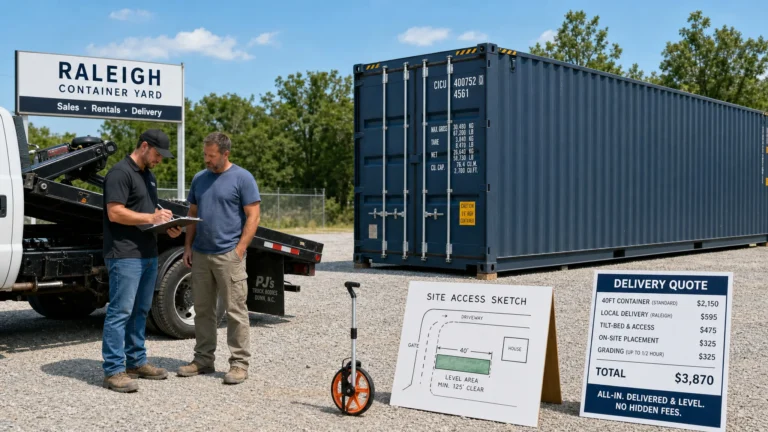
A container purchase is not complete until the unit is delivered and placed. A quote that looks cheaper on paper can become expensive if delivery, offloading, access problems, taxes, or site work are not included.
Ask each supplier to clarify these items in writing:
- Container size, height, and type
- Grade, such as One-Trip, Cargo Worthy, or Wind & Watertight
- Whether photos are of the actual unit or representative inventory
- Delivery ZIP code and delivery method
- Whether the quote includes placement or only transport
- Any fuel, wait time, failed delivery, or difficult-access fees
- Payment terms and cancellation terms
- Condition expectations at delivery
Transparency matters. Buyers should expect the same clarity they would look for when reserving equipment, vehicles, or travel services, where price, conditions, deposits, and included services are visible before checkout. For example, Aqua-Blue’s electric cart rental service in Terre-de-Haut presents key rental conditions upfront, and a container supplier should be equally direct about grade, delivery assumptions, and site responsibilities.
In 2026, steel markets, transportation costs, fuel, and regional inventory can still move pricing. That is why Raleigh and Southeast buyers should compare total delivered value, not a bare container price with unknown logistics.
6. Verify the seller before sending payment
First-time buyers should be cautious with online listings that show unusually low prices, generic photos, no local delivery details, or pressure to wire money quickly. A legitimate supplier should be able to discuss container grades, delivery equipment, site access, and what happens if the site is not ready.
For Raleigh buyers, local knowledge matters. A team familiar with North Carolina clay soil, tree canopies, narrow driveways, rural access roads, and Wake County permitting questions can help prevent delivery problems before the truck arrives. For national buyers, the same principle applies: the seller should understand both the container and the logistics required to place it safely.
Look for a supplier that can answer practical questions, not just quote a price. Ask how the unit is graded, what inspection standards are used, what delivery equipment will be sent, and whether a High Cube or refrigerated unit changes clearance or power requirements.
7. Plan delivery before you buy
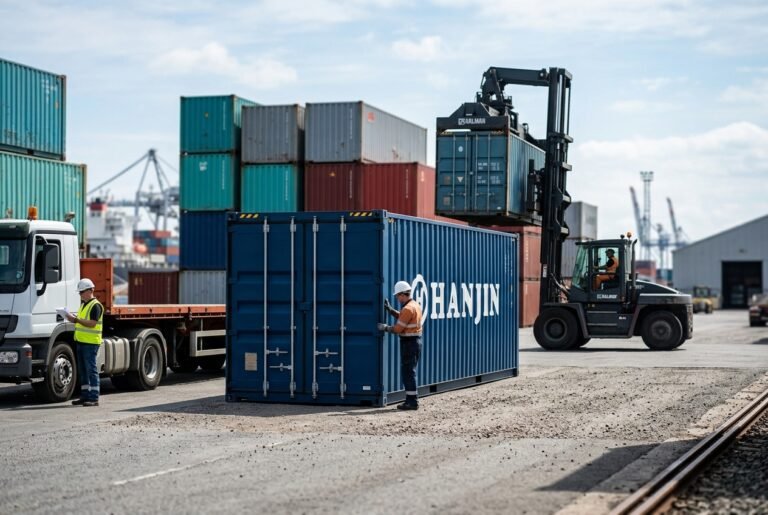
A shipping container is heavy, rigid, and usually delivered by specialized equipment such as a tilt-bed trailer, flatbed with crane support, side-loader, or other transport setup. Delivery planning should happen before you pay for the unit, not after.
Measure the route from the street to the drop spot. Check gate widths, driveway slope, turning radius, overhead tree limbs, power lines, soft shoulders, parked vehicles, septic areas, and drainage ditches. A 20ft container may be manageable on tighter properties, while a 40ft container often needs more straight-line approach and unloading room.
If you are unsure, send site photos and measurements to the supplier. Include the road approach, driveway entrance, overhead obstacles, proposed drop zone, and preferred door direction. The more information the delivery team has, the more likely the container lands exactly where you need it.
For a deeper delivery planning walkthrough, review the shipping container delivery requirements before scheduling.
Pro-Tip: Prepare the site before the truck arrives
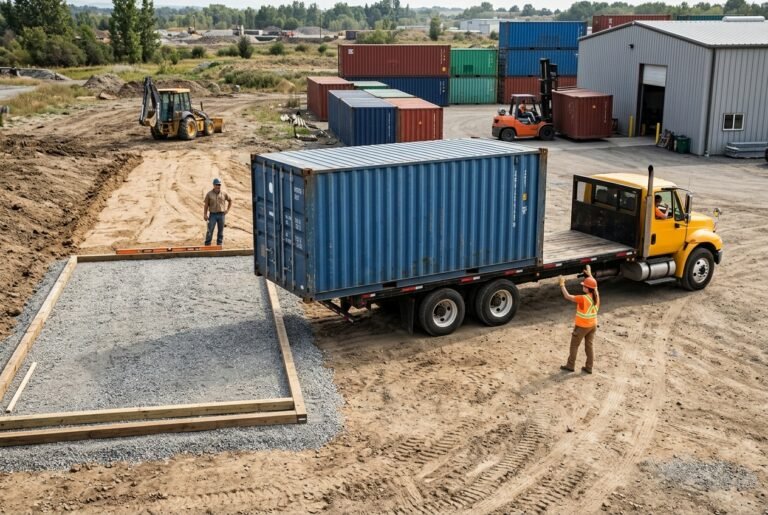
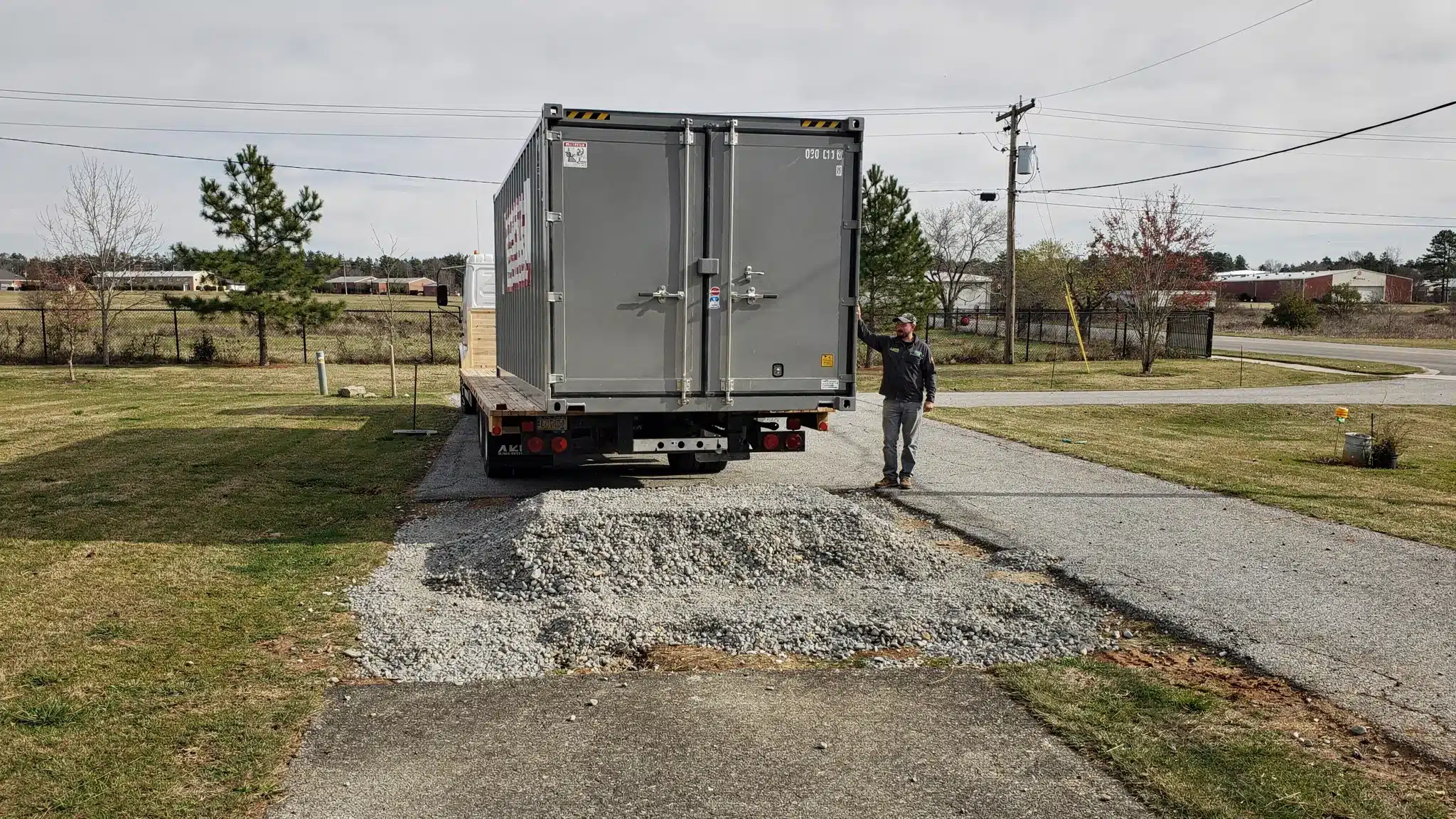
Do not set a long-term container directly on grass or soft soil if you can avoid it. In Raleigh and across the Southeast, clay soils, heavy rain, humidity, and poor drainage can cause settling, door misalignment, and corrosion under the container.
A practical storage setup usually starts with a level, compacted gravel pad that is slightly larger than the container footprint. Add geotextile fabric under the gravel where soil conditions call for it, maintain positive drainage away from the unit, and support the four corners evenly. Concrete pads, concrete piers, railroad ties, or engineered footings may be appropriate for heavier use, modified units, or permanent installations.
Before delivery, check permit, zoning, and HOA requirements. Rules can vary between Raleigh, Wake County, nearby municipalities, rural properties, commercial sites, and subdivisions. If you plan to add electrical service, plumbing, a foundation, windows, doors, or occupancy features, speak with the appropriate local authority or qualified professional before construction.
8. Confirm permits, setbacks, and site rules
Many buyers assume a container is simply portable storage, but local rules may treat it differently depending on duration, location, zoning, appearance, and use. A temporary construction storage unit may be handled differently than a permanent backyard shop, a retail kiosk, or an office conversion.
For Raleigh-area properties, check whether your location has requirements related to setbacks, screening, impervious surface, commercial site plans, stormwater, or neighborhood restrictions. For rural farms, confirm access roads, flood-prone areas, and utility easements. For businesses, verify landlord approval and fire lane clearance.
If the container will be modified into a workspace, cabin, mobile office, or modular structure, permitting becomes more important. Cutting openings, adding electrical systems, insulation, HVAC, plumbing, or occupancy features can change the project from storage to construction.
9. Inspect again on delivery day
When the container arrives, take a few minutes to document condition before and after placement. Photograph each side, the roof if safely visible, the doors, the floor, and the container number. Confirm that the size, grade, and door orientation match your order.
After placement, open and close the doors. If the doors suddenly bind after delivery, the issue may be uneven support or twist from the ground surface rather than a bad container. This is another reason a level pad matters.
Check that the container is sitting stable at the corners, not rocking, sinking, or bridging on uneven ground. If shimming is needed, discuss safe options with the driver or supplier. Never crawl under a container during delivery or while equipment is still moving.
10. Avoid these first-time buying mistakes
Many container problems are preventable. The most common mistakes come from rushing the purchase or focusing only on the lowest advertised price.
| Mistake | Why it matters | Better approach |
|---|---|---|
| Buying by price only | Grade, delivery, and repairs may cost more later | Compare total delivered cost and condition |
| Confusing WWT with Cargo Worthy | WWT is not automatically suitable for export | Confirm transport requirements before purchase |
| Ignoring site access | Failed delivery can create delays and extra fees | Measure access and send photos early |
| Skipping permit checks | Local rules may limit placement or use | Confirm zoning, HOA, and project requirements |
| Choosing too small | Overpacked containers are hard to use | Plan aisle space, shelving, and future growth |
| Choosing too large | Delivery may be harder than expected | Match size to site constraints and access needs |
If you want one broader reference before making a decision, Lease Lane Containers also maintains a shipping container buyers guide that walks through sizing, grading, inspection, and delivery planning in more detail.
Frequently Asked Questions
What is the best container grade for a first-time buyer? For general storage, a good Wind & Watertight container is often enough if it passes inspection. For export, stacking, high-value goods, or stronger structural requirements, choose Cargo Worthy. For offices, retail, modular builds, or clean long-term ownership, One-Trip is usually the safest choice.
Is a Wind & Watertight container waterproof? Wind & Watertight means the container should keep out wind and rain under normal stationary storage conditions, assuming the roof, walls, doors, and gaskets are intact. It does not mean the unit is certified for ocean shipping, and it does not eliminate condensation risk.
Should I buy a 20ft or 40ft container? Choose a 20ft unit if you have limited space, tight access, or moderate storage needs. Choose a 40ft unit if you need more volume, store long materials, or want a lower cost per cubic foot. Always confirm delivery access before choosing the larger unit.
Do I need a High Cube container? A High Cube is useful when you need extra interior height for shelving, insulation, lighting, HVAC, equipment, or conversion work. It may not be necessary for basic ground storage, and it requires more overhead clearance during delivery.
Do shipping containers need a foundation? They do not always need a full concrete foundation, but they do need stable, level support. A compacted gravel pad with proper drainage is a strong option for many storage uses. Permanent, modified, or occupied containers may require more formal foundation planning.
Do I need a permit for a container in Raleigh, NC? It depends on the property, zoning, duration, use, and whether the container is temporary storage or part of a modified structure. Check with the City of Raleigh, Wake County, your municipality, landlord, or HOA before delivery.
Can I use a used container for international shipping? Only if it meets the required Cargo Worthy standard and has appropriate documentation and CSC considerations for the shipment. A Wind & Watertight storage unit should not be assumed suitable for export.
Ready to make a confident container purchase? Lease Lane Containers LLC helps first-time buyers choose the right 20ft, 40ft, High Cube, refrigerated, One-Trip, Cargo Worthy, or Wind & Watertight unit and plan a clean delivery in Raleigh, across North Carolina, throughout the Southeast, and nationwide. Contact the sales team at sales@leaselanecontainers.com or visit the Raleigh office to discuss your container, site, and delivery plan.