Conex Container Prices: What Buyers Should Expect
Conex container prices can look confusing because the number you see online is rarely the full number you pay. A realistic quote depends on the container size, condition grade, delivery distance, placement requirements, and whether you need dry storage, a High Cube, a refrigerated reefer, or a unit suitable for freight.
For buyers in Raleigh, North Carolina, and across the Southeast, the smartest approach is to compare total delivered value, not just the lowest advertised container price. A clean, structurally sound container made from Corten Steel can serve a contractor, homeowner, farmer, retailer, or logistics team for years. A cheap unit with hidden leaks, weak floors, or poor door alignment can become expensive fast.
This guide breaks down what Conex container buyers should expect in 2026, how grades affect price, and what to ask before you commit.
What a Conex container price actually includes
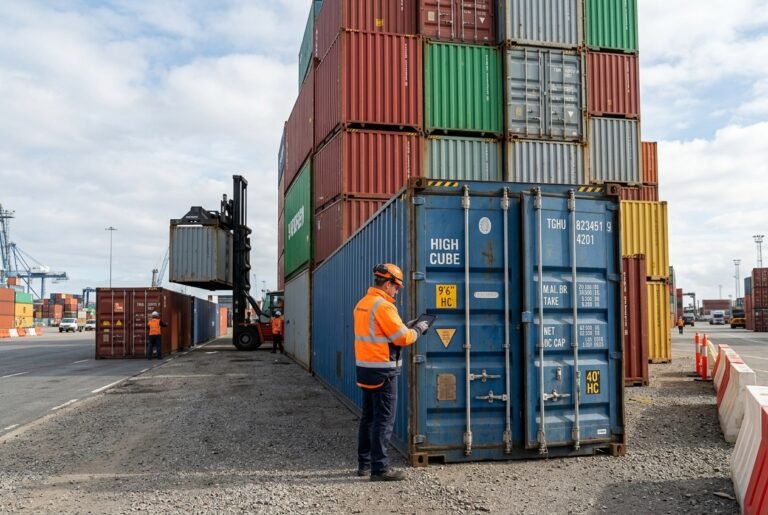
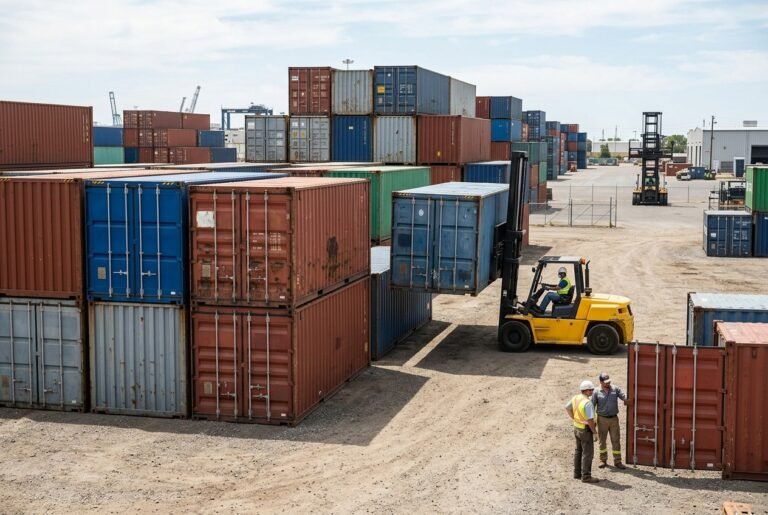
The term Conex container is commonly used to describe steel shipping containers used for storage, jobsite security, shipping, and modular conversion projects. Most standard shipping containers are built to ISO dimensional standards, which is why 20ft and 40ft units can be handled by trucks, cranes, depots, ports, and cargo systems around the world. For technical reference, international dry freight containers are commonly associated with ISO 668 Series 1 container dimensions.
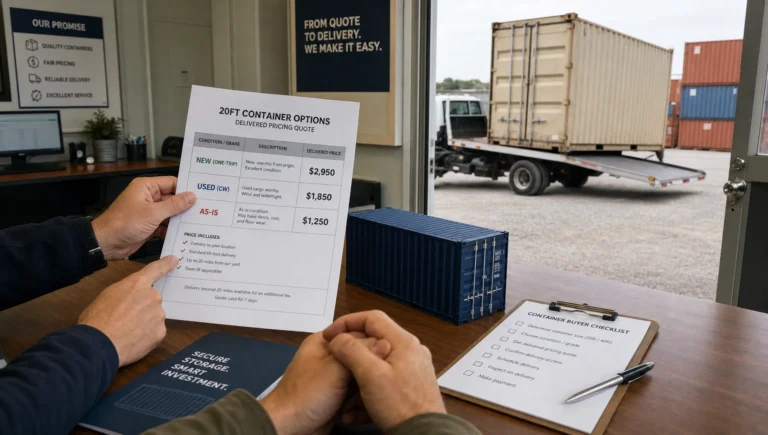
A container quote should separate the container itself from the other costs that get it to your property and make it useful. If those items are bundled together, ask for the details in writing so you can compare quotes fairly.
| Cost component | What it covers | Why it matters |
|---|---|---|
| Base container price | The steel unit by size, height, type, and grade | This is the number most buyers compare first |
| Delivery and placement | Trucking, mileage, fuel, equipment, and drop location | A low container price can be offset by high delivery costs |
| Condition documentation | Grade, inspection status, photos, and sometimes CSC details | This helps confirm whether you are buying WWT, Cargo Worthy, or one-trip |
| Optional work | Lock boxes, vents, paint, doors, ramps, shelving, or office build-outs | Modifications can add convenience but change the final price |
| Site preparation | Gravel pads, leveling, blocking, permits, or access improvements | Poor site prep can cause drainage issues and door problems |
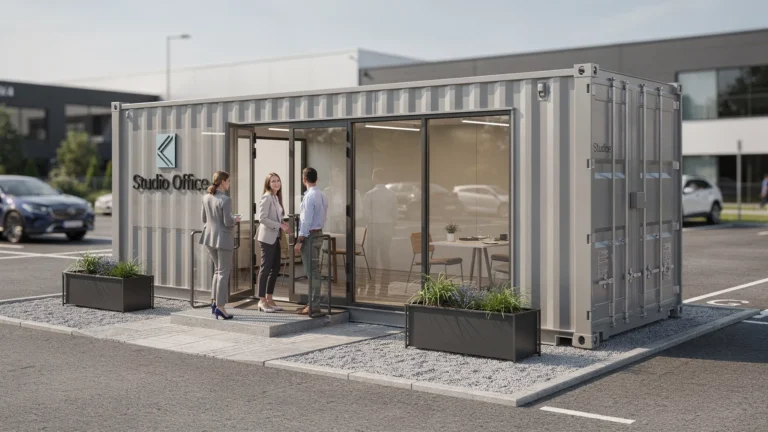
At Lease Lane Containers LLC, buyers often ask whether they should focus on size first or grade first. The answer depends on use. A general contractor storing tools in Raleigh may prioritize Wind and Watertight protection. A logistics manager moving freight may need Cargo Worthy condition. A retail pop-up or mobile office project may justify a one-trip container because appearance and modification readiness matter more.
Typical Conex container price ranges in 2026
The following ranges are broad planning ranges for the U.S. market before delivery, taxes, site prep, and modifications. Actual pricing changes with inventory, steel markets, port availability, trucking distance, and local demand. Raleigh and Southeast buyers may see different numbers than buyers in coastal port cities or rural inland markets.
| Container type | Typical grade | Common planning range before delivery | Best fit |
|---|---|---|---|
| 20ft standard dry container | Used WWT | $1,800 to $3,200 | Jobsite storage, home storage, farm tools |
| 20ft standard dry container | Cargo Worthy | $2,300 to $3,800 | Storage plus potential freight use |
| 20ft standard dry container | One-trip | $3,500 to $6,500 | Clean storage, retail, modifications, long-term use |
| 40ft standard dry container | Used WWT | $2,200 to $4,000 | Bulk storage, construction materials, inventory overflow |
| 40ft standard dry container | Cargo Worthy | $2,800 to $4,800 | Regional transport or export-related needs |
| 40ft High Cube dry container | Used WWT | $2,500 to $4,500 | Taller equipment, pallets, furniture, modular projects |
| 40ft High Cube dry container | Cargo Worthy | $3,000 to $5,200 | Large-capacity storage with stronger freight suitability |
| 40ft High Cube dry container | One-trip | $5,500 to $8,500 | Clean long-term storage, conversions, business use |
| Refrigerated reefer container | Working used or newer | Often $8,000 to $25,000+ | Cold storage, food, flowers, pharmaceuticals, agriculture |
If you are focused on a smaller unit, Lease Lane Containers has a separate guide to 20ft shipping container price expectations that goes deeper into capacity, condition, and typical costs for that size.
The key takeaway is simple: Conex container prices are not linear. A 40ft unit does not always cost twice as much as a 20ft unit, and a High Cube may cost only modestly more than a standard-height unit when supply is strong. Grade, delivery, and local inventory often have more influence than length alone.
Why condition grade changes the price
Container grading is one of the most important parts of a fair quote. Two containers can both be 40ft units made from Corten Steel, but their value can be very different if one is a clean one-trip container and the other is an older WWT storage unit with dents and faded paint.
Here is how the common grades differ.
| Grade | What it means | Price impact | Best use |
|---|---|---|---|
| One-trip | A newer container that has typically made one cargo trip from the factory to its destination market | Highest dry container price | Clean storage, customer-facing projects, modular builds, long-term ownership |
| Cargo Worthy | A used container considered structurally suitable for cargo transport after inspection | Mid to upper used pricing | Export, transport, logistics, high-confidence storage |
| Wind and Watertight | A used container that should keep out normal wind and rain but is not certified for ocean freight | Lower than Cargo Worthy | Static storage, jobsites, farms, residential storage |
| As-Is | A discounted unit sold in its current condition, possibly with holes, floor issues, door problems, or heavy corrosion | Lowest upfront price | Buyers prepared to inspect closely and repair issues |
One-trip containers
A one-trip container is usually the cleanest and newest option available without commissioning a custom factory order. It has typically carried cargo once after manufacture, so it may have minor handling marks, but it should have strong doors, solid floors, clean interior walls, and a longer remaining service life.
One-trip units cost more because they offer predictable condition. They are especially popular for mobile offices, retail pop-ups, container homes, equipment storage, and projects where appearance matters. If you plan to cut openings for windows, personnel doors, insulation, HVAC, or electrical work, starting with a cleaner shell can reduce prep time.
Cargo Worthy containers
Cargo Worthy, often shortened to CW, means the container is used but structurally sound enough for cargo transport after inspection. A CW unit should have strong corner castings, usable floors, functional doors, and structural integrity. For international shipping, the carrier may also require valid CSC plate status or current inspection documentation.
Do not assume every used container is Cargo Worthy. CW containers command a premium over basic storage-grade units because they are suitable for more demanding applications. For exporters, manufacturers, and logistics managers, that premium is often worthwhile.
Wind and Watertight containers
Wind and Watertight, often shortened to WWT, is the most common grade for static storage. A WWT container should not have active leaks under normal weather conditions, and it should keep tools, materials, furniture, feed, or inventory protected from wind and rain.
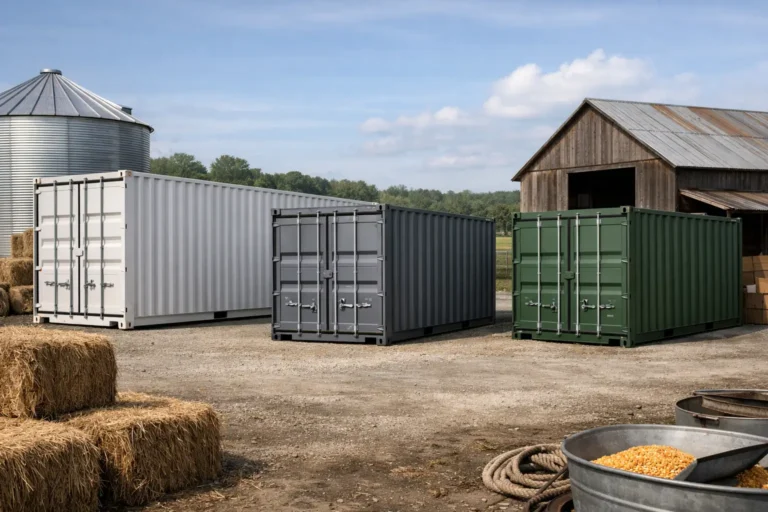
For many general contractors, home builders, farmers, and small businesses in North Carolina, WWT is the value sweet spot. You are not paying for freight certification you may never use, but you still get a durable steel storage solution.
Size, height, and container type affect your final number
The most common dry storage choices are 20ft standard, 40ft standard, and 40ft High Cube. A 20ft container is easier to place on tight residential lots, urban jobsites, and smaller farms. A 40ft container offers significantly more storage volume, making it attractive for builders, retailers, warehouses, and real estate developers.
High Cube containers are 9ft 6in tall, compared with the standard 8ft 6in exterior height. That extra foot is valuable when storing taller equipment, stacking inventory, or planning a modular conversion. Because 40ft High Cube units are in strong demand, they often sell at a premium over standard-height containers, especially in clean one-trip condition.
Refrigerated containers, also called reefers, are a separate category. A working reefer includes an insulated container body and a refrigeration unit, so price depends on container condition, machine hours, refrigeration performance, voltage requirements, and service history. A restaurant group, farm operation, florist, or cold-chain logistics team should evaluate reefers very differently than dry containers.
For a broader breakdown of how size, grade, and delivery combine, see Lease Lane Containers' guide to container cost explained by size, grade, and delivery.
What moves Conex container prices up or down
The base price of the steel box is only one part of the buying decision. The final delivered price can change for reasons that have nothing to do with the container walls or floor.
Delivery distance is one of the biggest variables. A buyer near Raleigh may have different freight costs than a buyer in a remote mountain area, a coastal property, or a jobsite with limited access. Fuel prices, truck availability, and equipment type can all affect the quote.
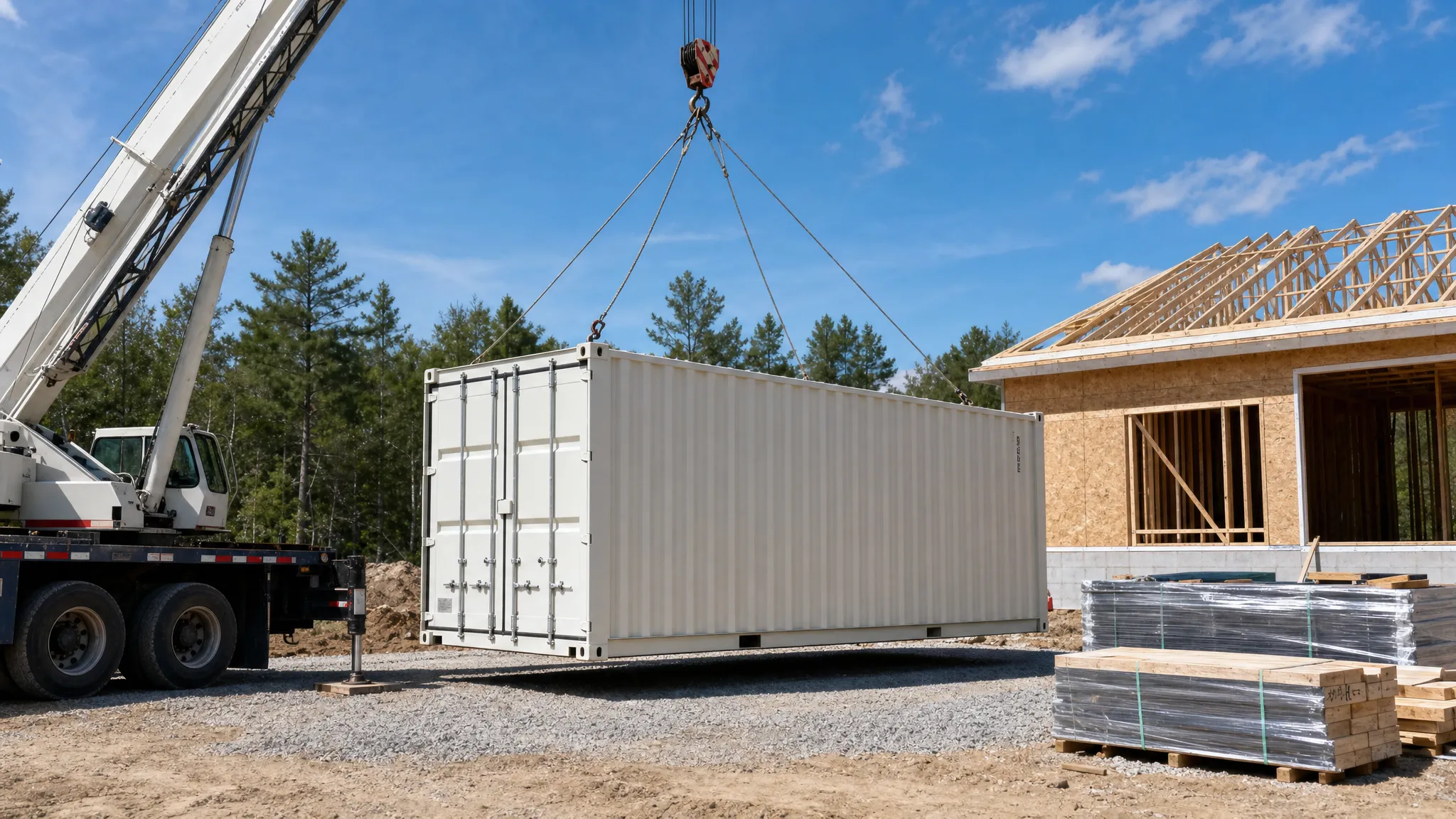
Placement difficulty also matters. A simple drop on a wide, level gravel pad is easier than a tight backyard delivery with low branches, soft soil, fences, or limited turning radius. If the truck cannot safely access the drop zone, the driver may need a different delivery method, or the buyer may need to prepare the site first.
Modifications change pricing as well. A lock box, vents, repainting, roll-up door, personnel door, windows, insulation, electrical package, or office conversion can be worth the investment, but each item should be quoted separately so you understand the finished cost.
Raleigh and Southeast market considerations
Raleigh buyers benefit from strong regional transportation routes across North Carolina and the Southeast. Interstates such as I-40 and I-95 help connect inland customers with container supply moving through regional hubs and ports. That said, local demand can still tighten availability, especially during busy construction seasons or after major weather events when storage demand rises.
In the Triangle area, including Raleigh, Durham, Cary, Chapel Hill, and surrounding Wake County communities, buyers often need containers for construction storage, home renovation projects, business inventory overflow, and agricultural use. The best container for a downtown Raleigh contractor may not be the same as the best unit for a rural property owner outside the city.
Regional weather should also guide your decision. North Carolina humidity, summer heat, heavy rain, and occasional severe storms make drainage and ventilation important. A WWT container in good condition can perform well for static storage, but it still needs a level base and airflow around the unit. If you are storing temperature-sensitive inventory, electronics, documents, or food products, ask whether insulation, vents, dehumidification, or a reefer container is more appropriate.
How to compare quotes without getting misled
A low advertised price may be legitimate, but it may also exclude key details. Before you compare Conex container prices, make sure every seller is quoting the same scope.
Ask each seller to confirm these items:
- The exact size, including whether it is standard height or High Cube
- The condition grade, such as one-trip, Cargo Worthy, WWT, or As-Is
- Whether photos show the actual unit or a representative unit of similar grade
- Whether delivery is included, and if so, what ZIP code and placement assumptions were used
- Whether taxes, permits, or site preparation are included or excluded
- Whether the container has known floor repairs, door issues, roof dents, rust, patches, or previous cargo odors
- Whether a Cargo Worthy unit includes the documentation needed for your intended shipping use
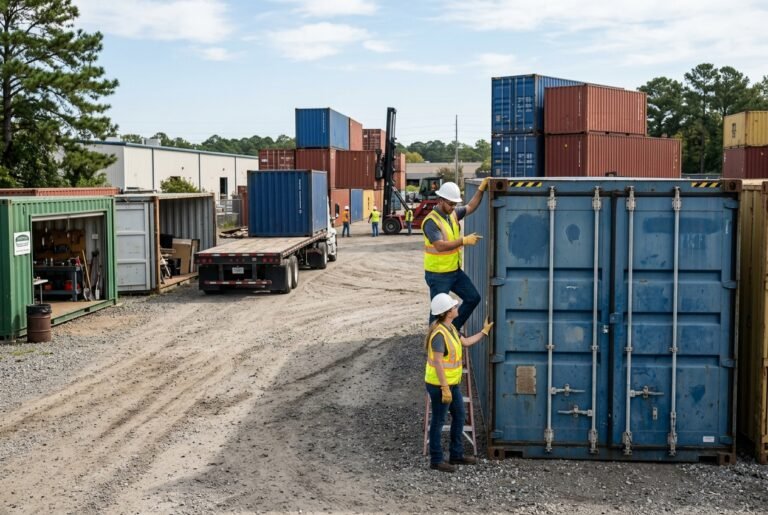
It is also smart to ask how delivery is handled. A tilt-bed truck is common for ground-level delivery, but it requires clear space in front of the drop area. If a seller gives you a low container price but cannot explain delivery requirements, the savings may disappear later. Lease Lane Containers also offers a detailed guide to shipping container delivery cost factors for buyers who want to understand freight, access, and placement variables.
Pro-Tip: prepare the site before you schedule delivery
A container is only as stable as the surface under it. Before delivery, choose a level drop spot with firm ground, good drainage, and enough clearance for the truck. In Raleigh and much of the Southeast, compacted gravel is often a practical choice because it drains better than bare soil and helps reduce settling.
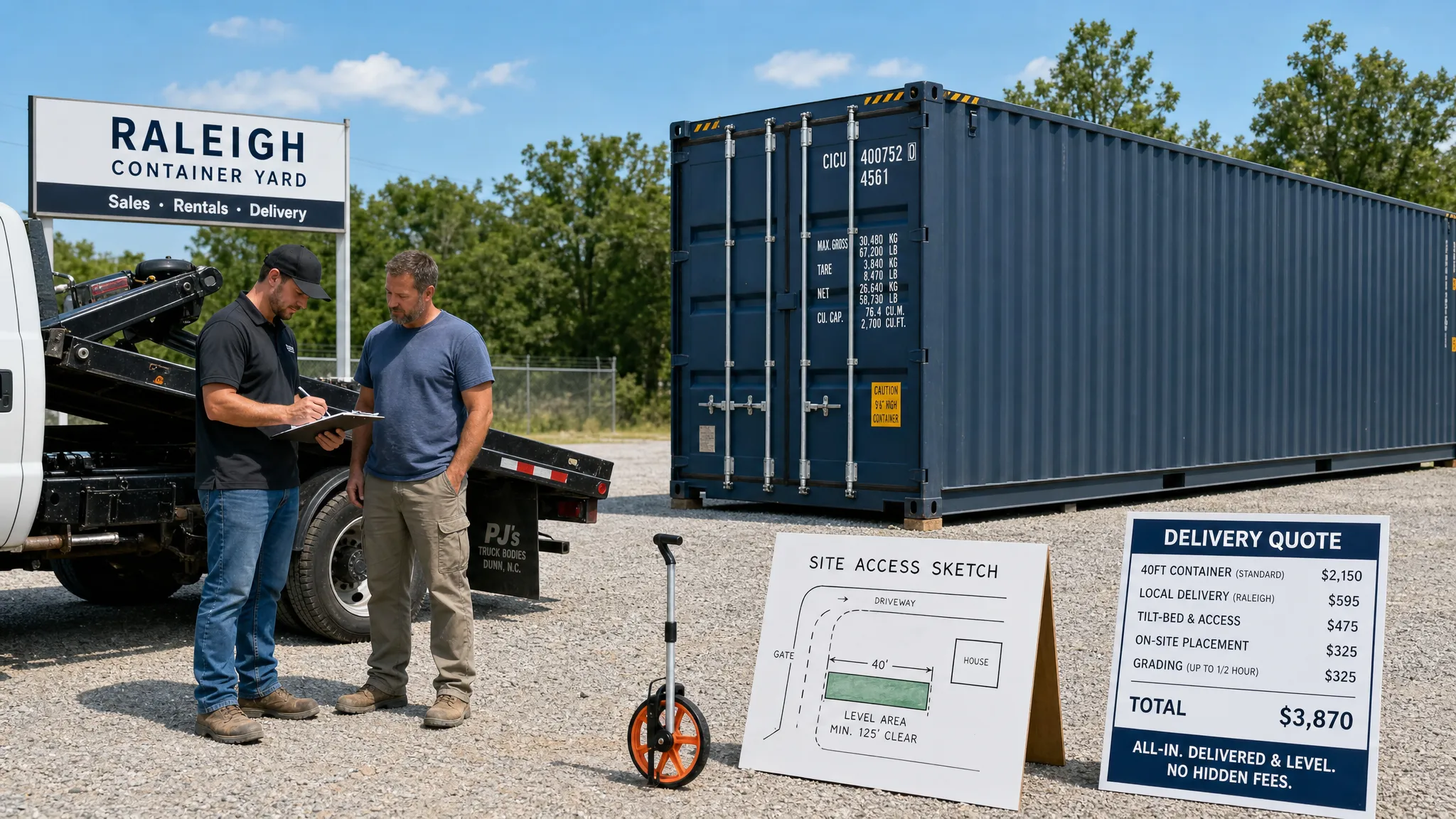
For a 20ft container, many deliveries require roughly 60ft to 80ft of straight access for the truck and container to roll off safely. For a 40ft container, plan for roughly 100ft to 120ft of straight access when possible. Actual requirements vary by truck, property layout, and delivery method. Buyers should also check for overhead obstructions such as tree limbs, power lines, carports, and building overhangs.
Avoid placing a container directly on soft, uneven soil if you can. When the corners settle unevenly, the frame can twist just enough to make the cargo doors harder to open and close. A level gravel pad, concrete strip footings, or properly placed blocks at structural support points can help preserve door alignment and improve drainage.
Permit requirements vary by city, county, zoning district, duration of use, and whether the container is temporary storage or part of a permanent structure. Before placing a container in Raleigh, Wake County, or any North Carolina municipality, check local zoning rules, building permit requirements, and HOA restrictions. This is especially important for residential neighborhoods, commercial sites, and modular conversion projects.
When a cheaper container makes sense, and when it does not
A lower-cost WWT unit can be a smart buy when you need dependable static storage and do not care about cosmetic dents, faded paint, or previous decals. Many contractors choose used WWT containers because tools, lumber, fixtures, and jobsite materials need security and weather protection more than showroom appearance.
A Cargo Worthy container makes more sense if the unit may go back into transport, especially for export or intermodal freight. Paying a little more for structural confidence can reduce risk when the container will be lifted, stacked, or moved under load.
A one-trip container is often the better investment for customer-facing sites, long-term property storage, modular construction, offices, and retail uses. The higher upfront cost can be easier to justify when the container will be visible, modified, insulated, painted, or used for many years.
The cheapest option is usually risky when the seller cannot clearly explain the grade, provide photos, or separate delivery from the base price. In the container industry, vague pricing often leads to vague expectations. A transparent quote should tell you what you are buying, where it is coming from, and what it will cost to place it on your site.
Frequently Asked Questions
What is the average price of a Conex container? Common dry storage Conex container prices often range from about $1,800 to $8,500 before delivery, depending on size, grade, height, and condition. Refrigerated reefers and heavily modified units can cost significantly more.
Are used Conex containers worth buying? Yes, used containers can be a strong value when the grade matches the application. A WWT used container is often ideal for static storage, while a Cargo Worthy used container is better for freight-related use.
What is the difference between Cargo Worthy and Wind and Watertight? Cargo Worthy means the container is structurally suitable for cargo transport after inspection. Wind and Watertight means the container should keep out normal wind and rain for storage, but it is not necessarily certified for shipping.
Why are one-trip containers more expensive? One-trip containers are newer, cleaner, and typically have less wear on floors, doors, seals, and exterior panels. Buyers pay more for longer expected service life, better appearance, and easier modification potential.
Does the quoted price usually include delivery? Not always. Some sellers quote the container only, while others include delivery to a specific ZIP code. Always ask whether delivery, placement, taxes, and permits are included.
Do I need a permit for a Conex container in Raleigh? It depends on the location, zoning, intended use, and how long the container will remain on site. Check with the City of Raleigh, Wake County, your local municipality, or your HOA before delivery.
Is a High Cube container worth the extra cost? A High Cube is often worth it if you need extra vertical clearance for equipment, pallet stacking, insulation, HVAC, or modular conversion work. For basic storage of low-profile items, a standard-height unit may be enough.
Get a clear Conex container quote from a Raleigh-based team
If you are comparing Conex container prices in Raleigh, North Carolina, the Southeast, or anywhere in the U.S., Lease Lane Containers LLC can help you evaluate the right size, grade, and delivery plan for your site. Our team supplies one-trip and used containers, including standard, High Cube, Cargo Worthy, Wind and Watertight, and reefer options.
For a transparent quote, send your desired size, delivery ZIP code, intended use, and site details to sales@leaselanecontainers.com, or visit the Lease Lane Containers Raleigh office to speak with a local container specialist.