20 Foot Sea Container Uses, Specs, and Buying Tips
A 20 foot sea container is one of the most practical steel storage and transport assets you can buy. It is compact enough for a residential driveway, strong enough for a contractor’s jobsite, and standardized enough for intermodal shipping when the right grade is selected.
For buyers in Raleigh, North Carolina, the Research Triangle, and the broader Southeast, the 20 ft size often hits the sweet spot. It gives you secure ground-level storage without taking over the entire property. It can hold tools, building materials, inventory, farm supplies, furniture, or freight, while still being easier to place than a 40 ft unit.
The key is choosing the right container for the job. A clean one-trip unit, a Cargo Worthy container, and a Wind and Watertight used container can all be smart purchases, but they are not interchangeable. Below, we will break down the core specs, best uses, grade differences, inspection points, and buying tips that matter before you schedule delivery.
What Is a 20 Foot Sea Container?
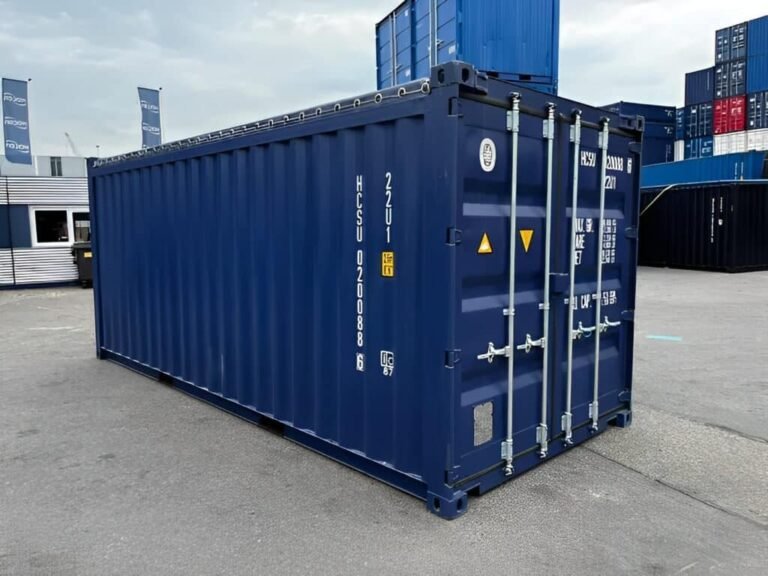
A 20 foot sea container, also called a 20ft shipping container, cargo container, conex box, or ISO container, is a standardized steel container designed for ocean freight, rail, truck transport, and secure storage. Most units are built from Corten Steel, a weathering steel designed to resist corrosion better than ordinary carbon steel when exposed to outdoor conditions.
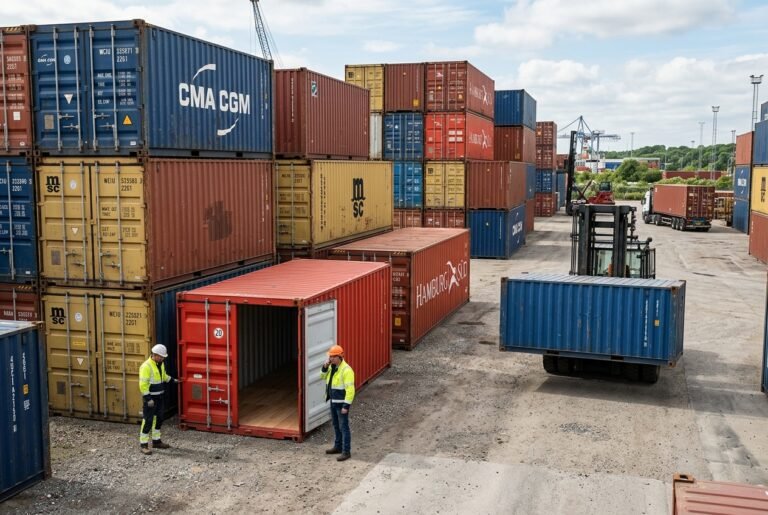
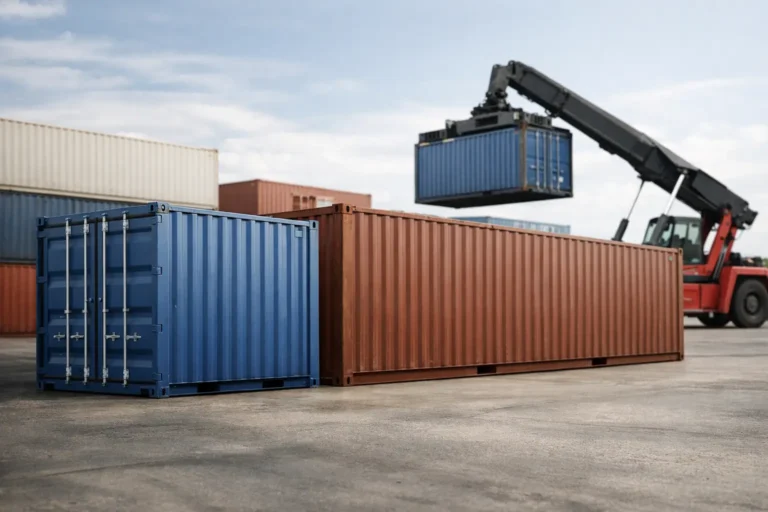
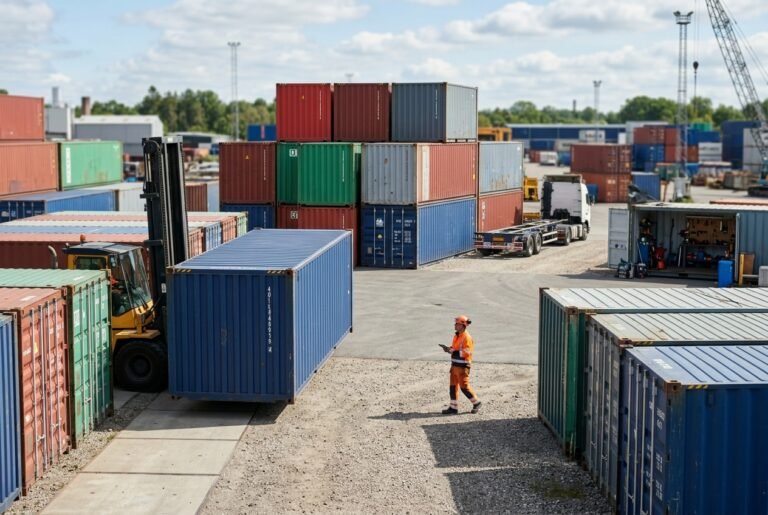
Because these containers are built to ISO standards, they include standardized corner castings, structural rails, locking doors, and dimensions that allow them to be moved by cranes, forklifts, container handlers, chassis, and tilt-bed delivery trucks. That standardization is one reason 20 ft containers remain popular for both logistics managers and non-shipping buyers who simply need reliable storage.
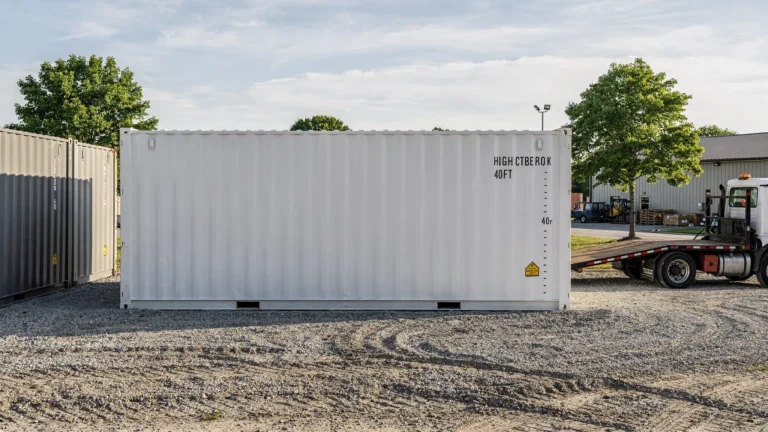
A standard 20 ft dry container is not the same as a High Cube container. A standard unit is typically 8 ft 6 in tall on the exterior, while a High Cube is typically 9 ft 6 in tall. The extra height can be useful for taller equipment, interior shelving, mobile offices, or certain modular conversion projects. If you are comparing container sizes, Lease Lane’s shipping container dimensions guide for 20ft and 40ft units is a helpful reference before you finalize your selection.
Standard 20 Foot Sea Container Specs
Exact measurements vary slightly by manufacturer, age, floor thickness, and modifications, but most standard 20 ft dry containers are close to the following specifications.
| Specification | Typical 20 ft standard container measurement |
|---|---|
| Exterior length | 20 ft |
| Exterior width | 8 ft |
| Exterior height | 8 ft 6 in |
| Interior length | About 19 ft 4 in |
| Interior width | About 7 ft 8 in |
| Interior height | About 7 ft 10 in |
| Door opening width | About 7 ft 8 in |
| Door opening height | About 7 ft 5 in |
| Interior volume | About 1,170 cu ft |
| Tare weight | Commonly about 4,800 to 5,100 lb |
| Maximum gross weight | Commonly 52,910 lb, depending on plate and manufacturer |
These figures are useful, but buyers should always confirm the unit-specific CSC plate, manufacturer data, and condition before using a container for cargo transport. If your container will be used only for stationary storage, dimensions, door condition, floor condition, and weather resistance usually matter more than payload rating.
A 20 ft container can typically fit in many residential, farm, retail, and jobsite environments where a 40 ft container would be difficult to maneuver. That said, the truck still needs enough approach space to deliver it safely, especially if the unit is being dropped at ground level by tilt-bed trailer.
Best Uses for a 20 Foot Sea Container
The 20 ft size is popular because it is flexible. It is large enough to be useful, but not so large that it becomes difficult to place on tighter properties around Raleigh, Cary, Durham, Wake Forest, or rural sites across North Carolina.
Jobsite Storage for Contractors and Builders
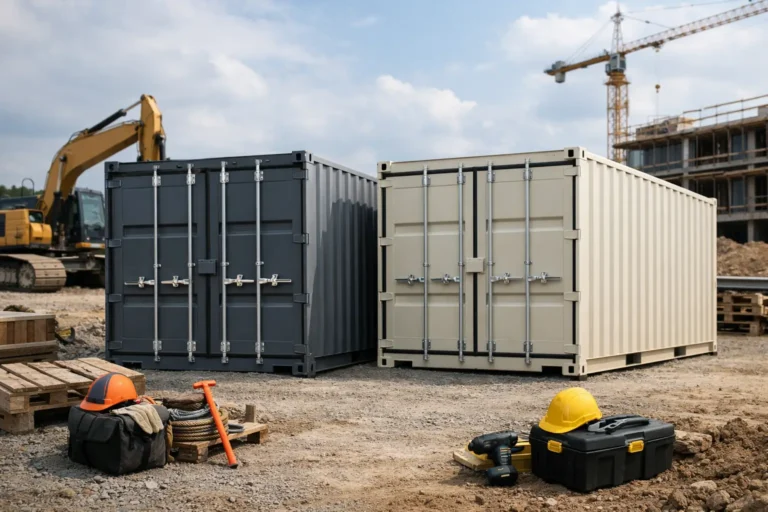
General contractors and home builders often use 20 ft containers to secure tools, fasteners, lumber, tile, fixtures, generators, and equipment. Compared with a temporary shed, a steel container offers stronger lockbox options, Corten Steel walls, and ground-level access.
On urban infill projects in the Southeast, where space is limited, a 20 ft sea container can often be placed along a driveway, near a slab, or at the edge of a staging area. It keeps materials on-site, reduces trips to the warehouse, and helps protect expensive tools from rain and theft.
Residential and Property Storage
Homeowners use 20 ft containers during remodels, moves, estate cleanouts, storm preparation, and long-term property storage. A container can hold furniture, lawn equipment, seasonal items, motorcycles, renovation materials, or workshop supplies.
For residential storage, a Wind and Watertight used container is often sufficient if the unit has solid doors, intact seals, a good roof, and a dry interior. If appearance matters, such as placement near a home, driveway, or customer-facing property, a newer unit may be worth the upgrade.
Farm and Agricultural Storage
Farms and rural landowners use 20 ft containers for feed, tools, fencing supplies, pumps, irrigation parts, small tractors, chemicals, and seasonal equipment. The container’s steel shell and raised floor help protect contents from weather when the unit is placed correctly.
Agricultural buyers should think carefully about ventilation, condensation control, and access. If the container will store feed, seed, or temperature-sensitive items, added vents, insulation, or a refrigerated option may be appropriate depending on the use.
Small Business Inventory and Pop-Up Operations
Retailers, landscapers, event companies, ecommerce sellers, and service businesses often need overflow storage that does not require a long commercial lease. A 20 ft container can serve as secure back-of-house inventory storage, a mobile equipment room, or the base for a pop-up retail concept.
For projects that require frequent side access to tools, pallets, or retail displays, an open-side configuration may be worth considering. Lease Lane lists options such as a Used 20Ft Open Side Shipping Container for Easy Access, which can make loading and organization easier than relying only on end doors.
Shipping, Export, and Regional Transport
If you need the container for international shipping or intermodal transport, condition and documentation become more important. A Cargo Worthy container is typically the right category to discuss because it is inspected for structural integrity and cargo use. You should also verify the CSC plate and confirm that the unit meets the requirements of your carrier, freight forwarder, port, or shipping line.
For domestic storage, a Cargo Worthy grade may be more than you need. For ocean freight, a basic storage-grade unit may not be enough.
Container Grades Explained: One-Trip, Cargo Worthy, and WWT
Container grade is one of the most important buying decisions. Two containers can be the same size but serve very different purposes based on age, condition, certification, and structural quality.
| Grade | What it means | Best for |
|---|---|---|
| One-Trip | A newer container that has typically made one cargo trip from the manufacturer before being sold | Buyers who want premium condition, cleaner appearance, longer service life, and easier modification potential |
| Cargo Worthy | A used container inspected as structurally suitable for cargo transport, often with a valid CSC plate when required | Export shipping, regional freight, and buyers who need structural confidence |
| Wind and Watertight | A used container that should keep out wind and water but is not necessarily certified for ocean shipping | Stationary storage, jobsites, farms, and budget-conscious property storage |
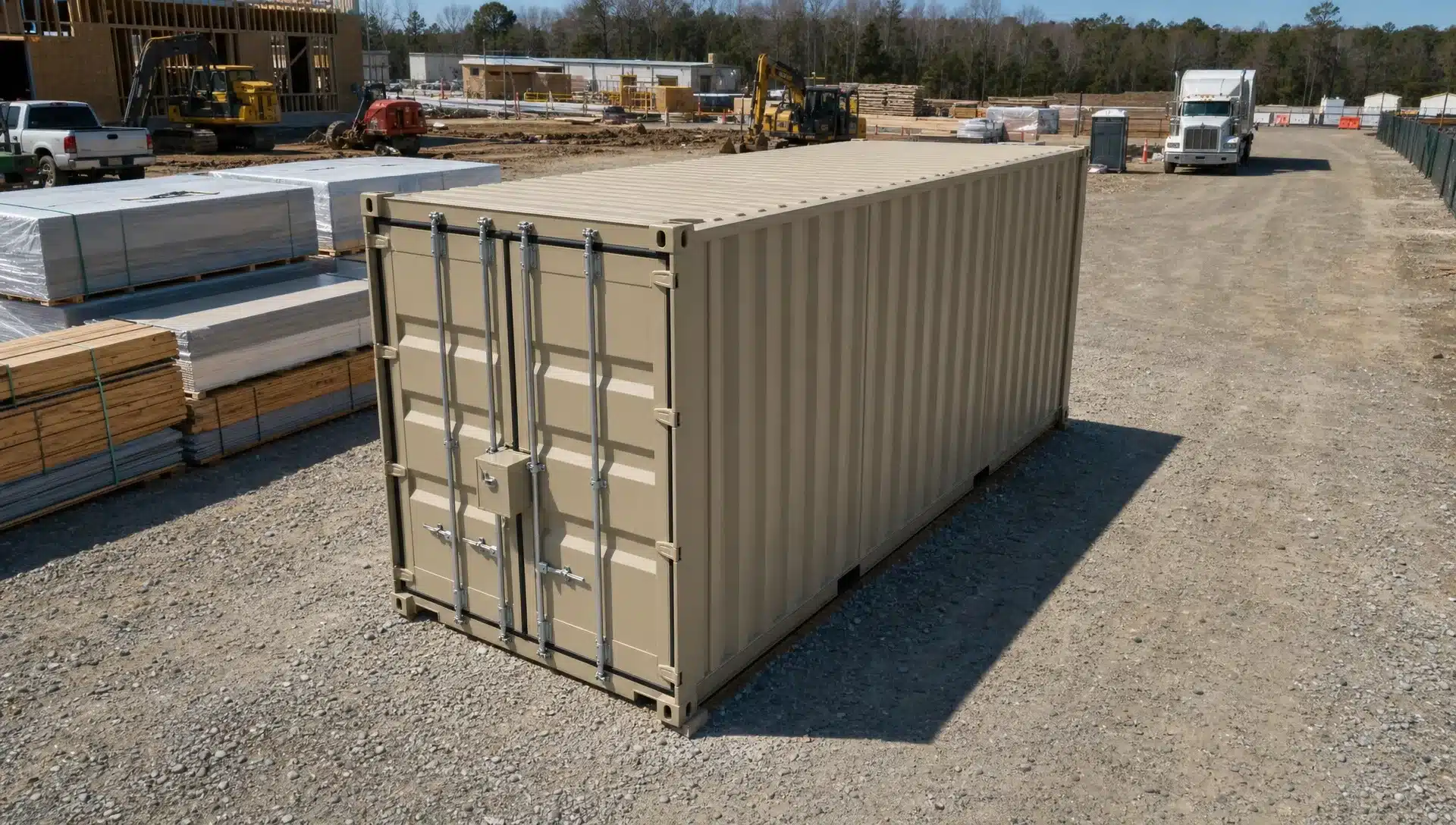
A one-trip container generally has fewer dents, cleaner paint, better door seals, newer flooring, and less corrosion than older used units. It is often the best option when appearance matters, when you plan to modify the unit, or when you want the longest practical service life. Buyers comparing premium 20 ft options can review the New One Trip 20 Ft Shipping Container for a relevant example of this grade.
A Cargo Worthy container is used, but it should still have the structural integrity needed for cargo movement. This is especially important for logistics managers purchasing for freight, export, or regional hauling. Look for corner post condition, roof bows, floor strength, door operation, and proper inspection status.
A Wind and Watertight container, often shortened to WWT, is usually the most economical choice for static storage. It should keep weather out under normal conditions, but it may have more cosmetic wear, surface rust, patches, dents, or an older floor. WWT can be a strong value for contractors, farms, and homeowners as long as it is honestly graded.
Standard vs High Cube: Which 20 Ft Configuration Makes Sense?
Most buyers looking for a 20 foot sea container are considering a standard-height dry container. It is widely available, cost-effective, and compatible with many storage and transport needs.
A 20 ft High Cube container adds one extra foot of exterior height, making it useful when vertical clearance matters. That extra height can help if you plan to add insulation, interior framing, lighting, shelving, or office finishes. It can also be useful for taller equipment or stacked inventory.
However, High Cube availability can vary by region and container type. In some markets, 40 ft High Cube containers are more common than 20 ft High Cube units. If you are buying in Raleigh or elsewhere in the Southeast, ask what is currently available before designing a project around a specific height.
Refrigerated 20 ft containers, also called reefers, are a separate category. They are designed for temperature-controlled storage or cold chain logistics and require power. They can be appropriate for food, floral, pharmaceutical, or event applications, but they have less interior space than a dry container because of refrigeration equipment and insulated walls.
Buying Tips Before You Choose a 20 Foot Sea Container
A good purchase starts with matching the container to the actual job. A container that is perfect for backyard storage may be the wrong choice for international freight. A container that is ideal for export may be more than a homeowner needs.
Start With the Use Case
Before comparing units, decide whether your main need is storage, shipping, modification, business use, or a mix of those goals. Static storage buyers can often focus on WWT condition, door seals, roof condition, and site placement. Freight buyers should prioritize Cargo Worthy status, structural integrity, and CSC documentation. Modification buyers often benefit from a one-trip unit because the cleaner steel and straighter frame can reduce prep work.
If you are still comparing configurations, Lease Lane’s guide on how to choose the right 20 ft storage container goes deeper into matching container type, grade, access, and site conditions.
Inspect the Critical Areas
For used containers, cosmetic wear is normal. The real question is whether the container is structurally sound and appropriate for your use. Look at the doors, roof, floor, sidewalls, corner castings, crossmembers, and underside if possible.
Pay special attention to the door gaskets and locking bars. If the doors are hard to open when the container is empty and level, they may become even more difficult after delivery to an uneven site. Check the roof from the inside during daylight. Pinholes, active leaks, heavy roof dents, or standing water marks should be addressed before purchase.
The floor is another major inspection point. Most standard dry containers have marine-grade plywood floors supported by steel crossmembers. For storage, look for soft spots, delamination, chemical odors, major repairs, or moisture damage. For cargo use, floor integrity is even more important because the unit may carry significant weight.
Understand Delivery Access
Delivery is not just a final step. It should shape your buying decision from the beginning. A 20 ft container still requires a large truck, safe turning radius, overhead clearance, and stable ground.
Most ground-level deliveries use a tilt-bed or roll-off style truck or trailer. The driver raises the bed and slides the container into position. This means the truck needs enough straight-line space in front of the final drop spot. Overhead branches, wires, steep grades, soft soil, fences, parked vehicles, and narrow gates can all create problems.
If you are in a dense Raleigh neighborhood, a commercial site near the Beltline, or a rural property with a long gravel drive, photos and measurements can help the delivery team plan the right equipment.
Compare Total Cost, Not Just Container Price
The lowest sticker price is not always the best deal. Compare the container grade, age, condition, delivery distance, availability, payment terms, and seller reputation. A very cheap used container can become expensive if it arrives with leaks, stuck doors, weak floors, or surprise delivery fees.
For 2026 buyers comparing market factors, Lease Lane’s 20ft shipping container price guide explains how grade, condition, location, and delivery can influence overall cost.
Choose a Seller That Explains the Grade Clearly
A reputable supplier should be able to explain the difference between one-trip, Cargo Worthy, and WWT units without vague language. Ask whether photos represent the exact unit or a sample unit, whether delivery is included or separate, and what condition standards apply.
For buyers in North Carolina and across the USA, working with a team that understands both local site conditions and national container logistics can reduce surprises. In the Southeast, humidity, storms, red clay soil, and uneven rural properties all make proper placement and drainage especially important.
Pro-Tip: Prepare the Site Before the Truck Arrives
A container performs best when it sits level, stable, and slightly elevated from standing water. Poor site preparation is one of the most common reasons buyers end up with hard-to-open doors, pooling water, premature floor issues, or delivery delays.
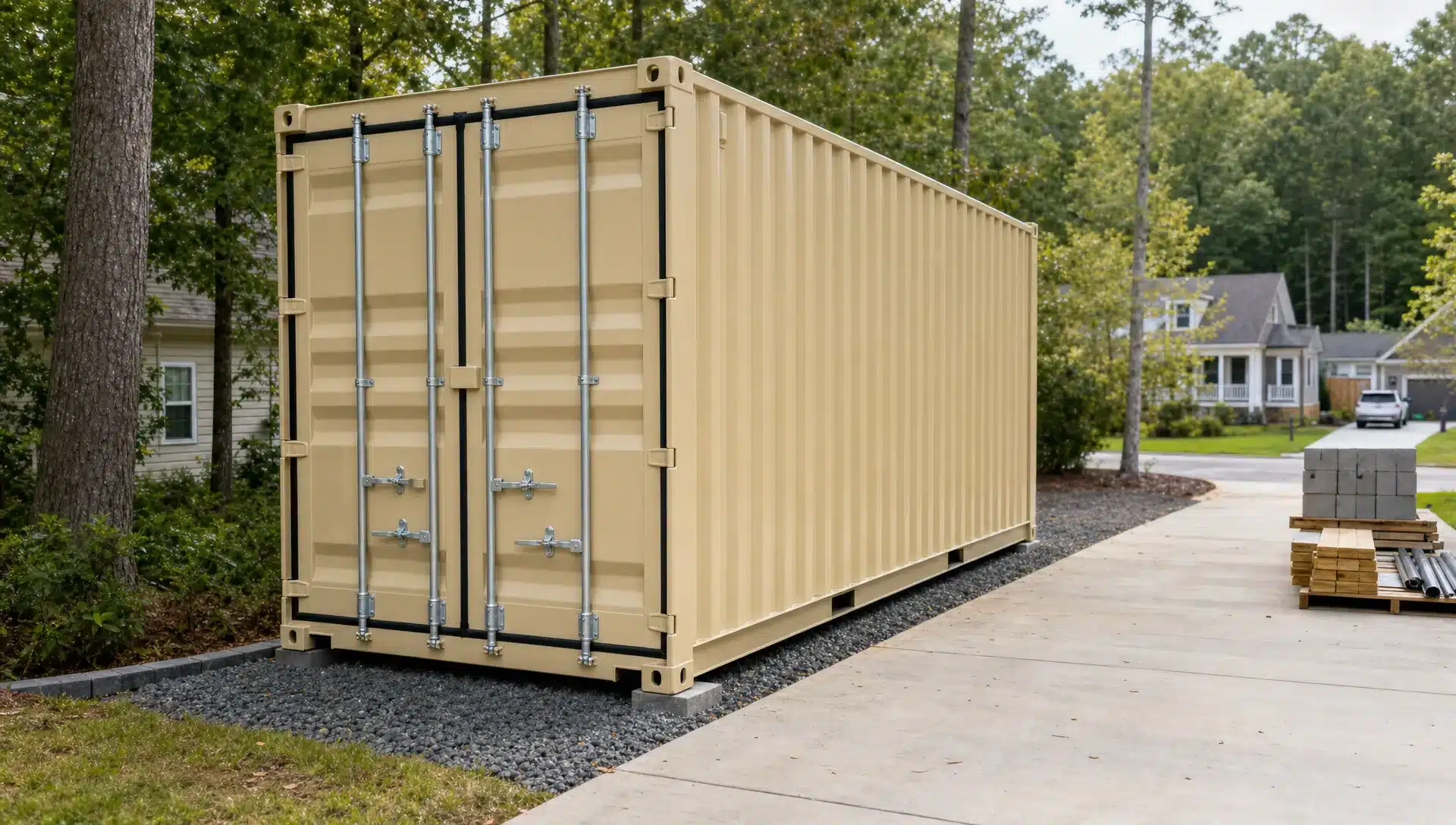
For most storage applications, a compacted gravel pad is a practical solution. Gravel helps drainage, reduces mud, and gives the container a more stable base than bare soil. Many buyers use crushed stone, railroad ties, concrete blocks, or concrete piers to support the corners, but the best approach depends on soil conditions, container weight, and local requirements.
The most important rule is to support the container evenly. If one corner sinks, the frame can twist enough to make the doors bind. Confirm that the drop zone is level, free of overhead obstructions, and accessible for the delivery truck. For a 20 ft tilt-bed delivery, plan for generous straight-line clearance and confirm exact requirements with the delivery team before installation day.
Permits are another important consideration. Rules can vary by city, county, zoning district, HOA, project duration, and intended use. Raleigh, Wake County, and other North Carolina jurisdictions may treat temporary storage differently from permanent structures or modified containers. Always check local requirements before placing a container, especially for commercial, residential, or public-facing sites.
When a 20 Foot Sea Container Is the Right Choice
A 20 ft container is usually the right choice when you need strong, secure storage but have limited space. It is easier to place than a 40 ft unit, often easier to maneuver on residential or active construction sites, and large enough for a meaningful amount of equipment or inventory.
It is also a smart choice when you want flexibility. A contractor may start with tool storage and later add shelving. A small business may use it first for inventory and later convert it into a mobile retail unit. A homeowner may use it during a renovation and then repurpose it for long-term equipment storage.
A 40 ft container makes more sense when volume is the top priority and the site can handle the footprint. A High Cube makes sense when height matters. A reefer makes sense when temperature control is required. The right container is not always the biggest or newest one. It is the one that fits your space, budget, cargo, access needs, and long-term plans.
Frequently Asked Questions
Is a 20 foot sea container the same as a 20ft shipping container? Yes. The terms are often used interchangeably. Sea container, shipping container, cargo container, conex box, and storage container can all refer to the same type of ISO steel container, although the exact grade and condition may vary.
What grade should I buy for storage? For stationary storage, a Wind and Watertight container is often enough if it has solid doors, intact seals, a dry interior, and a good roof. If you want a cleaner appearance or plan to modify the unit, a one-trip container may be a better fit.
Do I need a Cargo Worthy container? You typically need Cargo Worthy condition if the unit will be used for freight movement, export, or intermodal shipping. For backyard, farm, or jobsite storage, Cargo Worthy may be more than necessary unless you want the added structural assurance.
Can a 20 ft container fit in a driveway? Often, yes, but it depends on driveway width, slope, overhead clearance, truck access, and local rules. Measure the drop area and the approach route before ordering, and send photos to the delivery team if access is tight.
Will a 20 ft container rust in North Carolina weather? Shipping containers are built from Corten Steel, which is designed to resist weathering better than ordinary steel, but they can still rust over time. Good drainage, proper placement, roof inspection, and prompt touch-up of damaged paint can help extend service life in Raleigh and the humid Southeast.
Ready to Choose the Right 20 Foot Sea Container?
Lease Lane Containers LLC helps buyers in Raleigh, across North Carolina, throughout the Southeast, and nationwide choose clean, reliable shipping containers for storage, transport, and custom projects. Whether you need a one-trip 20 ft unit, a Cargo Worthy container for freight, or a Wind and Watertight option for jobsite storage, our team can help you compare grades, plan delivery, and prepare your site.
To discuss availability and delivery, contact the sales team at sales@leaselanecontainers.com or visit the Lease Lane Containers Raleigh office.