Recycled Shipping Containers for Storage and Builds
Recycled shipping containers are one of the most practical ways to add secure storage or usable space without starting from raw materials. For general contractors in Raleigh, homeowners across North Carolina, farms in the Southeast, and developers evaluating modular builds, the appeal is straightforward: the steel shell already exists, it was engineered for demanding transport, and it can often be delivered faster than a traditional structure can be built.
The key is choosing the right container for the job. A recycled container used for tool storage has different requirements than a container planned for a mobile office, retail kiosk, workshop, or compact dwelling. Grade, size, roof condition, door operation, and site preparation all matter.
What recycled shipping containers really means
In the container industry, recycled usually means repurposed rather than melted down and remanufactured. A shipping container may be retired from ocean service, regional freight, or a leasing fleet, then reused as ground-level storage or adapted into a build. That reuse extends the practical life of the unit and takes advantage of the container’s original engineering.
Most standard dry containers are built with Corten Steel, a weathering steel designed to resist harsh marine environments. They also use ISO standards for handling, stacking, and intermodal transport, which is why a container can move by ship, rail, and truck using corner castings and standardized equipment. Those same features make containers useful on construction sites, farms, commercial lots, and remote properties.
Still, recycled does not mean every unit is equal. A container that is excellent for static storage may not be the right starting point for a structural build. Buyers should understand the difference between One-Trip, Cargo Worthy, and Wind & Watertight before choosing.
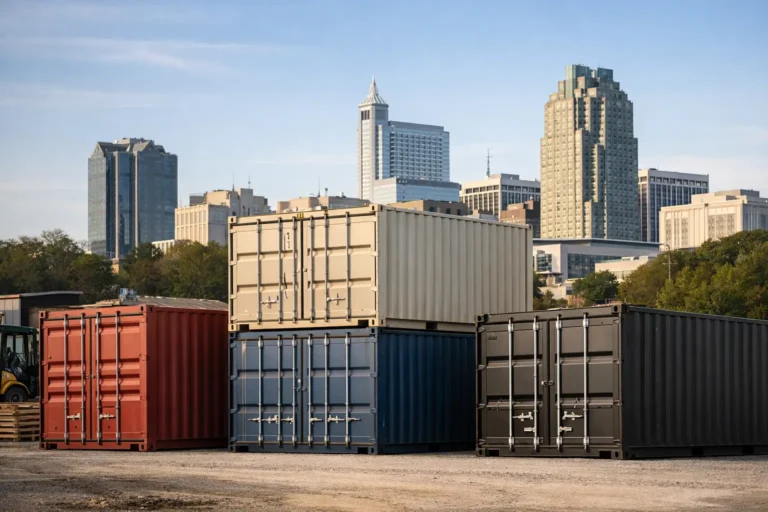
Container grades: One-Trip vs. Cargo Worthy vs. WWT
Container grading is where many buyers get confused. The terms sound similar, but they describe different levels of condition and intended use.
| Grade | What it means | Best fit | What to verify |
|---|---|---|---|
| One-Trip | A newer container that has typically made one cargo trip before resale | Clean storage, retail pop-ups, offices, container homes, customer-facing builds | Exterior condition, doors, roof, floor, and exact dimensions |
| Cargo Worthy | A used container considered suitable for cargo transport when inspection and paperwork are current | Export, regional transport, logistics, durable jobsite storage | CSC plate, inspection status, structural rails, corner posts, doors, and floor |
| Wind & Watertight | A used container that keeps out wind and rain but is generally intended for static storage | Contractor storage, farm equipment, inventory overflow, household storage | Door seals, roof pinholes, floor condition, rust, and prior repairs |
A Cargo Worthy container may have dents and cosmetic wear, but it should remain structurally sound for transport when properly certified. A Wind & Watertight unit may be a cost-effective storage choice, but it should not be assumed suitable for export. One-Trip containers are typically the cleanest and most consistent option, especially when appearance matters or the unit will be modified.
If you are comparing used containers, Lease Lane’s guide on how to inspect a used shipping container before paying is a helpful next step before committing to a specific unit.
Choosing the right size for storage or builds
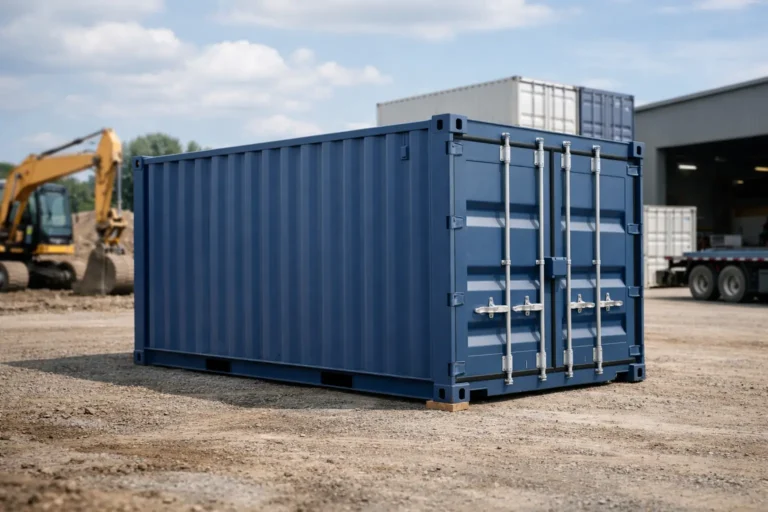
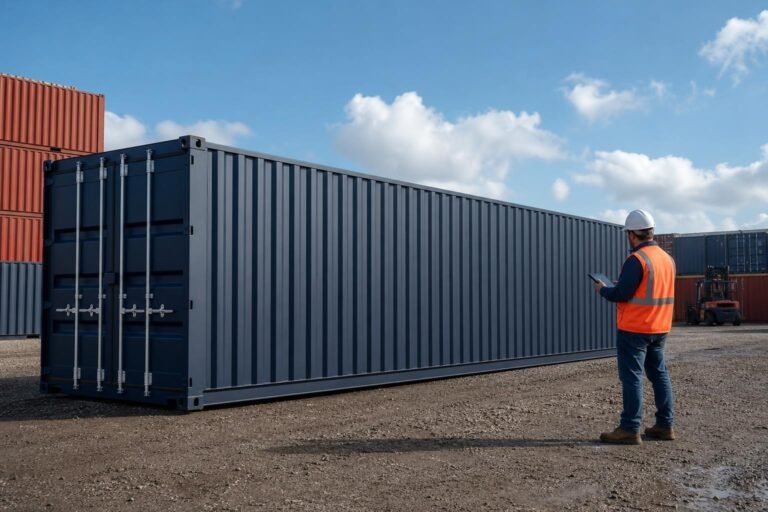
Most buyers start with 20ft and 40ft containers. The right choice depends on available space, access for delivery, storage volume, and whether the unit will remain portable.
| Container type | Common use | Buyer considerations |
|---|---|---|
| 20ft standard | Residential storage, small jobsites, farms, compact builds | Easier to place in tighter spaces and often simpler for smaller properties |
| 40ft standard | Large inventory storage, contractor materials, equipment staging | More floor area, but requires more delivery clearance and a longer level pad |
| 40ft High Cube | Workshops, offices, builds, bulky equipment | Extra height, typically 9 ft 6 in outside height, can help with insulation and ceiling clearance |
| Refrigerated Reefer | Cold storage, food, agriculture, temperature-sensitive goods | Requires power planning, drainage, maintenance access, and operating considerations |
For storage, a 20ft container often works well for tools, seasonal inventory, feed, furniture, and smaller equipment. For home builders, roofers, electricians, and general contractors in the Raleigh area, a 40ft unit is often more efficient when materials arrive in bulk. High Cube containers are popular for builds because the added height gives designers more room for insulation, lighting, HVAC, and a more comfortable interior feel.
For buyers evaluating structural modifications, it helps to understand the container’s anatomy before cutting openings. Lease Lane’s shipping container construction basics explain how side walls, corner posts, roof bows, crossmembers, and floors work together.
Best storage uses for recycled shipping containers
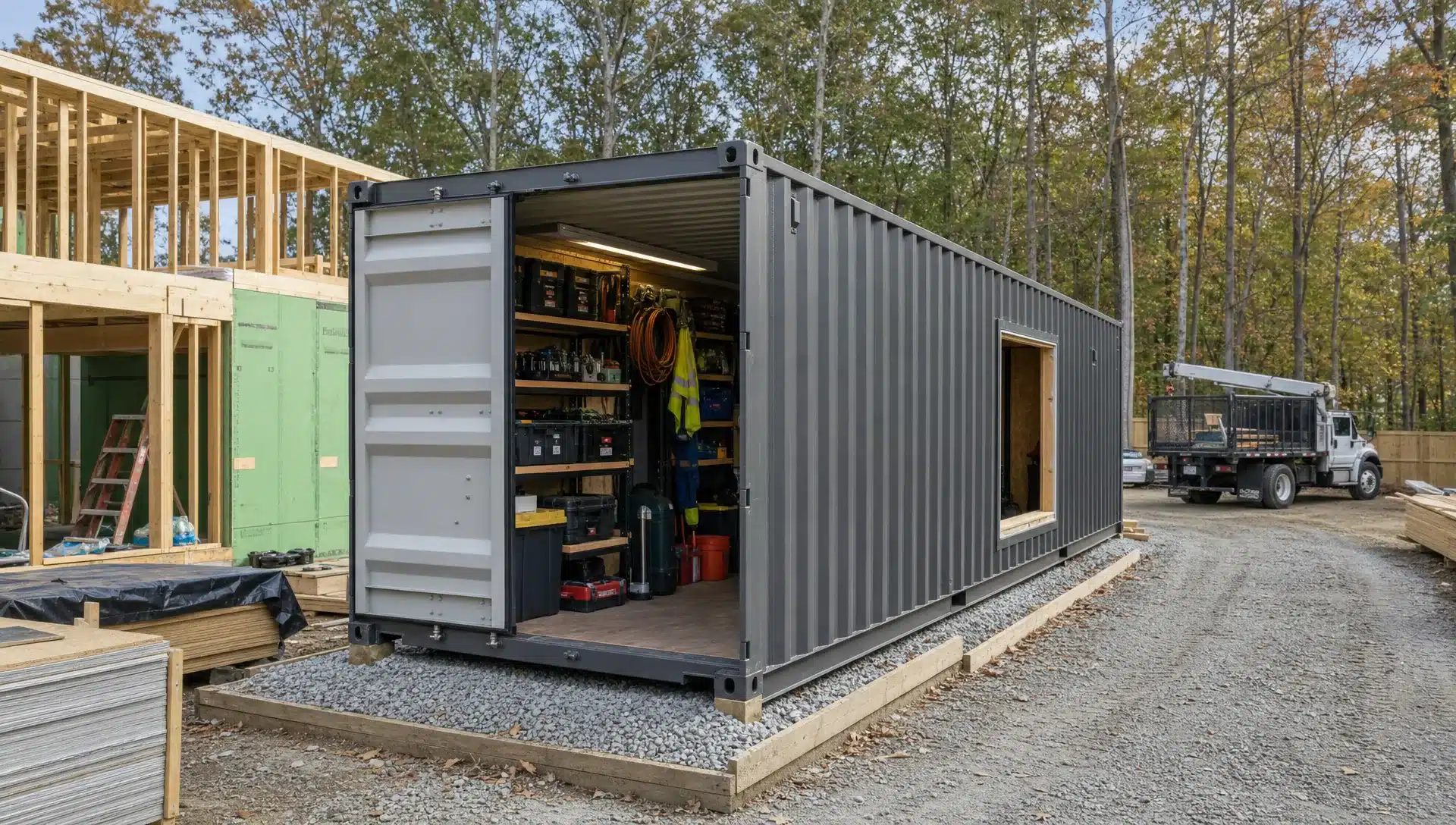
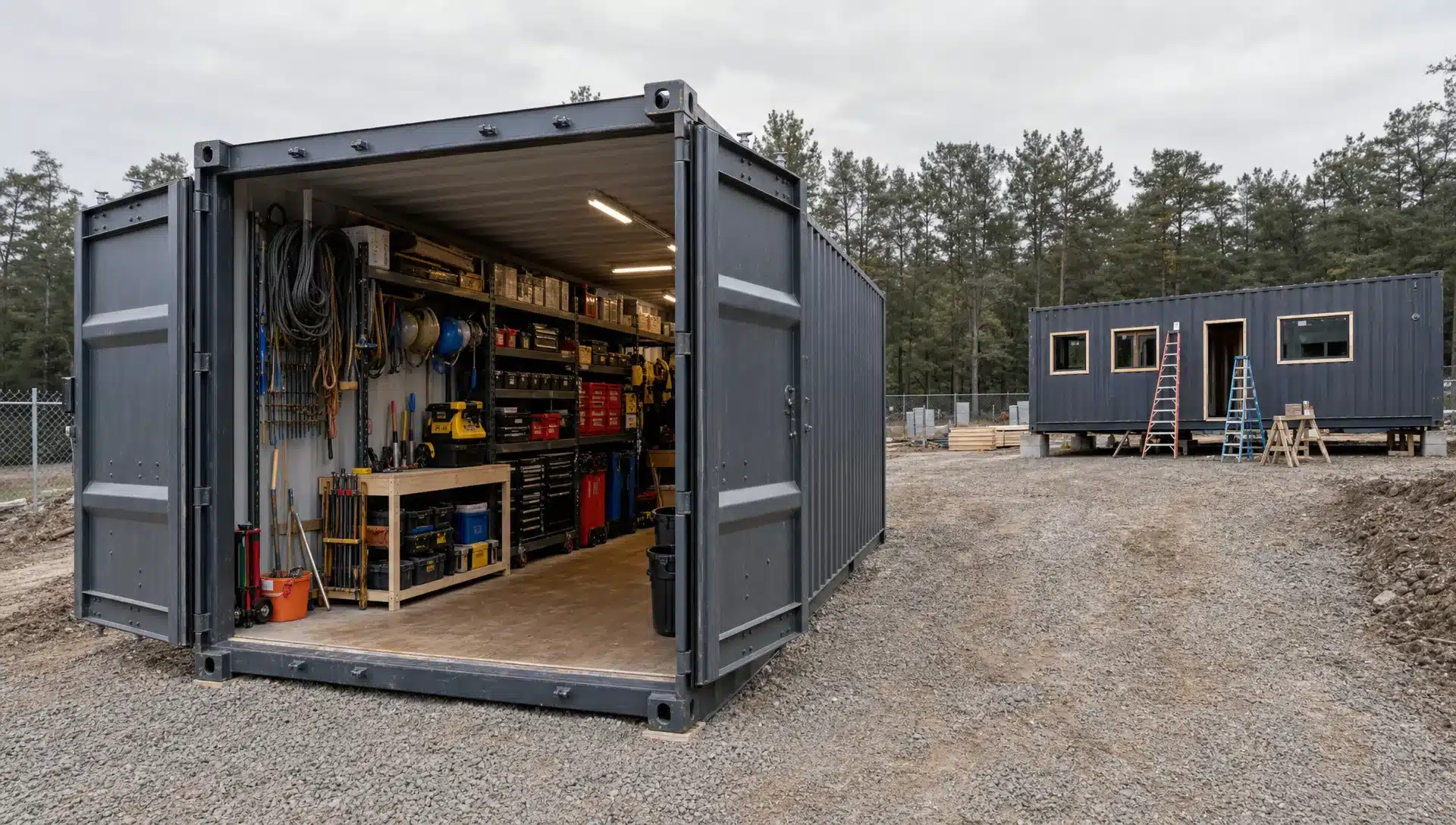
For contractors and home builders, recycled shipping containers provide secure ground-level storage for power tools, lumber, fasteners, fixtures, and jobsite supplies. Compared with temporary sheds or open trailers, the steel walls and lockable cargo doors provide a stronger barrier against weather and theft. Many Raleigh-area jobsites use containers because they can be dropped near the work zone and relocated as phases change.
Small businesses use containers for inventory overflow, seasonal stock, records, equipment, and temporary fulfillment areas. A retailer in the Southeast might use a Wind & Watertight unit for back-of-house inventory, while a customer-facing pop-up may justify a cleaner One-Trip container with modifications.
Homeowners and agricultural users often choose recycled containers for long-term property storage, feed, tools, ATVs, mowers, irrigation supplies, or workshop space. In rural North Carolina and across the Southeast, a container can be a practical alternative to building a shed, provided the site is level, accessible, and permitted where required.
Logistics managers should be more selective. If a container will carry cargo internationally or move through intermodal networks, Cargo Worthy condition and current documentation are important. If the container will stay on-site for storage, WWT may be enough.
From storage to builds: what changes?
When a recycled shipping container becomes part of a build, the decision-making changes. Storage buyers mainly care about weather resistance, security, delivery access, and floor condition. Build buyers must also consider engineering, code compliance, insulation, condensation control, HVAC, electrical service, plumbing, windows, doors, and the structural impact of cutouts.
Cutting large openings into side walls can reduce the container’s strength if the work is not properly reinforced. Roof penetrations, stacked layouts, decks, and foundations should be reviewed with qualified professionals. For anything intended for occupancy, speak with local building officials and experienced contractors before purchasing the container.
A recycled container can support many build types, including mobile offices, workshops, hunting cabins, pool houses, backyard studios, retail kiosks, and compact housing concepts. For buyers researching a finished compact living concept, the Fully Equipped 20ft Shipping Container Home is a useful reference point for how a 20ft footprint can be planned for minimalist, modern living.
If your project expands into a larger hybrid structure, such as a barndominium, workshop, metal building, or outdoor living space, coordination with an experienced turn-key general contractor can be valuable. In Oklahoma, for example, Summit Barndominiums & Outdoor Living focuses on concrete, metal buildings, garages, workshops, patios, and related site work, which are the kinds of trades that often overlap with container-based projects.
For container-specific upgrades, practical modifications can include lockboxes, personnel doors, roll-up doors, vents, insulation, windows, lighting, and electrical rough-ins. Lease Lane’s guide to custom shipping container modifications that pay off can help you prioritize improvements that add real function rather than unnecessary complexity.
Pro-Tip: prepare the site before delivery
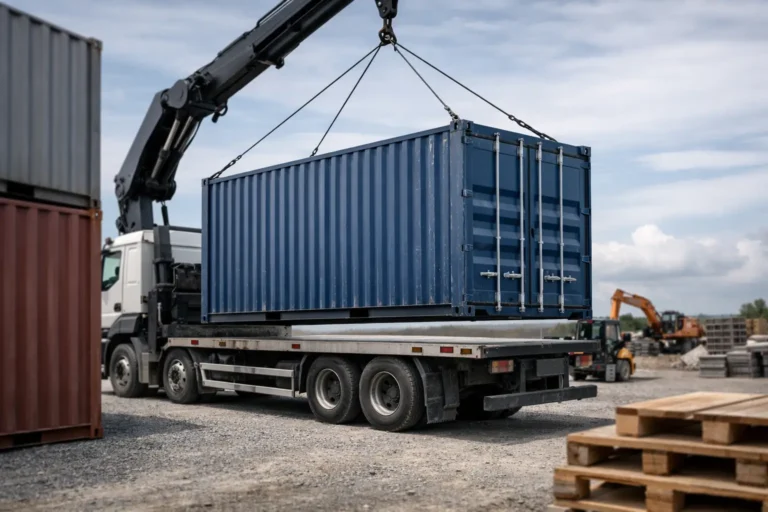
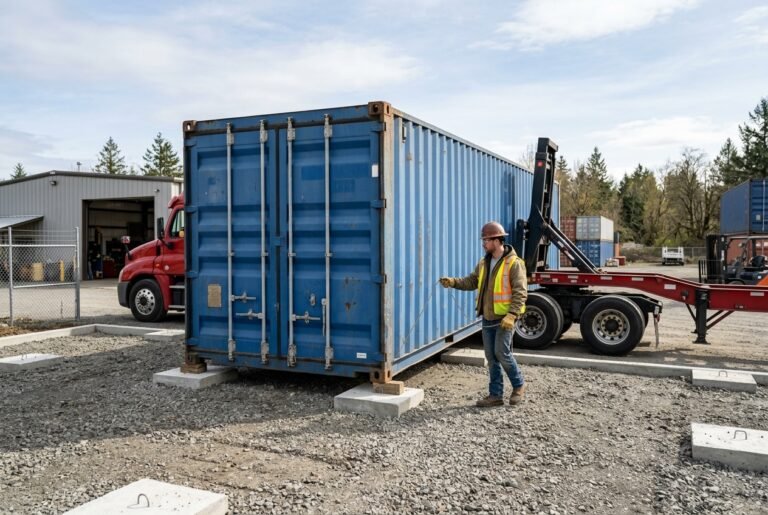
A recycled shipping container is only as useful as the spot where it lands. Before delivery in Raleigh, Wake County, or anywhere in the Southeast, plan the drop location carefully. A tilt-bed truck or crane delivery needs room to approach, unload, and leave safely.
Use these preparation steps before your container arrives:
- Create a level pad using compacted gravel, concrete, railroad ties, or properly placed piers.
- Keep the container off bare soil when possible to reduce standing moisture under the steel frame.
- Confirm truck access, overhead clearance, turning radius, and gate width before scheduling delivery.
- Place the doors where they can open fully without hitting fences, trees, slopes, or buildings.
- Check local rules for permits, setbacks, HOA requirements, and temporary storage limits.
For long-term placement, gravel is often a smart choice because it promotes drainage and can be adjusted more easily than a poured slab. Concrete pads may be preferred for offices, retail units, refrigerated containers, or builds where a more permanent foundation is needed. In areas with heavy rain, including much of North Carolina and the Southeast, drainage should be planned before the container arrives.
Permitting varies by municipality. A container used temporarily on an active jobsite may be treated differently than one used as a permanent accessory structure or occupied space. Raleigh property owners should verify requirements with the appropriate local office before delivery, especially for modified containers, electrical work, plumbing, or any habitable use.
What to ask before buying recycled shipping containers
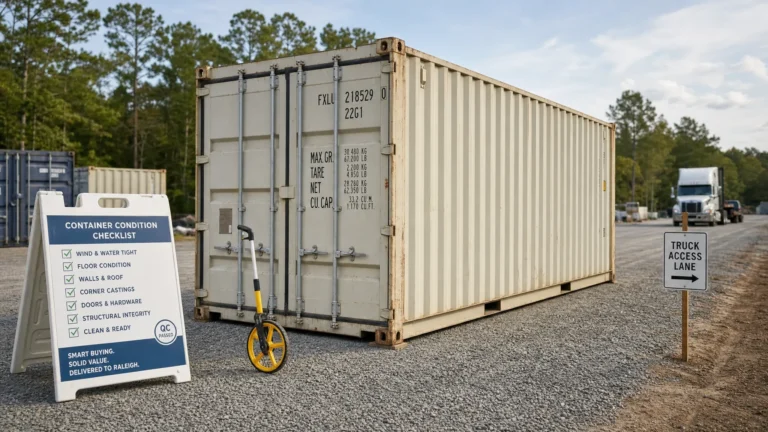
A transparent supplier should be able to explain the container grade, size, delivery method, and realistic condition. Photos are useful, but they do not replace a clear description of roof, floor, door, seal, and frame condition.
Before purchasing, ask whether the unit is One-Trip, Cargo Worthy, or Wind & Watertight. Ask if the floor has soft spots, whether the doors seal properly, and whether there are visible roof repairs or pinholes. For builds, ask whether the container is a standard height or High Cube, because interior headroom can change the design plan significantly.
Delivery questions matter just as much as condition. Confirm whether your site can receive a 20ft or 40ft unit, whether the truck can unload in the desired direction, and whether obstacles could affect placement. A low price is not a good deal if the container cannot be delivered safely or if site correction costs more than expected.
Frequently Asked Questions
Are recycled shipping containers the same as used containers? Not always. Many recycled shipping containers are used containers that have been repurposed for storage or builds. One-Trip containers are also repurposed after limited cargo use, but they are usually much cleaner and newer than typical used inventory.
Is a Wind & Watertight container good enough for storage? Often, yes. WWT containers are commonly used for static storage because they are intended to keep out wind and rain. They should still be inspected for door operation, seals, roof condition, rust, and floor strength.
Do I need Cargo Worthy if I am not shipping goods? Usually not. Cargo Worthy matters most when the container will be used for transport, especially export or intermodal cargo. For ground-level storage in Raleigh or elsewhere in North Carolina, a WWT or One-Trip unit may be more appropriate depending on condition and budget.
Are High Cube containers better for builds? High Cube containers are often preferred for offices, workshops, and living spaces because the extra height allows more room for insulation, ceiling finishes, lighting, and HVAC. They also require careful delivery planning because they are taller than standard units.
Can recycled shipping containers be used for homes or offices? Yes, but storage-grade selection is not enough. Occupied spaces require attention to structure, insulation, ventilation, moisture control, electrical work, plumbing, foundations, and local code requirements. Always involve qualified professionals for habitable builds.
Talk with Lease Lane Containers
Whether you need secure jobsite storage in Raleigh, a farm storage solution in North Carolina, a Cargo Worthy unit for logistics, or a container to start a modular build, Lease Lane Containers can help you compare grades, sizes, delivery access, and site preparation. For clear guidance on recycled shipping containers, contact the sales team at sales@leaselanecontainers.com or visit the Raleigh office.