Container Storage vs Self Storage Compared
A construction crew needs a secure place for tools before the next concrete pour. A farm needs protected storage beside the equipment shed. A homeowner needs room for seasonal items without making a weekly trip across town. In each case, container storage vs self storage is less about finding the cheapest advertised rate and more about choosing the storage model that works at the point of use.
Self-storage facilities offer convenience when you need a managed location away from your property. A shipping container provides durable, on-site storage that remains available whenever the job, operation, or household needs it. The better option depends on what you are storing, how often you need access, how long the need will last, and whether your site can receive a container safely.
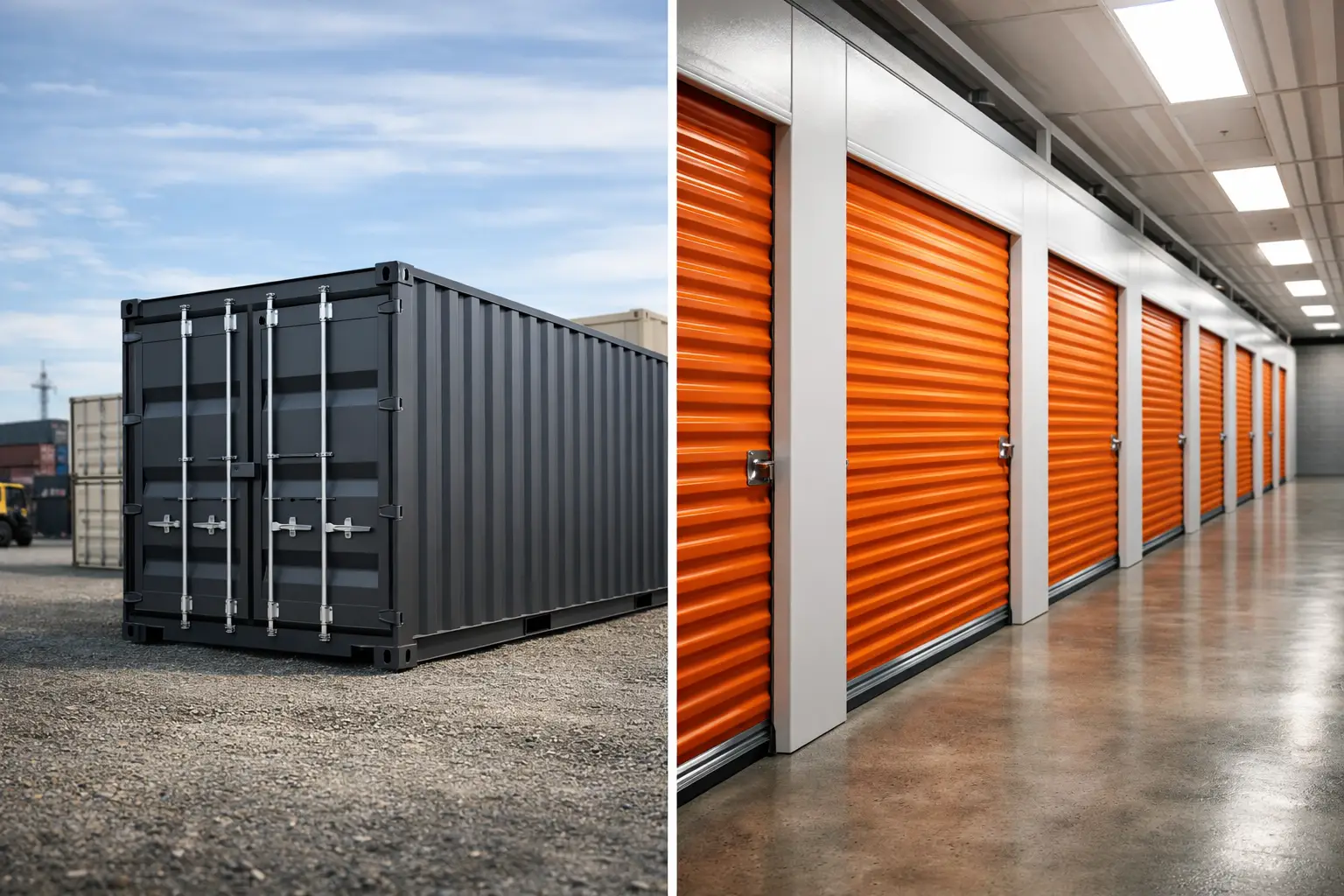
Container Storage vs Self Storage: The Core Difference
Self storage is space you rent at someone else’s facility. You drive your materials there, unload them, and access the unit during the facility’s stated hours or through its gate system. Unit sizes, security features, climate control, and monthly rates vary by location.
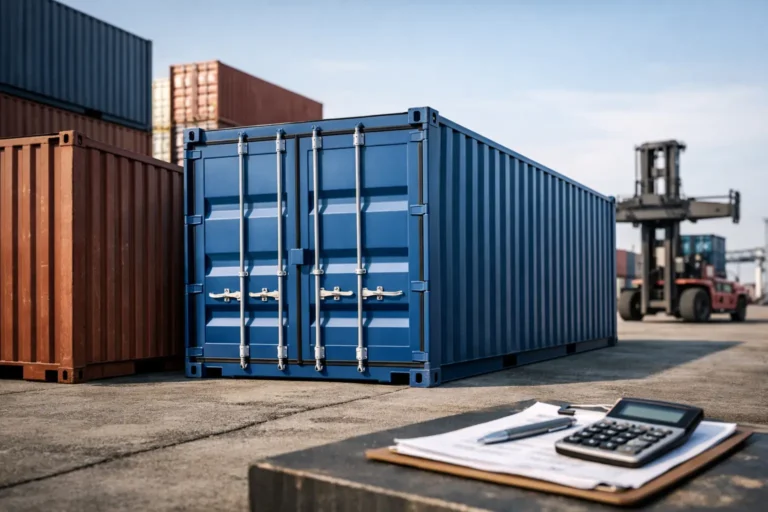
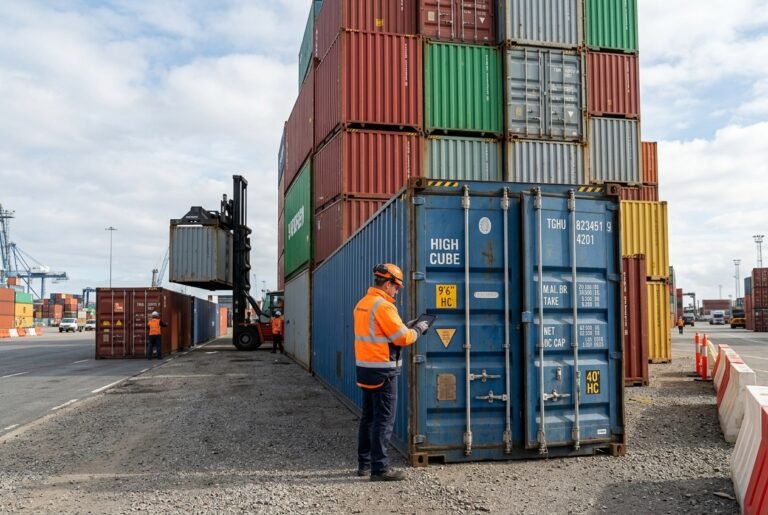
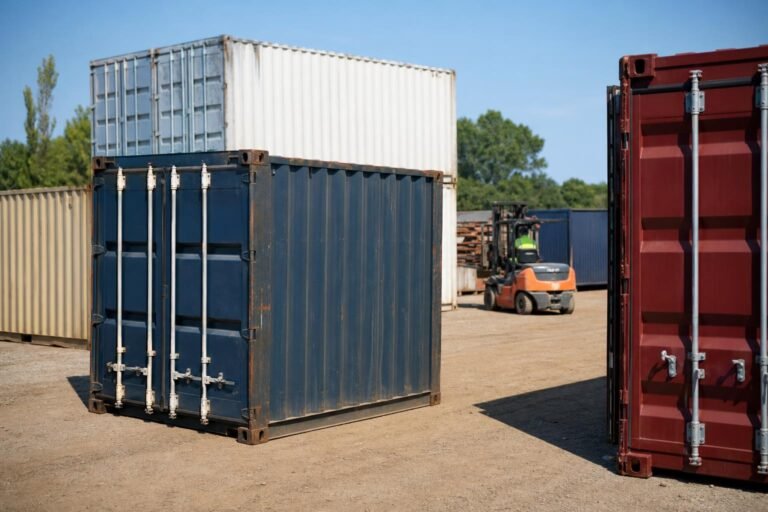
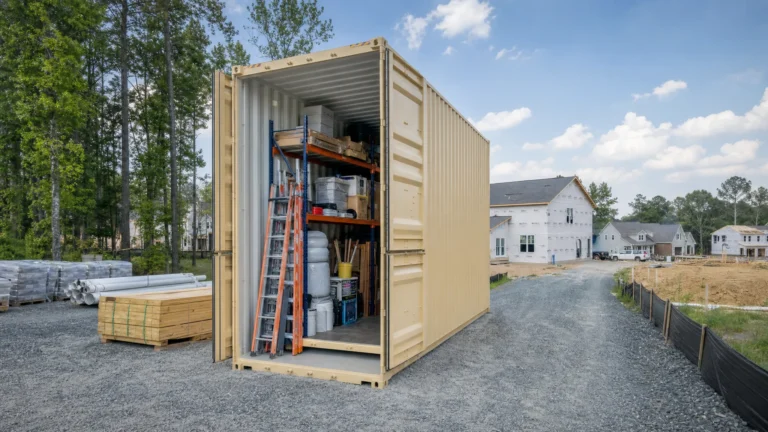
Container storage typically means a steel shipping container placed at your property, job site, farm, or business location. You may purchase the container for long-term use, rent it where that service is available, or use a container supplied as part of a project. Standard units commonly come in 20-foot and 40-foot lengths, with high-cube containers adding approximately one foot of interior height.
That difference changes the daily experience. A self-storage unit puts storage in a centralized facility. A container puts storage where the work happens.
Access: On-Site Availability Often Decides It
For contractors, agricultural operators, and businesses handling active inventory, travel time is a real cost. A crew that has to leave a site for fasteners, power tools, fittings, or replacement parts loses more than fuel. It loses productive hours.
A container on site allows access when the work requires it, including early starts and after-hours preparation. It is especially useful for equipment that needs to be secured at the end of every shift and retrieved again the next morning. The same principle applies to rural properties where the nearest self-storage facility may be a significant drive away.
Self storage can be the stronger choice when storage is occasional and off-site access is not a problem. It works well for apartment transitions, household overflow, college moves, archived files, and items you do not need during normal operations. A professionally managed facility may also provide features a remote property cannot, such as indoor hallways, elevators, climate-controlled units, and a staffed office.
Security Depends on the Whole Setup
Shipping containers are built from heavy-gauge Corten steel and designed for international freight. Their cargo doors use multiple locking bars, and the structure is inherently difficult to force open compared with a standard shed. For valuable tools and materials, a lockbox or welded lock protector can further shield the padlock from bolt cutters and prying.
Still, a container is not automatically secure just because it is steel. Its effectiveness depends on placement, lighting, access control, lock selection, and site activity. A container tucked behind a building with no lighting may need additional security measures, while one within view of an active shop or job-site camera system may be easier to monitor.
Self-storage facilities can offer perimeter fencing, controlled gate access, cameras, individual unit locks, and, in some cases, on-site management. Those are meaningful benefits for people who cannot supervise their own property. But facility security does not eliminate the need for insurance or careful inventory management. Ask what is actually monitored, whether access is recorded, and what coverage applies to your stored property.
Cost: Compare the Full Term, Not Just the Monthly Rate
Self storage has a predictable entry point. You pay a monthly rental fee, often with an administrative fee, insurance requirement, lock purchase, and possible rate changes over time. Moving items in and out also requires your vehicle, fuel, labor, and time.
A shipping container has a larger upfront cost if you buy it. The delivered price should account for the container size and condition, transport distance, delivery method, and site access. A clear quote should identify those factors before delivery, not after the truck arrives.
For a short-term need, self storage may be more economical because there is no capital purchase or site preparation. For multi-year storage at an active property, owning a container can become the more practical value. It remains a usable asset, can support changing business needs, and may retain resale value depending on condition and market demand.
Do not compare a 10-by-10 self-storage unit directly against a 40-foot container based only on price. Compare usable cubic space, access frequency, transportation costs, security needs, and the expected storage period. The lowest monthly number is not always the lowest operational cost.
Weather Protection and Climate Control
A properly graded Wind & Watertight container is designed to keep out wind and normal rainfall. For tools, machinery, construction materials, lawn equipment, and many household goods, that level of protection is often appropriate. Cargo Worthy containers meet a higher structural standard for international shipping, though they may still show cosmetic dents, patches, or surface rust from prior service.
Condition matters. A transparent seller should explain whether a container is one-trip, used WWT, Cargo Worthy, or refurbished, and what that designation means. One-trip containers generally offer the cleanest appearance and least wear. Used units can provide dependable storage at a lower purchase price when cosmetic perfection is not the priority.
Neither a standard steel container nor a non-climate-controlled storage unit automatically protects sensitive items from temperature swings and humidity. Condensation can form inside a container when warm, moist air meets cooler steel surfaces. If you are storing paper records, antiques, electronics, fabric, wine, or other moisture-sensitive goods, consider climate-controlled self storage or a container modified with insulation, ventilation, vapor control, and appropriate conditioning equipment.
Delivery and Site Preparation Are Part of the Decision
A self-storage unit requires no property preparation. That simplicity is a major advantage for renters, urban properties, and anyone without a suitable place to set a container.
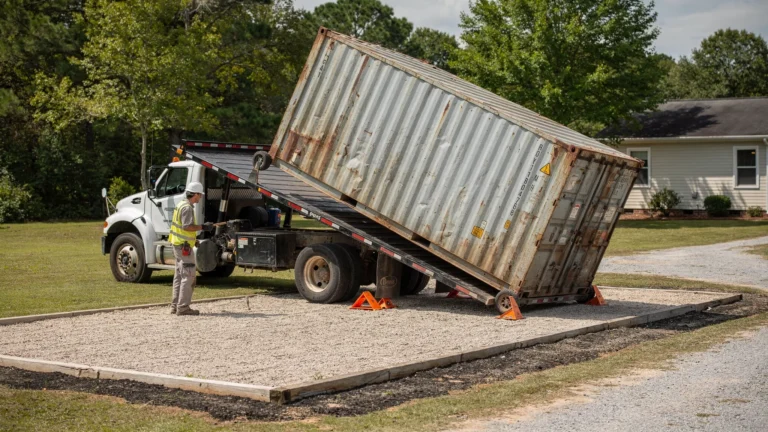
Container delivery requires planning. The delivery truck needs a clear approach, sufficient turning room, and overhead clearance away from branches, utility lines, and low structures. Tilt-bed delivery needs room for the container to slide off the truck, while ground-level delivery methods may be better suited to tighter sites. The unloading area should be firm, level, and accessible in all expected weather conditions.
A container does not always require a full concrete slab, but it should not sit directly in standing water or unstable soil. Many sites use compacted gravel and properly placed concrete blocks, piers, railroad ties, or a slab based on local soil conditions and intended use. Keeping the corner castings supported and the container reasonably level helps doors operate correctly and reduces long-term stress.
Before ordering, check local zoning rules, homeowners association requirements, setback rules, and permit requirements. These vary by jurisdiction. A residential neighborhood may restrict container placement or appearance, while an industrial site may have fewer limitations. Zero-surprises planning means confirming these details before scheduling delivery.
Appearance, Flexibility, and Long-Term Use
Self storage keeps visual clutter off your property. For homeowners in regulated neighborhoods, that may be reason enough to choose it. It is also easy to change unit sizes or end the rental when your needs change.
A container is more visible, but it can do more than store boxes. It can serve as a job-site tool room, agricultural supply storage, workshop shell, equipment enclosure, inventory overflow space, or the starting point for a mobile office or modular build. Paint, shelving, personnel doors, windows, electrical work, ventilation, and interior finishes can improve its function, provided modifications are planned correctly and local codes are followed.
This flexibility favors buyers with a stable property and a defined long-term need. It is less compelling for someone who expects to move soon or only needs a place for a few household items during a brief transition.
Which Option Fits Your Situation?
Choose self storage when you need a short-term solution, climate-controlled space, a managed location, or you do not have a compliant and accessible site for a container. It is also a sensible answer when your stored items are light, limited in volume, and rarely needed.
Choose container storage when immediate on-site access, durable steel security, and long-term utility matter most. It is often the better operational fit for construction sites, farms, warehouses, retail overflow, and rural properties where distance to a facility adds cost and delay.
The decision should begin with a site walk, not a rate sheet. Measure the approach, identify what must be stored, decide how often it will be used, and be honest about the storage duration. When those details are clear, the right storage choice usually becomes clear as well.