Can a Container Sit on Gravel?
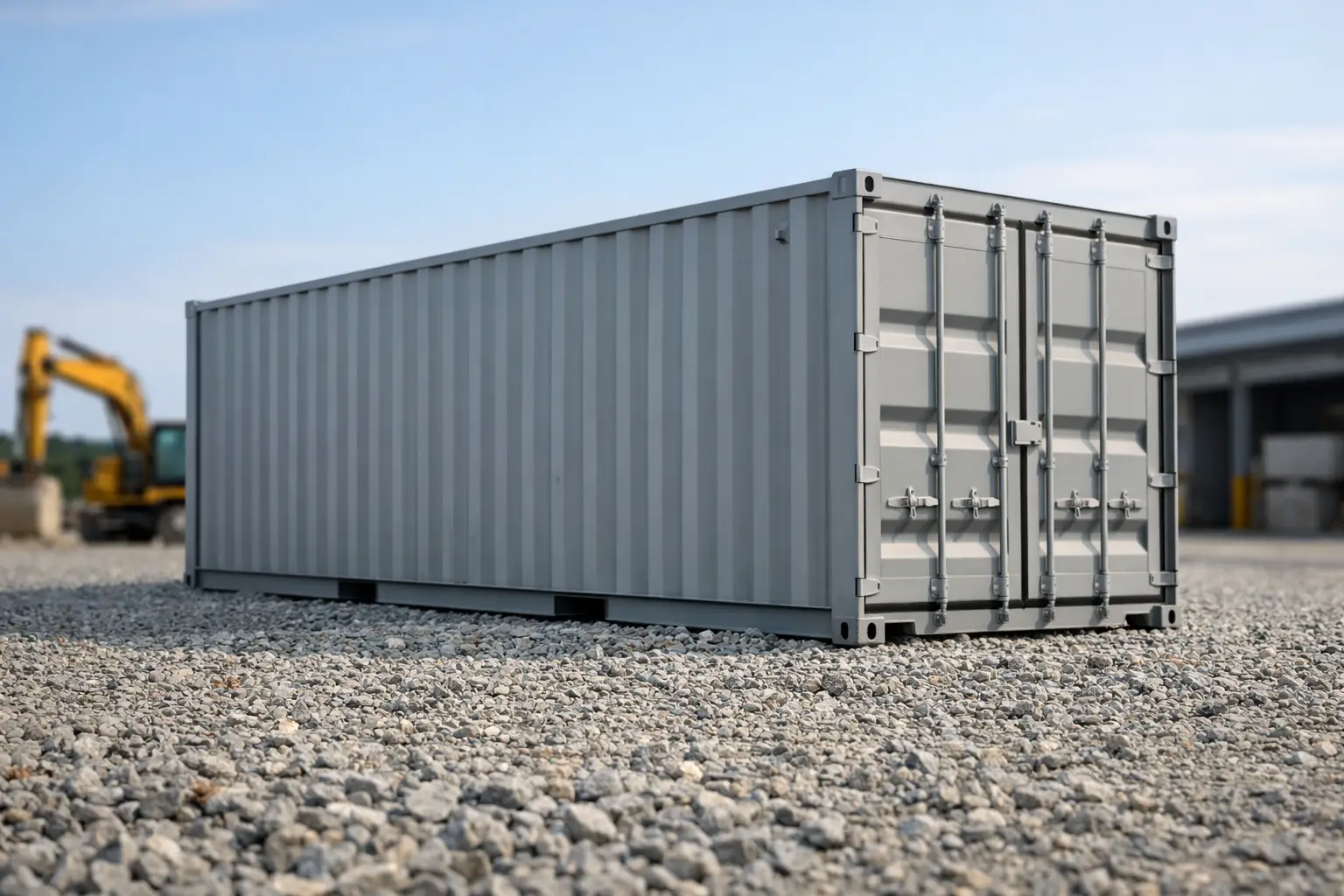
A shipping container that rocks when you open the doors is not sitting on a foundation – it is sitting on a problem. We hear the question can a container sit on gravel all the time, especially from contractors, farmers, and property owners who want a practical base without the cost of a full concrete pad. The short answer is yes, a container can sit on gravel, but only if the gravel base is built correctly for the container’s weight, use, and drainage conditions.
Can a container sit on gravel for long-term use?
Yes, in many cases gravel is a solid and cost-effective base for a shipping container. It is often the right choice for ground-level storage, job site setups, agricultural properties, and rural installations where drainage matters more than appearance. A well-prepared gravel pad can support a 20ft or 40ft container safely and help reduce standing water around the steel.
The catch is that gravel alone is not the standard – site preparation is. If the surface is soft, uneven, poorly compacted, or prone to washout, the container can settle out of level. That creates pressure on the corner castings, twists the frame, and makes doors hard to open and close. For storage containers, that is frustrating. For custom builds, offices, or containers being stacked, it can become a structural issue.
Shipping containers are designed to carry loads through their corner posts and corner castings. That means the support points matter more than most first-time buyers expect. If the gravel base is not stable under those load points, the container may not perform the way it should.
When gravel works well
Gravel works best on sites with decent native soil, room for grading, and a use case centered on storage rather than a finished occupied structure. For a contractor needing secure tool storage on a job site, a compacted gravel pad is often faster to install and easier to maintain than concrete. The same is true for farms needing equipment or feed storage in an area where water needs to move away from the container instead of pooling around it.
Gravel is also useful when you want flexibility. If the container may be relocated later, a gravel pad is easier to remove or rework than a permanent slab. That matters for temporary staging areas, pop-up business uses, and properties still being developed.
Another advantage is drainage. Concrete is strong and clean, but if the surrounding site does not slope properly, water can still collect around the pad. A properly built gravel base naturally helps manage runoff and reduces prolonged ground contact with moisture.
When gravel is not the best choice
There are situations where gravel is not enough by itself. If the ground underneath is very soft, highly expansive, or consistently saturated, the gravel may shift or settle over time unless the subgrade is improved first. Clay-heavy sites can be especially tricky because they hold water and change with the seasons.
Gravel is also less ideal when the container will be converted into a workspace, retail unit, or living structure with stricter requirements for floor level, anchoring, and utility tie-ins. In those cases, concrete piers, strip footings, or a full slab may be the better long-term foundation.
Stacking is another point where caution matters. A single container on gravel is common. Multiple containers, especially loaded units, demand more engineering and tighter control of bearing points. The same goes for refrigerated containers, which are heavier and have equipment that benefits from a more stable, level setup.
What a proper gravel base looks like
A workable gravel base is not just a few inches of stone dumped on the ground. It starts with clearing vegetation and organic material, because roots and topsoil compress and decay. After that, the area needs to be graded and compacted.
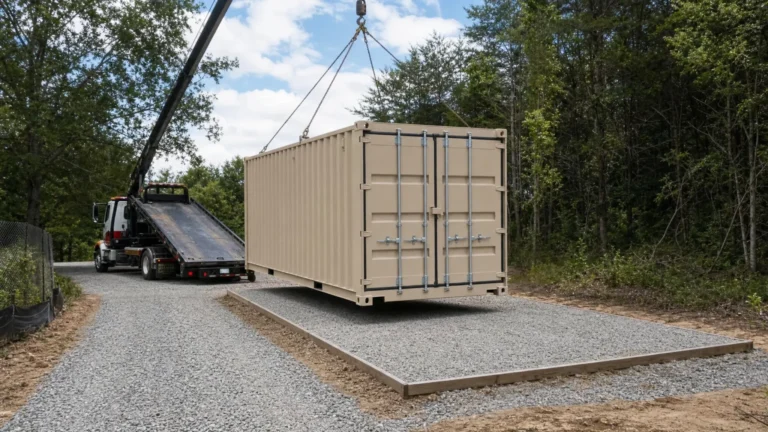
In most cases, the pad should extend beyond the footprint of the container. That gives the delivery equipment room to place the unit and helps keep the edges from eroding. The exact dimensions depend on the container size and delivery method, but extra margin around the perimeter is almost always beneficial.
The best gravel base usually includes a compacted sub-base and crushed stone with good interlock. Angular aggregate performs better than rounded stone because it locks together under load. Depending on site conditions, a geotextile fabric under the stone can also help separate the gravel from soft soil and reduce pumping or mixing over time.
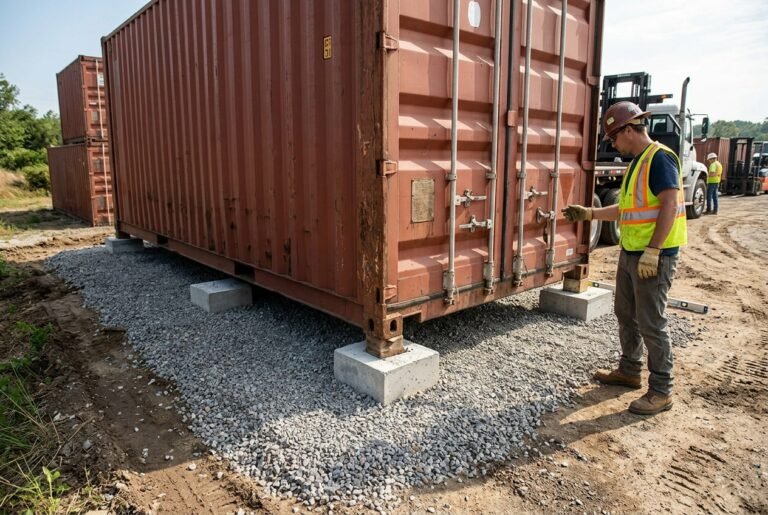
Level matters as much as strength. Containers do not need to be laser-perfect for simple storage, but they do need to be reasonably square and level across the corner supports. Even a small twist can affect the doors. If the doors are difficult on delivery day, that is usually a sign the base needs adjustment before the container is loaded with materials.
How much gravel is enough?
There is no one-size-fits-all depth because soil conditions drive the answer. On firm, well-drained ground, a thinner compacted gravel section may be enough for a standard storage container. On softer soil, you may need a deeper base or additional reinforcement.
This is where buyers run into avoidable problems. They plan for the weight of the empty container but forget the contents. A loaded 40ft container holding tools, equipment, inventory, or building materials can place far more stress on the support points than an empty unit sitting in a backyard.
For that reason, base design should reflect both container size and expected payload. A site prepared for an empty 20ft container may not be suitable for a heavily loaded 40ft high cube.
Corner support versus full-length support
Because shipping containers are engineered to transfer most structural loads through the corners, many setups use support at the corner castings rather than continuous support under the entire floor. On gravel, that often means making sure the corner areas are especially well compacted and stable.
That said, some owners prefer a more continuous bearing surface to reduce floor bounce or provide extra reassurance on imperfect ground. Neither approach is automatically wrong. The right answer depends on the container condition, intended use, soil bearing capacity, and how permanent the installation needs to be.
For used containers, especially older WWT units, keeping the frame aligned is important. A base that allows uneven settlement can exaggerate any existing wear in the doors or frame. Cargo Worthy and one-trip containers typically start out with tighter geometry, but even the best box can rack if it is set badly.
Delivery matters as much as the pad
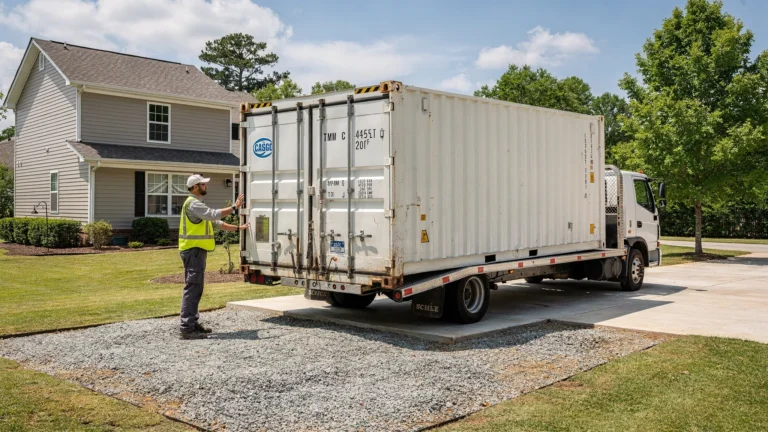
A container can sit on gravel, but it also has to be delivered onto gravel. Those are not always the same thing. Tilt-bed and ground-level delivery methods require stable access, sufficient clearance, and a surface that will not rut under the truck’s weight.
This is where site prep often gets overlooked. The container pad may be ready, but the truck path is not. Soft shoulders, low tree limbs, tight gates, and slopes can turn a routine drop into a reschedule. For customers who want zero surprises, it makes sense to think through both the final resting place and the route the equipment will take to get there.
If the site is remote or recently graded, the access area may need the same gravel treatment as the pad itself. A strong base at the destination does not help if the delivery truck cannot reach it safely.
Common mistakes with gravel pads
The most common issue is underestimating compaction. Loose gravel looks finished before it is actually ready. Without proper compaction, the stone shifts under point loads and the container settles unevenly.
Poor drainage is another frequent problem. Gravel helps with drainage, but it does not fix a low spot. If runoff from surrounding ground flows toward the container, water will still collect around the base. Over time, that creates mud, erosion, and more difficult site access.
Another mistake is ignoring follow-up checks. Even a well-built pad can settle slightly after delivery, especially on newer fill. It is smart to inspect the container after placement, test the doors, and recheck level if the unit will remain in place for years.
So, can a container sit on gravel without issues?
Yes – if the gravel base is designed like a foundation instead of treated like a shortcut. For many storage applications, gravel is one of the most practical choices because it balances cost, drainage, and speed of installation. But gravel is not forgiving of poor prep, soft soils, or rushed delivery planning.
If you are placing a container for tools, equipment, seasonal inventory, or farm storage, a compacted gravel pad is often a very good solution. If you are planning a container office, a custom build, stacking, or placement on difficult ground, it is worth getting more specific about support and leveling before the unit arrives.
The best site prep is the kind that keeps the container boring after delivery – doors open cleanly, water moves away, and nothing shifts when the weather changes.