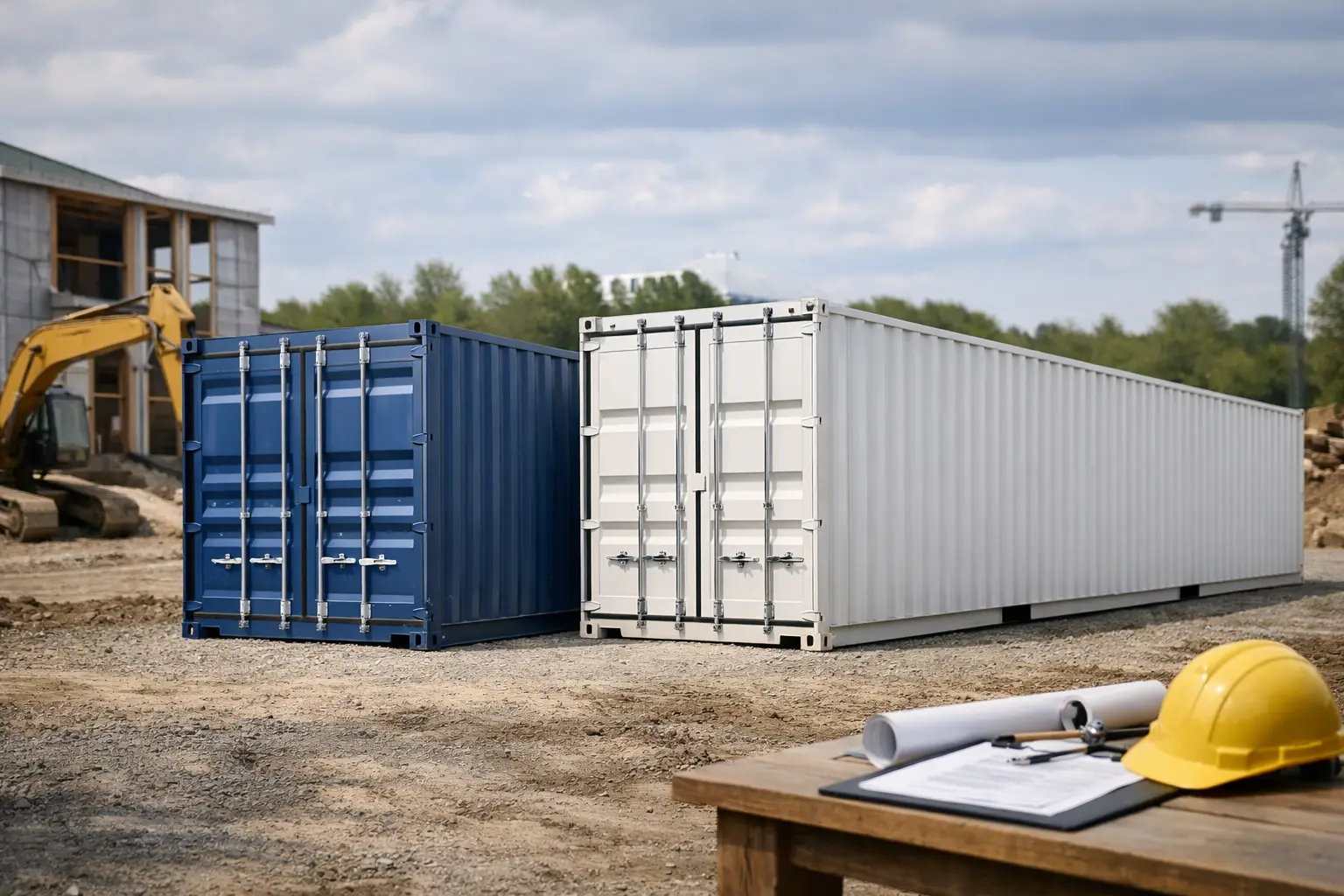
Do Shipping Containers Need Permits?
If you are asking do shipping containers need permits, the honest answer is usually yes – or at least you need to verify that your local rules do not require one. That distinction matters. A container used for temporary job-site storage may be treated very differently from a container placed behind a retail building, converted into an office, or set on private residential land for long-term use.
The biggest mistake buyers make is assuming the container itself is the only issue. In practice, local officials usually care more about how the unit will be used, where it will sit, how long it will stay, and whether site work or utilities are involved. A 20-foot storage container on compacted gravel can trigger a different review than a 40-foot high-cube container with electrical service, ramps, and customer access.
Do shipping containers need permits for every use?
Not for every use, and not in every jurisdiction. But permit requirements are common enough that you should treat them as part of the buying process, not an afterthought.
Most cities and counties regulate shipping containers through zoning, building, land use, or temporary structure rules. Some areas allow containers by right in industrial zones but restrict them in residential neighborhoods. Others allow short-term storage containers during active construction but require removal after a fixed number of days. Rural properties often have more flexibility, but even there, setbacks, floodplain rules, or homeowners association restrictions can still apply.
That is why a simple yes-or-no answer rarely holds up. The real question is this: what approvals apply to your specific use case?
What local officials usually look at
For contractors and commercial buyers, zoning is usually the first checkpoint. Local staff may ask whether the container is for equipment storage, inventory overflow, a field office, or a modified workspace. They may also ask if the property is already approved for that use and whether the container is a temporary or permanent addition.
For homeowners, the review often gets more specific. The planning office may want to know where the container will be placed, how visible it is from the street, whether it sits on a permanent foundation, and whether you plan to modify it. If the container will be used as a workshop, studio, or living space, the review typically becomes more involved.
Three issues come up again and again.
First, placement. Setback rules can dictate how far the container must be from property lines, roads, easements, septic systems, and existing structures. Second, site conditions. If your land slopes, holds water, or sits in a regulated flood area, approval may require more than a simple drop-off. Third, intended use. Storage is often simpler to approve than occupancy.
Storage container versus building conversion
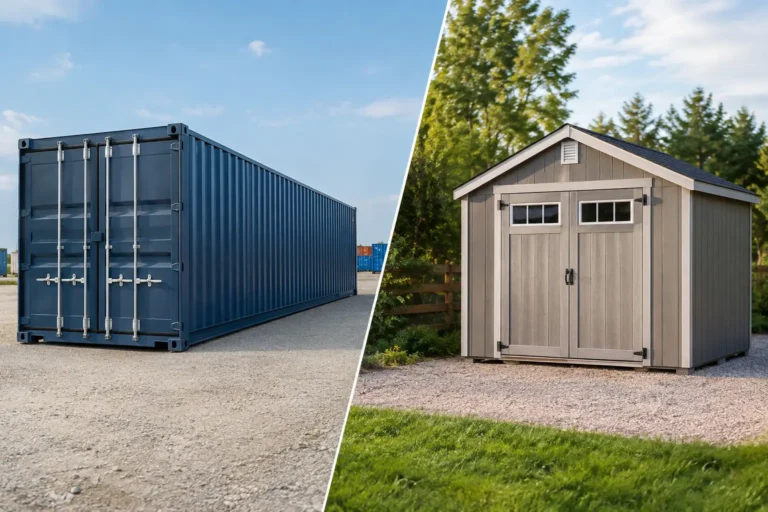
A standard ground-level storage container is usually the easiest path. If it remains a storage unit with no plumbing, no occupied interior, and minimal site disturbance, the permitting process may be limited to zoning approval or a temporary use permit.
A container conversion is different. Once you add insulation, electrical, plumbing, HVAC, windows, doors, or occupancy, local code enforcement may treat the unit more like a building than a storage box. At that point, you may need stamped plans, building permits, trade permits, inspections, and foundation details.
This is where buyers can get surprised. A container is built from durable Corten steel and engineered for transport, but that does not automatically mean it satisfies local building code for habitable or commercial occupancy. Structural modifications, especially cutting large wall openings, can also require engineered reinforcement.
Temporary permits are common on job sites
On construction sites, shipping containers are often allowed as temporary support structures, but the approval is not always automatic. Some municipalities tie the container to an active building permit. Others limit how long it can remain on-site or how many units are allowed.
That matters for general contractors who need quick, secure storage for tools, copper, fixtures, and high-value equipment. A city may approve a container during active construction but require removal once the certificate of occupancy is issued for the main project. If you plan to keep the unit for ongoing maintenance storage, that may require a separate review.
In these cases, speed matters, but so does paperwork. It is better to confirm the rules early than to pay for delivery twice because the first placement was not approved.
Delivery access can affect approval
Permits are not only about the container sitting on your property. They can also intersect with delivery logistics.
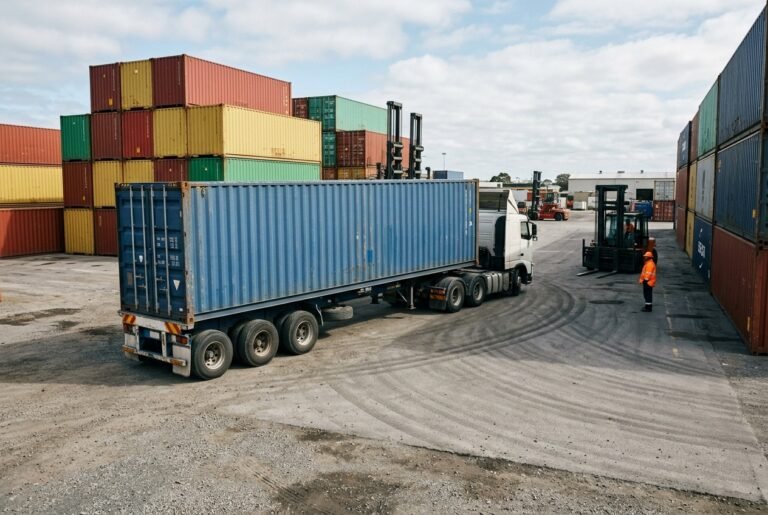
A 20-foot container is easier to place than a 40-foot or 45-foot unit, but every delivery still needs adequate clearance, turning radius, and stable ground. Tilt-bed and ground-level drop-offs need room for the truck to maneuver and safely lower the unit. Some localities care if the delivery will block a lane, impact traffic flow, or require work near utilities.
This is especially relevant in tighter urban and suburban settings. If a container must be set in a backyard, behind a commercial strip, or near overhead lines, the delivery plan may need just as much attention as the permit itself. Good site preparation prevents more problems than most buyers realize.
HOA rules and private restrictions
Even if a city or county allows the container, private restrictions can still stop the project.
Homeowners associations often regulate exterior appearance, accessory structures, screening, and temporary storage units. Deed restrictions can also limit what is visible from the road or what materials are allowed on a lot. Agricultural and rural buyers sometimes assume they are exempt from everything, but that is not always the case if the property is part of a managed development.
This is one of the more frustrating permit-related issues because local approval does not override private covenants. Before delivery is scheduled, it is worth confirming both.
How to check permit requirements without wasting time
Start with your local planning or zoning department, not just the building department. Ask them how shipping containers are classified for your property and intended use. Be specific. Saying “I want a container” is too vague to get a reliable answer.
Tell them the container size, whether it is new or used, where it will sit, whether it is temporary or permanent, and whether you plan to add utilities or make structural modifications. If this is a business site, mention your zoning district and current property use. If this is a residence, mention whether the container will be visible from the street and whether any grading or foundation work is planned.
The more precise you are, the fewer surprises you will get later. That same principle applies when working with your supplier. Verified dimensions, clear delivery requirements, and honest discussion about site conditions save time on both sides.
Common situations where permits are more likely
You are more likely to need permits or formal approval if the container will be used as an office, workshop, retail space, or dwelling. The same is true if you are installing electrical service, plumbing, stairs, decks, ramps, or a permanent foundation.
Approval is also more likely to be required when the unit stays long-term, sits in a visible front-yard location, or is placed on commercially zoned property with customer traffic. Large modifications, multiple stacked containers, and refrigerated containers with power connections usually trigger a closer review as well.
By contrast, a single storage container on private land with no utilities and no occupancy may face a lighter process. But lighter does not mean exempt.
What buyers should ask before ordering
Before you schedule delivery, confirm four things: whether the property allows containers at all, whether setbacks limit placement, whether your intended use changes the permit category, and whether utilities or structural modifications require separate approvals.
This is also the right time to think about container grade and finish. A Wind & Watertight unit may work well for secure storage, but if appearance matters for a customer-facing site or a residential property, a one-trip container often creates fewer objections from neighbors and property managers. Condition does not determine permit approval by itself, but presentation can influence how smoothly a project moves through review.
For buyers who want no fine print and no surprises, this is where an experienced container supplier adds value. The right supplier cannot issue permits for you, but they can help you choose the right size, understand delivery constraints, and avoid ordering a unit that does not fit your site or use case.
A shipping container is straightforward steel equipment. The rules around it are not always straightforward. If you treat permitting as part of site planning instead of a last-minute hurdle, you will make better decisions, avoid costly re-deliveries, and get the container working for your project faster.