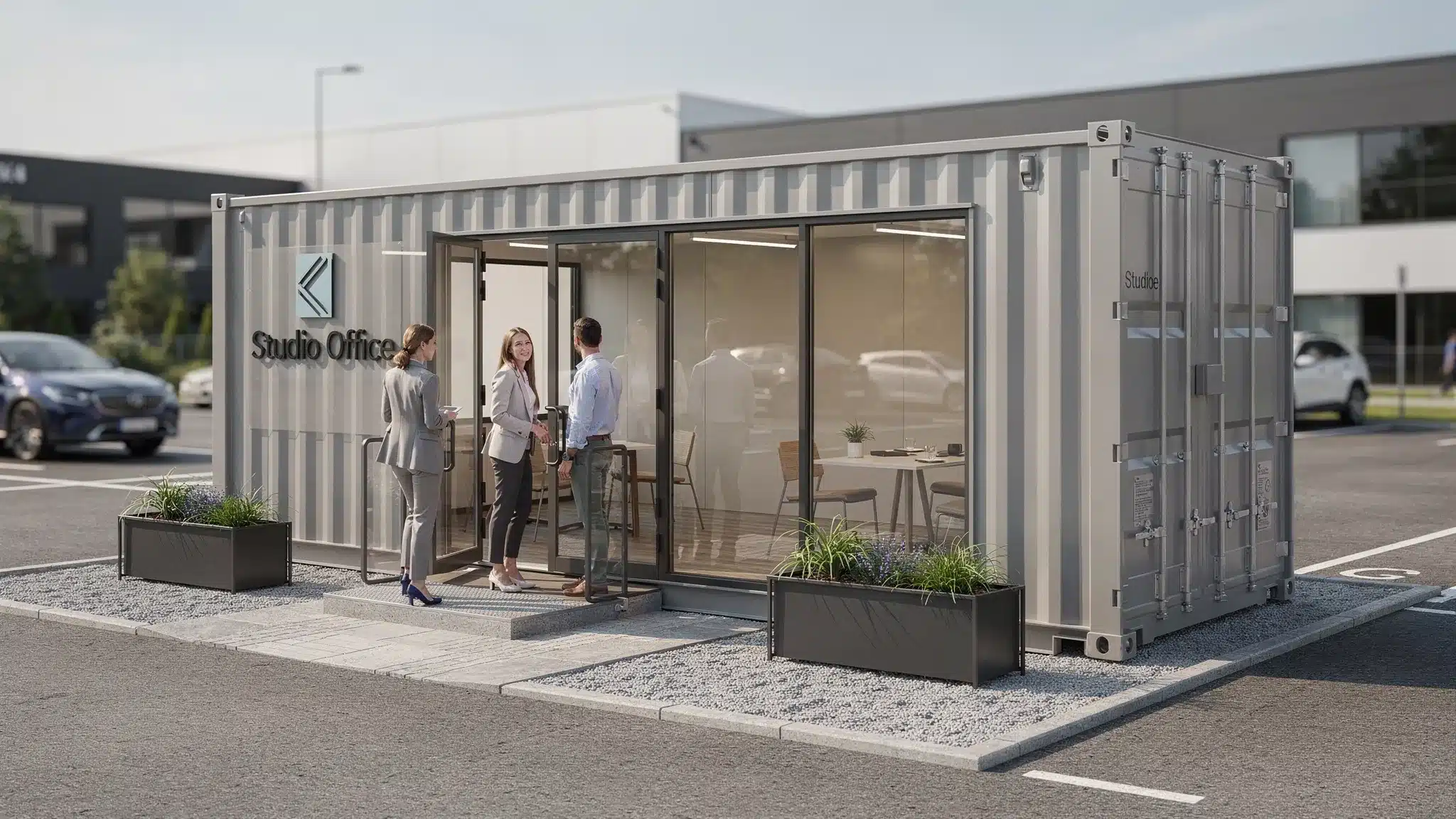
Repurposed Shipping Containers for Offices and Retail
Repurposed shipping containers have moved well beyond basic storage. For small businesses, contractors, real estate developers, and property owners, they can become durable offices, retail pop-ups, check-in kiosks, mobile showrooms, farm stores, and back-of-house inventory spaces with a faster deployment timeline than many conventional builds.
The key is choosing the right container shell before you invest in doors, windows, insulation, electrical, HVAC, signage, and finishes. A container that works for jobsite tool storage may not be the right base for a customer-facing retail unit in downtown Raleigh or a polished sales office on a development site in the Southeast.
This guide explains how to evaluate repurposed shipping containers for office and retail projects, including size selection, container grades, modification planning, site preparation, and delivery considerations.
Why Repurposed Shipping Containers Work for Offices and Retail
Shipping containers are built for global transport, not decoration. That is exactly why they are useful for commercial conversions. Standard ISO containers are designed around durable steel framing, corner castings, and consistent dimensions that make them easy to transport, stack, and modify when handled correctly.
Most dry shipping containers are made from Corten Steel, a weathering steel designed to resist corrosion better than ordinary mild steel. Corten Steel is not maintenance-free, especially in humid climates like North Carolina, but it gives container projects a strong structural starting point.
For offices and retail, the main advantages are practical:
- Faster installation than many stick-built structures
- Strong exterior shell for security and weather resistance
- Modular layouts that can expand over time
- Transportable format for temporary or seasonal use
- Suitable footprints for tight urban, commercial, farm, and jobsite locations
- Reuse of existing industrial equipment, which can support sustainability goals
For Raleigh-area businesses, this flexibility is especially useful. A container office can support a construction project in Wake County, a retail kiosk can serve a seasonal event near the Triangle, and a 40ft High Cube unit can become a semi-permanent showroom for a growing brand.
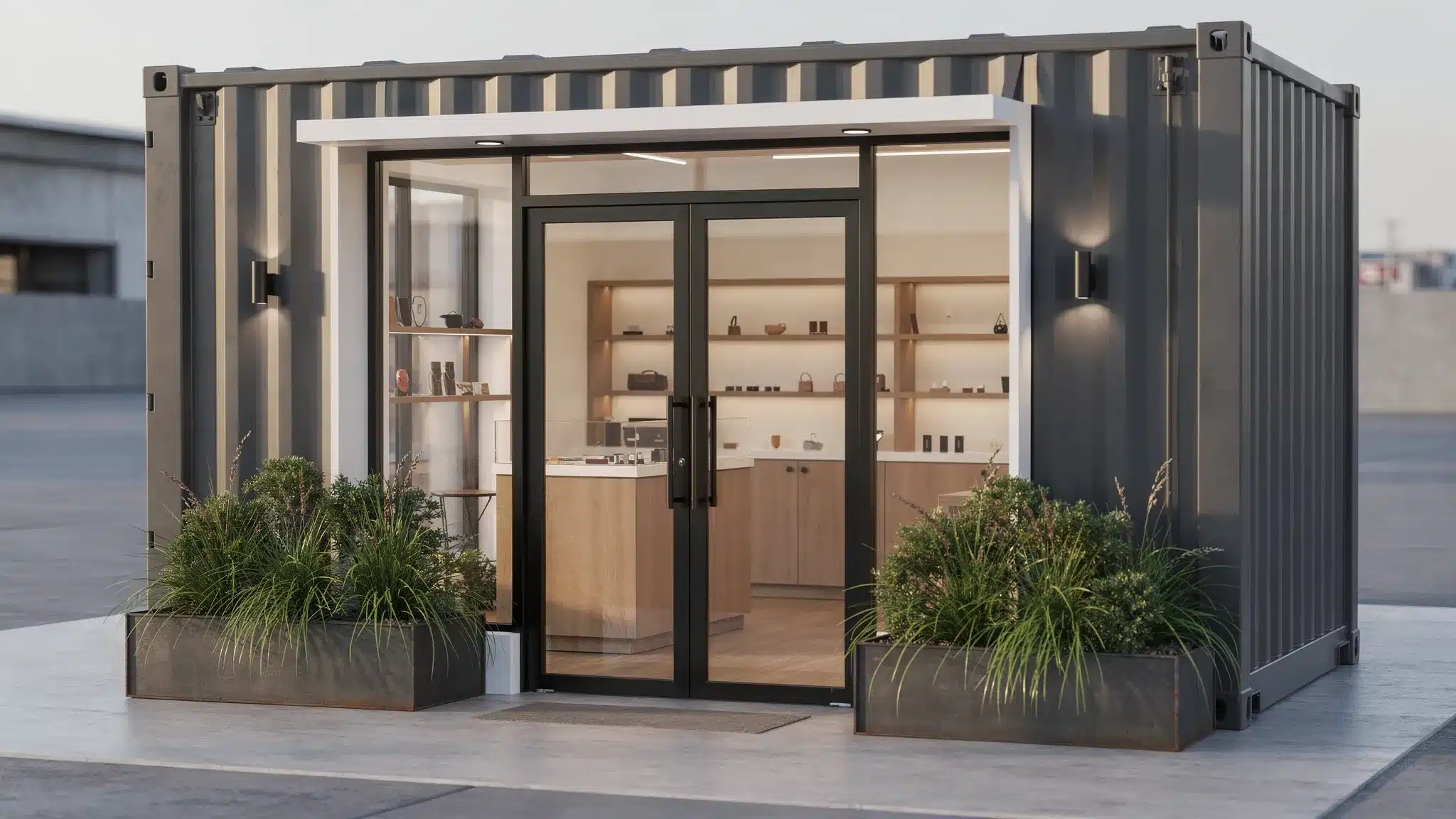
Office vs. Retail: Start With the Use Case
A shipping container office and a container retail space may look similar from the outside, but they have different planning requirements.
An office conversion prioritizes comfort, privacy, storage, HVAC, data access, and daily workflow. A retail conversion prioritizes customer movement, storefront visibility, point-of-sale access, lighting, display space, branding, and code-compliant entry.
| Project type | Best-fit uses | Key planning priorities | Common container choice |
|---|---|---|---|
| Jobsite office | Contractor office, plan review room, security station | Durability, climate control, secure locks, easy relocation | 20ft or 40ft standard |
| Sales office | Real estate development, leasing office, model-site support | Clean appearance, windows, restroom planning, signage | 40ft High Cube |
| Retail pop-up | Apparel, coffee, merchandise, event sales | Customer access, display layout, electrical, branding | 20ft or 40ft High Cube |
| Farm store | Produce sales, equipment check-in, seasonal retail | Ventilation, shade, pest control, durable flooring | 20ft standard or High Cube |
| Mobile showroom | Product demo, brand activation, roadshow | Premium exterior, doors, lighting, transport readiness | One-Trip 20ft or 40ft |
A compact 20ft container is often easier to place on small lots, event sites, and tight commercial spaces. A 40ft container provides more usable interior space for desks, product displays, storage, or customer circulation. If you are still deciding between sizes, Lease Lane Containers has detailed planning resources for 20ft containers and 40ft High Cube container dimensions to help compare real-world space needs.
Choosing the Right Container Grade for a Commercial Conversion
Container grade matters more for offices and retail than it does for simple storage. Once you cut openings, frame walls, add insulation, and finish the interior, the original shell becomes the foundation of the entire project.
One-Trip Containers
A One-Trip container is typically the best starting point for customer-facing offices and retail units. These containers have usually made one loaded ocean voyage from the factory before entering the resale market. They are not untouched, but they are generally the closest option to new.
For retail and office projects, One-Trip containers offer several advantages: cleaner appearance, fewer dents, better floors, newer door gaskets, more consistent paint, and longer remaining service life. If the container will sit in a visible location or carry your brand, the cleaner exterior can reduce prep work before painting, cladding, or signage.
Cargo Worthy Containers
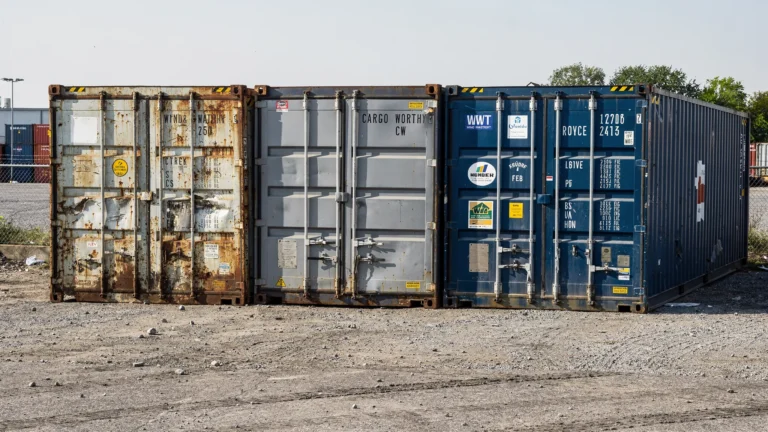
Cargo Worthy, often abbreviated CW, means the container is structurally suitable for cargo transport and can meet inspection standards for shipping use when properly certified. These units are used, so they may show dents, repairs, surface rust, and cosmetic wear, but the structure should remain sound.
A Cargo Worthy container can be a smart option for budget-conscious commercial projects, especially if the unit will be heavily modified, painted, or clad. For example, a contractor office or back-lot retail support unit may not require a near-new shell, but it should still have solid corner posts, rails, flooring, and doors.
Wind and Watertight Containers
Wind and Watertight, or WWT, containers are used containers that keep out normal wind and rain when properly closed. They are commonly used for stationary storage, but they are not necessarily certified for ocean transport. WWT units often have more visible wear than One-Trip or Cargo Worthy containers.
For office or retail conversions, WWT units require careful inspection. They may work for non-public support spaces, storage-connected offices, or budget builds, but the cost of repairing floors, removing odors, sealing pinholes, replacing gaskets, and correcting rust can reduce the upfront savings.
For a deeper look at grade selection, review Lease Lane Containers’ guide to used shipping container grades before committing to a conversion shell.
Standard vs. High Cube: Why Interior Height Matters
A standard shipping container is typically 8 feet 6 inches tall on the exterior. A High Cube container is typically 9 feet 6 inches tall, giving you roughly one extra foot of exterior height. That extra height can make a major difference once you add commercial finishes.
In an office or retail conversion, you may need space for:
- Floor build-up or finished flooring
- Ceiling framing
- Spray foam, mineral wool, or rigid insulation
- Electrical conduit and lighting
- HVAC ducting or mini-split lines
- Interior wall panels
- Signage and display fixtures
A standard container can work well, especially for simple offices or kiosks, but a High Cube often feels more comfortable after insulation and ceiling materials are installed. For retail, the additional height also improves display flexibility and customer experience.
If your project involves a premium interior, frequent customer visits, or long workdays, a High Cube container is worth serious consideration.
Modification Planning: What Offices and Retail Units Usually Need
A repurposed container becomes commercially useful when the modification plan matches the way people will actually use the space. It is easy to focus on the outside look, but performance depends on layout, structural reinforcement, moisture control, and utilities.
Common office and retail modifications include:
- Personnel doors and storefront doors
- Windows or service windows
- Roll-up doors for retail access or equipment movement
- Framing and interior wall finishes
- Insulation and vapor control
- Mini-split HVAC systems
- Electrical panels, outlets, lighting, and data ports
- Flooring upgrades
- Exterior paint, cladding, awnings, and signage
- Lockboxes, security bars, cameras, and exterior lighting
Any large wall cutout changes how the container carries load. ISO containers are strongest through their corner posts, rails, crossmembers, and corrugated sidewalls. When you add storefront glass, wide doors, or pass-through windows, the opening should be reinforced by a qualified fabricator or engineer familiar with container structures.
For customer-facing retail, furniture and display planning also matters. Modular counters, tables, seating, and event-style layouts can help keep the space flexible. Businesses planning temporary activations often look at furniture rental solutions for inspiration on how short-term interiors can be adapted for changing events, product launches, or pop-up formats.
Insulation, HVAC, and Condensation Control
Comfort is one of the biggest differences between a storage container and a usable office or retail space. Steel transfers heat quickly, which means an uninsulated container can become uncomfortable in summer sun or winter cold.
In Raleigh and across the Southeast, heat and humidity deserve special attention. A container office that is comfortable in April may become hot, humid, and condensation-prone in July if insulation and ventilation are not planned correctly.
Common insulation approaches include spray foam, rigid foam board, mineral wool, and framed wall systems. Spray foam is often used because it can seal gaps and help reduce condensation risk, but the right choice depends on budget, code requirements, interior finish goals, and whether the unit will be permanent or temporary.
HVAC planning should happen before interior finishes. Mini-split systems are common for container offices and retail spaces, but electrical capacity, wall penetrations, drainage, exterior condenser placement, and service access must be coordinated early.
Permits, Zoning, and Code Considerations
Before ordering a container for an office or retail conversion, check local requirements. Rules can vary between Raleigh, Wake County, nearby municipalities, business parks, HOAs, event venues, and rural properties.
Depending on the project, you may need to verify:
- Zoning approval for commercial use
- Temporary structure permits
- Building permits for permanent placement
- Electrical permits
- ADA access requirements
- Setbacks from property lines
- Fire separation and egress requirements
- Signage rules
- Utility connection approvals
A temporary retail pop-up at an event will have different requirements than a permanent office placed on a commercial lot. A container used only for storage may be treated differently than a container occupied by employees or customers. Always confirm requirements with the local authority having jurisdiction before fabrication begins.
In North Carolina, it is especially important to clarify whether the container is considered temporary equipment, an accessory structure, or part of a permitted commercial build. That classification can affect foundation design, anchoring, accessibility, and inspections.
Pro-Tip: Prepare the Site Before You Modify the Container
A good container conversion can still perform poorly if the site is not ready. Doors can bind, floors can feel uneven, moisture can collect underneath, and delivery can fail if the access path is too tight.
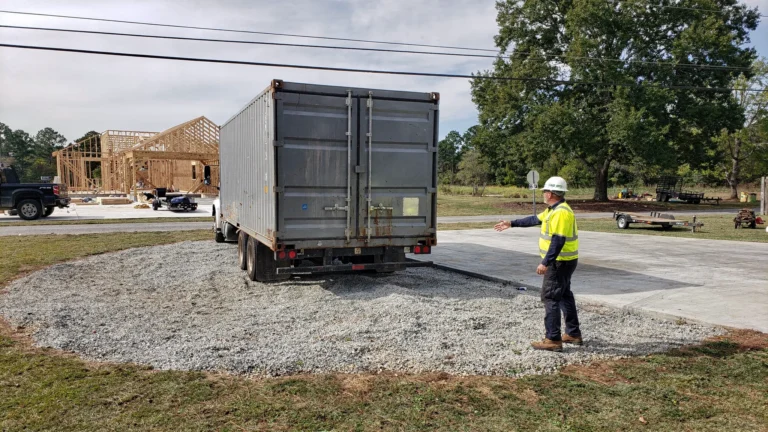
For office and retail units, plan the pad before delivery. A compacted gravel pad with good drainage is a practical option for many temporary and semi-permanent placements. Concrete slabs or piers may be appropriate for permanent commercial installations, especially when local code, foot traffic, utilities, or accessibility ramps are involved.
The container should sit level, with solid support under the corners and proper drainage away from the unit. Avoid placing a finished office or retail container directly on soft soil, low areas, or uncompacted fill. In humid regions like Raleigh and the wider Southeast, airflow under the container helps reduce long-term corrosion risk.
Before delivery day, confirm truck access, overhead clearance, turning space, door orientation, and final placement marks. Lease Lane Containers’ shipping container delivery requirements guide is a helpful resource for avoiding failed deliveries and costly repositioning.
Delivery Planning for Raleigh, the Southeast, and Nationwide Projects
Shipping container delivery is not just transportation. It is part of the project design. A container office or retail unit may be heavier than a standard empty container once it has insulation, windows, doors, fixtures, and equipment installed.
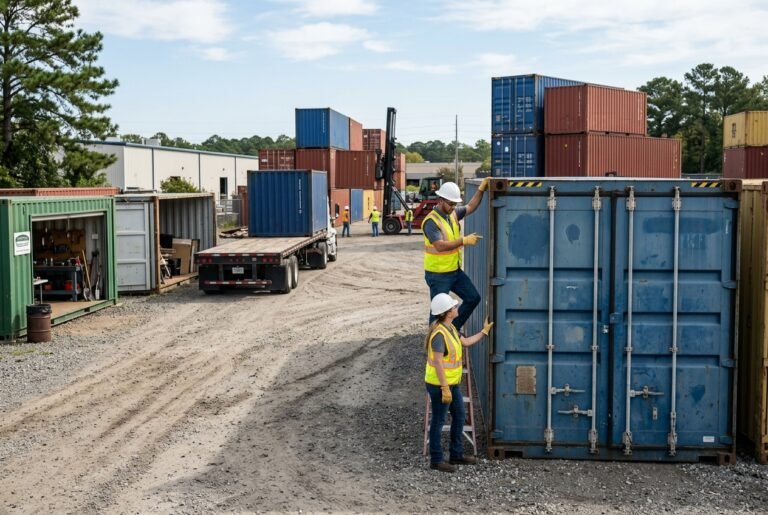
Common delivery options include tilt-bed delivery, flatbed delivery with a crane or forklift, and specialized equipment depending on site access. Tilt-bed delivery is common for many standard placements, but it requires straight-line space to slide the container off the trailer. Tight urban lots, sloped sites, soft ground, or finished landscapes may require additional planning.
For Raleigh projects, watch for common site constraints such as narrow driveways, tree canopy, soft clay soils after rain, overhead utility lines, and limited turning radius in developed neighborhoods. Across the Southeast, seasonal rain and humidity can make ground preparation even more important.
For nationwide delivery, the same principles apply: confirm container size, grade, modifications, weight, route access, unloading method, and pad readiness before the truck is scheduled.
Budgeting Beyond the Container Shell
The container itself is only one part of a commercial office or retail budget. Buyers sometimes compare container prices without accounting for the full installed project.
A realistic budget should account for the container shell, delivery, site preparation, permitting, design, engineering if needed, structural reinforcement, insulation, electrical, HVAC, doors, windows, interior finishes, exterior branding, security, and accessibility features.
A One-Trip container may cost more upfront, but it can reduce prep work and improve the finished appearance. A used Cargo Worthy unit may lower the initial shell cost but require more cleaning, rust treatment, repainting, or floor work. A WWT unit may be economical for basic storage-adjacent use but should be inspected carefully before occupancy-related investment.
If you are new to the buying process, Lease Lane Containers’ ultimate shipping container buyers guide explains how grade, delivery, and site planning affect total value.
Best Container Choices by Commercial Scenario
For a polished retail pop-up, a One-Trip 20ft or 40ft High Cube is often the best starting point. The cleaner exterior helps with branding, and the additional height improves the finished interior.
For a construction office, a Cargo Worthy or One-Trip unit can both make sense. If the office will move from site to site and take abuse, structural reliability and security matter more than cosmetic perfection.
For a real estate sales office, a 40ft High Cube One-Trip container is usually the stronger choice because visitors will judge the space as part of the development’s presentation.
For a farm stand or rural retail space, a 20ft container may provide enough room for a counter, storage, and basic customer interaction. If refrigeration is needed for produce, flowers, beverages, or food products, a refrigerated container may be worth evaluating separately.
For back-of-house retail storage connected to a storefront, a WWT or Cargo Worthy used unit may be a practical choice if it passes inspection and does not need a premium customer-facing finish.
Frequently Asked Questions
Are repurposed shipping containers good for retail stores? Yes, repurposed shipping containers can work well for retail pop-ups, kiosks, farm stands, and small showrooms when the container grade, layout, insulation, electrical, and customer access are planned correctly.
What container grade is best for an office conversion? One-Trip containers are usually best for polished, long-term, customer-facing offices. Cargo Worthy containers can work for budget-conscious office builds if the structure is solid. Wind and Watertight units are better suited for storage or basic support uses unless thoroughly inspected and repaired.
Is a High Cube container better for a container office? Often, yes. A High Cube container provides extra height that helps after adding insulation, ceiling finishes, lighting, and HVAC. The added headroom can make offices and retail spaces feel more comfortable and professional.
Do container offices and retail units need permits in Raleigh, NC? They may. Requirements depend on location, use, duration, utilities, foundation, occupancy, and local zoning. Always check with Raleigh, Wake County, or the applicable local authority before placing or modifying a container.
Can a used shipping container be converted into a customer-facing space? Yes, but condition matters. Used containers should be inspected for roof leaks, floor damage, odors, rust, door alignment, and structural issues. Cargo Worthy units are generally a stronger choice than basic WWT units for commercial conversions.
Talk With a Local Container Team Before You Build
A successful office or retail container starts with the right shell, the right grade, and a realistic delivery plan. Lease Lane Containers LLC helps customers in Raleigh, across North Carolina, throughout the Southeast, and nationwide choose clean One-Trip and used shipping containers for storage, commercial, and modular projects.
If you are planning a repurposed shipping container office, retail pop-up, jobsite workspace, or showroom, contact the sales team at sales@leaselanecontainers.com or visit the Raleigh office to discuss sizing, grades, site preparation, and delivery options before you buy.