40ft vs 45ft Container Buying Differences
A five-foot difference can look minor on a spec sheet. On a job site, farm, retail lot, or residential driveway, it can determine whether the container holds the full inventory load, fits the prepared pad, and can be delivered without a difficult maneuver. When comparing a 40ft vs 45ft container, the right choice is usually less about buying the largest box and more about matching usable space to access, site conditions, and long-term plans.
40ft vs 45ft Container: The Measurement Gap
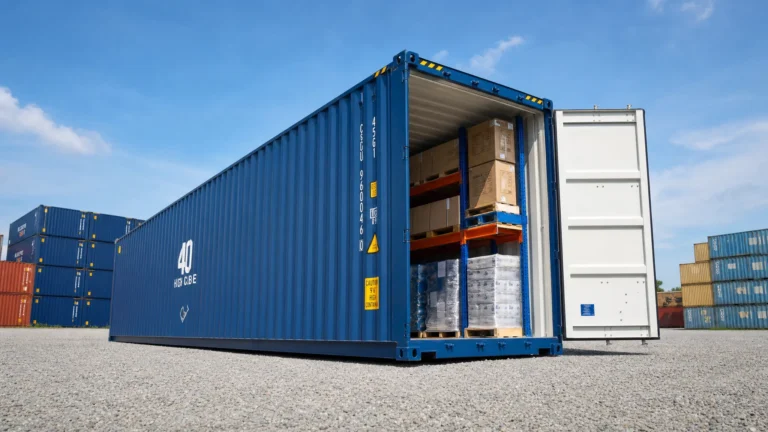
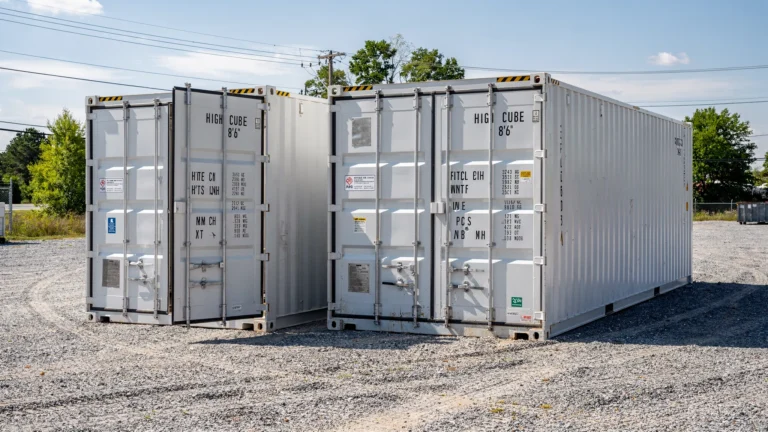
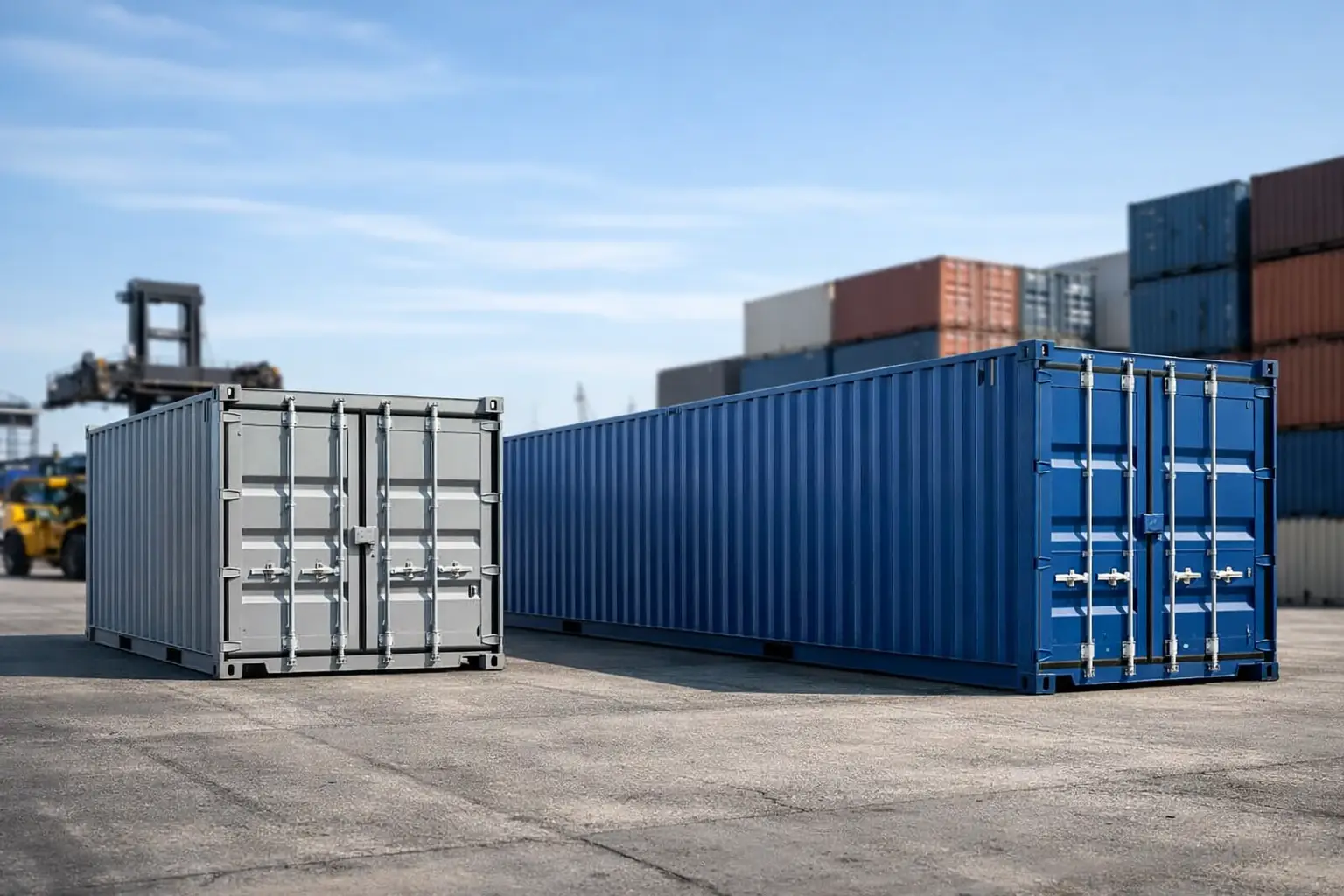
Both sizes are typically 8 feet wide, built from durable corrugated steel, and equipped with cargo doors at one end. Most 45-foot containers are High Cube units, meaning they are 9 feet 6 inches tall externally. A 40-foot container may be a standard-height unit at 8 feet 6 inches tall or a 40-foot High Cube at 9 feet 6 inches tall.
The practical difference is not only five additional feet of length. A 45-foot High Cube combines that added length with extra vertical clearance, creating noticeably more room for palletized materials, racking, machinery, seasonal inventory, or a modular build layout.
| Specification | 40ft Standard | 40ft High Cube | 45ft High Cube | |—|—:|—:|—:| | Exterior length | 40 ft | 40 ft | 45 ft | | Exterior width | 8 ft | 8 ft | 8 ft | | Exterior height | 8 ft 6 in | 9 ft 6 in | 9 ft 6 in | | Approximate interior volume | 2,350 cu. ft. | 2,690 cu. ft. | 3,040 cu. ft. |
Interior measurements can vary slightly by manufacturer, floor type, and container design. Always confirm the verified specifications of the specific unit before planning shelving, equipment placement, wall framing, or a custom build.
When a 40-Foot Container Is the Better Fit
A 40-foot container is the most common large-format option for good reason. It provides substantial storage without creating the same delivery and placement challenges as a 45-footer. For contractors, it can hold tools, job-site materials, boxed fixtures, and equipment while remaining manageable on many commercial sites. For agricultural operators, it offers protected storage for feed, parts, fencing supplies, and seasonal equipment.
The 40-foot standard-height container is often the practical choice when vertical space is not a priority. It is well suited to ground-level storage, especially for material that does not need tall shelving or overhead clearance. If you are storing landscaping supplies, boxed inventory, power tools, or furniture, standard height may be enough.
A 40-foot High Cube makes sense when the footprint of a 40-footer works, but the interior needs to work harder. The additional foot of interior height is valuable for warehouse-style shelving, taller equipment, stacked inventory, and workshop conversions. It can also reduce the cramped feeling in a container office, studio, or future build-out.
For properties with limited turning space, narrow driveways, overhead branches, or closely spaced buildings, the 40-foot option is generally easier to plan around. That does not mean it is a small delivery. A full-size truck and trailer still require a clear route, firm access, and adequate room to unload safely.
When a 45-Foot Container Earns Its Footprint
A 45-foot High Cube is often the better operational choice when storage turnover is high or when every pallet position matters. Logistics managers may use the extra length for overflow inventory that would otherwise require a second smaller unit. Retail operators can gain more display, stockroom, or pop-up space from one container shell. On larger construction sites, the added capacity can keep materials consolidated rather than scattered across multiple locked storage areas.
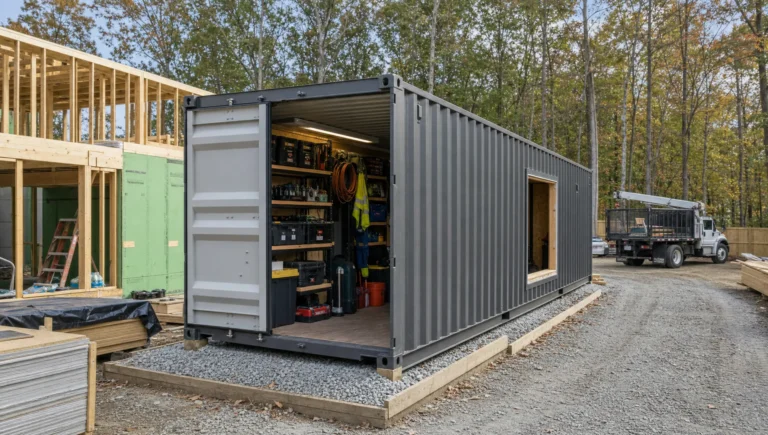
The 45-footer also has an advantage for modular projects. Five additional feet can change the layout of a workshop, office, retail space, or equipment room. That space may allow for a longer workbench, a dedicated entry area, more shelving, or better separation between stored materials and active work areas.
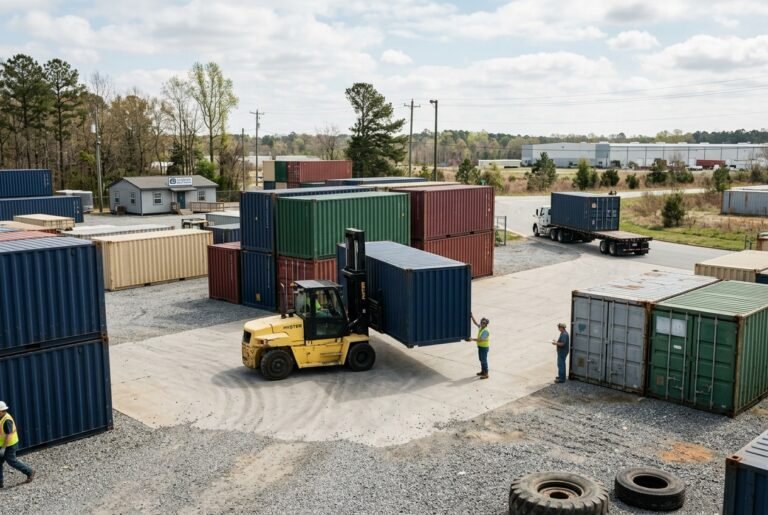
However, capacity only helps if the site can accommodate it. The 45-foot container has a longer delivery profile and usually needs more room for truck turns, trailer positioning, and unloading. A site that barely works for a 40-footer may not work for a 45-footer, particularly if the delivery route includes tight corners, soft ground, gates, ditches, utility lines, or parked vehicles.
Before ordering a 45-foot unit, measure the final pad and the entire approach to it. Include entrance width, turning areas, overhead clearances, grade changes, and the space needed for the delivery truck to leave safely after placement. Clear photos of the access route are useful when discussing delivery logistics.
Delivery Is Often the Deciding Factor
The container itself is only part of the purchase. Delivery method and site readiness can affect the total cost, timeline, and feasibility of the project.
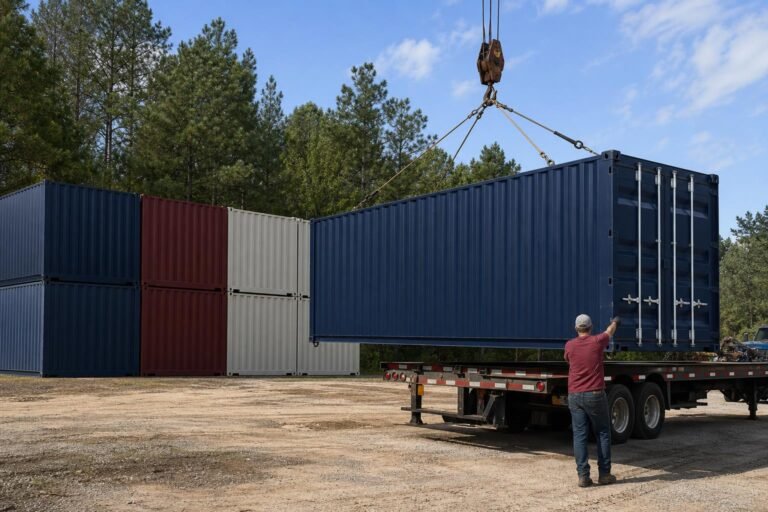
Tilt-bed delivery is commonly used for ground-level placement. The truck backs into position and slides the container off the trailer. This method needs a long, straight, reasonably level unloading area. A 45-foot container requires more clearance than a 40-footer because both the container and the truck must have room to align during the unload.
Ground-level delivery is valuable when you need the container placed directly on a prepared pad without a crane. Still, it is not a solution for every location. If the final position is behind a sharp turn, on a steep slope, or beyond weak ground, a different delivery plan or site work may be required. Crane placement can handle some difficult locations, but it adds coordination and cost.
For either size, prepare a firm, level base before delivery. Compacted gravel, concrete pads, or properly placed support blocks can help keep the corner castings supported and reduce the risk of twisting. Containers are engineered to carry loads through their corner posts. An uneven base can make doors difficult to operate and may lead to water drainage problems over time.
Condition and Grade Matter as Much as Size
A larger container is not automatically the better value if its condition does not match the intended use. For secure job-site storage or general agricultural storage, a Wind & Watertight unit can be a sensible budget-conscious option. This grade means the container is intended to keep wind and weather out, though it may show cosmetic dents, surface rust, repairs, and signs of prior cargo use.
Cargo Worthy containers meet a higher standard for international shipping and typically have a valid CSC plate when sold for export use. If the container will remain on your property for storage, export certification may not be necessary. It can still be a useful indicator when structural condition is a priority.
New, one-trip containers offer the cleanest appearance and usually have less wear on floors, door hardware, and exterior panels. They are often preferred for customer-facing retail spaces, residential properties, and conversions where appearance matters. A one-trip unit can cost more, but it may reduce prep work such as repainting, rust treatment, or door adjustments.
Ask for the grade in writing, clear pricing, and recent photos when available. Terms such as used or refurbished do not mean the same thing from every seller. A transparent seller should explain what condition is being quoted and what cosmetic or functional characteristics to expect.
Cost: Think Beyond the Purchase Price
A 45-foot High Cube generally costs more than a 40-foot container because it provides more steel, more enclosed volume, and may have tighter availability in certain markets. Freight can also be higher when the larger size requires a more specialized route or delivery arrangement.
The better value depends on how you would otherwise solve the storage problem. If a 40-footer will be filled immediately and you have the access for a 45-footer, the larger unit may cost less than buying a second container later. On the other hand, choosing a 45-foot unit for a tight property can create added site-preparation costs that erase the capacity advantage.
Account for the full project: container condition, transport, unloading method, base preparation, locks, ventilation, shelving, electrical work, and any modifications. No fine print and no surprises starts with comparing complete installed cost, not just the advertised container price.
Choose the Size That Protects Your Operation
Choose a 40-foot container when access is restricted, the pad is limited, or the storage plan does not require maximum cubic volume. Choose a 45-foot High Cube when you need expanded inventory capacity, taller clearances, or a more flexible layout and can provide the necessary delivery space.
Before scheduling delivery, walk the route with a tape measure, photograph the approach, and identify the exact placement point. Lease Lane Containers can help verify dimensions, container grade, and delivery requirements before dispatch, so the unit arriving at your site is one you can place, use, and rely on from day one.