
Shipping Containers Dimensions: 20ft vs 40ft vs High Cube
Choosing the right container starts with a deceptively simple question: “How big is it, really?” In practice, shipping containers dimensions include several measurements (exterior size, interior clearance, door opening, and height class) that directly impact what you can store, how you load it, and whether delivery to your site in Raleigh or anywhere in the Southeast is smooth or stressful.
This guide compares 20ft vs 40ft vs High Cube containers with real-world sizing details, typical use cases, and what to ask for depending on whether you need a One-Trip, Cargo Worthy (CW), or Wind & Watertight (WWT) unit.

The 3 container measurements that matter (not just length)
When buyers ask for a “20-foot container,” they are usually referring to the nominal exterior length. For planning storage and delivery, you should confirm three separate dimensions.
Exterior dimensions (for site fit and delivery clearance)
Exterior size is what determines whether a container will physically fit on your pad, behind a fence line, or between buildings. Most standard dry containers are built to ISO standards with an exterior width of about 8 feet.
Interior dimensions (for what actually fits inside)
Interior clearance is smaller than exterior due to:
-
Corrugated Corten steel walls
-
Header structures and corner posts
-
Plywood floors and crossmembers
If you are storing palletized material, equipment, or building supplies, interior width and height are usually the limiting factors.
Door opening (for loading and access)
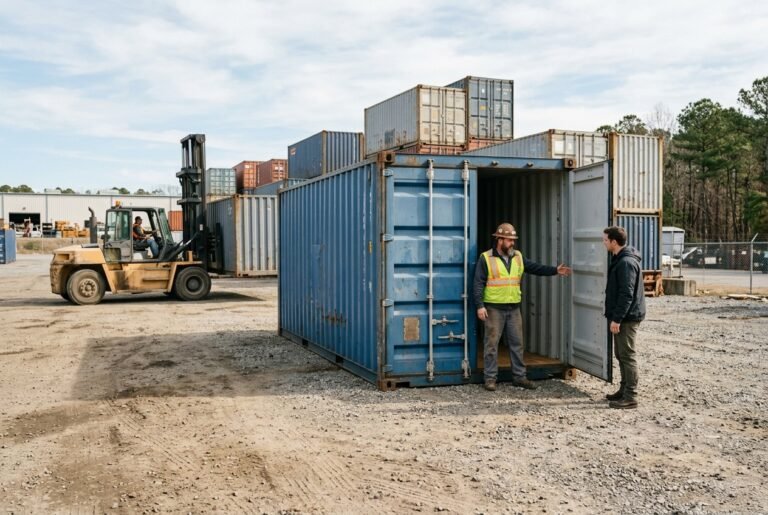
A container can have generous interior volume but still be painful to use if your pallet jack, mower, or skid steer bucket cannot clear the door opening.
Standard shipping containers dimensions: 20ft vs 40ft vs High Cube
Below are typical dimensions for standard dry van containers. Exact measurements can vary slightly by manufacturer and production run, so treat these as planning numbers and confirm the spec on the unit you are buying or leasing.
| Container type | Exterior (L x W x H) | Interior (L x W x H) | Door opening (W x H) |
|---|---|---|---|
| 20ft Standard | 20' x 8' x 8'6" (6.06 x 2.44 x 2.59 m) | 19'4" x 7'8" x 7'10" (5.90 x 2.35 x 2.39 m) | 7'8" x 7'5" (2.34 x 2.26 m) |
| 40ft Standard | 40' x 8' x 8'6" (12.19 x 2.44 x 2.59 m) | 39'5" x 7'8" x 7'10" (12.01 x 2.35 x 2.39 m) | 7'8" x 7'5" (2.34 x 2.26 m) |
| 40ft High Cube | 40' x 8' x 9'6" (12.19 x 2.44 x 2.90 m) | 39'5" x 7'8" x 8'10" (12.01 x 2.35 x 2.69 m) | 7'8" x 8'5" (2.34 x 2.57 m) |
What “High Cube” means in plain English
A High Cube container is typically 1 foot taller than a standard-height container. That extra height is often the difference between:
-
Stacking inventory safely without crushing boxes
-
Fitting taller equipment
-
Building a more comfortable container office or workshop conversion
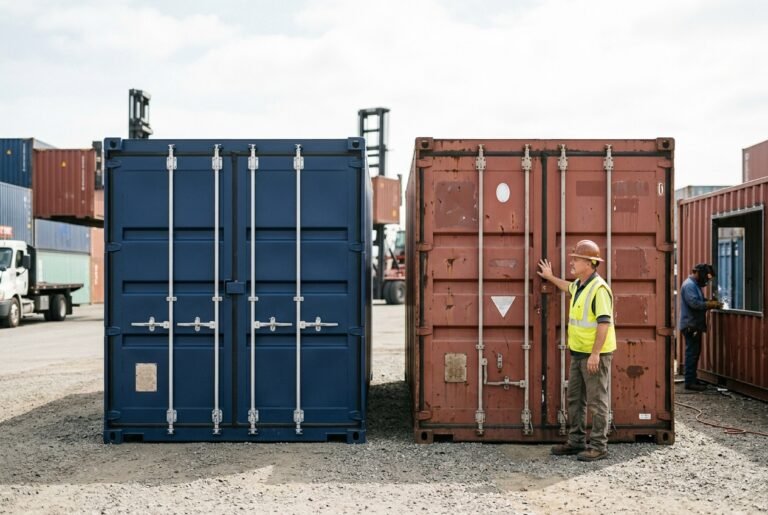
If you are deciding between a 40ft Standard and 40ft High Cube, the High Cube usually wins when interior height or future modifications matter.
20ft vs 40ft: which size is right for your job site or property?
20ft containers: the “fits almost anywhere” workhorse
A 20ft container is often the best first container for Raleigh-area contractors and homeowners because it is easier to place and easier to access.
Common 20ft use cases:
-
General contractors and home builders: secure tool and material storage on tight lots
-
Homeowners: garage overflow, seasonal items, furniture during renovations
-
Agriculture: feed, tack, small equipment, locked storage near barns
Practical advantages:
-
Easier delivery positioning on residential driveways and narrower job sites
-
Shorter length means fewer site-prep surprises
If you are actively shopping, start here: 20ft containers.
40ft containers: best for volume and long-term storage
A 40ft container can feel like adding a small warehouse bay to your property. For businesses and developers across North Carolina and the Southeast, the 40ft size is often the most cost-effective per square foot.
Common 40ft use cases:
-
Small business owners: inventory overflow, packaging stations, backstock storage
-
Real estate developers: staging materials, modular build-outs, multi-phase projects
-
Logistics managers: storage and, when needed, shipping-ready CW units
Tradeoffs to plan for:
-
Needs more linear space for placement
-
Delivery access (turning radius, overhead lines) becomes more critical
Browse options here: 40ft containers.
High Cube containers: the upgrade when height matters
High Cubes are popular across the Southeast for storage, job sites, and conversions because the height adds flexibility without adding footprint.
High Cube is a strong choice when you plan to:
-
Store tall racking, longer tools, or bulky equipment
-
Convert the container into a workspace where ceiling height improves usability
-
Load higher cube inventory that wastes space in standard height units
If you are comparing conditions and price points, High Cubes are commonly available as One-Trip (like-new) or used grades depending on supply.
Reefer (refrigerated) container dimensions: expect less interior space
Refrigerated containers (often called reefers) follow ISO exterior sizing (20ft or 40ft), but interior dimensions are reduced because the walls and doors are insulated and the refrigeration machinery takes space.
If you are maintaining cold chain for food, pharmaceuticals, flowers, or specialty storage, confirm:
-
Interior clearance and door opening for your pallets
-
Power requirements and placement (access to electrical hookups)
-
Whether you need a 20ft or 40ft Reefer based on throughput
Lease Lane Containers can help you match the right Reefer size and delivery approach, especially if you are staging in Raleigh and distributing across the region.
Container grades explained (One-Trip vs Cargo Worthy vs WWT)
Dimensions tell you whether it fits. Grade tells you what condition it is in and what it is suitable for. A reputable supplier should be transparent about grading so you are not guessing when the container shows up.
One-Trip (new) containers
One-Trip units are essentially new containers that have made a single loaded trip (typically overseas) and are then sold into the domestic market.
What to expect:
-
Clean appearance with minimal dents
-
Doors typically operate smoothly
-
Best choice for customer-facing uses (retail, office conversions) and long-term storage where aesthetics matter
Cargo Worthy (CW)
Cargo Worthy generally means the container is suitable for transport and meets the practical requirements for shipping use, often aligned with CSC safety expectations. If you need to move freight internationally, you will also want to confirm current CSC plate status and any carrier requirements.
Reference: the International Maritime Organization (IMO) container safety resources provide background on container safety and the Convention for Safe Containers.
Wind & Watertight (WWT)
WWT is a common grade for storage. It means the container keeps wind and water out when closed, even if it shows dents, surface rust, or cosmetic wear.
WWT is often the value choice for:
-
Construction storage
-
Farm storage
-
Back-of-house business storage
If you are exploring value options, start here: used containers.
How dimensions impact delivery in Raleigh and across the Southeast
Even when the container fits on paper, delivery is where most problems happen. A 40ft container is not “just twice a 20ft” in delivery complexity.
Key delivery realities to plan for:
-
Turning radius: longer containers require wider approach angles
-
Overhead clearance: power lines and tree limbs can block placement, especially for High Cubes
-
Drop zone size: you need enough room not only for the container, but also for the truck’s positioning
-
Ground conditions: soft soil and slopes can cause sinking or doors that stop sealing correctly
A local team (especially one experienced around Raleigh neighborhoods, job sites, and rural properties across NC) can often spot issues early and help you plan the simplest placement.
Pro Tip: Site preparation checklist before your container arrives
Good site prep protects your container, your property, and your budget. It also helps doors operate correctly over the long term.
Focus on three things:
-
Leveling: If the container is twisted even slightly, doors can bind and seals can leak. Aim for a level base, especially corner-to-corner.
-
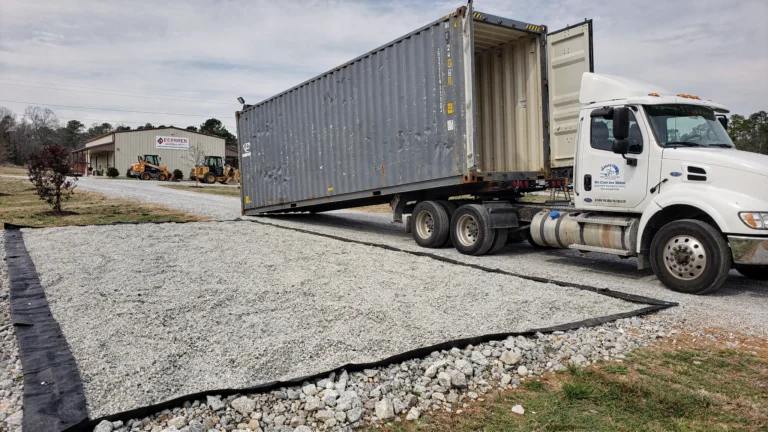
Base material: A compacted gravel pad is a common, cost-effective solution in North Carolina soils. Concrete also works well when you want a permanent, clean install.
-
Permits and HOA rules: In the Raleigh area, requirements can vary by zoning, intended use, and how visible the container is from the street. If the container will be used as an occupied space (office, retail), plan for additional permitting and code compliance.
If you are unsure, ask your supplier for placement guidance before delivery day. It is much easier to adjust a plan than to re-deliver a 40ft container.
Quick decision guide (based on real use cases)
If you are choosing between these sizes, here are straightforward rules that work for most buyers:
-
Choose a 20ft Standard when you want secure storage with the easiest placement and access.
-
Choose a 40ft Standard when you need maximum volume for the footprint and you have clear delivery access.
-
Choose a 40ft High Cube when height matters for storage efficiency or you plan a conversion.
-
Choose a Reefer when temperature control is a requirement, and confirm interior dimensions early.
Frequently Asked Questions
Are shipping containers really 20 feet and 40 feet long inside? No. The 20ft and 40ft labels refer to nominal exterior length. Interior length is shorter due to wall structures and door framing.
What is the standard width of a shipping container? Most ISO dry containers are about 8 feet wide externally. Interior width is typically several inches less.
Does a High Cube container cost more than a standard container? Often yes, because High Cubes are in high demand for storage efficiency and conversions. Pricing also depends heavily on grade (One-Trip vs CW vs WWT) and availability.
Is a WWT container good enough for storage in North Carolina humidity? Usually yes for tools, materials, and general storage, assuming doors seal properly. For sensitive inventory, consider One-Trip condition and plan for ventilation or moisture control.
Can a 40ft container be delivered to a residential driveway in Raleigh? Sometimes, but it depends on approach, turning space, overhead clearance, and surface strength. A site check and a clear drop plan make a big difference.
Get the right container size (with clear grading and delivery guidance)
If you are comparing shipping containers dimensions and want help choosing between a 20ft, 40ft, or High Cube (Standard, High Cube, or Reefer), Lease Lane Containers LLC can walk you through size, grade (One-Trip vs Cargo Worthy vs WWT), and site prep for a smooth delivery in Raleigh, North Carolina or nationwide.
Contact our sales team at sales@leaselanecontainers.com or visit our Raleigh office to get clear pricing and placement guidance before you order.



21 Comments