Container Shipping Prices: A Real-World Cost Breakdown
Pricing a shipping container is deceptively complex. Two people can both ask for “container shipping prices” and mean completely different things: one is budgeting the purchase price of the container, while the other is thinking about delivery and placement to their property.
This guide breaks down real-world costs the way contractors, homeowners, and project managers in Raleigh, North Carolina (and nationwide) actually experience them, line item by line item, so you can compare quotes accurately and avoid surprise charges.
To compare available options, explore our shipping container inventory.
First, define “container shipping prices” (purchase vs. delivery)
In the container industry, you will typically see costs split into:
-
Container price: The steel box itself (20ft, 40ft, High Cube, Reefer), usually built from Corten steel and manufactured to international ISO standards for intermodal transport.
-
Delivery and placement: Getting the unit from a depot (often near a port or rail hub) to your site and setting it down.
-
Optional add-ons: Lockboxes, paint, venting, shelving, electrical packages, and other modifications.
A low container price with high delivery, or vague “all-in pricing” without grade clarity, is where buyers get burned.
The three biggest price drivers: size, grade, and type
Size: 20ft vs. 40ft (and why High Cube changes the math)
As a rule, larger containers cost more, but price does not scale perfectly with length. A 40ft is not always “double” a 20ft in price, and delivery can tilt the equation either way.
-
20ft containers are often the sweet spot for jobsite tool storage and tight residential lots. If you are deciding between sizes, use this practical guide to constraints, access, and future growth: how to choose the right 20ft container size (and alternatives).
-
40ft containers win when you need long, uninterrupted storage bays, or when you want to partition the interior for multiple crews or zones. The same planning factors apply (door swing clearance, interior aisles, and placement): 40ft container sizing and site fit considerations.
-
High Cube containers add about one extra foot of interior height compared to a standard unit, which matters for racking, tall equipment, or converting into a workspace. High Cubes can carry a price premium because supply is tighter in some inland markets.
Grade: One-Trip vs. Cargo Worthy vs. Wind and Watertight (WWT)
Container “grade” is one of the most important inputs to price because it describes structural condition and intended use.
-
One-Trip (new): These have made one loaded voyage from the factory. Expect straighter panels, smoother door operation, fewer repairs, and better cosmetics.
-
Cargo Worthy (CW): Suitable for transport and international shipping in principle. In practice, buyers should still confirm condition, door sealing, and whether a current safety approval is needed for their use case.
-
Wind and Watertight (WWT): Built to keep weather out for storage use. WWT units may show dents, patches, and surface rust, but should not leak when properly inspected.
If you are comparing offers, “used” is not a grade by itself. “Used” must be paired with CW or WWT (or a seller’s own internal grading system, which should be explained).
| Grade | What it’s best for | Typical condition notes | Price direction (all else equal) |
|---|---|---|---|
| One-Trip (new) | Long-term property storage, retail buildouts, offices, high-visibility projects | Minimal wear, better cosmetics, fewer repairs | Highest |
| Cargo Worthy (CW) | Logistics use cases, export, some regulated workflows | Structurally sound, may have repairs and visible wear | Mid |
| Wind and Watertight (WWT) | Jobsite storage, farm storage, budget-conscious projects | Cosmetic wear likely, must remain dry inside | Lowest |
To sanity-check a grade claim, photos are helpful, but nothing beats a systematic inspection mindset. This checklist-style guide is a strong companion when evaluating used inventory: how to spot quality used containers before you buy.
Type: Standard vs. High Cube vs. Refrigerated (Reefer)
Container type affects both the container price and delivery complexity.
-
Standard dry van: The most common option for general storage.
-
High Cube dry van: Better for vertical storage and conversions, sometimes harder to source inland depending on the market cycle.
-
Refrigerated (Reefer): A specialized unit with insulated walls and a refrigeration system. The price is heavily influenced by operating condition, hours, and whether it is being used for true cold chain work or “insulated storage.” Reefers often require planning for electrical service.
Learn more about how we help buyers choose the right unit on our About Us page.
Delivery and placement: the cost most buyers underestimate
In the Raleigh and Triangle region, your delivery price can change dramatically based on access, terrain, and the type of delivery equipment required. Nationally, the same principle applies: the container might be priced competitively at a coastal depot, but the “last mile” to your site is where variability lives.
Before ordering, review our Shipping Policy so you know what to expect on delivery day.
Common delivery methods include:
-
Tilt-bed (roll-off): The driver slides the container off the bed. This often requires straight-line space in front of the drop spot.
-
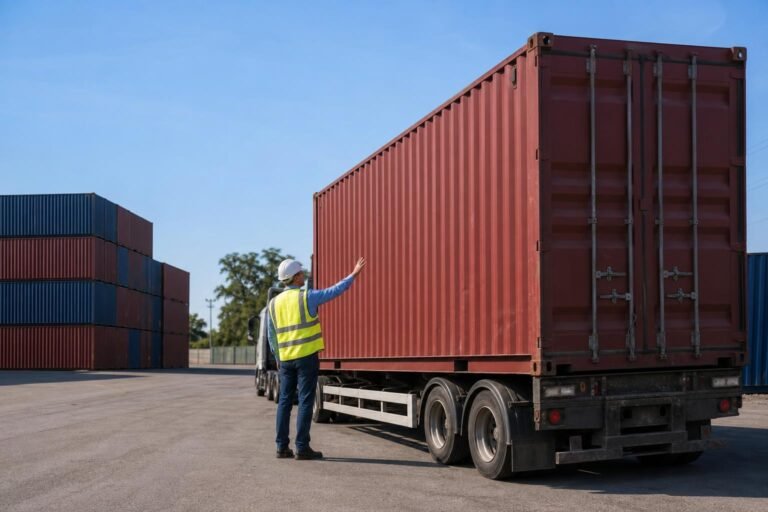
Chassis delivery: The container arrives on a chassis; depending on arrangements, you may be paying for a drop, a timed unload, or a return trip.
-
Crane or forklift-assisted set: Used when a tight site, landscaping, or obstacles prevent a tilt-bed set.
Here are the most frequent drivers of delivery cost and risk, regardless of whether you are in Raleigh, Charlotte, Richmond, or elsewhere in the Southeast:
| Delivery variable | What it changes | Why it matters |
|---|---|---|
| Distance from depot | Fuel and driver time | Inland delivery can outweigh small container price differences |
| Access width and turning radius | Truck selection | Tight residential streets and jobsite congestion can force specialized equipment |
| Ground conditions | Placement time and safety | Soft soil can cause sinking, ruts, or inability to level the doors |
| Slope and grade | Set difficulty | Containers must be stable; doors can bind if the unit twists |
| Obstacles overhead | Set location options | Tree limbs and power lines can restrict crane sets and tilt-bed angles |
| Appointment constraints | Waiting time | Construction sites with limited windows can add standby charges |
Pro-Tip: Prepare the drop spot like a contractor (even on a residential lot)
A “cheap” delivery can turn expensive if the driver cannot safely set the container, or if the container twists and the doors stop sealing correctly. Before scheduling delivery, plan for:
-
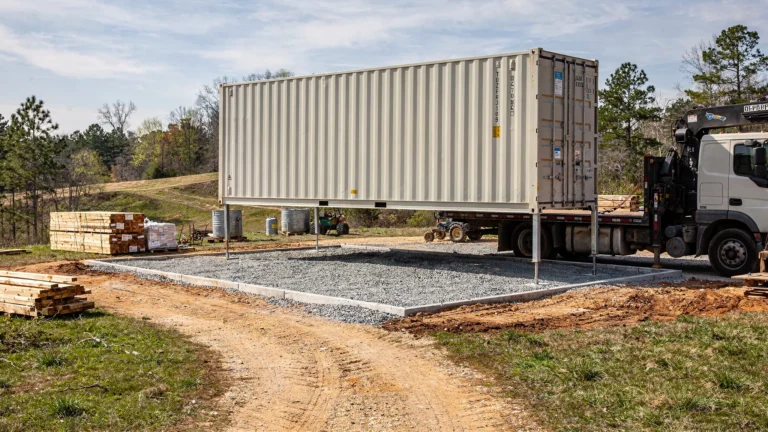
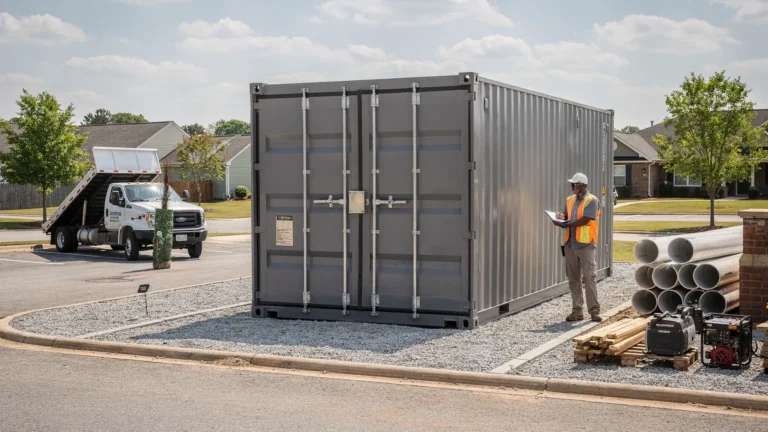
A level base: Concrete is great, but compacted gravel pads are common in North Carolina for jobsites and farms.
-
Drainage: Keep the container out of low spots where water pools after thunderstorms.
-
Support points: Many buyers use railroad ties, concrete blocks, or prepared footings to keep the base stable and improve airflow under the unit.
-
Access clearance: Measure gate openings, driveway width, and turning areas, then account for door swing clearance.
-
Permits and HOA rules: Requirements vary by municipality and neighborhood. In the Raleigh area, it is smart to confirm local rules early if the container will be visible from the street or used as anything other than temporary storage.
A good supplier will talk through your site conditions before dispatch, because delivery success is not just logistics, it’s risk management.
A realistic “out-the-door” cost breakdown (with example budgets)
Actual pricing moves with steel markets, equipment availability, and regional inventory, so treat the examples below as illustrative budgeting ranges, not a guaranteed quote. The purpose is to show how the math is typically structured.
For help choosing the right condition level, visit our Container Conditions guide.
For compact storage needs, our 20ft shipping containers are a practical option to compare.
If you need more room for inventory or equipment, review our 40ft shipping containers.
Buyers focused on value often start with our used shipping containers.
Example 1: 20ft used WWT for jobsite storage in Raleigh
Typical line items you may see:
-
Container (20ft, WWT, used): often the largest single line item
-
Local delivery and set: depends heavily on access and set method
-
Site materials (gravel, blocks, ties): usually small compared to the container, but critical to avoid door problems
-
Security: lockbox and high-quality padlock are common for contractor storage
Budget takeaway: for many General Contractors, the decision is less about chasing the lowest container sticker price and more about minimizing delivery friction and ensuring the unit stays dry and secure on day one.
Example 2: 40ft One-Trip High Cube for business inventory overflow
Typical line items you may see:
-
Container (40ft, High Cube, One-Trip): priced higher than used grades, often worth it when appearance and door reliability matter
-
Delivery and set: may require more room than a 20ft due to truck geometry
-
Optional ventilation and paint: helpful in hot, humid Southeast summers, especially if you are storing cardboard, textiles, or electronics
Budget takeaway: One-Trip High Cubes are frequently chosen by small businesses because they reduce the “unknowns” that come with heavily traveled used inventory.
Example 3: 40ft Reefer for temperature-controlled storage
Typical line items you may see:
-
Reefer container: condition and running status drive price
-
Electrical readiness: confirm voltage and site power before delivery
-
Delivery and placement: reefers are heavy; ground conditions matter
-
Ongoing operating cost: electricity becomes part of your total cost of ownership
Budget takeaway: reefer projects should be evaluated as an equipment purchase plus operations, not just a container purchase.
How to compare container quotes apples-to-apples
When reviewing pricing, ask for specifics in writing so two quotes are truly comparable:
-
Exact size and height (20ft, 40ft, Standard vs. High Cube)
-
Container grade (One-Trip vs. CW vs. WWT), not just “used”
-
Intended use (storage vs. international shipping requirements)
-
Door function and gasket condition (smooth operation matters for daily access)
-
Floor condition (look for soft spots, delamination, or odor issues)
-
Photos of roof and corner castings (structural zones that reveal hard impacts)
-
Delivery method and access assumptions (tilt-bed vs. chassis vs. crane)
If you need a field-tested inspection approach, this guide helps you spot red flags quickly: how to inspect and spot quality before you buy.
Why Southeast conditions (including North Carolina) affect value
In the Southeast, buyers often care more about weatherproofing and corrosion control than buyers in drier regions.
-
Humidity and heat can increase condensation risk, especially if you store tools, paper goods, or furniture. Ventilation and moisture control planning can protect your inventory more than chasing a small upfront discount.
-
Coastal exposure (for projects toward Wilmington and other coastal areas) accelerates corrosion. Even though containers are built from corrosion-resistant Corten steel, salt air and standing water still punish neglected surfaces.
-
Storm events make drainage and stable footings more important. A container that settles unevenly can twist, causing doors to bind and seals to leak.
Container pricing for modular builds: why fixed scope matters
Real estate developers and builders exploring container-based construction often run into a familiar budgeting issue: the steel box might be a predictable cost, but delivery, site work, and modifications can balloon without tight scope control.
If your project prioritizes fixed pricing and fixed scheduling in modular construction, it can be useful to look at how dedicated-build teams structure certainty. For example, Hubley positions modular home delivery around a fixed price and planning model, which is a helpful reference point for how disciplined scope and logistics reduce cost surprises.
Get a clear, local quote (and avoid surprises)
The fastest way to get accurate container shipping prices is to align on three facts up front: size, grade (One-Trip vs. CW vs. WWT), and your site’s delivery constraints.
Lease Lane Containers LLC can help you choose the right unit (20ft, 40ft, Standard, High Cube, or Reefer), explain grades transparently, and plan a clean delivery in Raleigh and across North Carolina, with nationwide delivery options.
Explore our available containers and reach out through our Contact Us page for expert guidance.

17 Comments