Best 20ft shipping container in Chicago, Illinois | 2026 Guide
Table of Contents
- Table of Contents
- Chicago 20ft Shipping Container Quick Facts
- 20ft Shipping Container in Chicago: What You Need to Know
- Top 20ft Shipping Container Options in Chicago
- Budget-Friendly: Wind and Watertight (WWT) Grade
- Mid-Range: Cargo Worthy (CW) Grade
- Premium: One-Trip Containers
- How to Choose the Right 20ft Shipping Container in Chicago
- Match the Container to Your Use Case
- Verify Site Access Before You Order
- Ask the Right Questions
- Watch for Red Flags
- Calculate Total Delivered Cost
- Chicago 20ft Shipping Container Market in 2026
- Chicago 20ft Shipping Container FAQ
- How much does a 20ft shipping container cost in Chicago in 2026?
- Do I need a permit to place a shipping container on my property in Chicago?
- How long does delivery take in the Chicago area?
- Can a 20ft container fit in a Chicago alley?
- What’s the difference between cargo worthy and wind and watertight?
- Can I buy a shipping container from out of state and have it delivered to Chicago?
- Get 20ft Shipping Container in Chicago Today
- Final Checklist
Table of Contents
- Chicago 20ft Shipping Container Quick Facts
- 20ft Shipping Container in Chicago: What You Need to Know
- Top 20ft Shipping Container Options in Chicago
- How to Choose the Right 20ft Shipping Container in Chicago
- Chicago 20ft Shipping Container Market in 2026
- Chicago 20ft Shipping Container FAQ
- Get 20ft Shipping Container in Chicago Today
- Final Checklist
Chicago sits at the crossroads of American commerce, and that position makes it one of the busiest markets for shipping containers in the Midwest. Whether you’re a contractor needing secure job site storage in Pilsen, a small business owner looking for inventory overflow space near the South Loop, or a homeowner setting up a workshop in the western suburbs, a 20ft shipping container is often the most practical solution. The city’s mix of tight residential lots, active construction zones, and industrial corridors creates unique delivery and placement challenges that buyers in other metros rarely face. Getting the right container at the right price requires understanding Chicago’s local dynamics: zoning rules that vary by ward, delivery access that depends on alley width and overhead clearance, and seasonal pricing shifts driven by construction cycles. This 2026 guide breaks down what Chicago-area buyers actually need to know before committing to a purchase, from realistic pricing tiers to the specific questions you should ask any supplier before signing. The goal is straightforward: help you spend less time guessing and more time putting a container to work.
Chicago 20ft Shipping Container Quick Facts
A 20ft shipping container measures 20 feet long by 8 feet wide by 8 feet 6 inches tall (or 9 feet 6 inches for a high cube shipping container). That gives you roughly 1,170 cubic feet of enclosed, secure storage space, enough for a single-car garage worth of equipment, furniture, or inventory.
Pricing in the Chicago metro area in 2026 typically falls between $2,200 and $4,800, depending on condition and grade. One-trip containers (sometimes called “new”) sit at the higher end, while wind and watertight or cargo worthy units come in lower. Delivery adds $200 to $600 within Cook County, with costs climbing for DuPage, Will, and Lake County drops.
Most Chicago-area suppliers can deliver within 5 to 10 business days of order confirmation. During peak construction season (April through October), expect timelines closer to 10 to 14 days due to higher demand and tighter truck availability.
What makes Chicago’s market distinct is the density factor. Many residential and commercial sites have limited access through alleys, under viaducts, or around tight corners. Suppliers who understand Chicago’s grid system and common delivery obstacles, like low-hanging power lines on the South Side or narrow lots in Logan Square, will save you headaches and extra fees.
20ft Shipping Container in Chicago: What You Need to Know
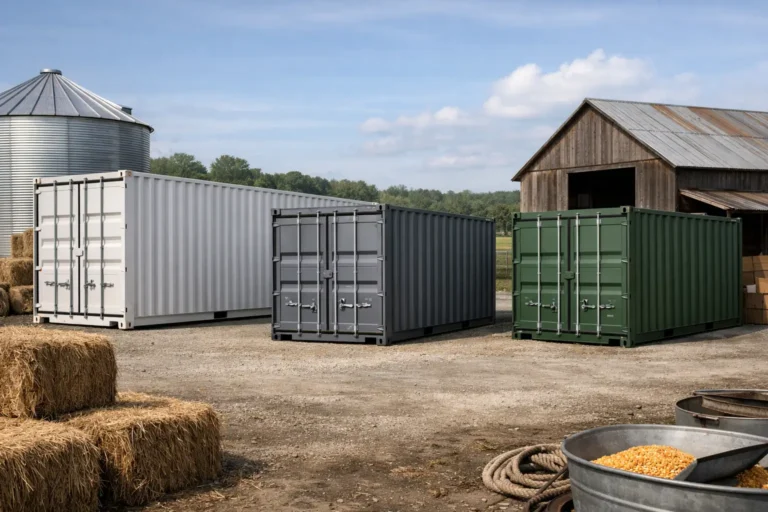
Chicago’s shipping container market serves a broad mix of buyers. Contractors working high-rise projects downtown need temporary tool and material storage. Retailers in Wicker Park and Bucktown use containers for seasonal inventory. Farms and agricultural operations in the collar counties store feed, equipment, and supplies year-round. Each use case comes with different requirements for container grade, placement, and access.
The city’s geography plays a direct role in how your container purchase unfolds. Chicago’s alley system, a feature most other major cities lack, is both an advantage and a constraint. Many residential deliveries happen through rear alleys, which means your supplier needs to know the turning radius of their delivery truck and whether overhead lines or tree branches will interfere. A standard tilt-bed truck requires roughly 60 feet of straight-line clearance to offload a 20ft container. Roll-off trucks need less space but are less common for single-unit deliveries.
Zoning regulations in Chicago vary significantly by ward and property type. In most residential zones (RS-1 through RS-3), placing a shipping container on your property may require a permit or variance from the City of Chicago Department of Buildings. You can reach their permit office at (312) 744-3449 or visit chicago.gov/buildings. Commercial and industrial zones (M1, M2, M3) are generally more permissive, but you should still verify with your alderman’s office before delivery day.
Neighborhood-specific considerations matter too. In areas like Bridgeport, Back of the Yards, and Chatham, alley widths tend to be consistent and well-maintained. In older neighborhoods like Pullman or parts of Humboldt Park, alleys can be narrower or partially obstructed. Knowing your site conditions before ordering is a practical step that prevents costly delivery failures. Lease Lane Containers offers delivery planning support that covers access requirements, turning radius, and overhead clearance, which is especially useful for first-time buyers dealing with Chicago’s tight lots.
Top 20ft Shipping Container Options in Chicago
Budget-Friendly: Wind and Watertight (WWT) Grade
Wind and watertight containers are the most affordable option, typically priced between $2,200 and $2,800 in the Chicago area. These units show visible wear: surface rust, dents, patched panels, and older door gaskets. They’re structurally sound and keep weather out, but they won’t win any beauty contests.
Best for: temporary job site storage, farm equipment, seasonal inventory, and any application where appearance doesn’t matter. If you’re storing landscaping equipment behind a warehouse in Bedford Park, a WWT container does the job at the lowest cost.
Inspection tip: check door operation carefully. Doors on older containers can stick or require extra force. Test both swing doors and inspect the rubber gaskets for cracking. Floor condition matters too – look for soft spots or signs of water damage in the marine-grade plywood flooring.
Mid-Range: Cargo Worthy (CW) Grade
Cargo worthy containers fall between $2,800 and $3,800. These units have been inspected and certified for international shipping, meaning they meet structural and weatherproofing standards set by the International Convention for Safe Containers (CSC). The certification plate on the door end confirms the inspection date.
Best for: long-term storage, small business use, and any situation where you want a container that looks decent and performs reliably for 10+ years. A restaurant group storing furniture and fixtures between locations in River North would be a good fit for this grade.
The cargo worthy designation gives you confidence that the container’s corrugated steel walls, corner castings, and locking mechanisms are all in working order. Lease Lane Containers provides transparent grading guidance so you understand exactly what each grade means before you buy.
Premium: One-Trip Containers
One-trip containers are manufactured overseas (typically in China) and shipped to the U.S. with a single load of cargo. They arrive in near-new condition with minimal wear, fresh paint, intact flooring, and smooth-operating doors. Pricing runs $3,800 to $4,800 in Chicago.
Best for: visible placement on commercial properties, container offices, retail pop-ups, and any project where aesthetics and long-term durability are priorities. A brewery in the West Loop using a container as a branded outdoor bar, for example, would want one-trip quality.
One-trip units also make the most sense if you plan to modify the container with windows, HVAC cutouts, or interior finishing. Starting with a clean, undamaged shell reduces modification costs and complications.
How to Choose the Right 20ft Shipping Container in Chicago
Picking the right container isn’t just about price. Your decision should account for five key factors: intended use, site access, container condition, supplier credibility, and total delivered cost.
Match the Container to Your Use Case
A contractor storing power tools and lumber on a demolition site in Englewood has different needs than a homeowner building a backyard workshop in Evanston. The contractor can save money with a wind and watertight unit. The homeowner probably wants a one-trip container that looks clean and can be modified later. Start with your actual use case, then pick the grade that fits.
Verify Site Access Before You Order
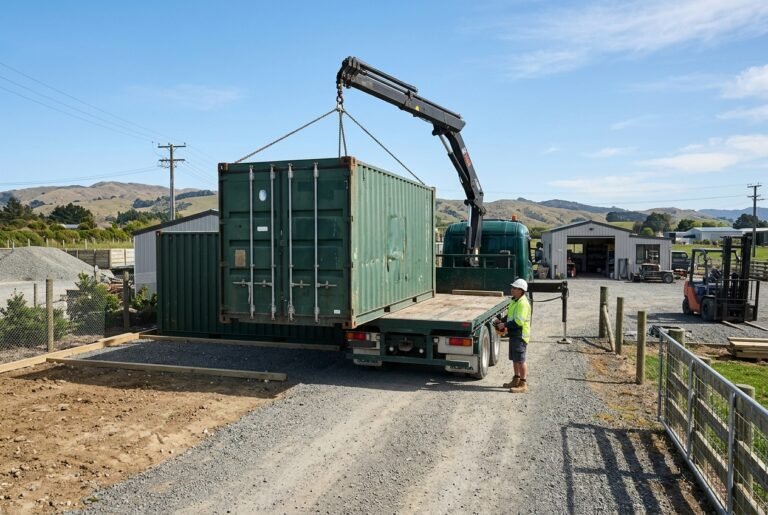
This is where Chicago buyers run into the most problems. Measure your alley width, check for overhead obstructions (power lines, tree branches, garage overhangs), and confirm that the delivery truck can reach your placement spot. A tilt-bed truck typically needs 60 to 70 feet of clearance behind the container’s final position. If your site is tight, ask your supplier about crane delivery, which costs more ($500 to $1,200) but solves access problems.
For container delivery planning, you’ll want to confirm the surface where the container will sit. Gravel pads, concrete slabs, or railroad ties work well. Bare dirt can lead to settling and drainage issues, especially during Chicago’s spring thaw.
Ask the Right Questions
Before committing to any supplier, get clear answers on these points:
- What grade is the container, and can you provide photos of the actual unit?
- Is delivery included in the quoted price, or is it separate?
- What’s the delivery method (tilt-bed, roll-off, or crane)?
- Do you offer any warranty or return policy?
- Can I inspect the container before delivery?
Watch for Red Flags
Avoid suppliers who can’t provide photos of the specific container you’re buying. Stock photos of pristine containers that don’t match the grade you’re paying for are a common bait-and-switch tactic. Be cautious of quotes that seem unusually low: a “cargo worthy” container listed at $1,800 in Chicago almost certainly isn’t what it claims to be.
Verify that the supplier has a physical location or verifiable business presence. Check Google reviews, BBB listings, and ask for references from recent Chicago-area deliveries. Illinois doesn’t require a specific license to sell shipping containers, but legitimate suppliers carry general business insurance and can provide proof of coverage.
Calculate Total Delivered Cost
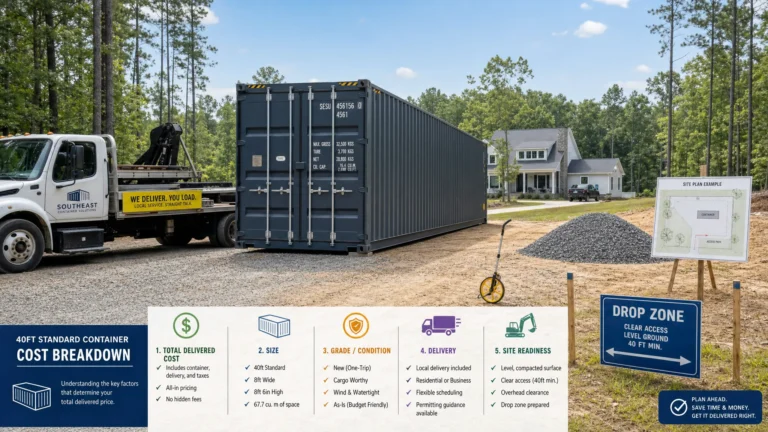
The sticker price on a container is only part of the equation. Factor in delivery fees, site preparation costs (gravel pad, leveling), any permits required by the City of Chicago, and potential modification expenses. A $3,000 container with $400 delivery, $600 in site prep, and a $200 permit brings your real cost to $4,200. Budget accordingly.
Chicago 20ft Shipping Container Market in 2026
Chicago’s container market in 2026 reflects broader national trends, but with local twists. Nationally, used shipping container prices have stabilized after the volatility of 2021-2023, when pandemic-era supply chain disruptions pushed prices up 40% to 60% above historical averages. Prices have settled back to pre-pandemic ranges, making 2026 a reasonable time to buy.
Locally, demand in Chicago follows a predictable seasonal curve. Orders spike from March through June as construction projects ramp up and homeowners tackle warm-weather projects. Prices during this window tend to run 10% to 15% higher than winter months. If you have flexibility on timing, ordering in November through February often gets you better pricing and faster delivery.
The City of Chicago has not introduced major new regulations specific to shipping containers in 2026, but enforcement of existing zoning rules has tightened in some wards. Aldermen in the 1st, 2nd, and 25th wards have been more active about requiring permits for containers placed on residential properties. Check with your local alderman’s office before assuming you can drop a container on your lot without paperwork.
Compared to the rest of Illinois, Chicago’s prices run roughly 5% to 10% higher due to higher delivery costs within the city (tolls, traffic, limited access) and stronger demand. Buyers in Joliet, Aurora, or Rockford can often find slightly lower prices, but the savings may be offset by longer delivery distances if you’re sourcing from a Chicago-area depot.
One notable trend: container offices and modified containers are gaining traction in Chicago’s commercial market. Small businesses, especially in the food and beverage industry, are using modified 20ft containers as pop-up retail spaces, ticketing booths, and satellite offices. This trend is driving more demand for one-trip containers that serve as clean starting points for modifications.
Chicago 20ft Shipping Container FAQ
How much does a 20ft shipping container cost in Chicago in 2026?
Expect to pay between $2,200 and $4,800 depending on the grade. Wind and watertight units start around $2,200, cargo worthy containers range from $2,800 to $3,800, and one-trip containers run $3,800 to $4,800. Delivery within Cook County adds $200 to $600. Suburban and collar county deliveries may cost more.
Do I need a permit to place a shipping container on my property in Chicago?
In most residential zones, yes. The City of Chicago Department of Buildings requires permits for structures placed on residential property, and a shipping container typically qualifies. Commercial and industrial zones (M1, M2, M3) are generally more permissive. Contact the Department of Buildings at (312) 744-3449 or your alderman’s office for property-specific guidance.
How long does delivery take in the Chicago area?
Standard delivery timelines run 5 to 10 business days from order confirmation. During peak season (April through October), expect 10 to 14 days. Crane deliveries or deliveries to restricted-access sites may require additional scheduling time.
Can a 20ft container fit in a Chicago alley?
Most Chicago alleys are 16 feet wide, which accommodates a 20ft container being delivered lengthwise by a tilt-bed truck. The constraint is usually overhead clearance and the truck’s turning radius at the alley entrance. Measure your specific alley and check for overhead power lines before scheduling delivery.
What’s the difference between cargo worthy and wind and watertight?
Cargo worthy containers have been inspected and certified for international ocean transport. They meet structural standards for corner castings, walls, floors, and doors. Wind and watertight containers keep weather out but haven’t been certified for shipping. They may have more cosmetic damage and older components. Both grades work well for storage; the choice depends on your budget and how long you plan to keep the container.
Can I buy a shipping container from out of state and have it delivered to Chicago?
Absolutely. Many buyers purchase from suppliers outside Illinois and arrange delivery to Chicago. Lease Lane Containers, based in Raleigh, North Carolina, offers nationwide delivery and can coordinate shipping to the Chicago metro area. The key is confirming delivery logistics and total cost upfront so there are no surprises.
Get 20ft Shipping Container in Chicago Today
If you’ve read this far, you likely have a specific project in mind. Here’s how to move forward efficiently.
Start by confirming your site access. Measure your alley or driveway width, note any overhead obstructions, and determine the surface where the container will sit. Take photos from multiple angles – any reputable supplier will want to see these before confirming delivery logistics.
Decide on your container grade based on your use case and budget. If you’re storing tools on a construction site for six months, a wind and watertight unit saves money. If you’re setting up a permanent storage solution for your small business, a cargo worthy or one-trip container is the better investment.
Get quotes from at least two to three suppliers, and make sure each quote includes delivery to your specific address. Compare total delivered cost, not just the container price. Ask about the delivery method and confirm the supplier has experience delivering to Chicago addresses with their specific access challenges.
Have your permit situation sorted before the container arrives. Nothing stalls a project faster than a container sitting on a flatbed with nowhere legal to go. Contact the City of Chicago Department of Buildings or your alderman’s office early in the process.
The best time to order is before you need the container. Rushing a purchase during peak season means higher prices and longer waits. Plan 2 to 3 weeks ahead, and you’ll have more options and better pricing.
Final Checklist
- Confirm your intended use case and select the appropriate container grade (wind and watertight, cargo worthy, or one-trip)
- Measure site access: alley width, overhead clearance, and available space for truck maneuvering
- Prepare the placement surface: gravel pad, concrete slab, or railroad ties
- Check zoning requirements with the City of Chicago Department of Buildings at (312) 744-3449
- Request quotes from multiple suppliers, comparing total delivered cost
- Ask for photos of the actual container you’ll receive
- Verify supplier insurance and check online reviews
- Schedule delivery during off-peak months (November through February) for better pricing
- Confirm delivery method: tilt-bed, roll-off, or crane
- Plan for any modifications before the container arrives
Finding the right 20ft shipping container for your Chicago project doesn’t have to be complicated. With clear information about grades, realistic pricing expectations, and proper site preparation, you can make a confident decision. If you’re ready to compare options, browse available inventory from Lease Lane Containers to see current container choices across grades and conditions. Have questions about delivery to your Chicago address or need help choosing the right size and grade? Contact us for straightforward guidance from a team that handles these decisions every day.