Ground Level Container Delivery Guide
A container can be on your site tomorrow, but if the truck cannot safely place it where you need it, tomorrow turns into a redelivery fee and a lost workday. This ground level container delivery guide explains what actually controls a successful drop-off – truck access, site conditions, clearance, and container placement – so you can plan with fewer surprises.
What ground-level delivery actually means
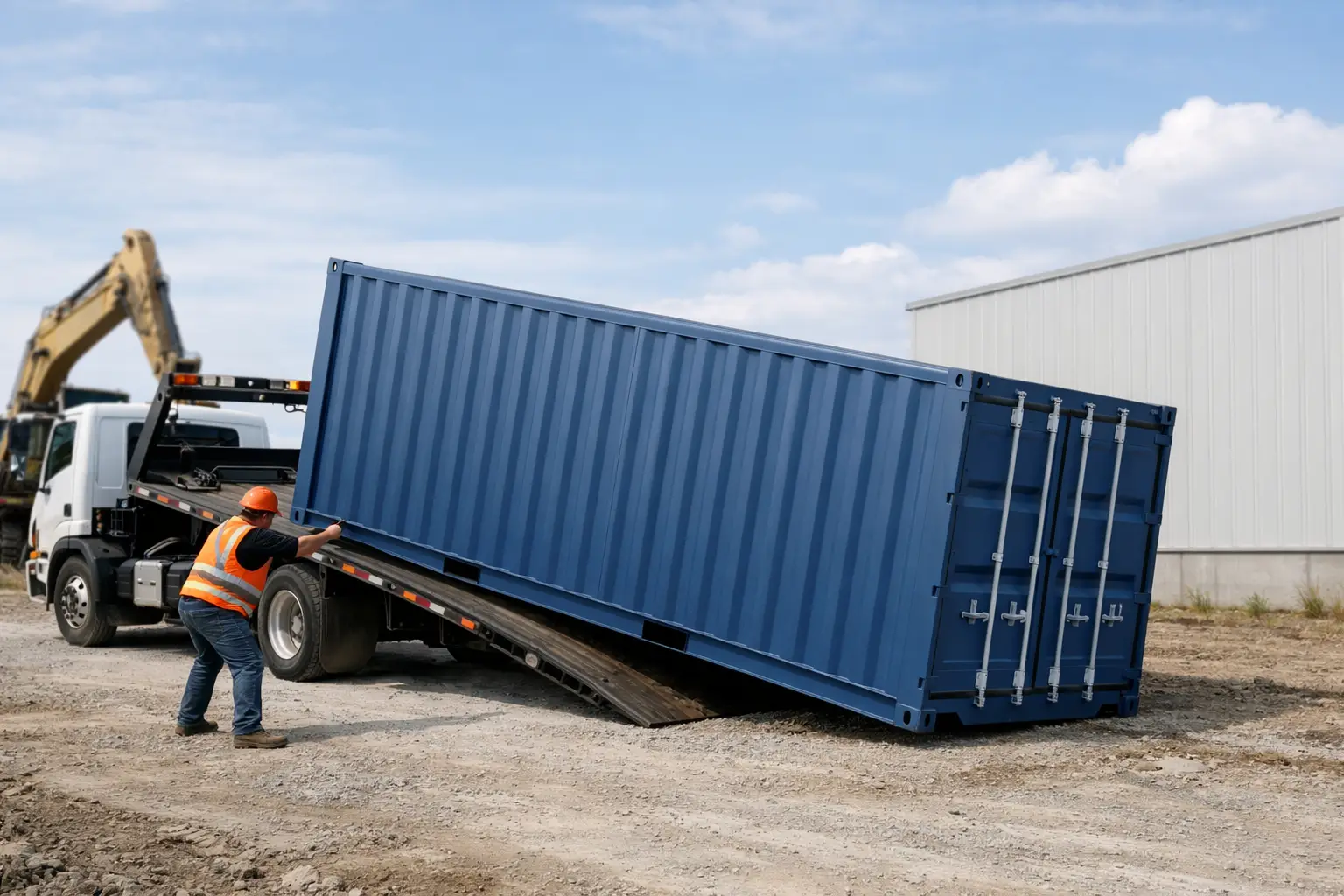
Ground-level delivery usually refers to placing the container directly on the ground or on customer-prepared supports using a tilt-bed or similar delivery setup. The driver does not crane the container into place. Instead, the truck tilts the bed and slides the container off as the vehicle moves forward.
That sounds simple, but it sets real limits. The truck and container need enough straight-line space to unload. The ground must support the combined weight of the truck and container. Overhead and side clearance matter more than many first-time buyers expect.
For contractors and agricultural operators, this method is often the fastest and most cost-effective option for secure onsite storage. For homeowners, it is usually the most practical way to receive a 20-foot or 40-foot unit without arranging specialized lifting equipment.
When ground-level delivery is the right choice
A ground-level drop works best when the site is relatively open, reasonably level, and easy to approach from the road or driveway. It is a strong fit for job sites, farms, equipment yards, retail overflow storage, and residential properties with clear access.
It may not be the right fit if you need the container placed behind a structure, over a curb line, inside a tight fenced area, or in a spot that requires turning and unloading at the same time. In those cases, a crane, forklift, or different delivery strategy may be needed. That usually adds cost, but sometimes it is the only safe option.
The three questions that decide the delivery plan
Before a dispatcher confirms a ground-level drop, three practical questions matter more than anything else.
First, can the truck get in and out safely? A delivery route may look fine on a map but still fail because of soft shoulders, narrow gates, low trees, utility lines, or sharp turns.
Second, can the site support the weight? A loaded tilt-bed truck placing a steel container is not comparable to a pickup backing into a driveway. Soft soil, fresh fill, wet grass, or thin asphalt can become a problem quickly.
Third, is there enough room to unload in a straight path? The truck needs working distance to tilt the bed and slide the container off. If the placement area is too short or blocked at either end, the driver may not be able to complete the drop.
Ground level container delivery guide for site preparation
The best site prep is not complicated, but it needs to be done before the truck arrives. Start with the footprint. A standard 20-foot container is about 20 feet long and 8 feet wide. A 40-foot container is about 40 feet long and 8 feet wide. High-cube units add extra height, which can affect overhead clearance.
The placement area should be level from front to back and side to side as much as possible. Perfectly flat is not always necessary, but major slope creates problems with door alignment, long-term settling, and water runoff. If a container twists too much during placement, the cargo doors can become difficult to open and close.
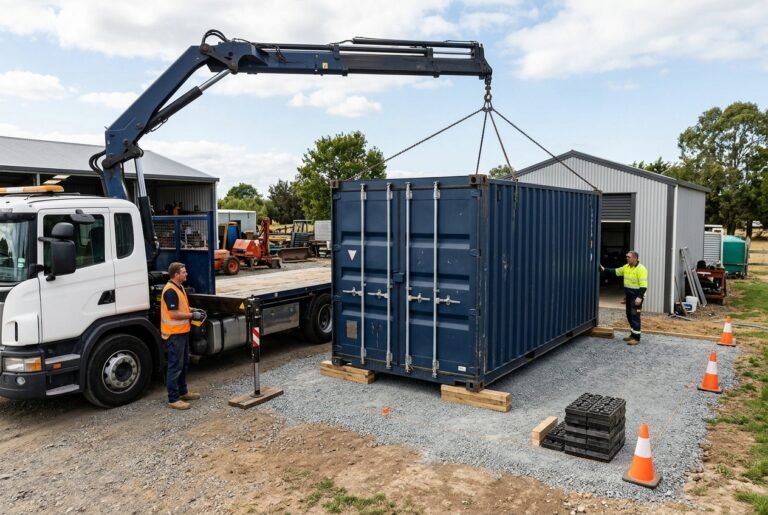
Compacted gravel is one of the most reliable surfaces for delivery and long-term use. It drains well, distributes weight better than bare soil, and gives the driver a more stable approach. Concrete pads also work well when sized correctly. Bare dirt can work in dry conditions, but it is far less predictable, especially after rain.
Many buyers also use railroad ties, concrete blocks, or steel plates under the corner castings. That can be a good solution when done correctly because shipping containers are designed to carry loads through the corners. The key is consistent support. Uneven blocking can create unnecessary stress on the frame.
Clearance requirements people miss
Most delivery problems are clearance problems. Buyers often measure the final container location but forget the full unloading path.
Length is the first issue. The truck needs more than the container’s length to complete a tilt-bed unload. A 40-foot container can require substantial linear space for the truck, trailer movement, and unloading angle. If the approach is tight, a 20-foot unit may be much easier to place even when a larger container would be preferable for storage capacity.
Height is the next issue. Tree limbs, power lines, carports, and building overhangs can stop a delivery immediately. During unloading, the front end of the container rises as the bed tilts, so the working height is greater than the resting height of the container.
Width matters too. Gates, fence openings, parked equipment, and retaining walls can limit truck movement. Even if the container itself fits, the truck still needs room to align and unload safely.
Surface conditions and weight limits
A shipping container is heavy even before you put anything inside it. Add the delivery truck, and the load on the ground becomes significant. This is where residential driveways and rural access roads deserve a close look.
Asphalt can deform in hot weather. Concrete driveways may crack if they are not designed for commercial vehicle loads. Septic fields, drain tiles, and underground utilities can also create hidden risk beneath what looks like a usable surface.
On construction sites, recently graded areas may still be too soft for a truck. On farms, pasture access can look dry near the entrance but remain unstable farther in. If conditions are questionable, say so upfront. A good delivery team would rather evaluate the site in advance than force a drop that damages property or gets a truck stuck.
Choosing the right container size for delivery reality
Sometimes the best container is not the biggest one. If access is tight, a 20-foot container may save time, reduce placement risk, and eliminate the need for expensive secondary handling.
A 40-foot unit makes sense when inventory volume or equipment length requires it, but it asks more from the site. It needs more turning space, more unloading room, and more attention to grade changes. A 45-foot container can be even more restrictive depending on route and local conditions.
This is also where container grade matters. If appearance is important for a retail pop-up, residential workshop, or customer-facing location, a one-trip or refurbished unit may be worth the added cost. If the main goal is secure job-site storage, a Wind & Watertight container often delivers the best value. The delivery planning is similar either way, but the right grade helps avoid paying for features you do not need.
What to send your delivery coordinator
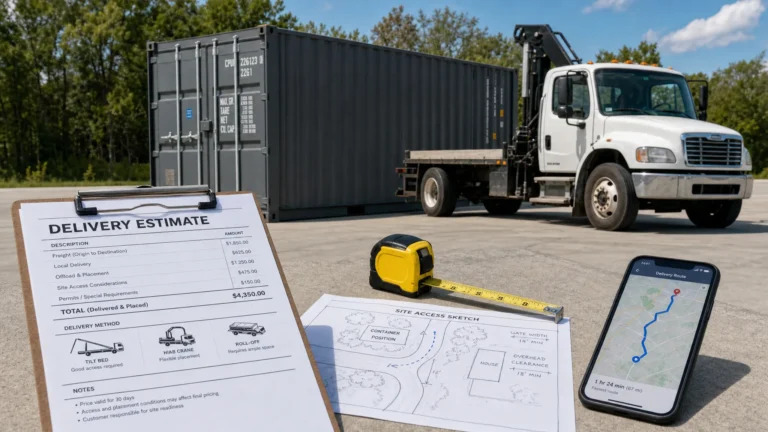
Photos are better than guesses. A few clear site pictures from the road entrance to the final placement area can prevent a lot of avoidable issues. Include gate openings, slopes, overhead lines, trees, and any obstacle that would affect truck movement.
Basic measurements help too. Width of access roads, length of straight approach, distance from the road to the drop spot, and overhead clearance are all useful. If you know the surface type – gravel, concrete, packed dirt, or grass – include that as well.
For commercial and industrial buyers, mention any site rules such as restricted delivery hours, check-in procedures, spotters, or PPE requirements. For residential deliveries, mention HOA restrictions, narrow driveways, shared lanes, or soft shoulders. These details are not minor. They often decide whether the first trip succeeds.
Day-of-delivery expectations
When the truck arrives, the drop usually goes quickly if the site was prepared correctly. The driver will assess access, confirm placement direction, and unload only if it can be done safely. That safety call is not optional. If conditions differ from what was described, the driver may refuse placement or recommend a different spot.
Make sure the placement area is clear of vehicles, equipment, debris, and bystanders. If container doors need to face a certain direction, confirm that before unloading starts. Once the container is on the ground, repositioning it is not simple without additional equipment.
It is also smart to think beyond the drop. Leave room to open cargo doors fully, to load with a forklift if needed, and to manage drainage around the container after installation.
Common reasons deliveries get delayed
The usual causes are soft ground, blocked access, low branches, inaccurate measurements, and last-minute placement changes. Weather can also be a factor, especially on dirt or grass surfaces.
Another common issue is assuming any flat-looking area will work. A container needs a site that is not just flat enough to look acceptable, but stable enough to support placement and long-term use. That difference matters.
If you want zero-surprises delivery, the best approach is simple: share accurate photos, prepare the surface properly, and ask questions before dispatch. Teams that handle container logistics every day can solve a lot, but only if they get the full picture before the truck is rolling.
A well-planned ground-level delivery is not complicated. It just rewards honesty and preparation. If your site has a constraint, say it early. The right delivery plan is almost always cheaper than fixing the wrong one after the truck arrives.