Best used shipping containers in Los Angeles, California | 2026 Guide
Table of Contents
- Table of Contents
- Los Angeles used shipping containers Quick Facts
- used shipping containers in Los Angeles: What You Need to Know
- Where Containers Are Available
- What Services Are Available
- Top used shipping containers Options in Los Angeles
- Budget-Friendly: Wind and Watertight (WWT) Grade
- Mid-Range: Cargo Worthy (CW) Grade
- Premium: One-Trip Containers
- How to Choose the Right used shipping containers in Los Angeles
- Verify the Container Grade
- Inspect Before You Buy (or Get Detailed Photos)
- Confirm Delivery Logistics
- Check California Permit Requirements
- Los Angeles used shipping containers Market in 2026
- Supply and Demand Dynamics
- Seasonal Patterns
- Regulatory Changes
- How LA Compares to the Rest of California
- Los Angeles used shipping containers FAQ
- How much does a used shipping container cost in Los Angeles?
- Do I need a permit to place a shipping container on my property in LA?
- How long does delivery take?
- Can I inspect the container before buying?
- What’s the difference between cargo worthy and wind and watertight?
- What size container do most LA buyers choose?
- Get used shipping containers in Los Angeles Today
- Final Checklist
Table of Contents
- Los Angeles Used Shipping Containers Quick Facts
- Used Shipping Containers in Los Angeles: What You Need to Know
- Top Used Shipping Container Options in Los Angeles
- How to Choose the Right Used Shipping Containers in Los Angeles
- Los Angeles Used Shipping Container Market in 2026
- Los Angeles Used Shipping Containers FAQ
- Get Used Shipping Containers in Los Angeles Today
- Final Checklist
Los Angeles sits at the center of the largest port complex in the Western Hemisphere. The Port of Los Angeles and the Port of Long Beach together handle roughly 40% of all containerized cargo entering the United States, which means the city has one of the deepest pools of used shipping containers anywhere in the country. For buyers looking for the best used shipping containers in Los Angeles, California, this 2026 guide breaks down pricing, grading, delivery logistics, and the specific factors that make the LA market unique.
Whether you’re a contractor setting up a job site storage solution in Sylmar, a small business owner expanding warehouse capacity in Vernon, or a homeowner building a container workshop in the San Fernando Valley, the sheer volume of containers cycling through LA’s ports creates real opportunities. But volume also means variability. Not every container on the market is worth buying, and condition matters as much as size when matching a container to your project. Understanding the local market, common grades, and delivery requirements will save you both money and headaches. Lease Lane Containers works with buyers across the country, including Los Angeles, to help match the right container grade and size to the job, with clear guidance on shipping container delivery planning from start to finish.
Los Angeles used shipping containers Quick Facts
Here are the essential numbers and details LA buyers should know before starting their search:
- Typical pricing range: Used shipping containers in Los Angeles generally run between $1,400 and $4,500 depending on size, grade, and condition. A 20-foot wind and watertight unit typically starts around $1,400 to $2,200, while a 40-foot cargo worthy container ranges from $2,000 to $3,800. One-trip containers (technically “like new”) command $3,500 to $5,500 or more.
- Response and delivery time: Most reputable suppliers can schedule delivery within 5 to 14 business days after purchase, though high-demand periods (spring and early summer) may push timelines to 2 to 3 weeks.
- Service area coverage: LA-based container depots are concentrated near the ports in Wilmington, San Pedro, and Carson, with additional yards scattered through the Inland Empire (Ontario, Fontana, Riverside). Delivery is available throughout Los Angeles County, Orange County, Ventura County, and the Inland Empire.
- What makes local providers stand out: Proximity to the ports means LA buyers have access to fresher inventory with more grade options than most U.S. markets. Containers that just came off international shipping routes are regularly de-listed and sold, keeping supply high and prices competitive compared to inland cities.
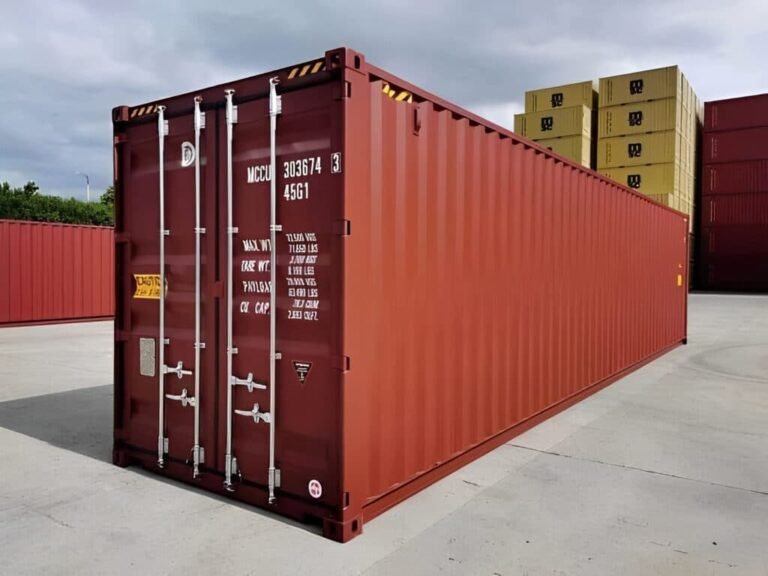
- Common container dimensions: The two most popular sizes are 20-foot (20 ft x 8 ft x 8.5 ft) and 40-foot (40 ft x 8 ft x 8.5 ft) standard units. High cube shipping containers add an extra foot of height (9.5 ft), which is valuable for workshop or office conversions.
used shipping containers in Los Angeles: What You Need to Know
Los Angeles is not a typical container market. The city’s direct connection to trans-Pacific trade routes means thousands of containers are offloaded, inspected, and cycled out of active shipping service every month. This creates a buyer’s market that most U.S. cities simply can’t match in terms of selection and price.
Where Containers Are Available
The heaviest concentration of container yards sits within a 15-mile radius of the twin ports. Wilmington and Carson host multiple depots where containers are stored, graded, and sold. Buyers in the San Fernando Valley, East LA, South LA, and the Westside can typically get delivery from these yards without excessive transport fees. For those in Santa Clarita, Palmdale, or the northern reaches of LA County, delivery costs increase due to distance and the mountain passes involved.
The Inland Empire functions as a secondary hub. Ontario and Fontana have large yards that serve both LA overflow and buyers in Riverside and San Bernardino counties. If you’re east of downtown, sourcing from an Inland Empire yard may actually reduce your delivery cost.
What Services Are Available
The LA market supports the full range of container transactions: outright purchase of used units, one-trip containers, modified containers (with roll-up doors, ventilation, electrical packages), and container offices. Buyers can also find specialty units like open-top containers, flat racks, and refrigerated (reefer) containers, though these are less common in the used market and carry higher price tags.
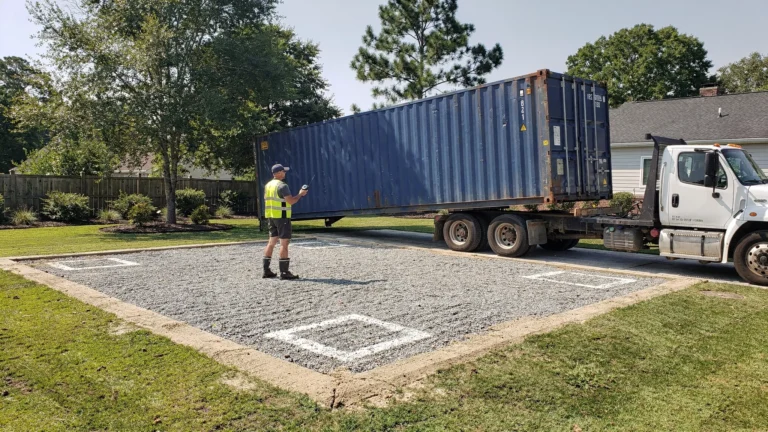
Site prep and delivery planning are critical in Los Angeles. Many residential neighborhoods have narrow streets, overhead power lines, and limited turning radius for delivery trucks. A tilt-bed truck typically needs about 100 feet of straight clearance to offload a 40-foot container, and a roll-off truck needs even more room to maneuver. Confirming site access before purchasing is a step that prevents costly failed deliveries.
Top used shipping containers Options in Los Angeles
Not all used containers are equal, and the right choice depends on your budget, intended use, and how long you need the container to last. Here’s how the LA market breaks down by tier.
Budget-Friendly: Wind and Watertight (WWT) Grade
Wind and watertight containers are the most affordable option, typically priced between $1,400 and $2,400 for a 20-foot unit and $1,800 to $3,000 for a 40-foot unit. These containers show visible wear: surface rust, dents, patched areas, and cosmetic damage. However, they still keep weather out and protect contents from rain and wind.
This grade is best for on-site storage, agricultural use, equipment lockup on construction sites, and situations where appearance doesn’t matter. A contractor storing tools at a job site in Boyle Heights or a farm operation in the northern LA County foothills will get solid value from a WWT unit.
Mid-Range: Cargo Worthy (CW) Grade
Cargo worthy containers have been inspected and certified as structurally sound enough to be loaded onto a cargo ship. Pricing runs $2,200 to $3,200 for a 20-foot unit and $2,800 to $3,800 for a 40-foot unit. These containers have less cosmetic damage, better-functioning doors, and intact floor systems.
CW grade is the sweet spot for most buyers. If you’re planning a small business storage solution, a retail pop-up shell, or a workshop conversion, cargo worthy gives you a solid foundation without the premium price of a one-trip container. This grade also holds resale value better than WWT units.
Premium: One-Trip Containers
One-trip containers have made a single voyage from the manufacturing facility (usually in China) to the U.S. They arrive with minimal wear, fresh paint, intact rubber door seals, and no rust. Pricing starts around $3,500 for a 20-foot unit and $4,500 to $5,500 for a 40-foot unit.
These are the right choice for container homes, visible commercial installations, and any project where appearance and long-term durability matter. In LA, where container architecture is increasingly popular in neighborhoods like Arts District and Echo Park, one-trip units are the standard starting point for conversion projects. Lease Lane Containers provides transparent grading guidance to help buyers compare these tiers and match the right condition to their project.
How to Choose the Right used shipping containers in Los Angeles
Buying a used shipping container is straightforward if you ask the right questions and verify the right details. Here’s a practical decision framework for LA buyers.
Verify the Container Grade
Always ask for the specific grade: wind and watertight, cargo worthy, or one-trip. Some sellers use vague language like “good condition” or “solid unit” to avoid committing to a grade. A cargo worthy certification (sometimes called a CSC plate inspection) is a verifiable standard. If a seller can’t tell you the grade, move on.
Inspect Before You Buy (or Get Detailed Photos)
If you can visit the yard in person, check these items:
- Door operation: both doors should open and close smoothly, with gaskets that still compress
- Floor condition: look for soft spots, holes, or heavy water damage in the marine plywood flooring
- Roof: check for rust-through, especially along the corrugated ridges where water pools
- Corner castings: these are the structural connection points; cracks or heavy corrosion here compromise the entire unit
- Undercarriage: look for chassis corrosion, bent cross members, and forklift damage
If you can’t visit in person, request dated photos of all four sides, the interior, the roof, and the undercarriage. Reputable sellers provide these without hesitation.
Confirm Delivery Logistics
Los Angeles presents specific delivery challenges. Before purchasing, measure your site access carefully. You need to know the width of your driveway or gate (minimum 10 feet for a standard container), overhead clearance (watch for power lines, tree branches, and carport structures), and turning radius for the delivery truck.
A tilt-bed truck is the most common delivery method for residential and tight commercial sites. It requires roughly 80 to 100 feet of straight-line space to slide the container off. If your site is on a hillside (common in Silver Lake, Mount Washington, or the Hollywood Hills), discuss placement options with your supplier before committing. Lease Lane Containers offers delivery planning support to help buyers confirm site access, placement, and clearance requirements before the truck arrives.
Check California Permit Requirements
Los Angeles County and the City of LA have different rules for container placement. Temporary storage containers on construction sites generally don’t require permits, but permanent placement on residential or commercial property often does. Contact the LA Department of Building and Safety (LADBS) at (213) 482-0000 or visit ladbs.org to check zoning and permit requirements for your specific address.
Los Angeles used shipping containers Market in 2026
The LA container market in 2026 reflects broader shifts in global trade patterns and local construction activity. Here’s what’s shaping prices and availability right now.
Supply and Demand Dynamics
Trans-Pacific trade volumes through the San Pedro Bay port complex reached record levels in late 2024 and early 2025, driven by front-loading of imports ahead of tariff changes. This surge increased the number of containers being retired from active shipping service, which has kept used container supply healthy heading into 2026. Buyers are seeing slightly lower prices on WWT and CW grade units compared to 2024, with 20-foot WWT containers dropping roughly 8 to 12% in some yards.
Seasonal Patterns
Spring and summer are peak buying seasons in LA. Construction activity ramps up, and demand for job site storage spikes between March and August. Buyers who purchase in the fall or winter months (October through January) often find better pricing and faster delivery windows. If your timeline is flexible, buying off-season can save $200 to $500 per container.
Regulatory Changes
California’s evolving building codes continue to affect container-based construction projects. The 2025 California Building Code update maintained provisions for shipping container structures but requires engineering stamps and compliance with Title 24 energy standards for any container converted to habitable space. This doesn’t affect buyers using containers strictly for storage, but it adds cost and complexity to conversion projects.
How LA Compares to the Rest of California
Los Angeles consistently offers the lowest used container prices in California due to port proximity. Buyers in Sacramento, Fresno, or the Bay Area typically pay $300 to $800 more per unit after factoring in transport from Southern California depots. San Diego prices are comparable to LA, but selection is more limited. If you’re buying in California, sourcing from the LA or Inland Empire market almost always makes financial sense, even with delivery charges to other parts of the state.
Los Angeles used shipping containers FAQ
How much does a used shipping container cost in Los Angeles?
A 20-foot wind and watertight container typically costs $1,400 to $2,200. A 40-foot cargo worthy unit runs $2,800 to $3,800. One-trip containers start around $3,500 for a 20-foot unit. Prices fluctuate based on supply cycles at the ports, seasonal demand, and the specific condition of each unit. Delivery within LA County usually adds $200 to $600 depending on distance from the yard.
Do I need a permit to place a shipping container on my property in LA?
For temporary placement (typically under 180 days) on a construction site, you generally don’t need a permit. For permanent placement on residential or commercial property, you’ll likely need a building permit from LADBS. Zoning restrictions vary by neighborhood, and some areas in LA have HOA rules that prohibit visible containers. Always check with your local planning department before purchasing.
How long does delivery take?
Most LA-area deliveries happen within 5 to 14 business days after purchase. If you need a specific grade or size that isn’t immediately available in local yards, expect 2 to 3 weeks. Rush delivery is sometimes available for an additional fee.
Can I inspect the container before buying?
Yes, most yard-based sellers in the Wilmington, Carson, and Ontario areas allow in-person inspections during business hours. If you’re buying from a supplier that ships from a different region, request detailed photos and ask about their return or exchange policy. A supplier that won’t provide photos or allow inspection is a red flag.
What’s the difference between cargo worthy and wind and watertight?
Cargo worthy means the container has been inspected and certified as structurally sound enough for international shipping. Wind and watertight means it keeps weather out but may not meet the structural standards for ocean transport. For most storage and project uses, both grades work well. CW is the better choice if you want stronger structural integrity and plan to resell the container later.
What size container do most LA buyers choose?
The 40-foot standard and 40-foot high cube shipping container are the most popular sizes for storage and commercial use. Homeowners and smaller projects often go with 20-foot units, which are easier to place on residential lots and require less site prep. High cube containers (9.5 ft tall instead of 8.5 ft) are preferred for workshop and office conversions because the extra headroom makes a noticeable difference in usability.
Get used shipping containers in Los Angeles Today
The LA market gives buyers more options and better pricing than almost anywhere else in the country. Whether you need a single 20-foot unit for backyard storage or multiple 40-foot containers for a commercial project, the path to a good purchase follows the same steps.
Start by defining your use case and matching it to the right grade. Storage-only projects can save money with a wind and watertight unit. Projects that need structural integrity or better aesthetics should look at cargo worthy or one-trip containers. Measure your site access before you shop: knowing your driveway width, overhead clearance, and available space for truck maneuvering prevents the most common delivery problems.
Have these details ready when you contact a supplier: your delivery address, the container size and grade you need, your timeline, and any site access concerns. This information lets suppliers give you accurate pricing and realistic delivery estimates on the first call.
Lease Lane Containers works with buyers across the country, including throughout Los Angeles County, to match the right container to the job. With clear guidance on grades, dimensions, and delivery logistics, the goal is fewer surprises between purchase and placement.
Final Checklist
Before you commit to a used shipping container purchase in Los Angeles, run through these steps:
- Confirm the container grade (WWT, CW, or one-trip) and get it in writing
- Request dated photos of all sides, interior, roof, and undercarriage if you can’t inspect in person
- Measure your site: driveway width (minimum 10 ft), overhead clearance (minimum 14 ft for delivery truck), and straight-line space for offloading (80 to 100 ft)
- Check permit requirements with LADBS at (213) 482-0000 or ladbs.org
- Compare pricing across at least two to three suppliers before committing
- Ask about delivery method (tilt-bed vs. roll-off) and confirm which works for your site
- Verify the seller’s return or dispute policy before paying
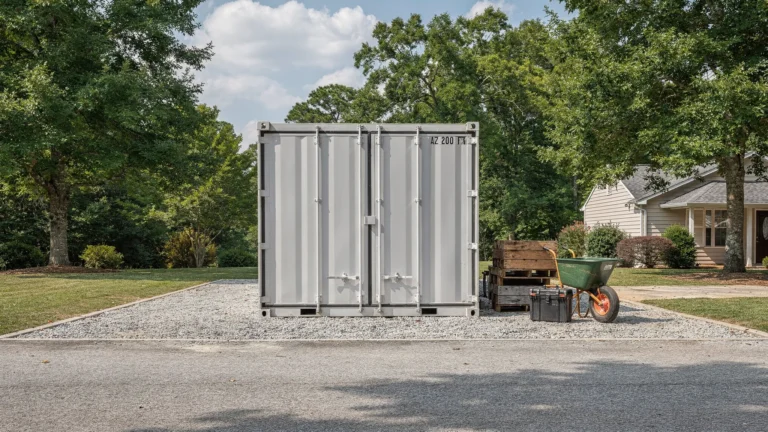
- Plan your foundation: a level gravel pad or concrete piers prevent settling and moisture problems
If you’re ready to compare sizes, grades, and current availability, browse our inventory to see what’s available for delivery to Los Angeles. Have questions about site prep, delivery logistics, or which grade fits your project? Contact us and we’ll help you work through the details.