How to Buy a Shipping Container With Delivery Included
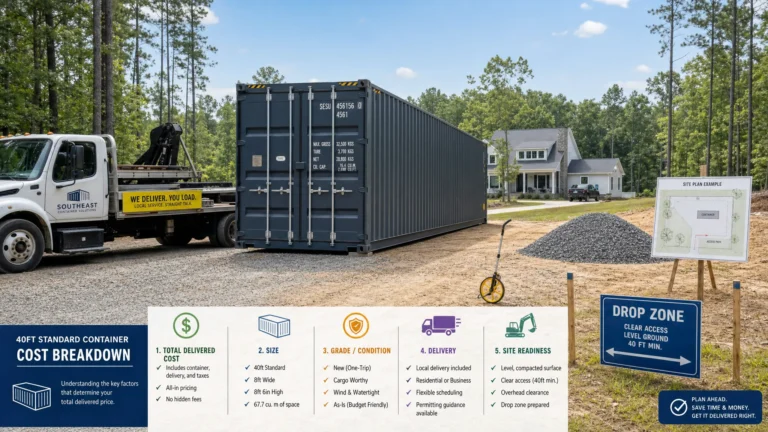
Buying a shipping container with delivery included should make the purchase simpler, not more confusing. The right quote tells you the container grade, the size, the delivery method, the drop location assumptions, and what happens if the site is not ready when the truck arrives.
That matters whether you are a general contractor storing tools on a Raleigh jobsite, a small business adding inventory overflow space, a homeowner planning long-term storage, or a logistics manager sourcing a Cargo Worthy unit for transport. A shipping container with delivery is only a good deal when the container itself and the placement plan match your use case.
Use this guide to compare delivered quotes, understand container grades, prepare your site, and avoid the most common buying mistakes.
What delivery included should mean in a container quote
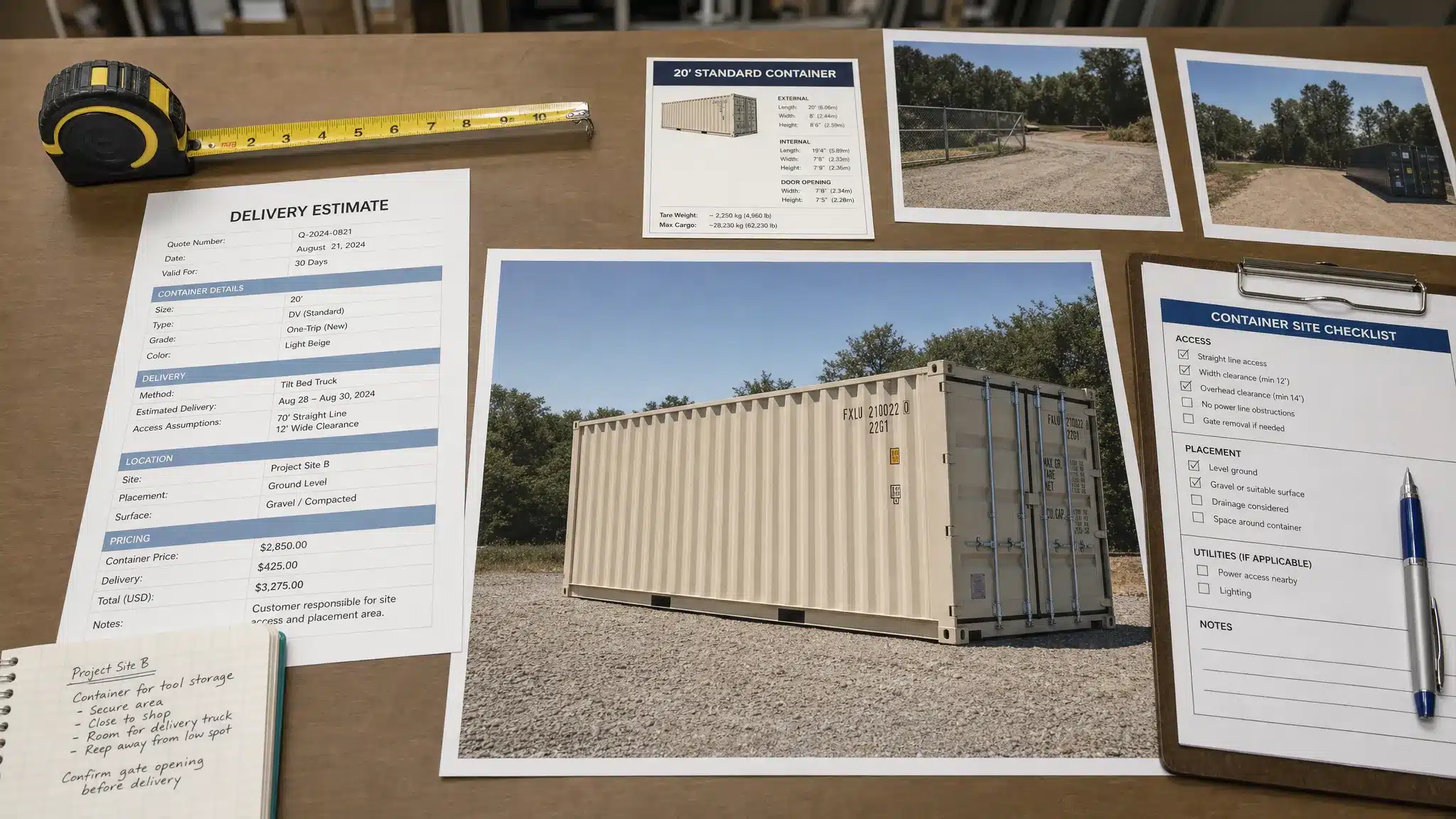
Delivery included should not be a vague promise. It should be a written quote that explains where the container is coming from, where it is going, how it will be unloaded, and what site conditions are required for the included price to apply.
For buyers in Raleigh, Wake County, and the broader Southeast, delivery conditions can vary widely. A container placed on a flat gravel lot near a wide commercial driveway is very different from a 40ft High Cube delivery down a narrow residential lane with low branches and soft soil.
Before comparing prices, confirm these details in writing:
| Quote detail | What to confirm | Why it matters |
|---|---|---|
| Container size and type | 20ft, 40ft, High Cube, refrigerated, or specialty unit | Size affects truck access, unloading method, and placement space |
| Container grade | One-Trip, Cargo Worthy, Wind & Watertight, or another stated condition | Grade determines structural value, weather protection, and suitability for storage or transport |
| Delivery address | Full address or ZIP code, not just the city | Delivery cost changes with distance, route, and accessibility |
| Unloading method | Tilt-bed, flatbed, side-loader, crane, or chassis delivery | Each method has different space, ground, and clearance requirements |
| Final placement | Whether the quote includes ground-level placement at the marked spot | Some quotes include transport only, while others include a standard drop |
| Site assumptions | Level ground, adequate clearance, firm access, and no obstructions | Unprepared sites can cause delays, rescheduling, or extra equipment needs |
| Exclusions | Permits, site prep, tree trimming, utility coordination, or special equipment | Delivery included usually does not mean every site-related cost is included |
A clear delivered quote protects both sides. It helps the seller dispatch the right truck, and it helps you budget for the full project instead of only the container shell.
Step 1: Choose the right size and type first
Most buyers start with price, but the better starting point is use case. Shipping containers are built around ISO standards, with strong Corten Steel shells, corner castings, steel crossmembers, and marine-grade floors designed for heavy freight environments. That strength is useful, but only if the size fits your property and your workflow.
A 20ft unit is often easier to place in residential driveways, smaller jobsites, farms, and tight business lots. If you are comparing 20ft containers, think about access as much as capacity. A smaller unit may cost more per square foot than a 40ft unit, but it can save headaches when turning space is limited.
A 40ft container is usually the better fit for contractors, agricultural storage, warehouse overflow, and larger equipment. Buyers comparing 40ft containers should account for the longer truck setup area required during unloading.
High Cube containers add extra height, typically 9ft 6in exterior height rather than the standard 8ft 6in. That extra vertical space is valuable for mobile offices, workshops, palletized inventory, and modular conversions. If interior height matters, review High Cube container dimensions before you request a quote.
| Container type | Common use case | Delivery consideration |
|---|---|---|
| 20ft standard | Residential storage, small contractors, farms, compact lots | Easier to maneuver and place in tighter spaces |
| 40ft standard | Jobsite materials, business inventory, equipment storage | Requires more straight-line unloading space |
| 40ft High Cube | Workshops, offices, bulky storage, modular projects | Needs more overhead clearance because of added height |
| Refrigerated container | Cold storage for food, florals, pharmaceuticals, or events | Requires power planning, ventilation space, and tested refrigeration performance |
For refrigerated units, also confirm electrical requirements, temperature range, and whether the unit has been tested under load. Buyers evaluating cold storage should ask more detailed questions than they would for a dry storage container. This refrigerated container buyer guide explains what to verify before purchase.
Step 2: Understand grades before comparing delivered prices
A low delivered price is not useful if the grade is wrong for your project. Container grades describe condition, not just appearance. They also affect lifespan, modification potential, resale value, and whether the unit is appropriate for shipping cargo.
| Grade | What it means | Best for | What to watch |
|---|---|---|---|
| One-Trip | A container that has typically made one loaded ocean voyage and is the closest common resale option to new | Customer-facing projects, offices, container homes, long-term storage, premium sites | Higher upfront cost, but cleaner appearance and longer expected service life |
| Cargo Worthy (CW) | Structurally sound for cargo transport and typically suitable for intermodal use when documentation is current | Export, transport, stacking, high-value storage, rugged jobsite use | Ask about CSC plate status and whether a survey is needed for export |
| Wind & Watertight (WWT) | Used container that should keep out wind and water but is not necessarily certified for ocean cargo | Stationary storage, tools, farm supplies, household items, business overflow | Inspect roof, door seals, floor, and rust carefully |
| As-Is | Condition varies and may include leaks, structural damage, or significant repairs needed | Limited budget projects where repairs are expected | Higher risk, not ideal for valuable storage without inspection |
One-Trip containers are often the best choice when appearance matters or when the container will be modified into an office, retail pop-up, workshop, or cabin. A cleaner shell makes door and window cutouts easier to plan, and the factory paint system is usually in better condition.
Cargo Worthy containers make sense when structural integrity is the priority. They are especially relevant for logistics managers and buyers who may need international shipping compatibility. If the container will move freight, ask about the CSC plate and whether a current inspection or survey is required.
Wind & Watertight containers are a practical value for many Raleigh-area contractors, farmers, and homeowners who need stationary storage. A WWT unit should protect contents from normal weather, but it may have dents, patches, surface rust, and cosmetic wear from years of service.
If you are evaluating used containers, do not rely on grade name alone. Ask for photos, inspection notes, and a clear description of doors, gaskets, roof condition, flooring, and corner castings.
Step 3: Request an itemized delivered quote
Once you know the size and grade, ask for a delivered quote that separates assumptions from certainties. The goal is not to create unnecessary paperwork. The goal is to avoid surprises on delivery day.
A good quote request should include:
- Delivery ZIP code and full site address if available
- Container size, type, and grade preference
- Standard height or High Cube preference
- Intended use, such as storage, export, office conversion, agriculture, or retail
- Photos of the driveway, gate, approach road, and drop area
- Surface type, such as gravel, concrete, asphalt, dirt, or grass
- Known obstacles, including trees, fences, slopes, ditches, power lines, and tight turns
- Desired door orientation and exact placement area
When a seller asks about your site, that is usually a good sign. Delivery planning is part of the container purchase, especially in the Southeast where clay soil, heavy rain, trees, and uneven rural access can affect placement.
If you are comparing multiple sellers, compare total delivered value instead of the lowest advertised container price. A lower unit price can disappear quickly if delivery, special equipment, or rescheduling is not included. For a broader purchasing framework, see Lease Lane Containers LLC’s Ultimate Shipping Container Buyers Guide.
Step 4: Match the delivery method to your property
The delivery method determines how much room you need and how precise the placement can be. It also affects whether the container can be set directly on your pad or needs additional equipment.
| Delivery method | Best for | Site requirements |
|---|---|---|
| Tilt-bed delivery | Most ground-level 20ft and 40ft storage drops | Straight approach, firm level surface, enough room for truck and trailer to pull forward |
| Flatbed delivery | Commercial sites with unloading equipment available | Forklift, crane, or other equipment needed on site |
| Side-loader delivery | Placement where forward pull-off space is limited | Adequate side clearance and stable ground beside the truck |
| Crane delivery | Tight urban sites, over-fence placement, difficult angles | Higher planning needs, overhead clearance, proper lifting plan, and safe setup area |
| Chassis delivery | Temporary logistics use where the container stays elevated | Suitable access and use case for container-on-chassis setup |
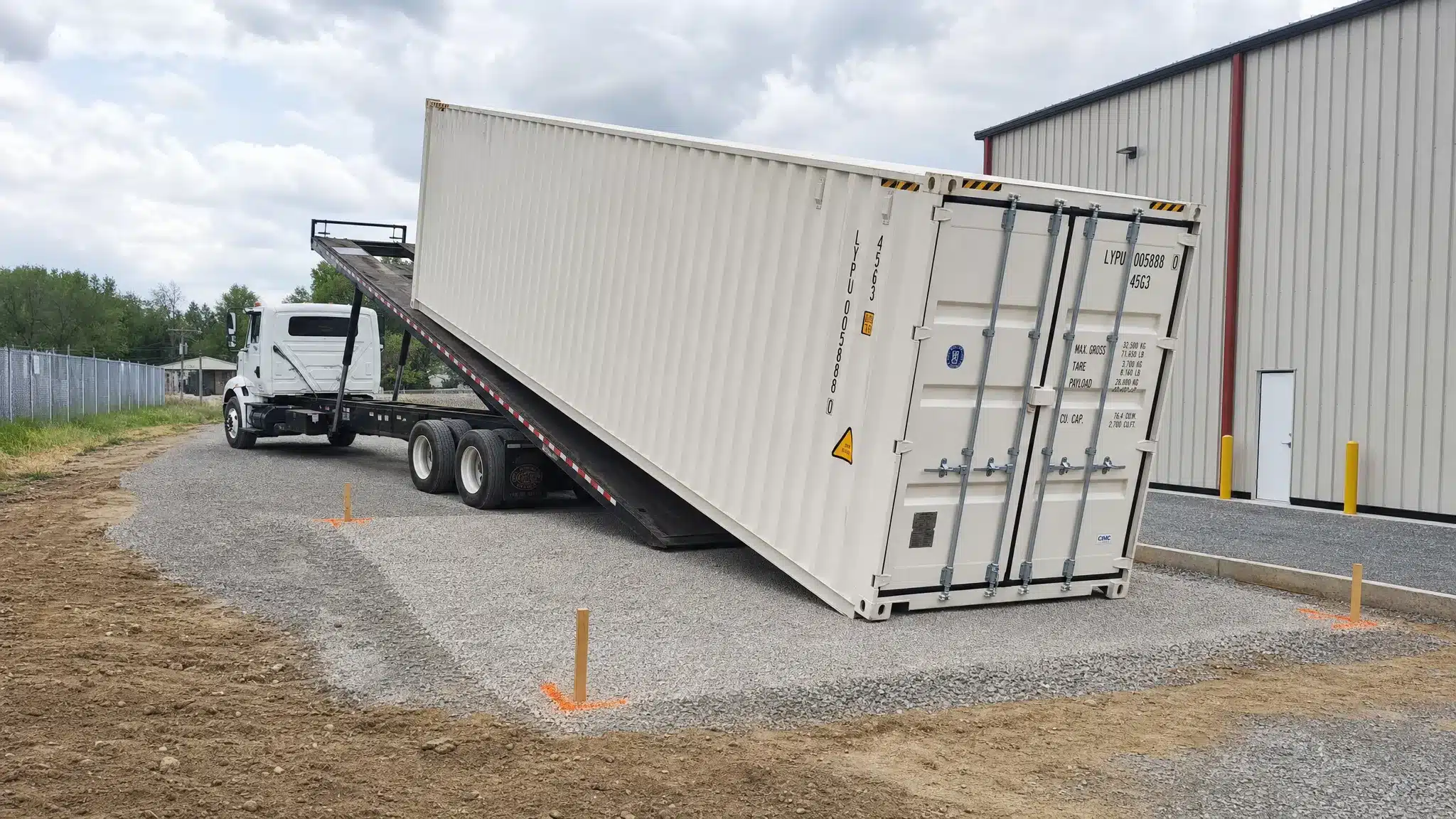
Tilt-bed delivery is common because it can place the container on the ground without a crane. The truck backs into position, tilts the trailer, sets one end down, and pulls forward as the container slides into place. This works well when there is enough straight-line distance and the ground can support the truck.
For dense commercial properties, downtown Raleigh locations, tight residential lots, or sites with limited access, a crane or side-loader may be more appropriate. Those options can solve access problems, but they require more coordination and are not always part of a standard delivery-included quote.
Before scheduling, review your route with the seller. Lease Lane’s guide to shipping container delivery requirements is a helpful starting point for measuring access, clearance, and ground conditions.
Pro-Tip: Prepare the pad before you schedule the truck
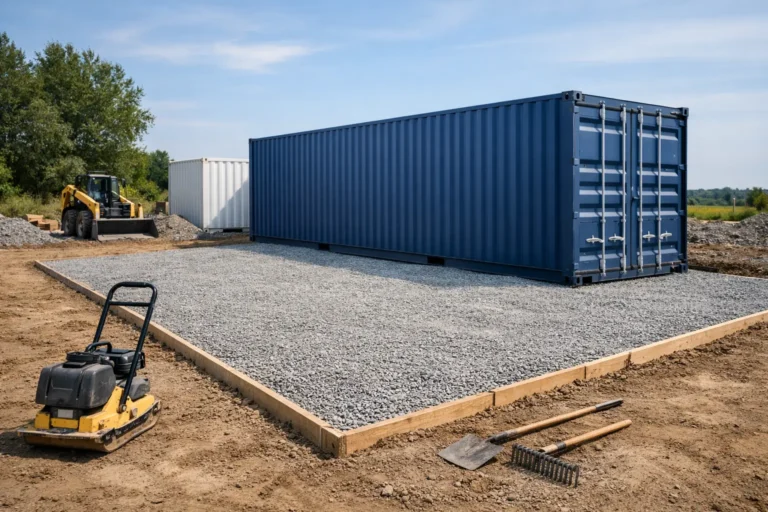
A container is only as stable as the surface under it. For most long-term storage projects in North Carolina, a compacted gravel pad is one of the most practical foundations because it drains well, supports weight, and helps keep the steel base away from standing water.
The pad should be level, firm, and slightly larger than the container footprint. At minimum, the four corner castings need stable support. For heavy storage, frequent forklift loading, or long-term placement, additional support along the side rails can reduce stress and help keep the doors aligned.
Avoid placing a container directly in a low area where water collects. Corten Steel is designed to be durable, but standing moisture under the container can accelerate corrosion over time. Good drainage is especially important in Raleigh and the Southeast, where humidity and storm runoff can be tough on poorly prepared sites.
Also check permits, zoning, and HOA rules before delivery. Requirements vary by city, county, property type, duration of use, and whether the container is temporary storage or part of a modified structure. If you plan to dig, trench, install piers, or run utilities, contact NC 811 before disturbing the ground.
For more detailed site work steps, use this guide on how to prepare your site for container delivery.
Step 5: Inspect condition before dispatch
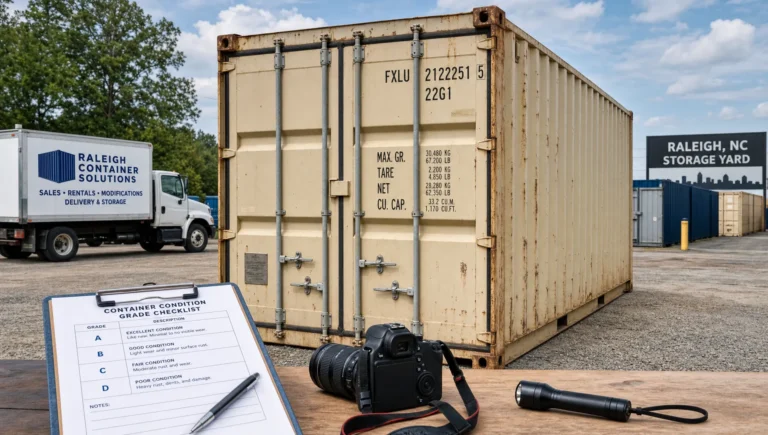
When buying a shipping container with delivery included, inspect before the truck is scheduled whenever possible. If you cannot visit the yard, ask for recent photos or a clear grade description. For some depot inventory, exact-unit photos may depend on availability and logistics, but the seller should still be able to explain what grade you are buying.
Focus on the areas that affect performance:
- Roof condition, including dents that may hold water
- Door operation, locking rods, hinges, and handles
- Rubber gaskets and door seals
- Floor condition, soft spots, odors, and signs of chemical contamination
- Corner castings, top rails, bottom rails, and crossmembers
- Wall dents, patches, rust, and previous repairs
- Vent condition and signs of internal moisture issues
- CSC plate details if the unit is being sold as Cargo Worthy for transport use
For storage, a few dents and surface rust may be acceptable. For an office conversion, retail use, or container home project, cosmetic and structural condition matter much more because repairs become more expensive after cutouts, insulation, and finishes begin.
Do not assume fresh paint means quality. Paint can improve appearance, but it does not automatically confirm structural integrity, a dry interior, or good doors. The grade, inspection history, and seller transparency matter more.
Step 6: Be ready on delivery day
Delivery day should be simple if the site has been measured and prepared. Have a responsible person on site who can meet the driver, confirm the placement area, and make final orientation decisions. Mark the container corners with paint, cones, stakes, or boards so there is no confusion about door direction.
Keep vehicles, materials, pets, and bystanders away from the truck path. Delivery drivers need room to maneuver, and they may decline placement if the site is unsafe or too soft. The driver’s judgment matters because a stuck truck or unstable drop can damage property and equipment.
After placement, inspect the unit before the driver leaves if it is safe to do so. Open and close the doors, check that the lock rods move properly, look for daylight through the roof or walls, and take photos of all sides. If the doors bind after placement, the issue may be uneven ground rather than the container itself. Shimming or re-leveling the corners often solves the problem.
How delivery included helps different buyers
A delivered container is valuable because it turns a complex logistics purchase into a usable asset on your property. The best container and delivery plan, however, depends on who is buying.
| Buyer type | Recommended starting point | Delivery planning priority |
|---|---|---|
| General contractors and builders | 20ft or 40ft WWT or Cargo Worthy storage unit | Secure access, jobsite surface, door orientation, and theft-resistant placement |
| Homeowners and agriculture buyers | 20ft or 40ft WWT container for long-term storage | HOA or zoning checks, gravel pad, drainage, and driveway access |
| Small business owners | One-Trip or cleaner used container for inventory, pop-up, or office use | Customer-facing appearance, access for loading, and future modification plans |
| Real estate developers | One-Trip or Cargo Worthy High Cube for modular builds | Permits, engineering review, foundation planning, and modification strategy |
| Logistics managers | Cargo Worthy or refrigerated unit depending on cargo | CSC documentation, transport requirements, power needs, and loading workflow |
This is why a local, knowledgeable supplier matters. A Raleigh-based team understands North Carolina site conditions, regional delivery constraints, and the practical questions buyers should ask before the truck arrives. At the same time, nationwide delivery capability helps buyers source the right unit even when local inventory changes.
Red flags when buying a container with delivery included
Be cautious if a seller cannot clearly explain the container grade, delivery method, or site requirements. The container industry includes reputable suppliers, but it also attracts vague listings and overly simple pricing claims.
Common red flags include:
- No written grade, such as One-Trip, Cargo Worthy, or Wind & Watertight
- No explanation of whether delivery includes final ground placement
- No questions about site access, clearance, or surface conditions
- Pressure to pay before details are confirmed
- Stock photos only, with no grade-specific details
- Extremely low pricing that does not mention delivery distance or unloading method
- Refusal to discuss doors, seals, floor, roof, or structural condition
The best sellers help you buy the right unit, not just the cheapest unit. They should be willing to discuss size, grade, delivery access, site preparation, and realistic limitations.
Frequently Asked Questions
Is delivery included the same as free delivery? Not always. Delivery included usually means the quoted price includes delivery under stated conditions. It may not include special equipment, difficult access, permits, site preparation, rescheduling, or crane placement unless those items are written into the quote.
What is the best grade for basic storage? For most stationary storage, a Wind & Watertight container is often a practical choice because it should keep out normal weather at a lower cost than a One-Trip unit. Choose Cargo Worthy if you need stronger transport suitability, and choose One-Trip if appearance, longevity, or modifications are priorities.
Can a shipping container be delivered to a residential driveway? Often, yes, but the driveway must be wide enough, strong enough, and clear of overhead obstructions. You also need enough straight-line space for the delivery truck, especially for a tilt-bed drop. Check HOA and local rules before ordering.
Do I need a permit for a shipping container in Raleigh or Wake County? It depends on your property, zoning, duration of use, and whether the container is temporary storage or part of a structure. Always check with the appropriate local authority or HOA before delivery.
Should I choose a 20ft or 40ft container if delivery is included? Choose based on usable space and site access. A 20ft container is easier to place in tighter areas, while a 40ft container provides more capacity and may be a better value for large storage needs. If height matters, consider a High Cube.
Can I move the container later? Yes, containers can usually be relocated, but moving one requires proper equipment, site access, and a new delivery plan. If you expect to move the unit often, discuss placement, orientation, and future pickup access before the first delivery.
Ready to buy a shipping container with delivery included?
Lease Lane Containers LLC helps buyers in Raleigh, across North Carolina, throughout the Southeast, and nationwide choose the right container size, grade, and delivery plan. Whether you need a 20ft storage unit, a 40ft High Cube, a Cargo Worthy container for transport, a Wind & Watertight unit for jobsite storage, or a refrigerated container for cold storage, start with a clear delivered quote and a prepared site.
For help choosing the right unit and planning your drop location, contact the sales team at sales@leaselanecontainers.com or visit the Raleigh office to speak with a local container specialist.