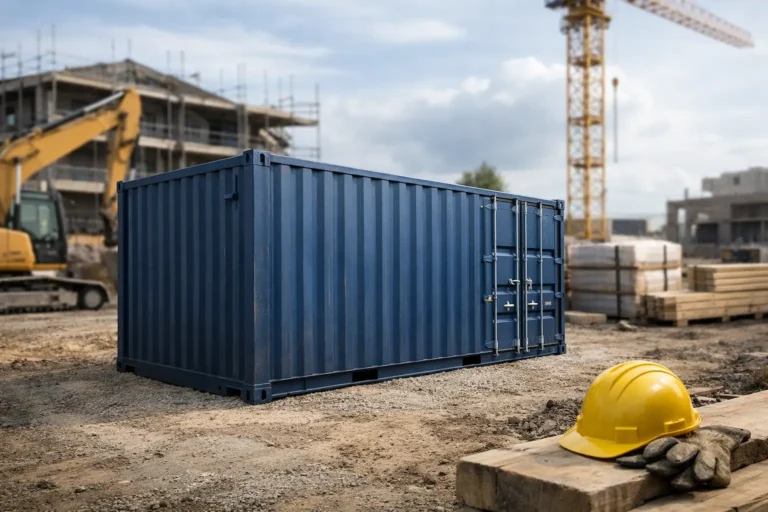
20ft High Cube Container: When the Extra Height Pays Off
That extra foot of height can look like a small upgrade on paper. On a job site, farm, retail lot, or warehouse dock, it can be the difference between fighting your storage every day and having a container that works with your operation.
A 20ft high cube container keeps the same compact footprint as a standard 20ft unit, but raises the exterior height from 8 ft 6 in to 9 ft 6 in. For buyers in Raleigh, across North Carolina, and throughout the Southeast, that extra vertical clearance often pays off when you need better headroom, taller shelving, easier modification space, or more cubic capacity without moving up to a 40ft unit.
The key is knowing when the added height is useful and when it is just extra cost. Here is how to make that call before you buy.
What makes a 20ft High Cube container different?
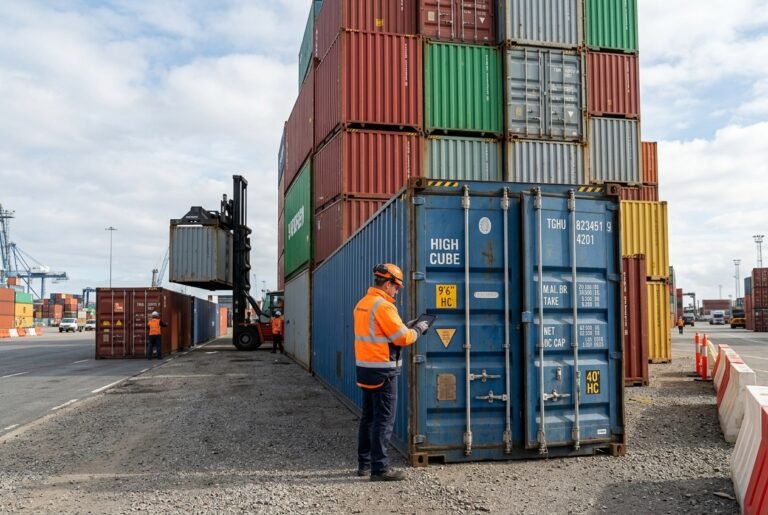
A high cube shipping container is built taller than a standard ISO container. The length and width stay nearly the same, while the height increases by one foot. Like other intermodal containers, high cube units are commonly built with corrugated Corten Steel, ISO-style corner castings, heavy-duty doors, and structural frames designed for handling and stacking.
The International Organization for Standardization defines core freight container specifications through standards such as ISO 668, but real-world dimensions can vary slightly by manufacturer, floor thickness, door design, and whether the unit is dry storage or refrigerated.
| Specification | Standard 20ft container | 20ft High Cube container |
|---|---|---|
| Exterior length | About 20 ft | About 20 ft |
| Exterior width | About 8 ft | About 8 ft |
| Exterior height | About 8 ft 6 in | About 9 ft 6 in |
| Interior height | About 7 ft 10 in | About 8 ft 10 in |
| Door opening height | About 7 ft 5 in | About 8 ft 5 in |
| Typical interior volume | About 1,170 cu ft | About 1,300 cu ft or more |
| Floor area | About 148 sq ft | About 148 sq ft |
The most important takeaway is simple: a 20ft high cube does not give you more floor space. It gives you more usable vertical space. If your storage problem is caused by length or floor layout, a standard 20ft unit may not solve it. If your issue is height, stacking, interior build-out, or comfort, the high cube upgrade can be very practical.
For a deeper explanation of interior height, door openings, and high cube specs across sizes, Lease Lane’s guide to high cube container dimensions is a useful companion to this buyer-focused breakdown.
When the extra height pays off
The best reason to choose a 20ft high cube container is not because it is bigger in every direction. It is because it is bigger in the one direction many buyers underestimate.
Contractor storage with tall tools and materials
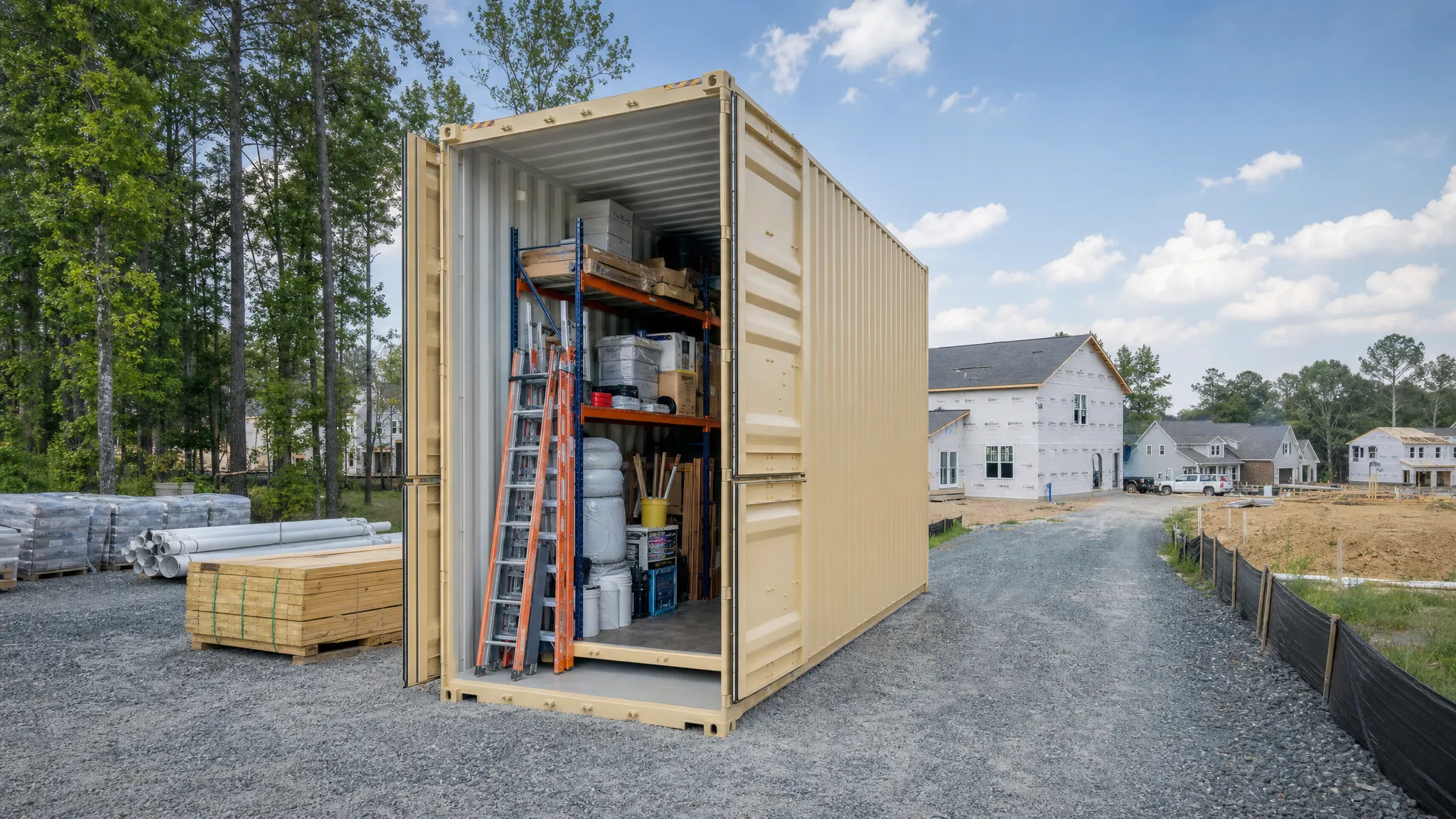
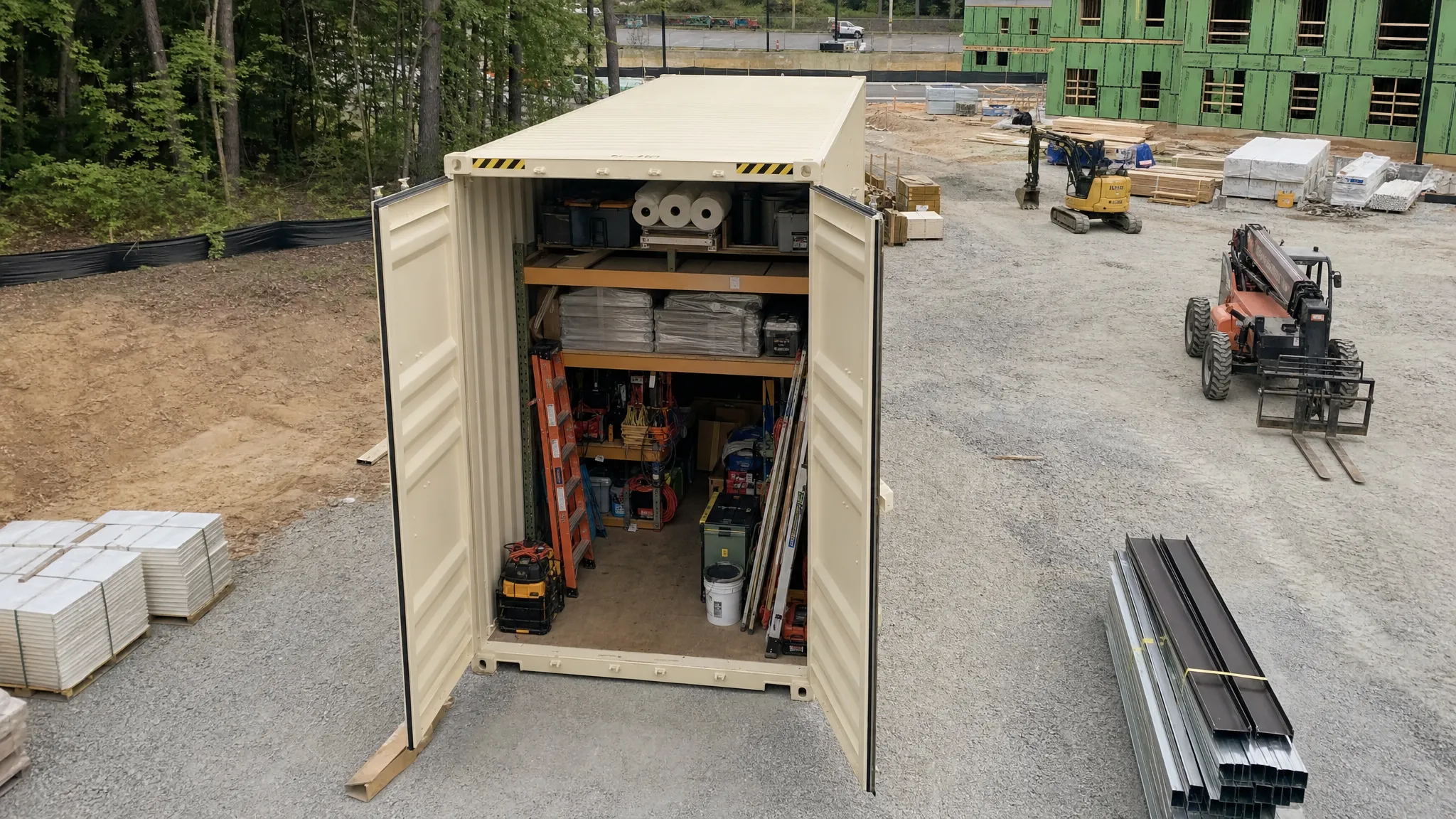
General contractors and home builders around Raleigh often need secure, ground-level storage for ladders, scaffolding components, pipe, trim, insulation rolls, conduit, and packaged materials. A standard 20ft container can handle many of those items, but the lower ceiling and shorter door opening can make loading awkward.
With a 20ft high cube, crews have more clearance to stand materials upright, add taller shelving, and move inside without feeling cramped. The added height is especially valuable when the container becomes a daily-access tool room rather than a rarely opened storage box.
For job sites in Wake County, Durham, Cary, Chapel Hill, and across the Southeast, the compact 20ft footprint also matters. A 40ft container may be too long for a narrow lot, active residential build, or tight commercial renovation site. A 20ft high cube gives you more storage efficiency while still fitting where space is limited.
Better vertical racking and inventory overflow
Small business owners often use containers for seasonal inventory, event supplies, equipment, packaging, or overflow from a warehouse or retail location. In those cases, the extra height pays off when you can use vertical racking instead of adding another storage unit.
The floor area of a 20ft container is limited, so shelving design matters. A high cube container allows taller racks, better top-shelf clearance, and more breathing room for bins or cartons. If your products are light but bulky, such as apparel, paper goods, displays, agricultural supplies, or packaging materials, you may run out of volume before you run out of weight capacity. That is exactly where high cube containers shine.
Mobile offices, pop-ups, and modified spaces
If you plan to modify a container into a mobile office, workshop, retail pop-up, or controlled storage space, headroom becomes even more important. Insulation, interior framing, lighting, ceiling panels, HVAC components, and flooring can all reduce usable height.
A standard container may feel acceptable before modification, then noticeably tight after the build-out is complete. A 20ft high cube gives your modification team more room to work with, especially if the final space needs to feel comfortable for people rather than just store materials.
For businesses exploring container-based retail or workspace ideas in Raleigh and nearby markets, the high cube format can make a compact 20ft unit feel more open without expanding the site footprint.
Agricultural, residential, and equipment storage
Homeowners, farms, and rural property owners often choose 20ft containers because they are easier to place than longer units. A high cube version is worth considering for mowers, UTV accessories, feed storage, tools, seasonal furniture, irrigation supplies, or taller household items.
The door opening is just as important as interior height. Before buying, measure the tallest item you need to load, including wheels, handles, roll bars, protective packaging, or pallet height. If the item cannot clear the door, the extra interior height will not help.
Volume-limited shipping
Logistics managers should think about whether freight is weight-limited or volume-limited. Dense cargo may hit payload limits before the extra height matters. Light, bulky cargo may benefit from a 20ft high cube because it adds cubic capacity while keeping the container compact.
If the container will be used for international shipping, grade and documentation become critical. You will generally need a Cargo Worthy unit with a valid CSC plate and any required inspection documentation. Wind & Watertight units are excellent for many storage uses, but WWT alone is not the same as approved ocean-shipping condition.
When a 20ft High Cube may not be worth it
A 20ft high cube container is not automatically the right choice. The upgrade pays off only when the extra vertical capacity solves a real problem.
If your cargo is low-profile, dense, or stored mostly on the floor, a standard 20ft container may be more cost-effective. Concrete tools, tile, fasteners, metal parts, machinery components, and other heavy materials often reach practical handling or floor-load limits long before height becomes an issue.
Availability can also affect the decision. Standard 20ft containers and 40ft high cube containers are often more common in many markets than 20ft high cube units. In Raleigh and the Southeast, supply can shift based on port activity, depot inventory, shipping demand, and seasonal construction needs. If timing matters, ask what is available now and whether waiting for a 20ft high cube is worth the operational benefit.
Site restrictions matter too. A high cube container is taller on the truck and taller once placed. Low tree limbs, overhead utility lines, building eaves, carports, tight gates, and sloped driveways can make delivery more complicated. If you are working with a very tight drop zone, the extra foot can be a real constraint.
If your main need is more floor area, a longer unit may be the better choice. Buyers comparing compact storage with larger-capacity options should review Lease Lane’s guide to 20 ft cargo container uses and buying tips before deciding whether height or length matters more.
Container grade matters as much as height
The height of the container is only part of the buying decision. Condition grade determines what the unit is suitable for, how it should be priced, and what level of risk you are accepting.
Lease Lane Containers emphasizes transparent grading because two containers with the same dimensions can perform very differently depending on age, structural condition, door function, floor condition, and prior use.
| Grade | What it generally means | Best fit |
|---|---|---|
| One-Trip | Newer container, typically used for one loaded trip before resale, usually cleaner with less wear | Retail-facing storage, modifications, mobile offices, long-term property storage, buyers who want the best condition |
| Cargo Worthy | Structurally suitable for cargo transport when properly inspected and documented | Domestic or international shipping, logistics use, buyers needing structural confidence |
| Wind & Watertight | Keeps out normal wind and rain, doors and seals function, but not necessarily certified for shipping | Job site storage, farm storage, residential storage, inventory overflow |
| As-Is | Condition varies, may have leaks, damage, heavy rust, door issues, or floor problems | Only for buyers who can inspect carefully and accept repair risk |
For most Raleigh-area contractors, homeowners, and small businesses using a container for stationary storage, Wind & Watertight is often the practical baseline. For modifications, customer-facing uses, or clean inventory storage, One-Trip may be worth the premium. For shipping cargo, Cargo Worthy is the category to discuss first.
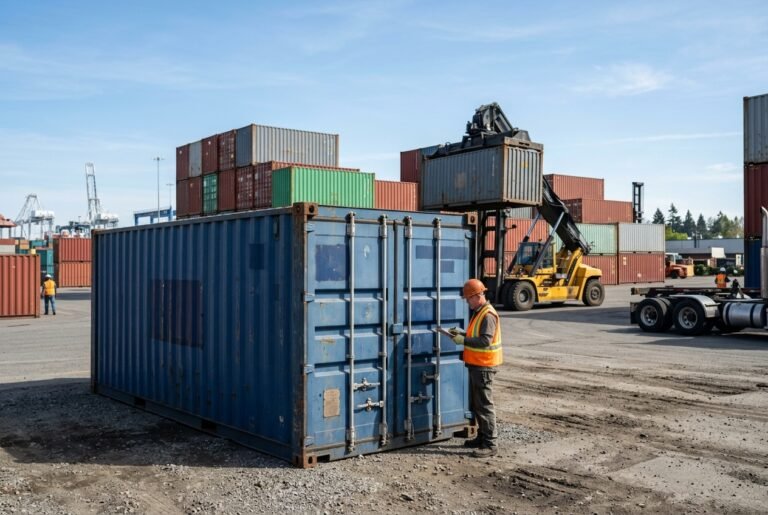
Also remember that Corten Steel is designed to resist atmospheric corrosion better than ordinary steel, but it is not magic. Containers still need inspection. Look for deep corrosion, soft flooring, damaged door gaskets, bent frames, patched roof areas, and daylight entering through holes. Surface rust is common on used containers, but structural rust is a different issue.
Cost: how to decide if the high cube premium makes sense
The delivered cost of a 20ft high cube container depends on condition, market availability, distance from the depot, delivery method, and whether you need modifications, refrigerated equipment, or special placement. Rather than focusing only on the container price, compare the total value of the upgrade.
A useful way to think about it is this: if the extra height prevents you from renting off-site storage, buying a second unit, redesigning shelving, or limiting a modification, the premium can pay for itself quickly. If the extra height sits unused, it is just a nice feature you paid for.
Ask these questions before requesting a quote:
- Will I use the extra vertical space every week?
- Do my materials or equipment require the taller door opening?
- Will shelving or pallet racking take advantage of the added height?
- Am I planning insulation, lighting, HVAC, or an interior ceiling?
- Is my site accessible for a taller unit and delivery truck?
- Do I need WWT, Cargo Worthy, or One-Trip condition?
For buyers specifically shopping in the Triangle, Lease Lane’s overview of high cube shipping containers for sale in Raleigh, NC explains local considerations that can affect availability, delivery, and fit.
Pro-Tip: prepare the site before the truck arrives
A 20ft high cube container performs best when it is set on a level, stable, well-drained surface. Poor site preparation can cause doors to bind, water to pool under the floor, and the container to settle unevenly over time.
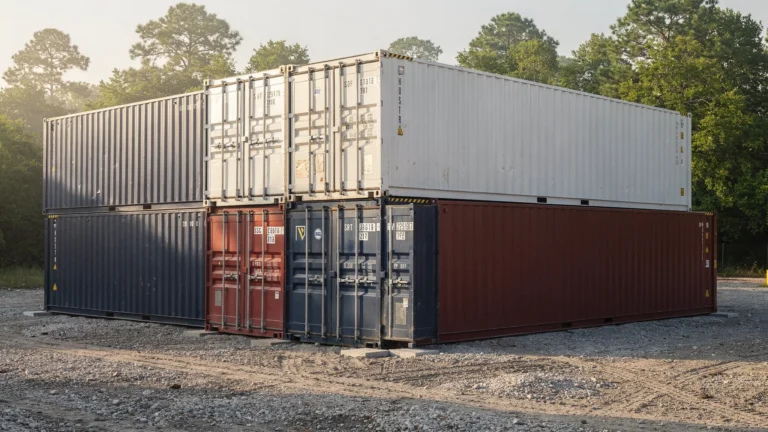
For most storage applications, a compacted gravel pad is one of the most practical solutions. Many buyers use several inches of compacted stone over firm soil, with railroad ties, concrete blocks, or piers placed under the main structural points as needed. The goal is to support the container at its corners and keep the frame level.
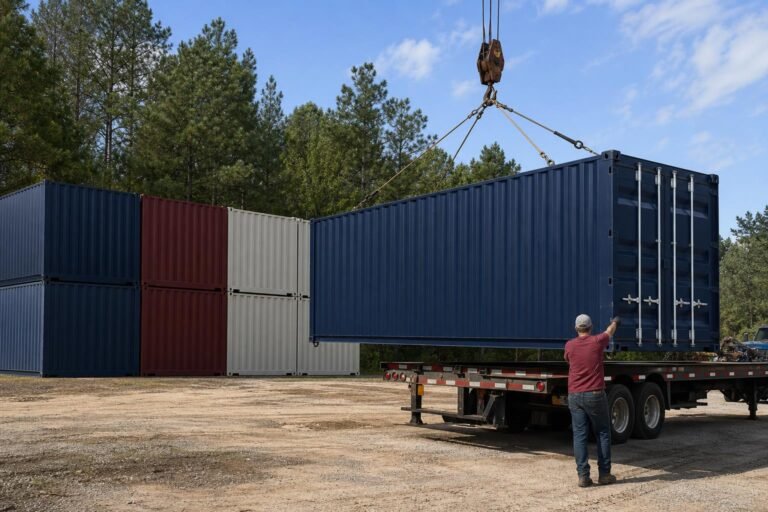
Plan delivery access before the truck is scheduled. Many tilt-bed deliveries for a 20ft unit require roughly 60 ft of straight clearance, about 12 ft of width, and 14 to 16 ft of overhead clearance, although exact requirements depend on the truck, site, and placement method. A high cube unit adds one foot of container height, so overhead lines, branches, and building overhangs deserve extra attention.
In Raleigh, Wake County, and surrounding North Carolina municipalities, permit and zoning requirements can vary based on duration, property type, visibility, use, utilities, foundation, and whether the container is temporary storage or part of a permanent structure. Always check local rules and HOA restrictions before delivery. For commercial sites and modified containers, confirm requirements early so the container does not arrive before approvals are in place.
How to choose between standard, high cube, and larger containers
The right container is the one that fits the job, the site, and the budget. A 20ft high cube is often the sweet spot when you need compact placement plus extra vertical clearance.
| Choose this option | When it makes sense |
|---|---|
| Standard 20ft container | You need compact, secure storage and your items do not require extra height |
| 20ft High Cube container | You need the 20ft footprint, but want taller doors, more headroom, better racking, or modification space |
| 40ft standard container | You need more floor area and have enough room for delivery and placement |
| 40ft High Cube container | You need maximum volume, extra height, and a site that can handle the longer unit |
| 20ft refrigerated container | You need temperature control and can accommodate reefer power and ventilation requirements |
For many buyers, the decision comes down to the relationship between height and footprint. If your site cannot accept a 40ft unit but your storage plan feels cramped in a standard 20ft, the 20ft high cube deserves serious consideration.
Frequently Asked Questions
How much taller is a 20ft high cube container than a standard 20ft container? A 20ft high cube container is typically one foot taller on the exterior, measuring about 9 ft 6 in high instead of 8 ft 6 in. Interior height and door opening height also increase by roughly one foot, although exact dimensions vary by manufacturer.
Is a 20ft high cube container good for job site storage? Yes, it can be an excellent job site storage option when contractors need room for ladders, shelving, pipe, insulation, tall tools, or organized daily-access materials. The compact footprint works well on many Raleigh construction sites where a 40ft unit may be too long.
Can a Wind & Watertight 20ft high cube be used for international shipping? Not by grade alone. Wind & Watertight means the unit is suitable for many storage uses, but international shipping usually requires Cargo Worthy condition, a valid CSC plate, and any inspection documentation required by the carrier or route.
Are 20ft high cube containers harder to find than standard 20ft containers? Often, yes. In many markets, standard 20ft dry containers and 40ft high cube containers are more common. Availability can change quickly, so buyers in Raleigh, North Carolina, and the Southeast should ask what is currently in stock before planning around a specific unit type.
Do I need a permit for a 20ft high cube container in Raleigh? It depends on the property, use, placement duration, zoning, utilities, and whether the container is temporary storage or part of a permanent structure. Check with the City of Raleigh, your county, and any HOA or site owner before delivery.
Ready to see if the extra height is worth it?
If you are deciding between a standard 20ft container and a 20ft high cube container, Lease Lane Containers can help you compare dimensions, grades, delivery requirements, and site conditions before you commit. Whether you need contractor storage in Raleigh, inventory space in the Southeast, or a Cargo Worthy unit for transport, the right recommendation starts with how you plan to use the container.
Contact the Lease Lane Containers sales team at sales@leaselanecontainers.com or visit the Raleigh office to discuss current availability, delivered pricing, and the best container grade for your project.