20 Ft Storage Container for Sale: How to Choose Right
A 20 ft storage container for sale can solve a practical problem quickly: secure space without building a permanent structure. For general contractors in Raleigh, it can keep tools and materials locked up on site. For homeowners and farms, it can protect equipment from weather. For small businesses, it can create affordable overflow storage during a busy season.
The key is choosing the right unit before it reaches your property. A 20ft container is compact enough for many driveways, job sites, farms, and retail lots, yet large enough to hold serious inventory or equipment. But condition, grade, delivery method, door swing, and site preparation all affect whether the container performs the way you expect.
This guide explains how to evaluate a 20 ft storage container for sale with the same practical criteria used by experienced buyers in Raleigh, North Carolina, the Southeast, and across the USA.
Start with the job the container needs to do
The right 20ft container depends less on the sticker label and more on the use case. A contractor storing power tools has different needs than a logistics manager preparing cargo for export. A homeowner storing furniture through a renovation may care most about clean interiors and weather resistance, while a farm may prioritize easy access and durability on uneven land.
A standard 20ft shipping container is often the sweet spot when you need ground-level storage but do not have the room or turning radius for a 40ft unit. It is easier to place in tighter areas around Raleigh neighborhoods, construction sites in Cary or Durham, and rural properties across eastern North Carolina.
| Buyer type | What to prioritize | Why a 20ft unit works |
|---|---|---|
| General contractors | Security, fast access, rugged floors, Wind & Watertight condition | Fits many job sites and holds tools, fasteners, fixtures, and small equipment |
| Homeowners | Clean interior, weather resistance, driveway placement | Practical for renovations, moves, seasonal equipment, and long-term storage |
| Farms and agriculture | Corten steel durability, pest resistance, easy ground access | Useful for feed, tools, irrigation parts, and machinery attachments |
| Small businesses | Inventory overflow, retail fixtures, temporary storage | Adds capacity without leasing more warehouse space |
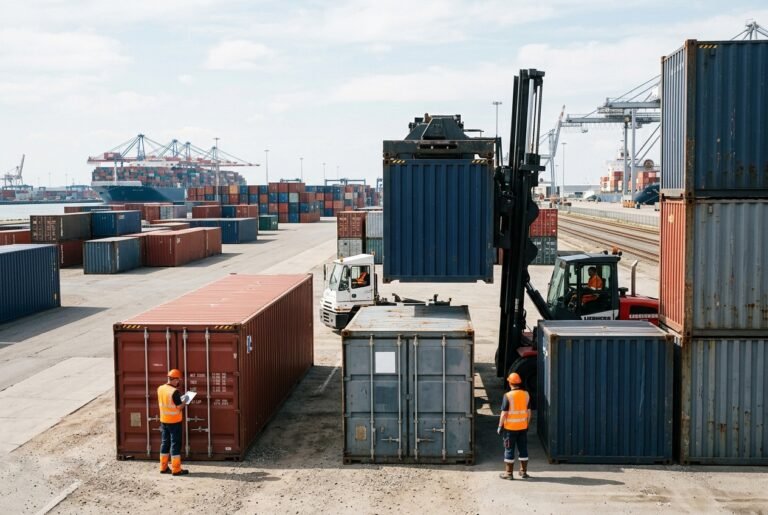
| Logistics managers | Cargo Worthy grade, CSC documentation, ISO compatibility | Better suited for transport and export requirements |
If you are still comparing use cases, Lease Lane Containers also has a detailed guide on 20 ft cargo container uses and buying tips that can help you decide whether a 20ft unit is enough space for your application.
Know the dimensions before you buy
Most 20ft shipping containers are built to ISO standards, which means the basic exterior footprint is consistent across many units. That standardization is one reason containers are so useful: they are engineered for transport, stacking, handling, and long-term durability.
Typical dimensions vary slightly by manufacturer, repairs, and interior components, but these are common measurements for a standard 20ft container.
| Measurement | Typical standard 20ft container size |
|---|---|
| Exterior length | 20 ft |
| Exterior width | 8 ft |
| Exterior height | 8 ft 6 in |
| Interior length | About 19 ft 4 in |
| Interior width | About 7 ft 8 in |
| Interior height | About 7 ft 10 in |
| Door opening | About 7 ft 8 in wide by 7 ft 5 in high |
| Interior volume | About 1,170 cubic feet |
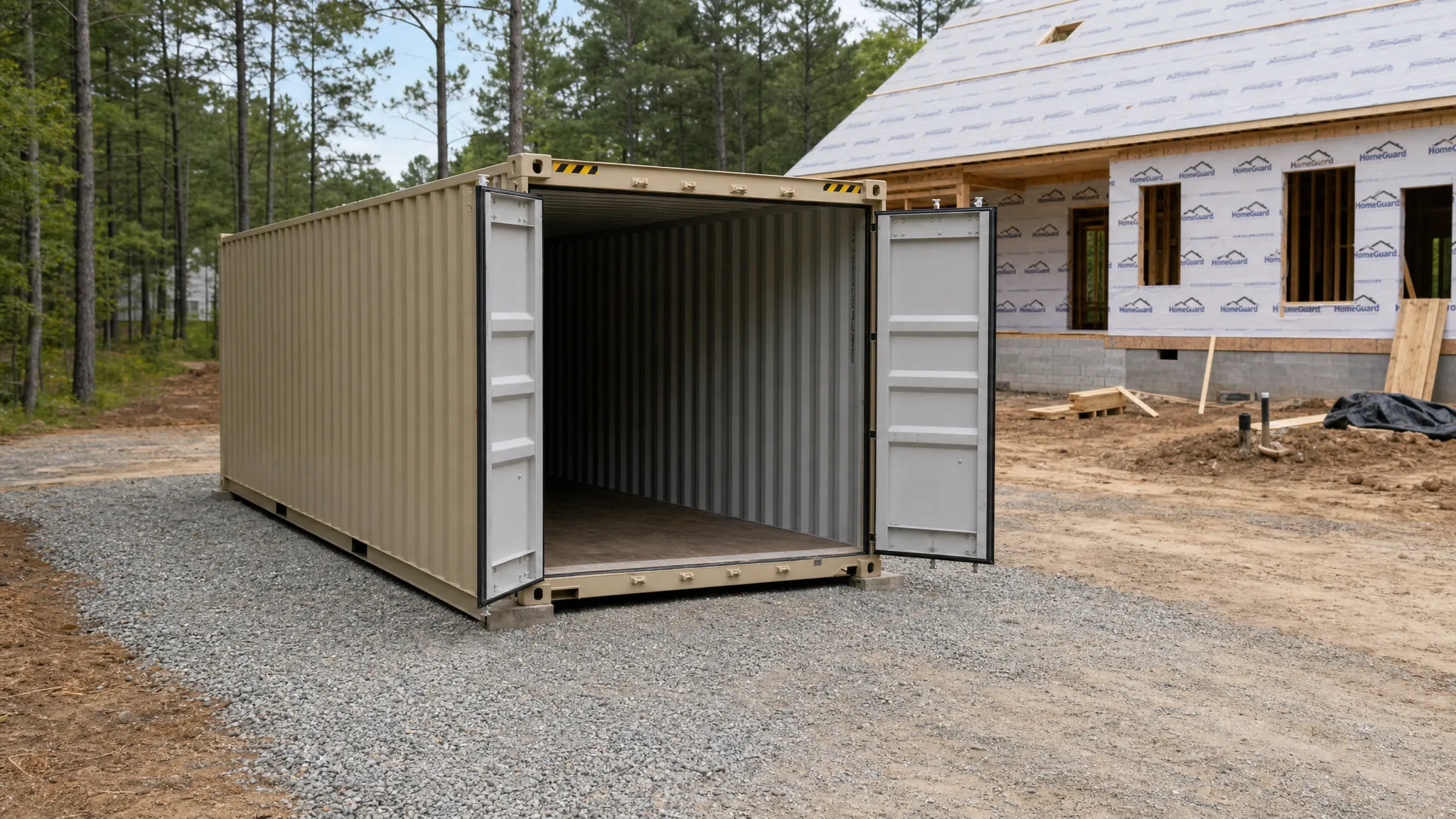
The main question is not just whether your items fit inside. You also need room for door swing, delivery truck access, and safe walking space around the unit. A 20ft container with cargo doors needs several feet of clearance in front so the doors can open fully and stay usable.
Some buyers ask about a High Cube container. A High Cube unit is typically 9 ft 6 in tall on the exterior, adding about one extra foot of height compared with a standard container. High Cube options can be valuable for taller equipment, shelving, or modification projects that include insulation, ceiling panels, or lighting. Availability of 20ft High Cube containers can vary by market, so ask before planning around that height.
Choose the right grade: One-Trip, Cargo Worthy, or Wind & Watertight
Container grade is one of the most important buying decisions. It affects appearance, usable life, suitability for shipping, and budget. Lease Lane Containers emphasizes transparent grading because buyers should know exactly what they are getting before delivery.
A new container is usually called a One-Trip container in the industry. It has typically made one cargo trip from the manufacturing region to the destination market. That means it may show minor handling marks, but it is usually the cleanest and least worn option. These units are commonly built from weathering steel, often called Corten Steel, and designed around ISO container standards.
A Cargo Worthy container, often abbreviated CW, is used but structurally suitable for cargo transport when properly inspected. For international shipping, you should verify survey requirements, the CSC plate, and carrier acceptance before purchase. Cargo Worthy does not mean perfect appearance. It means the structure, doors, floors, and weather resistance meet a higher transportation-focused standard than basic storage grade.
A Wind & Watertight container, often abbreviated WWT, is generally the practical storage grade. It should keep out wind and rain under normal conditions, but it is not automatically certified for ocean freight. WWT containers often show dents, patches, surface rust, or paint wear, but they can be a smart value for job site storage, farm storage, and residential projects.
| Grade | Best for | What to expect | Good for shipping cargo? |
|---|---|---|---|
| One-Trip or New | Long-term storage, clean appearance, modifications, business use | Minimal wear, cleaner interior, strong remaining service life | Possibly, but verify CSC and shipping requirements |
| Cargo Worthy | Export, regional transport, logistics use | Used condition with structural integrity suitable for cargo | Yes, when documentation and inspection requirements are met |
| Wind & Watertight | Ground storage, contractors, farms, homeowners | Weather-resistant storage with cosmetic wear | Not automatically |
If appearance, longevity, and a cleaner interior are priorities, a 20ft New Shipping Container for Sale – Wind & Watertight, USA Delivery is often the better fit. For buyers who mainly need secure and practical storage at a more value-focused level, the 20ft Used Wind & Watertight Shipping Container for Sale can be a sensible option.
Inspect the condition, not just the grade name
A grade label helps, but inspection details matter. Two WWT containers can look very different depending on age, prior use, repairs, paint condition, and depot handling. Before you commit, ask for current photos of the actual unit when possible, or confirm whether the container will be selected from available inventory matching the stated grade.
Start with the doors. They should open, close, and latch without excessive force. Door gaskets should be intact enough to resist wind-driven rain. Locking bars should move properly, especially if the container will be accessed daily by crews or employees.
Next, look at the roof and corner posts. Surface rust is common on used containers, but deep corrosion, holes, severe roof dents that hold water, or compromised corner castings are more serious concerns. Corten Steel is designed to resist corrosion better than ordinary steel, but it still performs best when water can drain away and the container is not sitting in mud.
The floor also deserves attention. Many ISO containers use heavy-duty plywood flooring supported by steel crossmembers. For storage, look for soft spots, major delamination, strong chemical odors, or holes. For equipment storage, consider the weight of what you plan to load and whether you need ramps, forklifts, or pallet jacks.
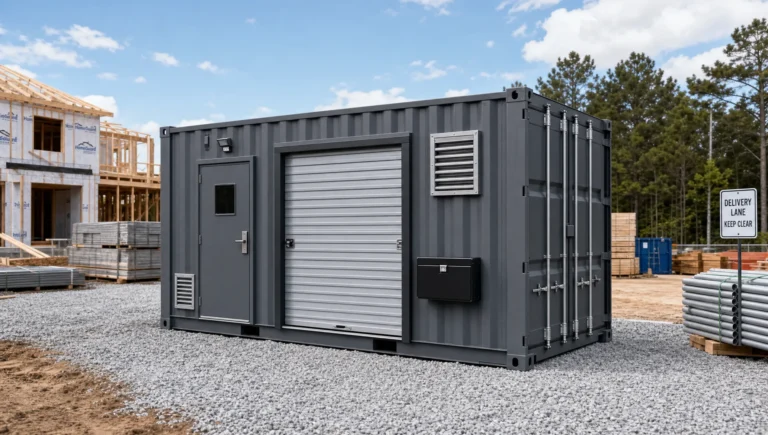
Finally, think about modifications before purchase. Vents, lock boxes, roll-up doors, shelving, insulation, electrical packages, and personnel doors may influence which grade makes the most sense. A cleaner One-Trip container is often easier to modify for customer-facing or office-style uses. A used WWT container may be all you need for tools, supplies, or seasonal equipment.
Delivery can make or break the purchase
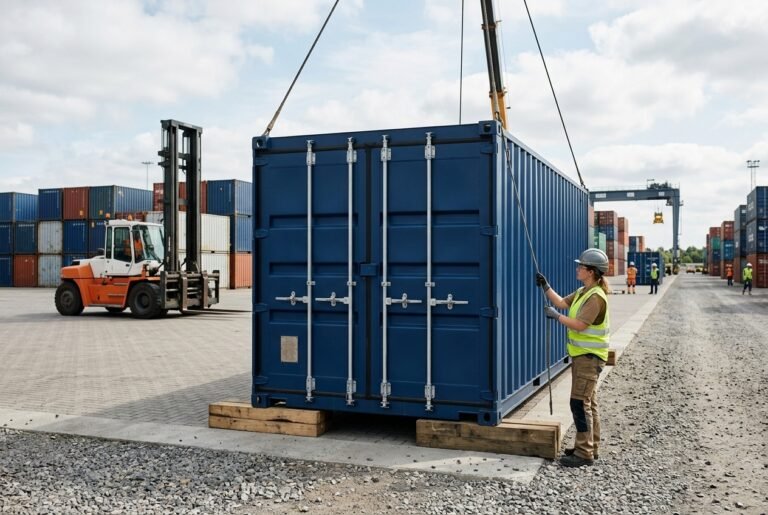
Many first-time buyers focus on the container and underestimate delivery. A 20ft container is heavy, and placement requires planning. In the Raleigh area and throughout the Southeast, delivery conditions can vary from paved commercial lots to narrow residential driveways, wooded farm lanes, and active construction sites.
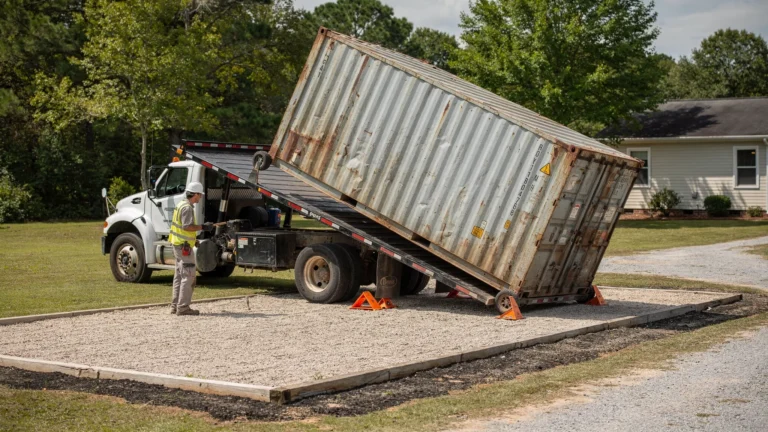
Ground-level delivery is common for storage buyers. The truck typically backs into position and slides the container off the trailer or tilt bed. This means the driver needs adequate straight-line clearance, firm ground, overhead clearance, and a clear path into the drop zone. If the truck cannot safely access the site, the container may need to be placed in a different location.
Orientation matters too. Decide which way the cargo doors should face before delivery day. A container placed with doors facing a fence, slope, tree line, or building may become frustrating to use even if the container itself is in great condition.
For businesses buying outside North Carolina, delivery rules are similar but local conditions change. Lease Lane Containers supports USA delivery, but the best results still come from clear communication about access roads, turns, overhead wires, surface conditions, and the exact drop spot.
Pro-Tip: Prepare the site before the truck arrives
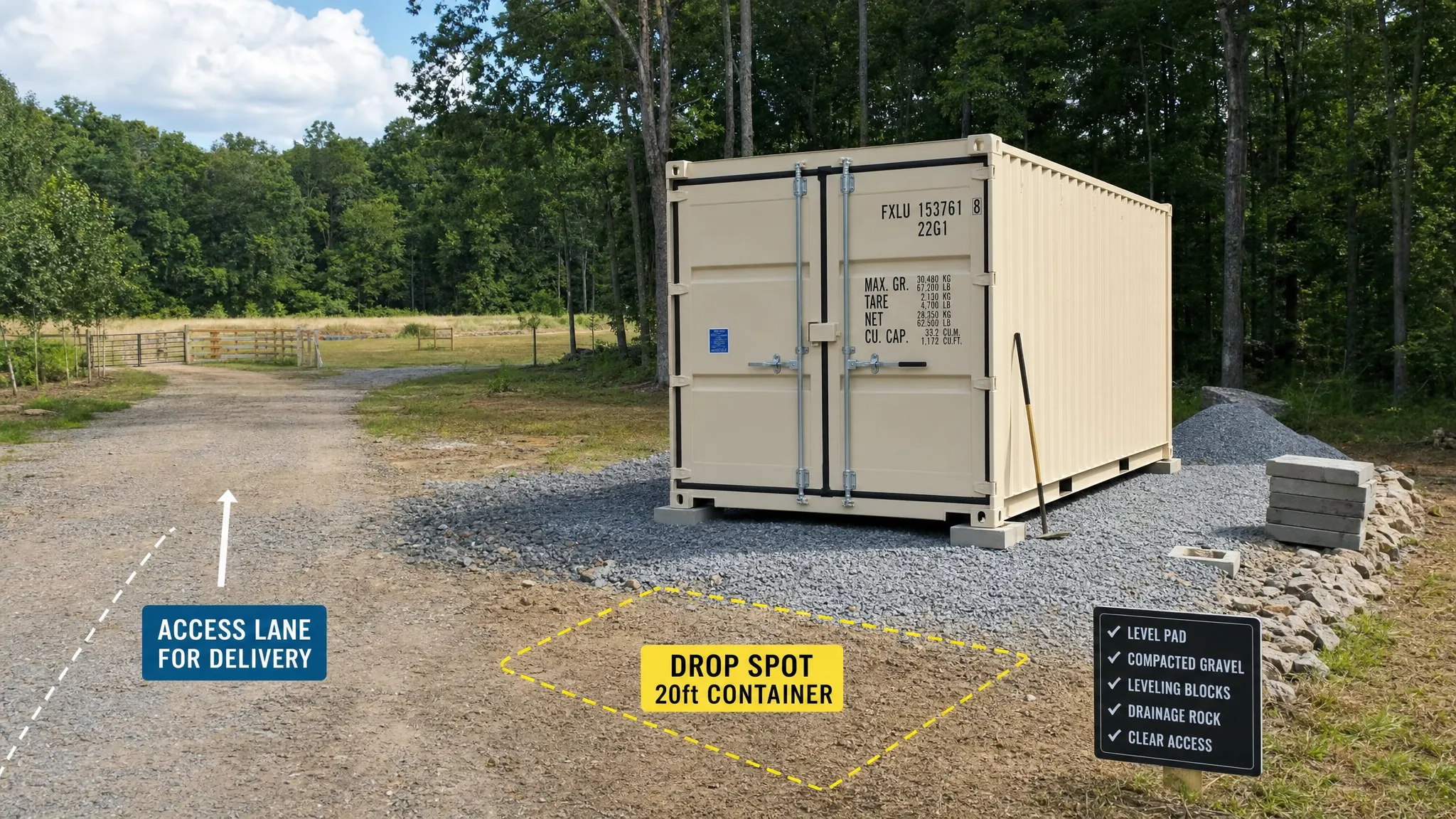
A shipping container is strong, but it still needs a stable foundation. Poor site preparation can lead to door alignment problems, standing water, floor deterioration, and uneven settling. This is especially important in the Southeast, where heavy rain and clay-heavy soils can create drainage issues.
For most storage uses, a compacted gravel pad is one of the best practical choices. It helps drainage, reduces mud splash, and keeps the steel frame from sitting in pooled water. Concrete pads can also work well, especially for businesses or frequent forklift access, but they are not always necessary for basic storage.
| Site prep item | Recommended approach | Why it matters |
|---|---|---|
| Level surface | Use compacted gravel, concrete, railroad ties, or concrete blocks under structural points | Helps doors operate correctly and reduces frame twist |
| Drainage | Keep the container slightly elevated above surrounding grade | Prevents standing water and slows corrosion risk |
| Access path | Clear branches, vehicles, debris, and low wires before delivery | Allows the driver to place the unit safely |
| Door clearance | Leave open space in front of cargo doors | Makes daily access easier and safer |
| Permits and rules | Check local zoning, HOA rules, and job site requirements | Avoids costly relocation or compliance issues |
In Raleigh, Wake County, and nearby municipalities, permit rules can depend on property type, zoning, how long the container will remain, and whether it is used for construction storage, residential storage, business inventory, or a modified structure. Always confirm requirements before delivery, especially if the unit will be visible from the street, placed in a residential area, or used for anything beyond storage.
Match the container to your buying priority
Once you understand grade, dimensions, condition, and delivery, the best choice becomes clearer. The right 20 ft storage container for sale is the one that fits the job without paying for features you do not need or accepting condition issues that will cost more later.
If you want a clean appearance for a retail site, office conversion, customer-facing business, or long-term residential use, a One-Trip container is usually the strongest choice. It gives you a better starting point and typically reduces cosmetic concerns.
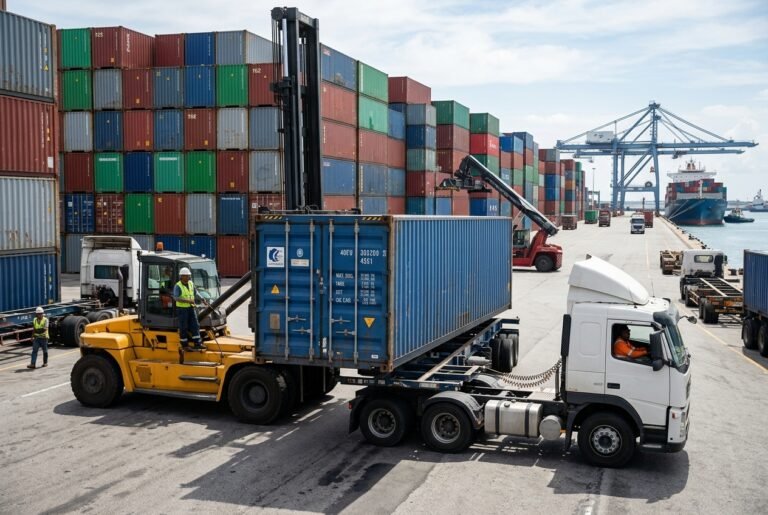
If you need to ship goods, focus on Cargo Worthy condition and documentation. Ask whether the unit has the required plate and whether a survey is needed for your carrier or route. A container that is perfect for storage may not meet export requirements.
If you need secure ground storage for tools, equipment, supplies, or household goods, a WWT container is often the value option. It should protect contents from normal weather while keeping your budget focused on practical performance instead of appearance.
Price matters, but compare total cost rather than only the advertised number. Delivery distance, grade, local availability, accessories, modifications, taxes, site work, and crane or special placement needs can all change the final project cost. For current buying considerations, review the 20ft shipping container price guide for 2026 buyers before comparing quotes.
Questions to ask before you buy
A reliable seller should be able to explain the container clearly, not just send a quick price. Before purchasing, ask questions that confirm condition, logistics, and fit for your site.
- What grade is the container: One-Trip, Cargo Worthy, or Wind & Watertight?
- Is the quoted unit the exact container shown in photos, or a representative unit from inventory?
- Are there any known roof leaks, floor issues, door problems, or major repairs?
- What delivery method will be used, and how much clearance does the truck need?
- Which direction will the doors face when the unit is placed?
- Are there local permit or HOA considerations for my property type?
- If I need international shipping, can you confirm Cargo Worthy status and documentation requirements?
These questions protect you from buying the wrong grade, planning for an impossible drop location, or assuming a storage-grade unit can handle a transportation job.
Frequently Asked Questions
Is a 20ft container big enough for job site storage? Yes, for many contractors it is. A 20ft unit can hold tools, fixtures, fasteners, safety gear, and smaller equipment while fitting on tighter job sites than a 40ft container.
What is the difference between WWT and Cargo Worthy? Wind & Watertight means the container is suitable for storage and should keep out normal wind and rain. Cargo Worthy means the container is structurally suitable for cargo transport when inspection and documentation requirements are met.
Should I buy new or used? Buy new or One-Trip if you want cleaner condition, longer service life, or a better starting point for modifications. Buy used WWT if your main goal is secure, practical storage at a more economical level.
Can I place a 20ft storage container in a residential driveway in Raleigh? It may be possible, but rules vary by zoning, neighborhood, HOA, and duration of use. Check local requirements before scheduling delivery.
Do shipping containers need a foundation? They do not always need a full concrete foundation, but they should sit level and drain well. Compacted gravel, concrete blocks, or a concrete pad can help protect the frame and keep doors working correctly.
Ready to choose the right 20 ft container?
Choosing a 20 ft storage container for sale is easier when you compare grade, condition, delivery access, and site preparation before you buy. Lease Lane Containers LLC helps customers in Raleigh, across North Carolina, throughout the Southeast, and nationwide find practical container solutions for storage, transport, and modular projects.
For help selecting the right 20ft unit, contact the Lease Lane Containers sales team at sales@leaselanecontainers.com or visit the Raleigh office to discuss your site, delivery needs, and container options with a local team.