Buying a Shipping Container in Raleigh
If you need a shipping container in Raleigh, the fastest way to waste money is to buy the wrong grade or overlook delivery access. A container can look acceptable in a listing photo and still create problems once it reaches your site – doors that fight you, floor damage that limits use, or a truck route that does not fit your property. For contractors, growers, facility managers, and homeowners, the real goal is not just getting a box delivered. It is getting a unit that matches the job, arrives when promised, and sits correctly on day one.
What matters most when choosing a shipping container in Raleigh
Raleigh buyers usually start with size, but condition and delivery matter just as much. A 20-foot container is a common choice for job-site storage, residential properties, and tighter access points. A 40-foot unit makes more sense when you need larger-volume storage, inventory overflow, or space for a workshop build. High-cube containers add roughly one foot of interior height, which can be useful for palletized goods, equipment, or conversion projects where headroom matters.
Then there is container grade. This is where many first-time buyers run into confusion. A one-trip container is the closest thing to new in the market. It has typically made a single cargo journey from the factory and usually offers the cleanest appearance, the longest service life, and the fewest cosmetic issues. That matters for retail applications, office conversions, or residential settings where appearance counts.
Used containers cost less, but the right used unit depends on your tolerance for wear. Wind and Watertight, often shortened to WWT, generally means the container keeps out wind and water and remains structurally sound for storage. Cargo Worthy usually indicates the container meets criteria for overseas shipping, though buyers should still confirm the exact condition and certification details being offered. For stationary storage, many customers do not need export-ready condition, but they do need straight doors, a solid floor, and a roof without active leaks.
Size, use case, and where buyers get tripped up
A container should fit the way you plan to use it, not just the footprint you have available. Construction firms often default to 20-foot units because they are easier to place, easier to relocate, and well suited for tools, copper, fixtures, and smaller equipment. If your crew is storing long materials, job-site supplies, and multiple rolling carts, a 40-foot unit may save you from adding a second container later.
Agricultural operators tend to think in seasons. Feed, tools, irrigation parts, and repair inventory can quickly outgrow a smaller container, especially if you want room to move inside. A high-cube unit can help when equipment has awkward dimensions or when stacked storage is part of the plan.
Homeowners usually focus on price first, but condition often deserves more attention. If the container will sit behind a home as long-term storage, cosmetic dents may not matter much. If it will become a workshop shell, studio, or visible backyard structure, door alignment, floor condition, and exterior appearance become more important. Paying more upfront for a cleaner unit can reduce repair work later.
New, used, or refurbished
There is no single best option. It depends on budget, appearance requirements, and how long you expect the container to stay in service.
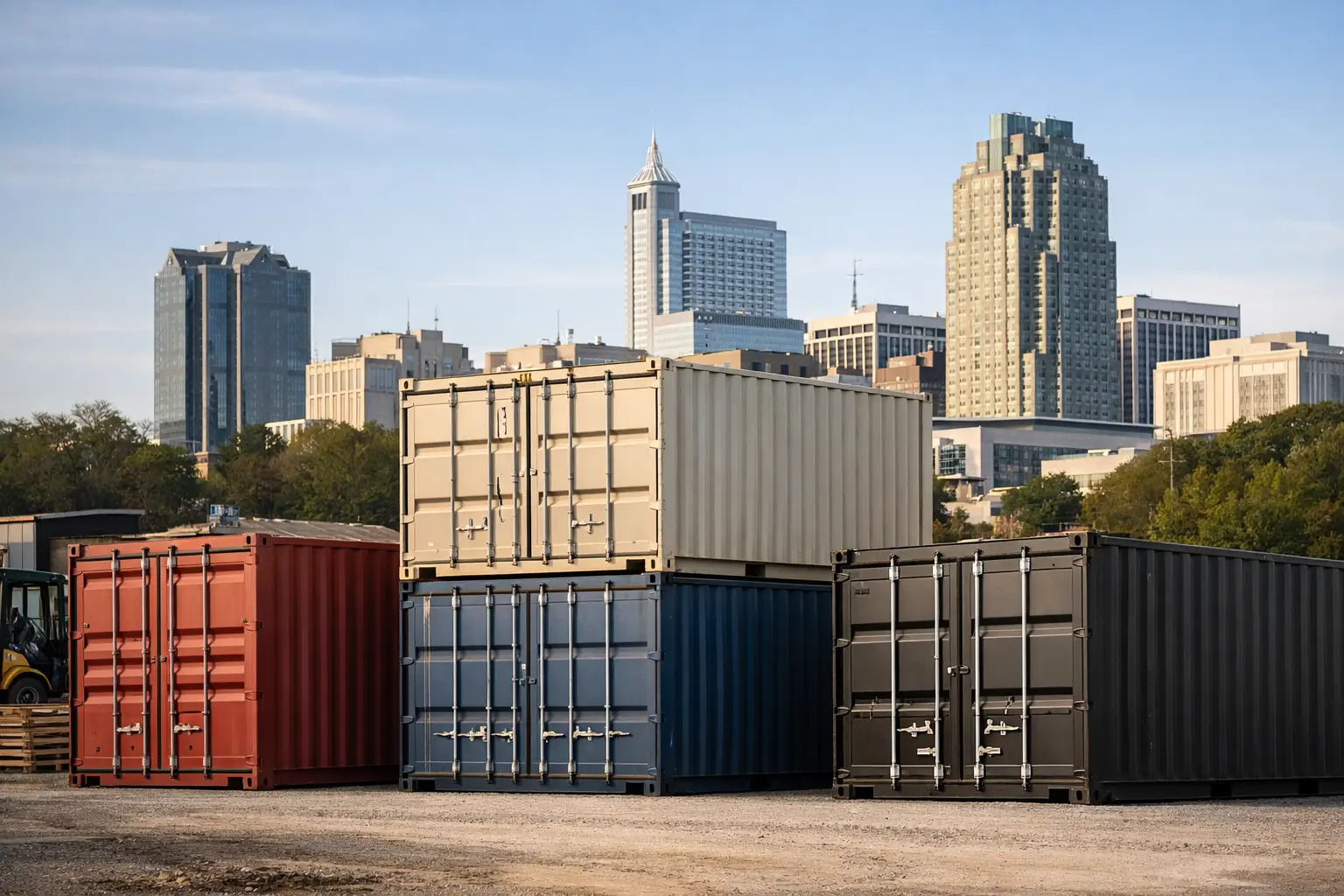
A one-trip container is usually the simplest path when you want predictable condition. These units are built from Corten steel, designed for durability, and generally have fewer dents, less corrosion, and tighter door seals than older stock. If the container will support a customer-facing use, such as a pop-up retail setup or a branded modular build, the cleaner finish is often worth the premium.
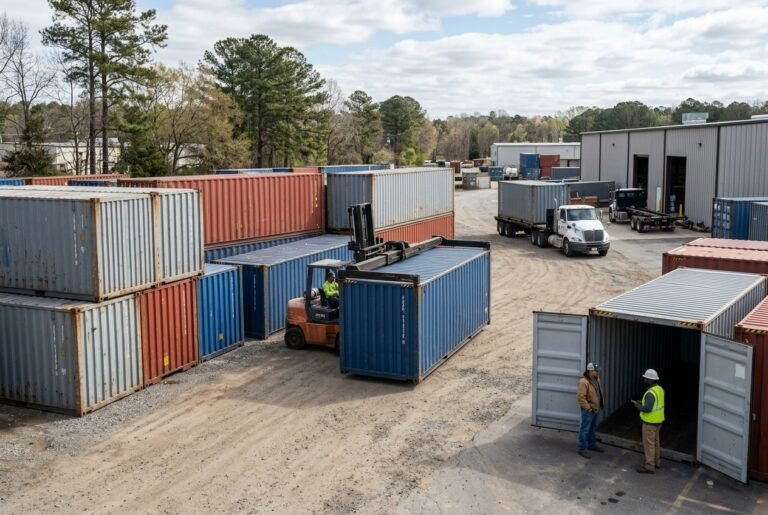
Used containers make sense when secure storage is the priority and cosmetic wear is acceptable. For a job site or equipment yard, a structurally sound used container can be the right value. The key is transparency. You want verified specifications, clear grading language, and realistic photos or inspection notes rather than vague claims like good shape.
Refurbished containers sit somewhere in the middle. They can be a strong choice when you want the savings of a used unit with some cosmetic or functional improvements. Still, refurbished can mean different things from one seller to another. It is worth asking exactly what was repaired or repainted and whether the work was cosmetic, structural, or both.
Delivery is where many container purchases go sideways
The container itself is only half the transaction. Delivery logistics decide whether the process is smooth or expensive.
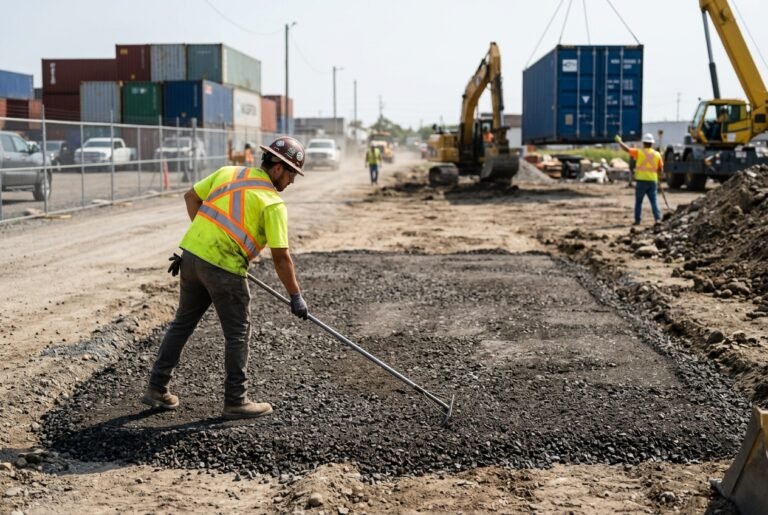
In Raleigh and the surrounding area, access conditions vary more than buyers expect. New subdivisions may have HOA restrictions, narrower streets, or tighter turning radiuses. Rural properties often have soft ground, slopes, tree limbs, or long driveways that complicate placement. Commercial sites can have excellent truck access but limited room to maneuver around active operations.
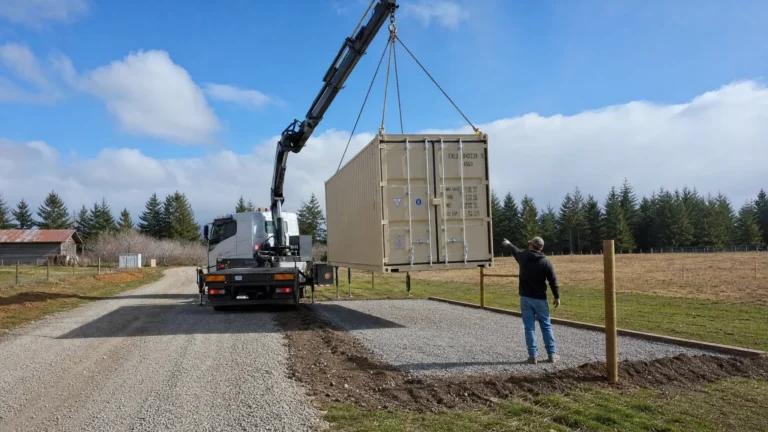
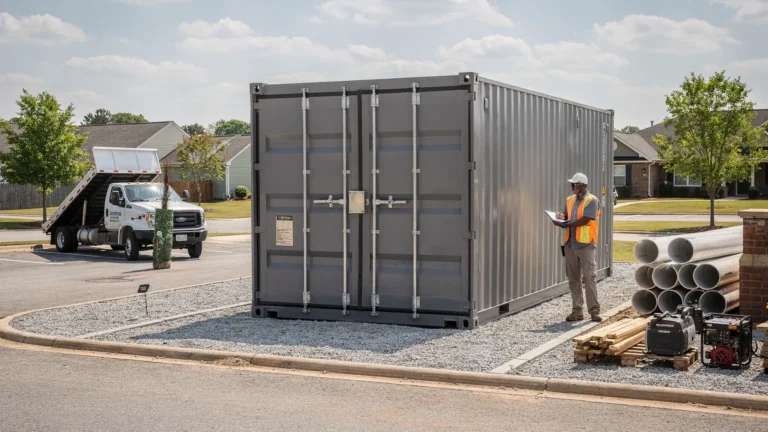
This is why delivery method matters. Tilt-bed delivery is common because it allows the container to slide off the truck and land at ground level. It is efficient, but it requires enough straight-line clearance for the truck and the full container length plus unloading space. A ground-level drop can be ideal when you need immediate walk-in access without cranes or forklifts. But it still depends on surface conditions, grade, and approach angle.
A dependable seller should ask practical questions before scheduling delivery. Is the site level? Is there overhead clearance from trees or power lines? Is the surface gravel, concrete, asphalt, or dirt? Will recent rain affect the truck’s ability to get in and out? These are not minor details. They are the difference between a routine drop and a failed delivery attempt.
Site preparation is not optional
A shipping container is strong at its corner castings. That does not mean you should place it carelessly.
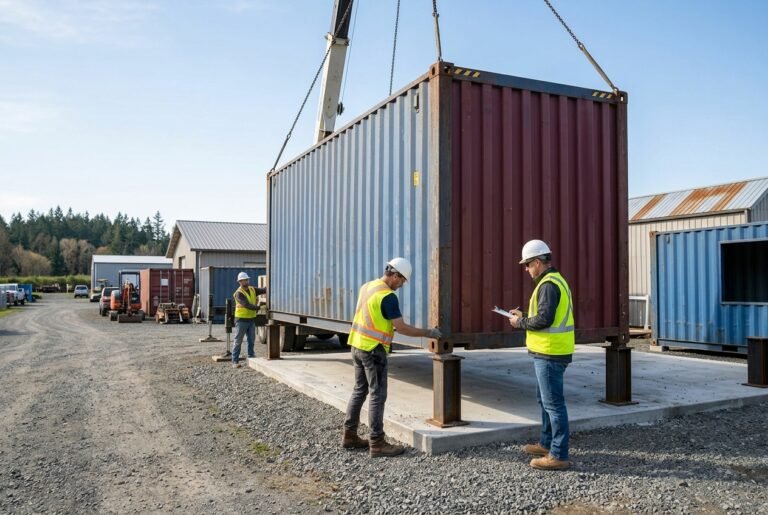
The best setup is a level, well-drained base that supports the container evenly. Gravel is a common choice because it improves drainage and can be cost-effective for residential and agricultural properties. Concrete works well for long-term placement and frequent access. Railroad ties, blocks, or other support points can be appropriate in some cases, but they need to be placed correctly to avoid twisting the frame.
A container that is out of level by too much can create immediate problems with the doors. If the doors are hard to open on delivery day, the issue may not be the container itself. It may be the surface below it. That is one reason experienced buyers spend time on site prep before the truck arrives.
You should also think ahead about use. If people will be in and out daily, plan for a dry walking surface and enough clearance around the doors. If electricity or climate control is part of the project, choose the location with those future upgrades in mind.
Special container types for specific jobs
Standard dry containers handle most storage needs, but not every project is standard. Refrigerated containers, often called reefers, are useful for temperature-sensitive products, food service backup, and specialized industrial storage. Open-top units help when materials need to be loaded from above. Tunnel containers, with doors at both ends, can simplify access when inventory needs to move in a straight-through flow.
For mobile offices and custom modular builds, structural integrity matters more than appearance alone. Door cutouts, window framing, insulation, and electrical work all depend on starting with a sound unit. If customization is the goal, it helps to say that upfront rather than buying a low-cost container and trying to adapt it later.
How to compare quotes without getting surprised
Price matters, but a low number without context is not a real comparison. Ask whether the quote includes delivery, taxes, and any fuel or mileage charges. Confirm the exact container grade, size, and height. If the listing says 40-foot HC, make sure you are getting a 40-foot high-cube and not a standard-height unit.
It is also smart to ask about the actual unit condition. Are the doors operational? Is the floor solid and free of soft spots? Is there visible corrosion, patchwork, or prior repairs? A trustworthy supplier should be comfortable discussing these details in plain terms.
In a market like Raleigh, where buyers range from major contractors to rural homeowners, clarity is worth paying for. Lease Lane Containers LLC emphasizes clear pricing and grading transparency for that reason. It reduces the back-and-forth and helps customers choose a unit based on use, not guesswork.
The right container is the one that fits the job and the site
A shipping container is a straightforward product until it meets a real-world property, timeline, and budget. Then the details start to matter. Size, grade, door function, steel condition, delivery access, and site prep all work together. If one piece is off, the whole purchase feels harder than it should.
The best approach is simple: buy for your actual use case, ask direct questions about condition and delivery, and prepare the site before the truck rolls. That is how you get a container that works the first time and keeps working long after the invoice is paid.