How to Choose a Shipping Container Dealer
A container can look solid in a photo and still create problems when it reaches your site. A door may be difficult to operate, the floor may not suit your intended use, or the delivery truck may have no safe place to unload. Choosing the right shipping container dealer is less about finding the lowest advertised price and more about confirming exactly what you are buying, what it will cost, and how it will arrive.
For contractors, farm operators, homeowners, and logistics teams, that clarity matters. A container is often needed quickly to protect tools, equipment, inventory, or materials. The right purchase should provide secure, durable storage without unexpected repair work, access issues, or delivery charges after the order is placed.
What a Shipping Container Dealer Should Verify
A dependable dealer should be able to explain container condition in plain terms, provide the unit specifications that matter to your project, and ask practical questions before arranging delivery. If the conversation starts and ends with a price, important details may be getting missed.
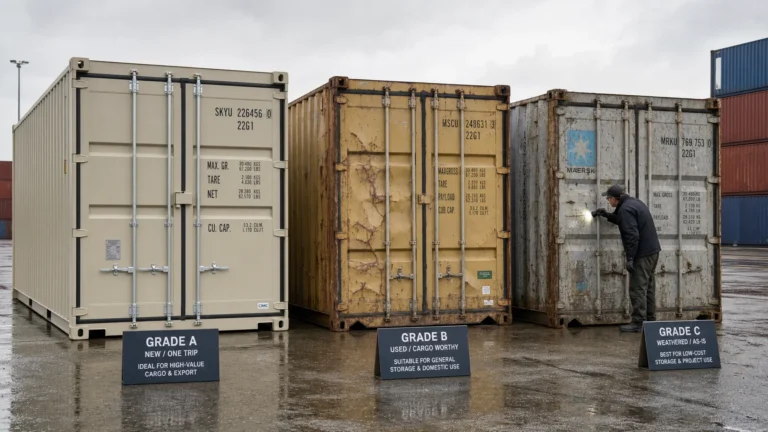
Start with the container grade. Shipping containers are built from Corten steel, a weathering steel designed to withstand demanding marine conditions. That does not mean every used container is in the same condition. Age, prior cargo, exterior dents, surface rust, floor wear, and door operation can vary significantly.
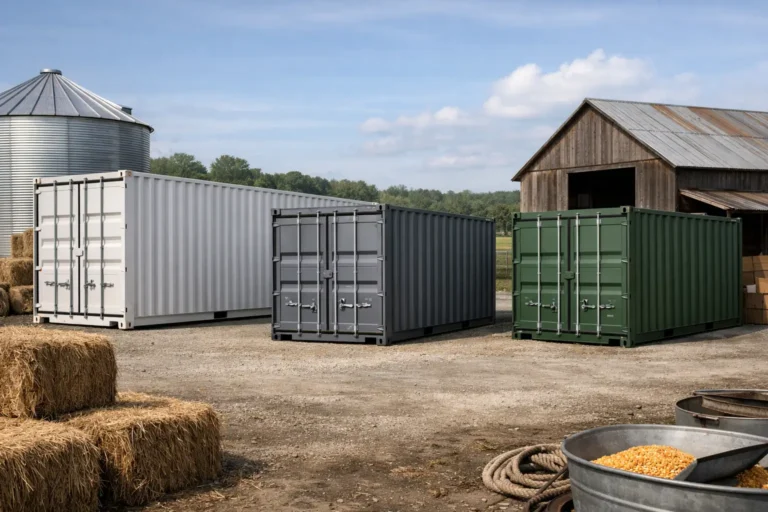
For storage applications, many buyers choose a Wind & Watertight, or WWT, container. This means the container should be structurally sound enough to keep out wind and water under normal conditions. It may have cosmetic dents, patches, surface rust, or signs of shipping use. A WWT unit can be a cost-effective choice for job-site storage, agricultural equipment, and general property storage when appearance is not the top priority.
Cargo Worthy, often called CW, is a different designation. It generally means the container is suitable for international shipping and has the structural condition required for certification. It can be appropriate when a container may be loaded for transport or where a higher degree of structural confidence is needed. However, Cargo Worthy does not necessarily mean it looks new. It can still show normal signs of use.
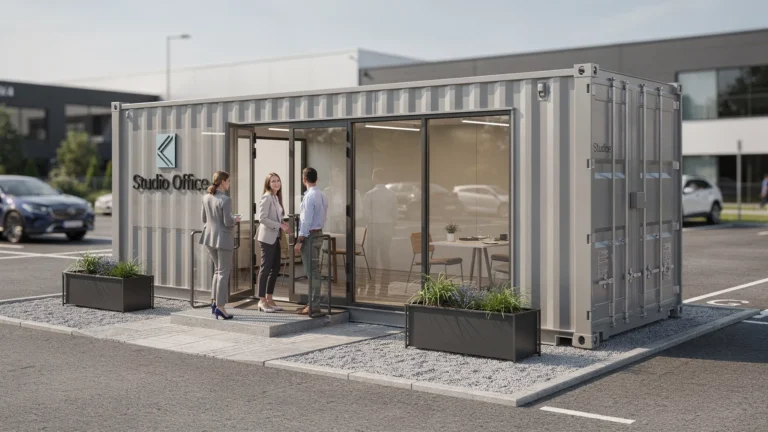
A one-trip container is typically the best choice when exterior appearance, newer flooring, cleaner interior condition, and fewer cosmetic repairs matter. These units have generally made a single cargo journey from the manufacturer. They are often selected for retail builds, office conversions, homeowner projects, and visible commercial locations. They cost more than used units, but that premium may be justified when the container will be modified, painted, or placed where appearance affects the property.
A transparent dealer will explain these distinctions without treating every grade as interchangeable. Ask whether the quoted price is for a specific grade and size, whether photos represent the actual unit or a typical inventory image, and whether any known repairs or patches are disclosed before delivery.
Match the Container Size to the Job
The most common container sizes are 20-foot and 40-foot units. A standard 20-foot container provides approximately 1,170 cubic feet of internal volume and is often a practical fit for residential storage, compact job sites, and farms with limited placement room. A standard 40-foot container offers roughly 2,390 cubic feet, making it useful for larger tool inventories, palletized materials, seasonal equipment, and commercial overflow.
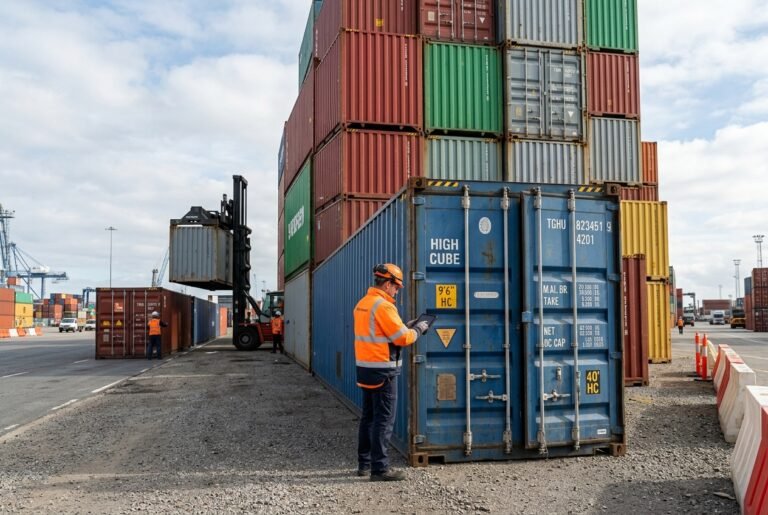
Height deserves equal attention. Standard containers are typically about 8 feet 6 inches tall externally. High-cube containers are about 9 feet 6 inches tall, providing additional vertical clearance that can make a meaningful difference for shelving, equipment storage, workshop conversions, and modular construction. A 40-foot high-cube may be the more useful long-term option when the site has adequate access and the added height supports the intended layout.
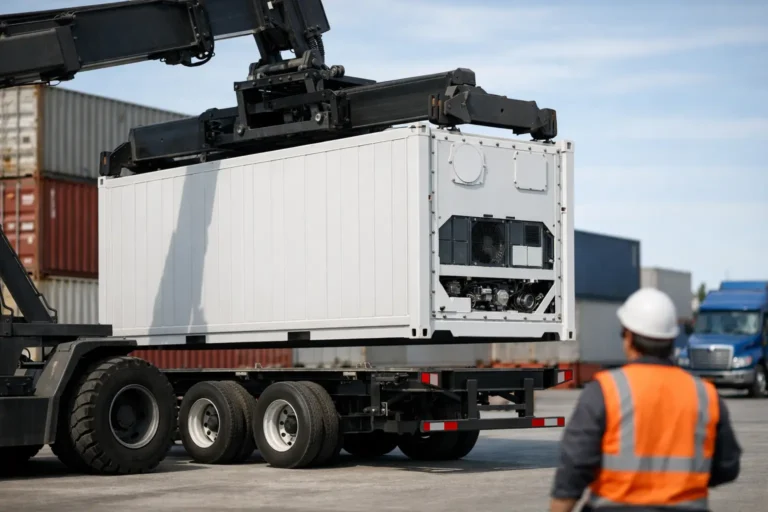
Specialized units should be selected based on an operational need, not just availability. Refrigerated containers, or reefers, are designed for temperature-sensitive cargo but require power and should be evaluated carefully for mechanical condition. Open-top containers can simplify loading oversized materials by crane. Tunnel containers have doors at both ends, which can improve access for inventory flow or a temporary pass-through workspace.
Before requesting a quote, define what must go inside, how it will be loaded, and how often it needs to be accessed. A 20-foot unit may be easier to place, but a 40-foot unit can prevent the cost and inconvenience of adding a second container later.
Delivery Planning Is Part of the Purchase
Container delivery is not a minor detail. It is one of the most common sources of avoidable surprises, especially on active construction sites, rural properties, and residential driveways.
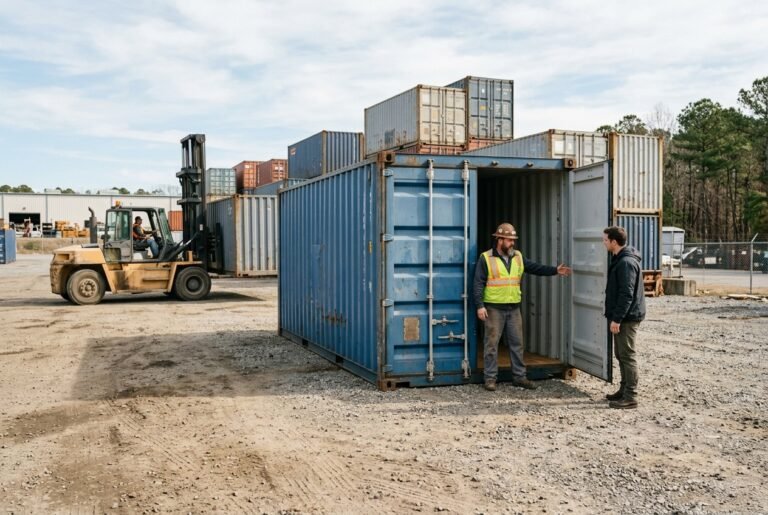
A dealer should discuss the delivery method before confirming the order. Tilt-bed delivery is common for containers because the truck can slide the unit onto the ground. This method requires a clear approach, enough length for the truck and container, overhead clearance, and a level unloading area. Ground-level delivery can be a practical option when a crane is not available, but it still requires room for the truck to maneuver safely.
Prepare for a delivery conversation by confirming four site conditions:
- The entrance width, turning room, and driveway surface can support the delivery truck.
- The placement area is level, firm, and clear of soft ground, low branches, utility lines, and parked equipment.
- There is sufficient straight-line clearance for the container and truck during unloading.
- The door end is positioned correctly for your intended access before the driver arrives.
For long-term placement, a container should rest on stable, level support points. Concrete blocks, gravel pads, railroad ties, or engineered foundations may be appropriate depending on the site, local requirements, and intended use. Raising the container slightly off the ground can improve drainage and reduce moisture exposure beneath the floor.
A trusted dealer will not guess at delivery feasibility from an address alone. They should ask for site photos, access measurements, and any relevant gate, slope, or overhead-clearance details. That preparation protects the buyer, the driver, and the property.
Look Beyond the Base Price
Low advertised pricing can be meaningful, but only if it reflects the complete transaction. Ask for clear pricing that separates the container cost from delivery, taxes where applicable, modifications, and any special equipment requirements. No fine print, no surprises should be the standard for a high-value purchase.
It also helps to understand what is included. Are lockboxes, vents, shelving, paint, personnel doors, windows, or roll-up doors part of the quote? Is the unit sold as-is, refurbished, or inspected to a stated grade? If a container needs to serve as a secure office, workshop, or retail structure, modifications should be scoped before delivery whenever possible. Retrofitting after placement can add freight, labor, and downtime.
For construction and industrial buyers, speed matters, but condition should not be sacrificed blindly. A lower-cost WWT unit may be ideal for protecting lumber and hand tools. A one-trip or refurbished unit may make better business sense for client-facing storage, a branded pop-up shop, or an office where appearance and door reliability are more visible.
Questions That Separate Reliable Dealers From Resellers
A legitimate dealer should be comfortable answering direct questions. Ask where the container is located, what grade is being quoted, whether the unit has been inspected, and what delivery method is planned. Confirm the external dimensions, door opening dimensions, and whether the container is standard or high-cube.
Also ask how the dealer handles a problem discovered before or during delivery. Condition expectations should be established in writing, particularly for used inventory. A reasonable answer does not promise a used container will be flawless. It explains the expected condition, documents the grade, and provides a clear process for resolving an issue.
Inventory availability can change quickly by region, size, and grade. A dealer with nationwide logistics experience can be valuable when a project has a tight schedule or a delivery location outside a major port market. For buyers in Raleigh, the Research Triangle, and throughout the Southeast, Lease Lane Containers LLC helps coordinate container selection and delivery planning around actual site requirements rather than a generic freight estimate.
Choose Certainty Over a Bargain That Moves
The best container purchase starts with a clear use case: what you need to store, how long you need it, what condition is acceptable, and how the truck will reach the site. Once those answers are established, price comparisons become more meaningful because you are comparing equivalent grades, sizes, and delivery terms.
A good dealer does more than sell steel boxes. They help you avoid buying the wrong grade, choosing a size that limits your operation, or scheduling a delivery your site cannot support. Bring measurements, photos, and a realistic description of your use case to the conversation. That preparation is the fastest path to a container that arrives ready to work.