Choosing a Storage Container for Retail Inventory
A back room can become a bottleneck quickly when seasonal merchandise, fixtures, cartons, and returns start competing for the same floor space. A storage container for retail inventory gives retailers a secure, weather-resistant place to hold overflow stock without committing to a warehouse lease or disrupting daily operations. The right unit can support a short seasonal surge, a long-term inventory plan, or a pop-up retail operation. The wrong one can create delivery problems, access issues, and avoidable damage to your products.
The decision is not simply 20 feet versus 40 feet. Retailers need to consider container condition, door access, site drainage, security, interior organization, and the clearance required for delivery. Clear specifications before purchase prevent the kind of surprises that turn a practical storage solution into an operational headache.
Start With the Inventory, Not the Container Size
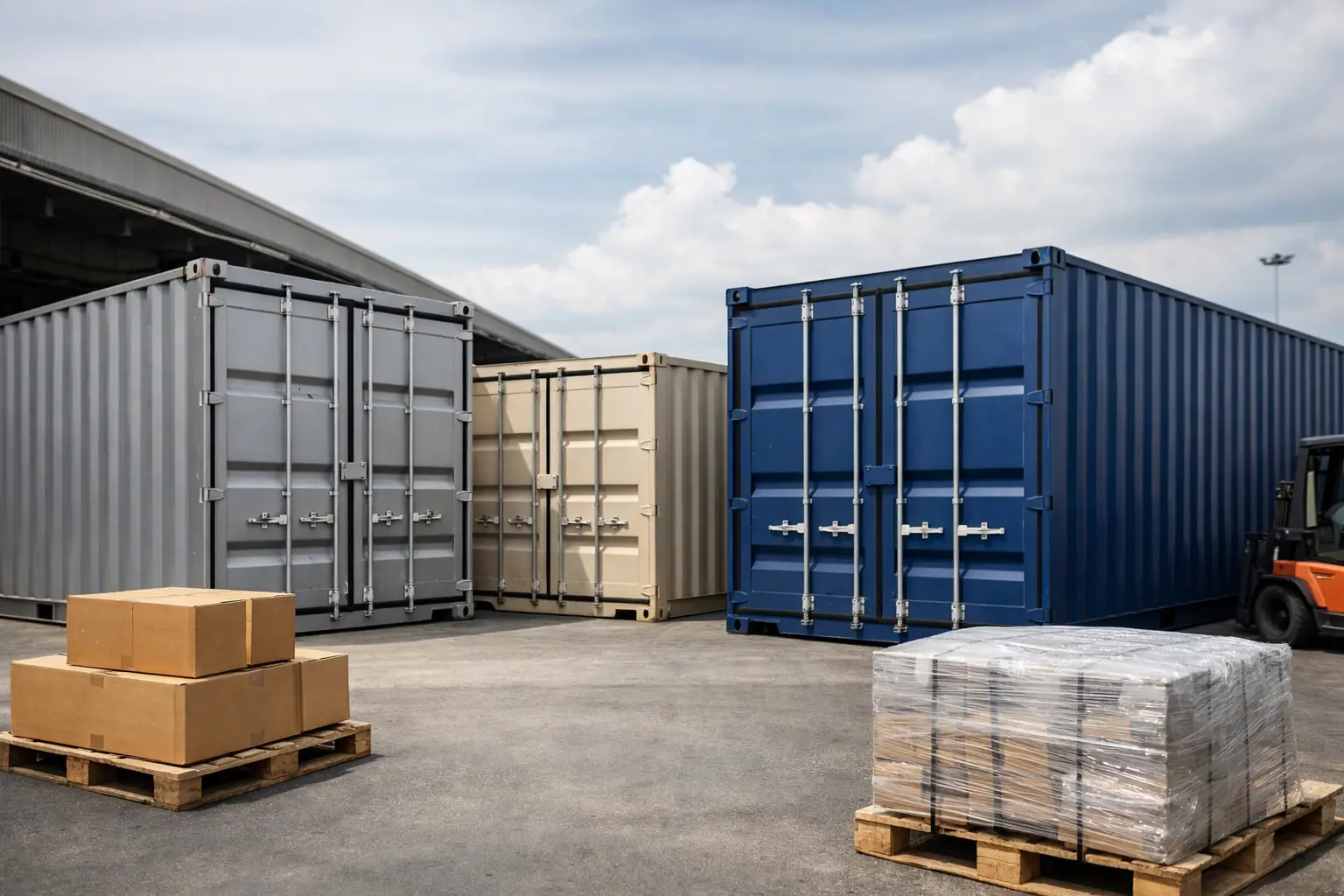
Retail inventory is not all stored the same way. Boxed apparel, packaged home goods, display fixtures, paper products, and small appliances can generally work well in a standard dry shipping container. Items that are sensitive to temperature, moisture, or extreme heat require a more careful plan.
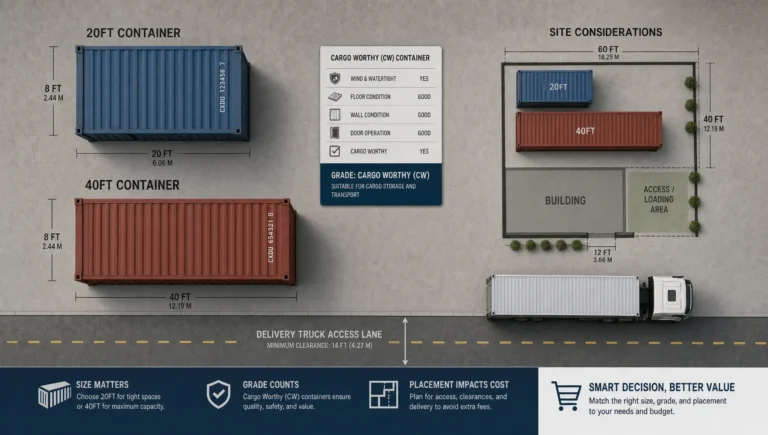
A 20-foot standard container is often a sensible starting point for a single retail location. It provides roughly 1,170 cubic feet of enclosed space while keeping the footprint manageable for many commercial sites. It works well for seasonal displays, packaged merchandise, point-of-sale materials, and excess cartons that need to remain close to the store.
A 40-foot container offers roughly double the internal volume and is usually the better value when inventory arrives by pallet, when multiple departments need storage, or when stock will remain on-site for an extended period. A 40-foot high-cube container adds approximately one extra foot of interior height. That added height can matter when using taller shelving or stacking lightweight cartons safely.
Before selecting a unit, estimate how many pallets, cartons, racks, or fixtures you need to store. Then leave room for a person to enter, locate stock, and remove it without unloading half the container. A container packed wall to wall may have enough cubic footage on paper, but it is not an efficient retail inventory system.
Plan for access frequency
If employees will access inventory every day, build an aisle into the layout and place fast-moving products near the doors. If the container is intended for reserve stock that is touched only during resets or seasonal changeovers, denser storage may be acceptable.
Standard shipping containers have cargo doors at one end. For retail users who need access from both ends, a tunnel container with doors at each end can simplify stock rotation and create a more workable flow. It is especially useful when the unit sits between a receiving area and a sales-floor staging zone.
Choose the Right Container Grade for Retail Stock
Container condition affects both appearance and performance. Retailers storing sellable merchandise should understand the difference between common grades rather than selecting solely on the lowest advertised price.
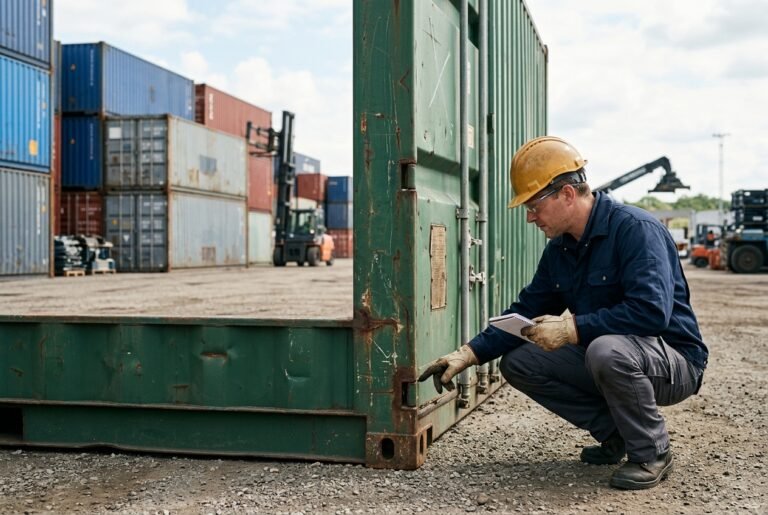
A Wind and Watertight, or WWT, container is designed to keep wind and rain out. These units are commonly used for secure storage and may show cosmetic wear, surface rust, repairs, or dents from previous shipping service. For many retailers, a verified WWT unit is a practical and cost-conscious option for boxed inventory, fixtures, and supplies.
Cargo Worthy containers meet a higher standard associated with international shipping eligibility. They are structurally sound and inspected for transport use, but Cargo Worthy does not mean the container will look new. If your retail operation does not need to ship the unit overseas, a WWT container may meet your storage requirements at a lower cost.
One-trip containers have typically made a single loaded journey from the manufacturer. They generally offer the cleanest appearance, newer door hardware, and less visible wear. They are often the preferred choice for customer-facing locations, upscale retail sites, branded pop-ups, or businesses that may later convert the container into a showroom or mobile retail space.
Refurbished containers can be a strong middle-ground option when cosmetic condition matters but a new-looking one-trip unit is not necessary. The key is to request verified specifications and understand exactly what refurbishment includes. Paint alone does not correct a compromised floor, damaged door seals, or a unit that has not been properly checked for water intrusion.
Control Moisture Before It Reaches Your Merchandise
Corten steel containers are durable, but a steel enclosure is affected by temperature swings. Warm, humid air can condense inside a closed container when outside temperatures change, particularly in humid regions of the Southeast. This is manageable, but it needs to be planned for when storing retail goods.
Keep cartons off the floor with pallets, dunnage, or shelving. This improves airflow and protects inventory from minor moisture at the floor level. Avoid loading wet pallets, damp fixtures, or recently rain-exposed boxes into the container. They introduce moisture that can remain trapped inside.
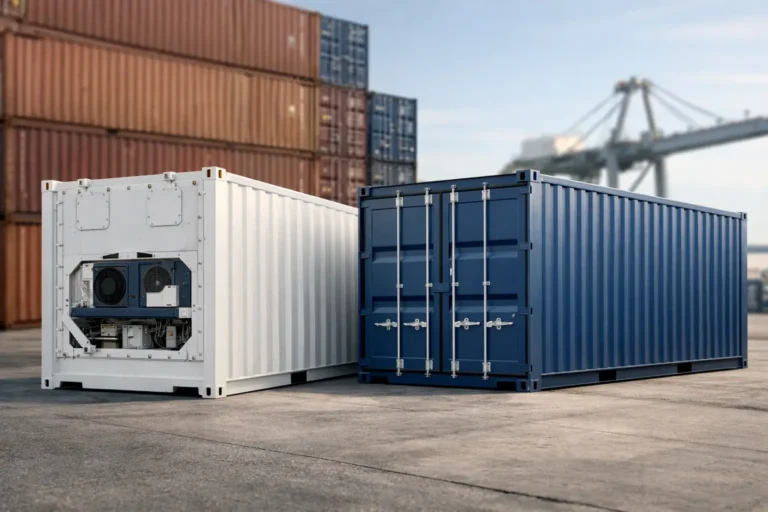
For apparel, paper goods, electronics, candles, cosmetics, or other temperature-sensitive products, standard dry storage may not be enough during extended hot or humid periods. Desiccants, moisture absorbers, insulation, vents, and a regular inspection schedule can help depending on the product and climate. Refrigerated containers, commonly called reefers, are appropriate when inventory requires controlled temperatures, but they need electrical service and cost more to operate. They should be selected because product specifications require them, not simply because the merchandise is valuable.
Build Security Into the Site Plan
A shipping container provides a significant physical barrier compared with temporary tents or unsecured trailers, but security depends on more than the steel walls. The placement of the container, lighting, visibility, and lock protection all matter.
Use a quality lockbox or lock guard to protect the padlock from bolt cutters and direct tampering. Keep the doors facing a visible, well-lit area when possible. If staff access is limited, establish a simple key-control process so managers know who can enter the unit and when.
Inside, do not place high-value merchandise directly against the doors. Leave enough clear space for employees to enter and close the container safely. If you are using shelving, anchor or stabilize it appropriately. Container floors are designed for cargo, but unsecured shelves can shift when stock is loaded unevenly or when a forklift places a pallet too aggressively near the entrance.
For multi-location retailers, a container can also improve inventory accountability. Assign the unit to a specific category such as seasonal décor, store fixtures, e-commerce returns, or promotional materials. Mixing every type of overflow stock into one unmarked container often creates the same inventory visibility problem that caused the space shortage in the first place.
Prepare the Ground Before Delivery Arrives
A container needs stable, level support. It does not always require a full concrete slab, but it does need a firm base that keeps the frame supported and the doors operating correctly. A compacted gravel pad, concrete pads at the corner castings, or a concrete slab can work depending on the site, local conditions, and the intended duration of use.
Drainage deserves close attention. Do not place the unit in a low area where water collects around the base. Standing water can accelerate corrosion, complicate access, and create muddy conditions for staff moving inventory in and out. Slightly elevating the container on proper supports can also help with drainage and airflow.
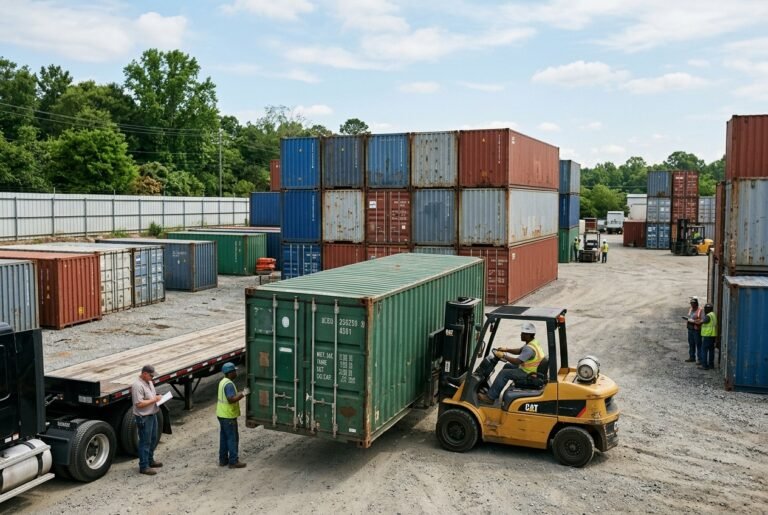
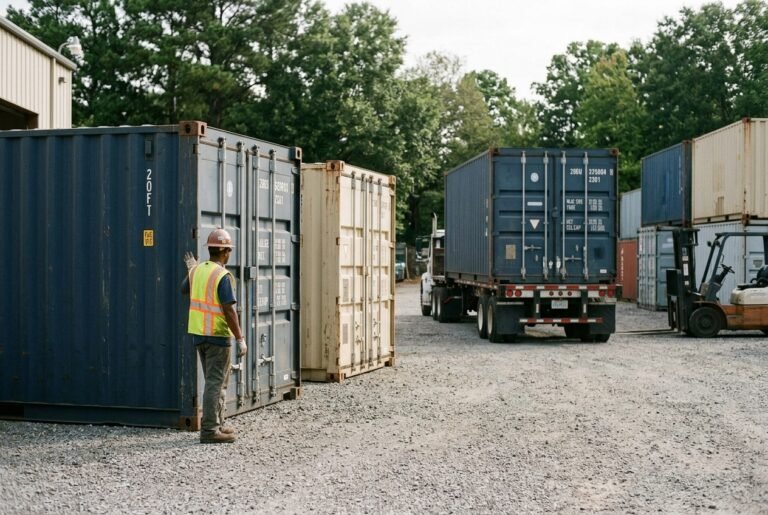
Measure the full delivery path, not just the final placement area. Delivery trucks need room to enter, turn, and exit. Overhead wires, tree limbs, curbs, parked vehicles, gates, and soft ground can all affect what delivery method is practical. Tilt-bed delivery requires substantial length and overhead clearance because the container slides off the truck at an angle. Ground-level delivery options may be better for tight sites, but requirements still vary by unit size and access conditions.
This is where clear communication with the container provider matters. Share photos, site measurements, gate widths, and any known obstacles before scheduling delivery. A precise site review is far more useful than assuming a truck can reach an area because a passenger vehicle can.
Make the Container Work Like an Extension of the Stockroom
A container performs best when it has a defined operating system. Label zones, use pallet positions or shelf locations, and keep an updated count of what enters and leaves. Retail inventory that disappears into unmarked cartons becomes slow-moving inventory by default.
For temporary seasonal overflow, a simple front-to-back arrangement may be enough. For ongoing storage, consider a central aisle with categorized shelving on both sides. Keep heavier items low, reserve upper areas for lightweight cartons, and store frequently requested products near the entrance. Battery lighting, where appropriate, and a weather-protected entry mat can make the unit easier and safer for staff to use.
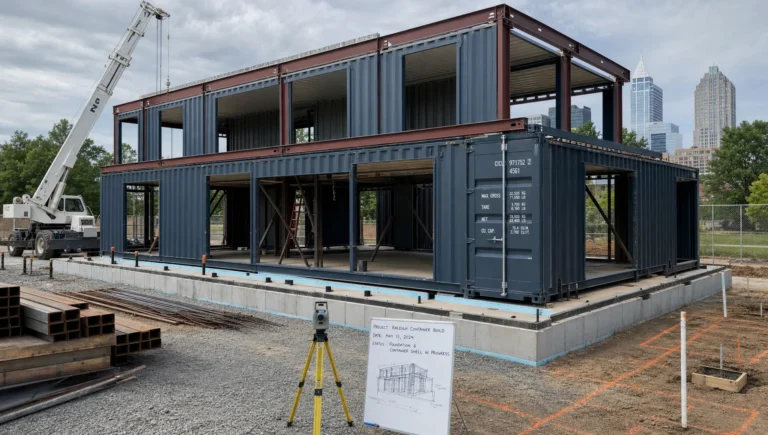
If your brand image requires more than plain steel, customization can be considered after the storage basics are solved. Exterior paint, signage, personnel doors, windows, shelving, electrical work, and insulation can turn a container into a more polished retail support space or a pop-up sales unit. Any modification should account for structural integrity, local permitting, and how the container will be delivered and positioned.
The most dependable choice is the container that fits your actual inventory flow, site constraints, and product protection needs. Define those requirements first, verify the grade and delivery plan, and your container can remain a useful part of retail operations long after the next seasonal rush has passed.