How to Inspect Used Steel Shipping Containers
Buying a used container should lower your storage or project cost, not create a new problem on your property. The difference often comes down to inspection. A clean-looking exterior can still hide roof pinholes, door gasket failures, soft flooring, or structural distortion that will matter once the first Raleigh thunderstorm rolls through.
Used steel shipping containers are built to work hard. Most are made from corrosion-resistant weathering steel, commonly called Corten Steel, and designed around ISO standards for intermodal transport. That does not mean every used unit is equally suited for every job. A contractor storing tools in Wake County, a small business adding inventory overflow in the Southeast, and a logistics manager preparing cargo for overseas shipment may all need different grades, documentation, and inspection standards.
Use the process below to evaluate condition with confidence before you pay, schedule delivery, or place a container on your jobsite, farm, retail lot, or industrial property.
Know the Grade Before You Inspect
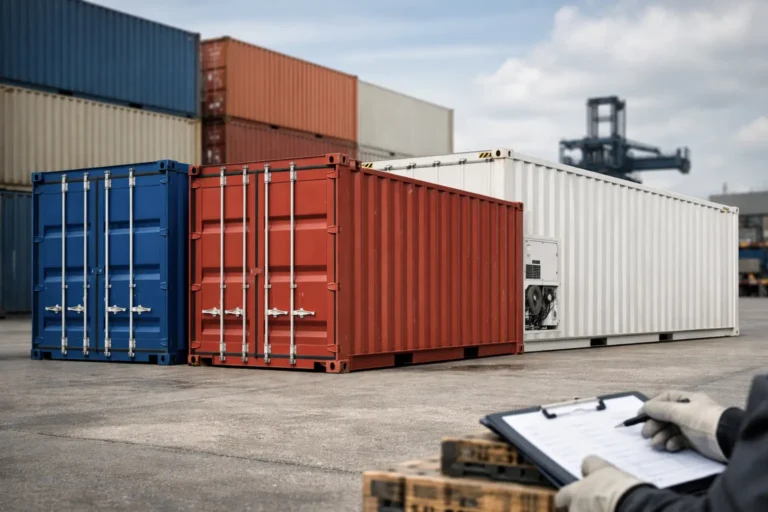
A used container inspection starts with the seller’s grade. The grade tells you what the container is being represented as, and your inspection confirms whether the unit matches that claim.
| Grade | What it typically means | Best fit | Inspection priority |
|---|---|---|---|
| One-Trip | A newer container that has usually made one cargo trip from the manufacturer to market. It should have minimal dents, cleaner paint, and less wear. | Customers who care about appearance, long service life, modifications, or premium storage. | Confirm age, look for handling dents, check doors and seals, and verify it is not being misrepresented. |
| Cargo Worthy (CW) | A used container considered structurally suitable for cargo transport. For ocean export, the CSC plate and inspection status matter. | Logistics, shipping, exporters, and buyers needing stronger structural assurance. | Check corner posts, corner castings, crossmembers, roof bows, floor, and paperwork. |
| Wind & Watertight (WWT) | A used container that should keep out wind and rain under normal storage conditions, but is not necessarily certified for cargo shipping. | Jobsite storage, farm storage, equipment storage, and many residential or business uses. | Look for leaks, door gasket issues, roof holes, corrosion, and floor condition. |
| As-Is | Sold with no meaningful condition guarantee. It may have leaks, structural damage, bad doors, or floor problems. | Budget projects where repairs are expected. | Inspect everything and price repairs before buying. |
If you are comparing listings and are unsure how grades affect value, Lease Lane’s used shipping container grades guide is a useful companion to this inspection process.
Match the Container to the Job First
Before you judge dents or rust, clarify what the unit must do. A container used for dry tool storage has different requirements than one used for export cargo, refrigeration, retail conversion, or a mobile office buildout.
For example, a Raleigh homeowner or general contractor who needs compact ground-level storage may be evaluating a 20′ x 8′ x 8.5′ Tall –Used Shipping / Storage Container-Wind and Watertight – Blue. A builder, agricultural buyer, or small business needing more floor space may compare that with a 40Ft X 8Ft Used Shipping Container – Standard. Both can be strong options when the condition matches the use case, but both should be inspected with the same disciplined approach.
Also confirm whether you need a standard-height unit or a High Cube. Standard containers are commonly 8 feet 6 inches tall on the exterior. High Cube containers are commonly 9 feet 6 inches tall, which provides extra interior height for shelving, equipment, insulation, lighting, or office conversions. That extra foot is valuable, but it can affect delivery clearance, local visibility concerns, and placement near trees, power lines, or buildings.
Start With Identification and Paperwork
A legitimate shipping container should have a container identification number, usually displayed in large lettering on the exterior, and often a manufacturer’s plate or CSC safety approval plate on cargo-worthy units. If the container is being sold for storage only, paperwork may be simpler. If it is being represented as Cargo Worthy, documentation matters more.
Check whether the container number on the unit matches the invoice, quote, photos, and delivery paperwork. For export or freight use, ask whether the CSC plate is current and whether any required inspection has been completed. The International Organization for Standardization publishes dimensional standards such as ISO 668, and intermodal containers are built around these dimensional and handling expectations. If the unit has been structurally altered, that can affect cargo use.
For storage buyers in Raleigh and across North Carolina, paperwork is still important. You want the grade, size, condition expectations, delivery terms, and any exclusions in writing before payment.
Inspect the Exterior Steel and Structural Frame
Walk around the container slowly. Do not start with paint color. Paint is cosmetic; structure is what protects your investment.
Focus on the corner posts, corner castings, top rails, bottom rails, side panels, and roof line. The corner castings are critical because they are part of the ISO handling system used for lifting and stacking. If they are badly bent, cracked, or poorly repaired, the unit may not be suitable for transport or heavy-duty use.
Look for dents that affect function. Minor sidewall dents are common on used containers and often acceptable for storage. Large inward dents near the door frame, top rail, bottom rail, or corner posts require closer attention because they may indicate racking, impact damage, or compromised alignment.
Rust needs interpretation. Corten Steel is designed to resist corrosion better than ordinary mild steel, but it is not magic. Surface rust is common and usually manageable. Scaling rust, deep pitting, rust around seams, or rust that has created pinholes is a more serious concern. In the humid Southeast, units stored on wet ground, near standing vegetation, or in coastal environments can deteriorate faster if water is allowed to sit against the steel.
Check the Roof Carefully
The roof is one of the most important areas to inspect, especially for Wind & Watertight storage. Containers are designed to shed water, but roof dents can create low spots where rain collects. Standing water accelerates corrosion and can eventually lead to pinholes.
If safe access is available, inspect the roof from above. If you cannot safely access the roof, inspect from inside with the doors closed and look for daylight. Pinholes are often easiest to detect from the interior. You can also look for water stains on the ceiling, rust streaks down the walls, or damp areas after rain.
Avoid assuming that a fresh patch or heavy coating is automatically bad. Repairs can be acceptable when done properly. The issue is whether the repair is sound, watertight, and appropriate for the grade being sold. Sloppy roof patches, excessive sealant, or mismatched metal plates should prompt more questions.
Test the Doors, Gaskets, and Locking Hardware
Container doors tell you a lot about the frame. Open and close both doors fully. They should swing without extreme force, latch securely, and seal evenly.
Pay attention to the locking rods, cam keepers, hinges, handles, and rubber gaskets. Worn gaskets can allow wind-driven rain into the container, especially during summer storms in Raleigh or hurricane-season weather across the Southeast. Bent locking rods or hard-to-operate handles can indicate impact damage, poor maintenance, or a container sitting out of level.
Door stiffness can also be caused by uneven ground. If you inspect a unit sitting twisted on rough terrain, doors may bind even if the container frame is acceptable. Still, any door that cannot be opened, closed, and locked reliably should be addressed before purchase.
Inspect the Floor Like It Carries the Value
Container floors are typically one of the most expensive areas to repair. Many used containers have thick plywood floors supported by steel crossmembers. The top surface may look acceptable while the underside has corrosion, damaged crossmembers, or moisture problems.
Walk the entire floor. Listen for hollow sounds. Feel for soft spots, spongy areas, delamination, raised edges, holes, or sections that flex under weight. Inspect corners and door thresholds carefully because water often enters or collects there first.
Stains deserve attention. A used cargo container may have transported many types of freight, so look for chemical odors, oil stains, unknown residues, or evidence of spills. For household goods, office conversion, retail use, or agricultural storage, odor and contamination can be just as important as structural strength.
For a deeper look at this specific inspection area, Lease Lane has a dedicated guide on how to inspect container floors properly.
Look Under the Container When Possible
The underside is often ignored because it is harder to access, but it can reveal serious issues. Look at the steel crossmembers, bottom rails, forklift pockets, and underside of the floor. Heavy corrosion on crossmembers can reduce floor support and shorten service life.
If the container is sitting flat on the ground, you may not be able to see much. In that case, ask for photos from before placement or request that the supplier explain the undercarriage condition. For buyers using a container on a construction site, farm, or industrial lot, underside condition matters because the unit may be moved, loaded, or exposed to wet soil for years.
Check for Leaks With a Simple Light Test
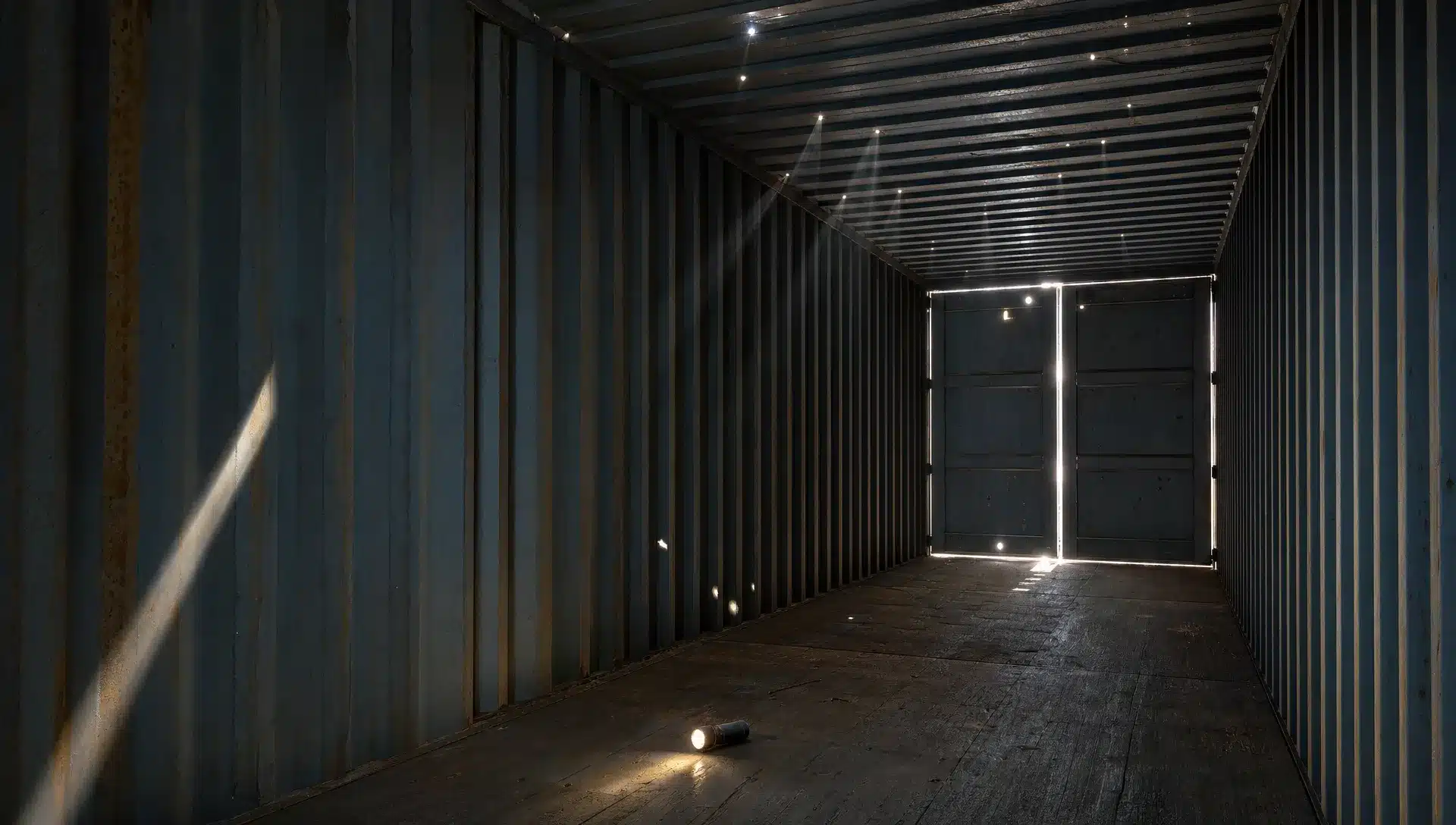
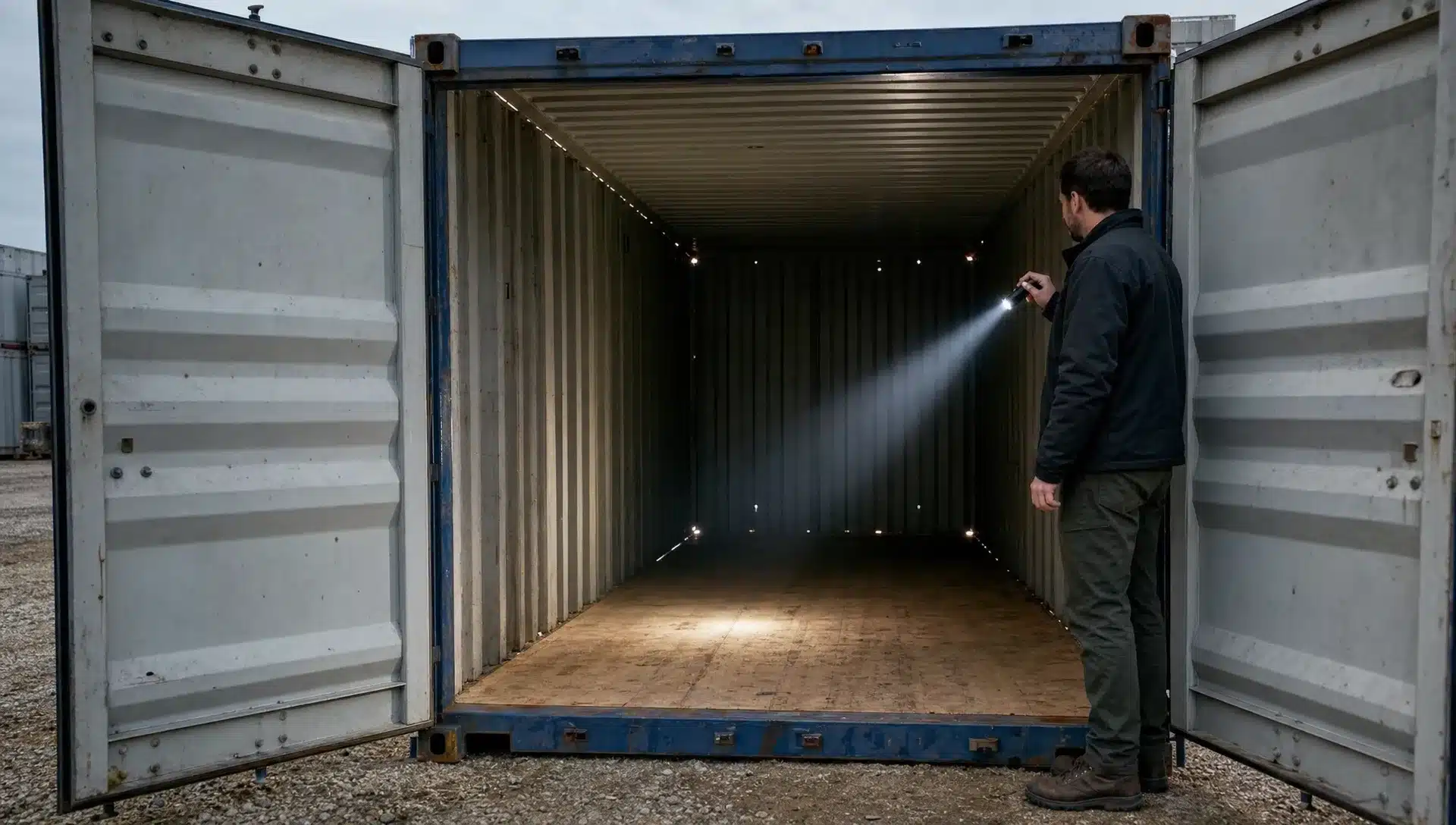
One of the simplest WWT checks is the daylight test. Step inside during daylight, close the doors completely, and let your eyes adjust. Any visible pinhole of light may indicate a path for water, dust, insects, or wind.
The daylight test is not perfect. Door gaskets can leak without showing obvious daylight, and roof seams can fail only during heavy rain. Still, it is a fast way to identify roof holes, wall punctures, bad repairs, and door seal gaps.
If possible, inspect after rain. Water stains, damp flooring, rust trails, or condensation patterns can reveal problems that a dry-day inspection misses.
Interpret Common Findings Correctly
Not every flaw should stop a purchase. Used containers are industrial equipment, and some wear is expected. The key is knowing which issues are cosmetic, which affect storage performance, and which affect structural safety or cargo use.
| Finding | Usually acceptable for WWT storage? | Concern level | What to do next |
|---|---|---|---|
| Faded paint or decals | Yes | Low | Cosmetic only unless rust is hidden underneath. |
| Minor sidewall dents | Often | Low to moderate | Confirm dents do not affect frame, doors, or interior space. |
| Surface rust | Often | Low to moderate | Clean, treat, and monitor, especially in humid climates. |
| Roof dents that hold water | Sometimes | Moderate | Inspect for pinholes and corrosion. Ask about repair or discount. |
| Daylight through roof or walls | No for WWT | High | Require repair, choose another unit, or price it as As-Is. |
| Soft or contaminated floor | Usually no | High | Estimate repair or replacement before buying. |
| Bent corner posts or damaged castings | No for CW | High | Avoid for cargo use and inspect carefully for storage use. |
| Doors that will not seal or lock | No | High | Fix before delivery or select a better unit. |
Special Notes for Cargo Worthy and Reefer Units
If you need the container for international shipping, do not rely on a visual inspection alone. Cargo Worthy should mean the unit is structurally suitable for transport, but you still need the right documentation, a valid CSC plate where applicable, and confirmation that the container meets the requirements of your carrier, freight forwarder, or port.
For refrigerated containers, also known as reefers, the steel box is only part of the inspection. The refrigeration machinery, electrical requirements, temperature performance, door seals, insulation, drain lines, and service history all matter. A reefer can look structurally clean while still requiring mechanical work. If cold chain performance is critical, ask for a unit-specific operational check.
Pro-Tip: Prepare the Site Before Delivery
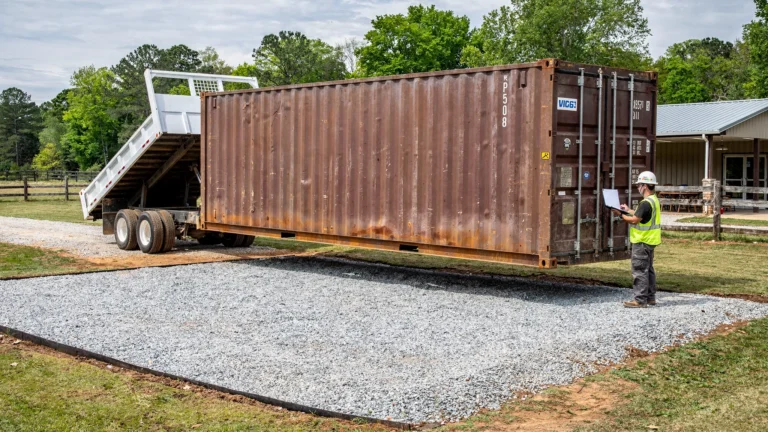
A good used steel shipping container can perform poorly if it is dropped on a bad site. Site preparation affects drainage, door operation, corrosion, and long-term usability.
In Raleigh and much of the Southeast, clay soils and heavy rainfall make drainage especially important. A compacted gravel pad is often a practical choice because it helps keep the container level and reduces standing water. At minimum, the container should sit on a stable, level surface with support under the corners or appropriate bearing points so the frame does not twist.
Before delivery, confirm access for the truck, overhead clearance, turning room, slope, soil firmness, and the exact door orientation. Trim branches, remove low obstructions, and mark the desired drop spot clearly. If the site is soft after rain, wait or improve the surface rather than risking a difficult delivery.
Also check permit and zoning requirements before the container arrives. Rules can vary by city, county, neighborhood, property type, duration of use, and whether the container is considered temporary storage or part of a construction project. In Raleigh, start with the appropriate local permitting and zoning resources, such as the City of Raleigh permits information, and always account for HOA or commercial property restrictions.
Questions to Ask Before You Pay
A strong inspection should end with clear answers from the seller. Ask what grade is being sold, whether the container is One-Trip, Cargo Worthy, Wind & Watertight, or As-Is, and whether the exact unit shown in photos is the unit you will receive. Ask how delivery is handled, whether the driver places the container at ground level, and what happens if the site is not accessible on delivery day.
For buyers in North Carolina, it is also smart to ask how the container has been stored and whether the seller can advise on site preparation for local soil and weather conditions. For national delivery, ask how condition is verified before dispatch and whether you will receive current photos.
Transparency matters. A reputable supplier should be comfortable explaining container grades, showing condition details, and helping you choose the right size rather than pushing the cheapest available box.
When a One-Trip Container May Be the Better Choice
Used containers are often the right choice for budget-conscious storage, construction sites, farms, and equipment protection. But a One-Trip container can be worth the additional cost when appearance, modification quality, long-term resale value, or reduced maintenance matters.
Choose One-Trip when you want a cleaner exterior for a customer-facing location, plan to add doors and windows, need a container for a modular build, or want fewer dents and less rust from the start. Choose a solid WWT used container when you mainly need secure, dry storage and cosmetic wear is acceptable. Choose Cargo Worthy when the unit needs to move loaded freight or enter intermodal service.
The right answer is not always the newest container. The right answer is the container whose grade, condition, size, and delivery plan match the job.
Frequently Asked Questions
What is the most important thing to inspect on used steel shipping containers? The roof, doors, floor, and structural frame are the most important areas. A container with a leaking roof, soft floor, bad door seals, or damaged corner posts can create expensive problems even if the exterior paint looks acceptable.
Is surface rust normal on a used shipping container? Yes, surface rust is common on used containers, especially in humid regions like North Carolina and the Southeast. Deep pitting, flaking rust, rust holes, or corrosion around seams and structural members is more serious.
What does Wind & Watertight mean? Wind & Watertight means the container should keep out wind and rain under normal storage conditions. It does not necessarily mean the container is certified for cargo shipping, and buyers should still inspect the roof, walls, floor, doors, and gaskets.
What does Cargo Worthy mean? Cargo Worthy means the container is considered structurally suitable for cargo transport. If you plan to use it for international shipping, confirm the CSC plate, documentation, inspection status, and carrier requirements before buying.
Should I inspect a container in person before buying? In-person inspection is ideal when practical. If you cannot inspect in person, ask for current photos of the exact unit, including the roof, doors, floor, corner posts, underside where available, and any repairs or rust areas.
Do I need a permit for a shipping container in Raleigh? Permit requirements depend on location, property use, placement duration, zoning, and whether the container is temporary or part of a construction or business operation. Check local Raleigh or Wake County requirements and any HOA or landlord rules before delivery.
Ready to Inspect With Confidence?
If you are comparing used steel shipping containers in Raleigh, across North Carolina, or for delivery anywhere in the USA, Lease Lane Containers LLC can help you choose the right size, understand One-Trip, Cargo Worthy, and WWT grades, and plan a clean delivery site before the truck arrives.
Contact the sales team at sales@leaselanecontainers.com or visit Lease Lane Containers LLC online to connect with the Raleigh office and get clear guidance for your next container purchase.