Best Shipping Container Modifications for Worksites
A container that arrives with the right modifications can go straight to work. A container that is modified without a clear plan can create security gaps, water intrusion, delivery problems, and unnecessary cost. The best shipping container modifications are the ones that solve a specific operational problem while protecting the container’s Corten steel structure and keeping the final unit practical to place, access, and maintain.
For contractors, agricultural operators, retailers, and property owners, the starting point is not a list of accessories. It is the job the container needs to perform: secure tool storage, a staffed job-site office, equipment staging, refrigerated inventory, or a workshop shell. That purpose determines the right container size, grade, door configuration, and level of customization.
Start With the Container Grade and Layout
Modifications do not correct a poor base container. A Wind & Watertight (WWT) unit is often a practical starting point for general storage when appearance is not the main concern. It should be structurally sound, with functioning cargo doors and no active leaks, but used units can show dents, surface rust, patches, and prior repairs.
For a customer-facing retail build, a home-office shell, or a project where exterior appearance matters, a one-trip container usually provides a cleaner starting point. These units have made one loaded journey from the manufacturer, so their floors, doors, and exterior panels generally have less wear. Cargo Worthy containers are commonly selected when international transport certification is relevant, though a certification requirement should be confirmed before purchasing.
The interior layout matters just as much. A standard 20-foot container works well for compact storage, a small office, or a controlled-access tool room. A 40-foot container provides more uninterrupted storage length, while a 40-foot high-cube adds approximately one foot of interior height. That added height is valuable for shelving, overhead electrical runs, insulation, and workshop clearance.
How to Choose the Best Shipping Container Modifications
The right modification package should reduce daily friction without adding features that will not be used. These are the most effective upgrades for common commercial, agricultural, and residential applications.
1. Lock Boxes and Upgraded Security
A lock box is one of the highest-value modifications for job-site and equipment storage. It is a welded steel enclosure that shields the padlock shackle from bolt cutters and prying tools. Paired with a quality puck lock, it provides substantially better protection than a standard exposed padlock.
For high-value inventory, security can also include welded lock rods, interior hasps, alarm provisions, or reinforced personnel doors. The correct approach depends on how often the container will be accessed. A crew opening the unit several times each day needs fast, dependable entry. A seasonal equipment container may prioritize maximum resistance to forced entry instead.
2. Personnel Doors for Daily Access
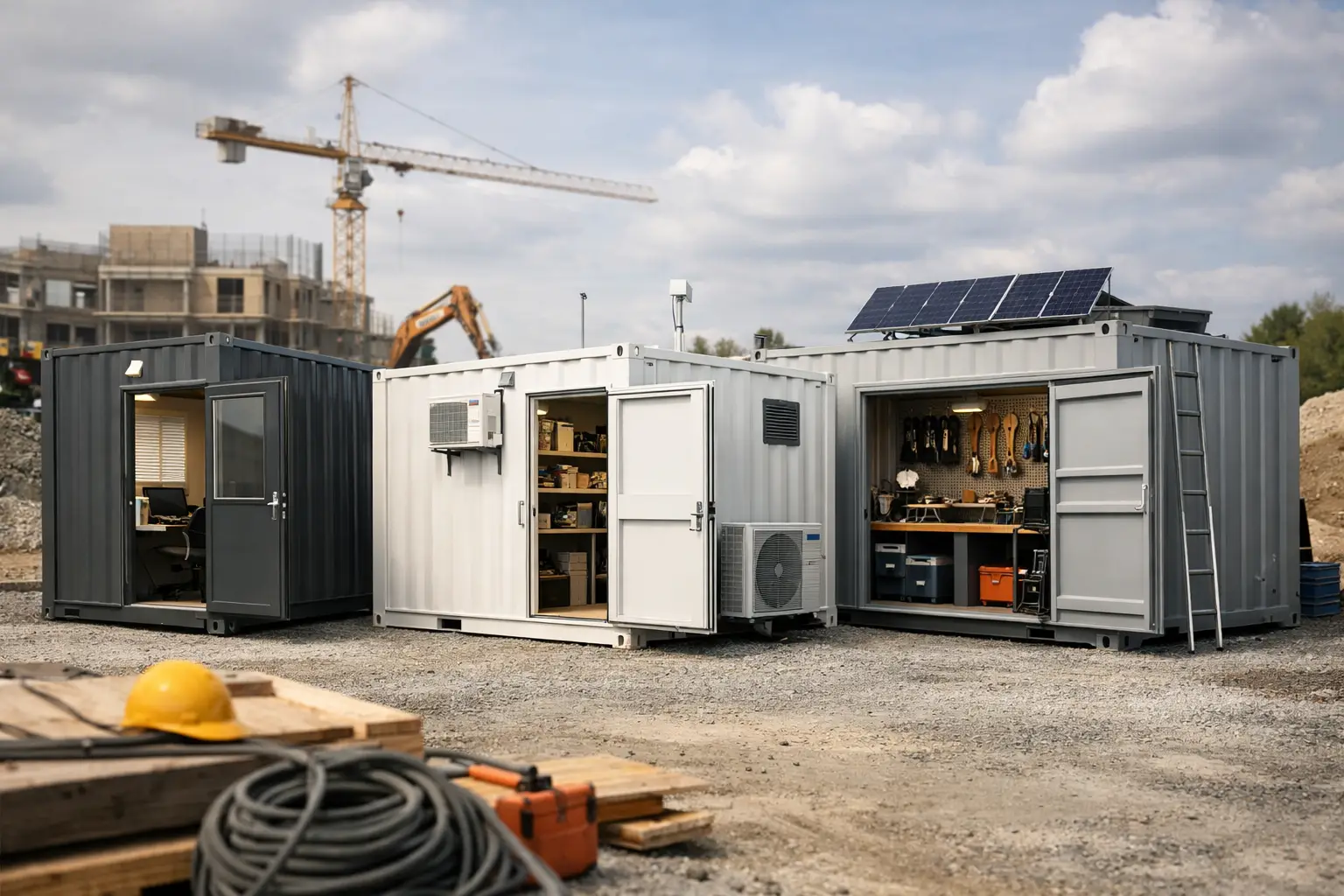
Opening cargo doors every time someone needs a drill, file, or box of parts is inconvenient. A framed steel personnel door creates a practical entry point while allowing the main cargo doors to remain secured. This is especially useful for offices, workshops, and organized storage containers with shelving near the doors.
The location needs planning. A side-door placement may improve traffic flow, but it should not interfere with the delivery truck’s access or the way equipment will approach the unit. Door swing direction, landing clearance, and whether the container will sit on blocks, piers, or a slab should be decided before fabrication.
3. Windows, Roll-Up Doors, and Service Openings
Windows make sense when people will work inside the container. They provide daylight and, when operable, ventilation. They also introduce more security and weatherproofing considerations than a standard steel wall, so window placement should reflect the site’s exposure and the value of items stored inside.
Roll-up doors are a strong fit for mobile retail, parts distribution, concession service, and workshop access. They create a large opening without requiring cargo doors to swing into customer or vehicle paths. However, cutting a large side opening changes how loads are carried through the corrugated steel walls. Proper steel framing and reinforcement are not optional. The more wall section removed, the more critical the structural design becomes.
A service window can be a better choice than a full roll-up door for pop-up retail and ticketing operations. It preserves more of the container wall, limits the opening size, and often reduces the cost of finishing the interior.
4. Ventilation and Moisture Control
Containers are weather-resistant cargo equipment, not naturally ventilated buildings. Temperature swings can create condensation inside a closed unit, particularly when storing tools, paper goods, textiles, feed-related supplies, or items sensitive to moisture.
Basic passive vents can improve airflow for standard storage. For workshops, battery storage areas, or spaces with regular occupancy, powered exhaust and fresh-air intake may be appropriate. The ventilation plan should match what is inside the unit. Venting alone will not solve moisture problems caused by wet materials, poor site drainage, or a container sitting directly in standing water.
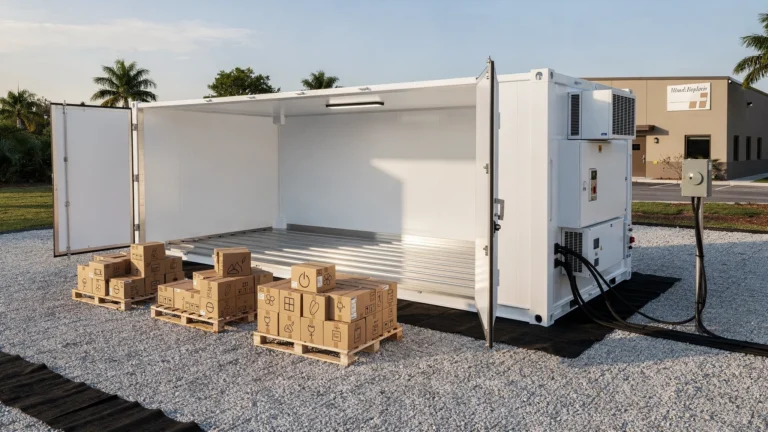
If humidity control is critical, consider insulation, vapor control, electrical service for a dehumidifier, and a site surface that keeps the container elevated and level. For temperature-controlled products, a refrigerated container may be more appropriate than trying to convert a dry container into a cooler.
5. Electrical, Lighting, and Climate Control
A basic electrical package can turn a storage container into a usable work area. LED lighting, exterior lighting, outlets, a breaker panel, and a power inlet are common additions for job sites and workshops. Electrical work should be planned around the available power source, expected load, local permitting requirements, and whether the unit may move to another site later.
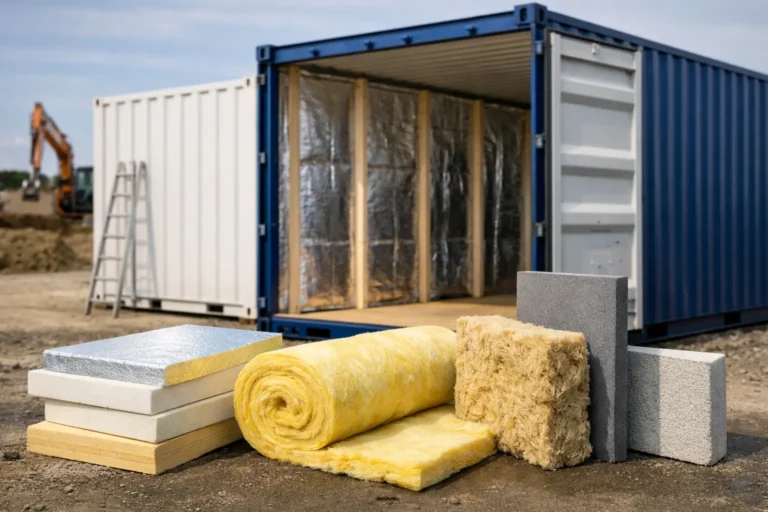
For offices and finished spaces, insulation and HVAC are usually connected decisions. Insulation reduces heat gain and loss, but it also takes up interior space and requires careful installation around framing, wiring, and condensation-prone metal surfaces. A mini-split system may be appropriate for a regularly occupied office, while a simple ventilation package may be sufficient for a tool container.
Avoid adding climate-control equipment before establishing the intended use. An air-conditioned container used only for occasional storage may not justify the added equipment, wiring, maintenance, and operating cost.
6. Interior Shelving and Work Surfaces
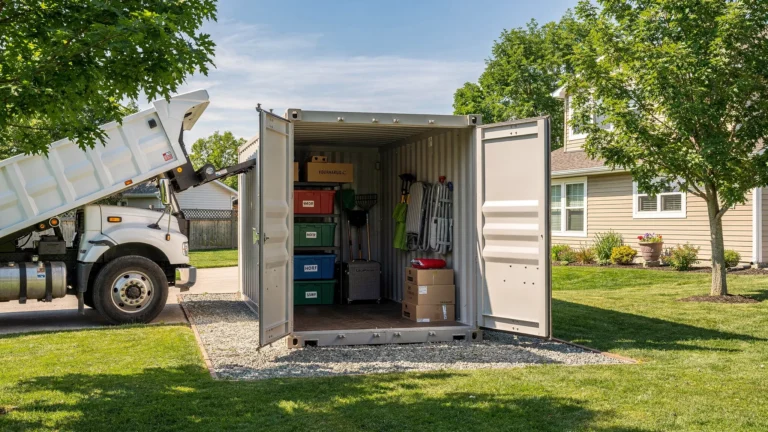
Well-designed storage usually delivers more value than a heavily finished interior. Adjustable shelving, rack systems, bins, and designated equipment zones keep crews from stacking materials on the floor and wasting usable volume. In a 20-foot container, a shelving layout on one wall may preserve a clear central aisle. In a 40-foot unit, shelving on both sides can work if the aisle remains wide enough for carts and equipment.
Workbenches, tool boards, and partition walls are useful for maintenance crews and agricultural operations. They should be securely attached to suitable framing or structural points, not simply fastened through thin interior lining. Plan the layout around cargo-door access, the weight of stored materials, and any future need to relocate the container.
Modifications That Require Extra Planning
Not every popular upgrade is suitable for every container. Large glazing systems, multiple side openings, rooftop decks, plumbing, and stacked container configurations can be effective, but they require more than cosmetic planning. They may involve engineering, permits, zoning review, foundation design, utility coordination, and code requirements that vary by jurisdiction.
Plumbing deserves particular attention. A sink or restroom installation requires a plan for water supply, drainage, freeze protection, and access for service. A container placed in rural North Carolina may face different utility and frost considerations than one installed at a commercial site in another state.
Exterior paint and branded finishes are also best handled after fabrication is complete. Welding, cutting, and framing can damage finished coatings. A proper finish process addresses prep, corrosion protection, and coverage of modified areas so the container remains protected from the elements.
Delivery and Site Preparation Should Shape the Design
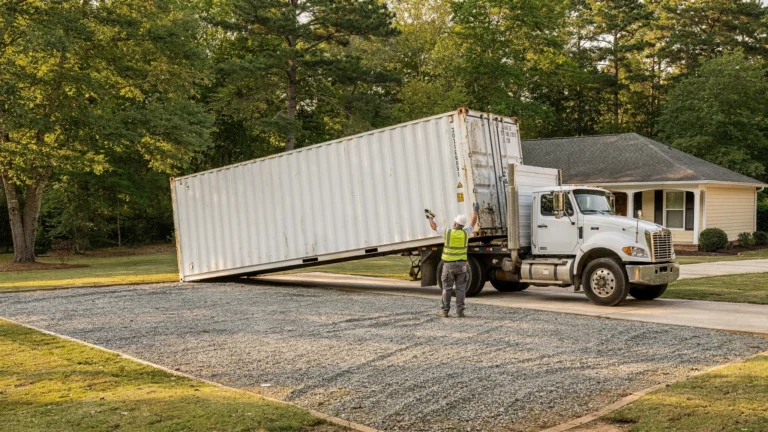
A modified container still has to reach the site. Before finalizing door locations, exterior stairs, awnings, or other protrusions, confirm the delivery method and clearance requirements. Tilt-bed delivery needs adequate overhead clearance and room to safely slide the container off the truck. Ground-level delivery methods may require different access conditions.
The site should be firm, reasonably level, and accessible to the delivery vehicle. Gravel, compacted stone, concrete pads, or properly placed support points can help keep the container level and reduce door alignment issues. Avoid low areas where water collects. A container can tolerate demanding transport conditions, but long-term placement on an uneven, poorly drained surface creates preventable problems.
Clear delivery planning is particularly valuable when the unit includes side doors, windows, HVAC equipment, or custom exterior elements. Lease Lane Containers helps customers review container specifications and delivery logistics before the truck is scheduled, reducing the chance of a last-minute site issue.
The best result is usually a container with fewer modifications, selected more carefully. Define how it will be used on day one, leave room for practical changes later, and make sure the steel, site, and delivery plan can support the finished unit.