Why Construction Containers Beat Traditional Site Storage
In 2026, contractors are under pressure to protect expensive tools, reduce downtime, and keep materials closer to the work. That is why more builders are replacing temporary sheds, off-site storage units, and scattered job boxes with construction containers, also known as jobsite shipping containers or conex storage containers.
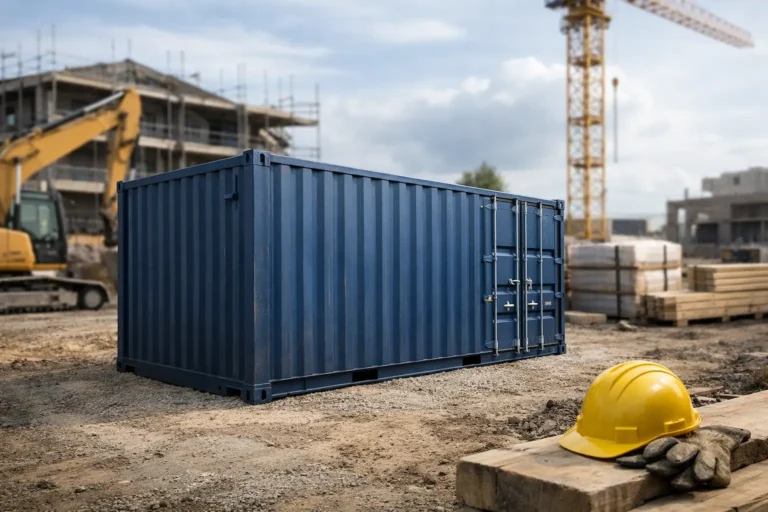
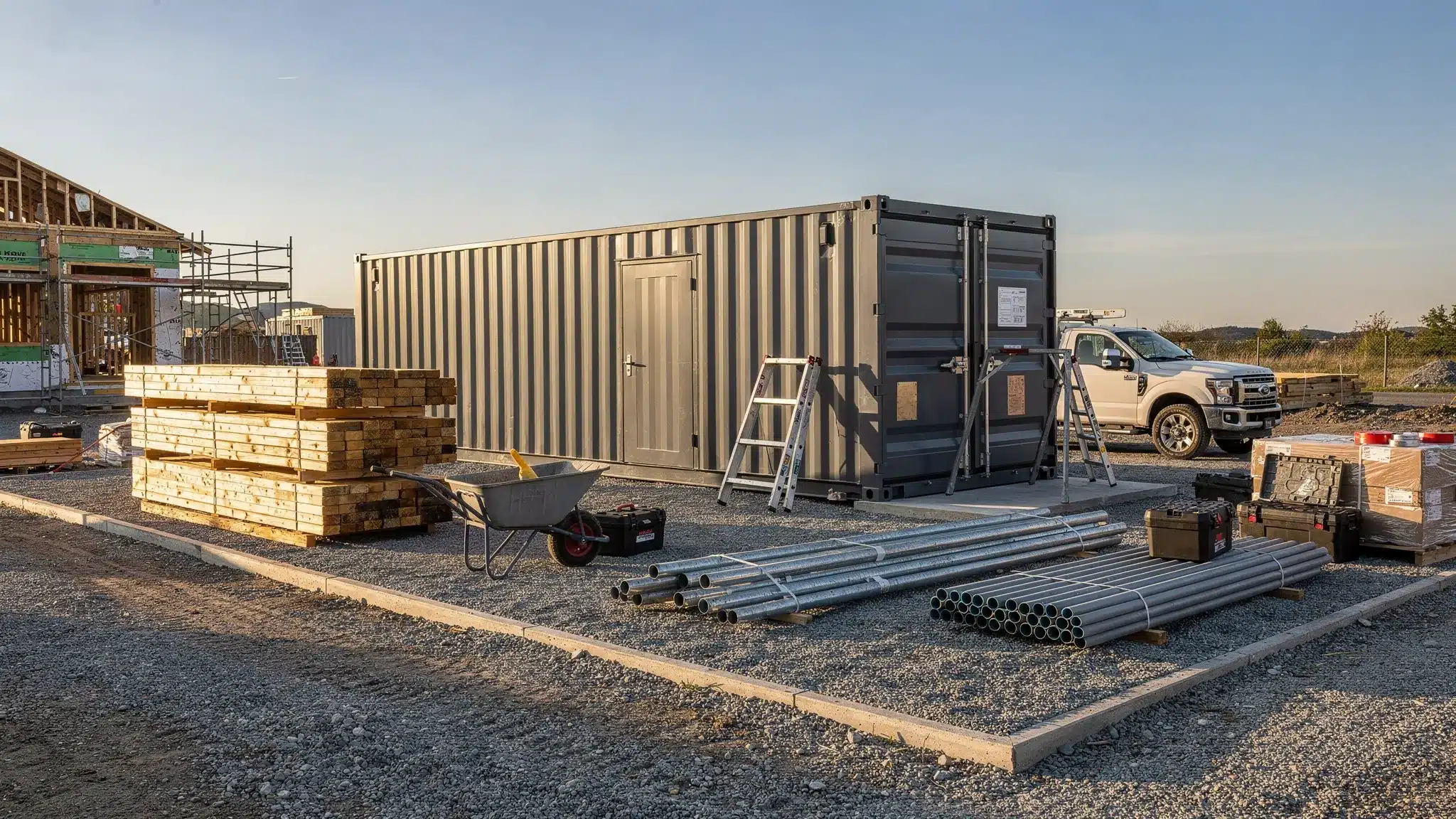
The reason is simple: an ISO shipping container was designed to survive ocean transport, crane handling, stacking, and harsh weather. When placed correctly on a jobsite, that same steel structure becomes secure, weather-resistant, reusable storage that can move from one project to the next.
For general contractors, remodelers, home builders, and developers in Raleigh, North Carolina, and across the Southeast, construction containers are not just a convenience. They are a practical jobsite control tool.
What makes a construction container different from traditional site storage?
Traditional site storage usually means one of four things: a wooden shed built on-site, a small gang box, an off-site self-storage unit, or a temporary trailer. Each can work in the right situation, but they often fall short when a project needs durable, weather-resistant, ground-level storage with flexible delivery.
A construction container is typically a 20ft container, 40ft container, or High Cube ISO shipping container repurposed for jobsite storage. These units are built from Corten steel, a weathering steel designed to resist corrosion better than ordinary mild steel. They also use standardized corner castings, doors, locking bars, and dimensions that follow ISO-style intermodal design principles.
That standardization matters. It means containers can be transported efficiently, placed by tilt-bed or flatbed equipment, and reused across multiple projects without rebuilding storage from scratch.
Construction containers vs. traditional site storage
The biggest advantage of a construction container is that it combines the strength of steel storage with the flexibility of temporary placement. Here is how it compares with common alternatives.
| Storage option | Strengths | Common limitations | Best use |
|---|---|---|---|
| Wooden jobsite shed | Custom size, familiar materials | Time to build, easier to damage, less secure, must be removed later | Short-term low-value material storage |
| Gang box or tool chest | Portable, good for small tools | Limited capacity, multiple boxes can clutter the site | Hand tools and daily-use equipment |
| Off-site storage unit | Controlled location, available in many areas | Travel time, fuel cost, delayed access to materials | Overflow storage away from active work |
| Office or storage trailer | Useful for admin space and meetings | Higher setup needs, stairs or ramps, less rugged for heavy material loading | Field office or combined office/storage |
| ISO construction container | Steel shell, ground-level access, weather protection, reusable | Requires delivery access and proper site prep | Secure jobsite storage for tools, materials, and equipment |
For many Raleigh-area jobsites, especially residential subdivisions, commercial renovations, and rural builds, the difference is access. A container keeps supplies on the property, close to the crew, and protected after hours.
1. Better security for tools and materials
Tool theft is a constant concern on construction sites. Generators, saws, compressors, copper, fixtures, fasteners, and specialty tools can disappear quickly when storage is spread across trucks, sheds, and unsecured staging areas.
A construction container improves jobsite security because it gives the crew one strong, lockable storage point. The steel sidewalls, cargo doors, locking bars, and optional lockbox protection create a much harder target than plywood sheds or scattered job boxes.
Security is not only about preventing theft. It also helps with accountability. When materials are stored in one container, supervisors can control access, organize inventory, and spot missing items faster. That matters on multi-trade sites where electricians, plumbers, framers, painters, and inspectors may all be moving through the same property.
For higher-risk jobsites, container placement also matters. Positioning the doors toward a visible area, adding lighting, and using a quality lock system can make a big difference. Lease Lane Containers has a detailed guide on secure container setup, locks, lighting, and placement for contractors who want to improve jobsite protection.
2. Stronger weather protection in the Southeast
North Carolina weather can be hard on jobsite materials. Raleigh and the wider Southeast deal with heavy rain, humidity, red clay, summer heat, tropical storm remnants, and occasional freeze-thaw conditions. Traditional site storage often lets water in through seams, roofs, doors, or ground contact points.
A Wind and Watertight construction container is specifically graded to keep out wind-driven rain under normal storage conditions. A good unit should have solid door gaskets, intact roof panels, working vents, and floors that are not soft or delaminated.
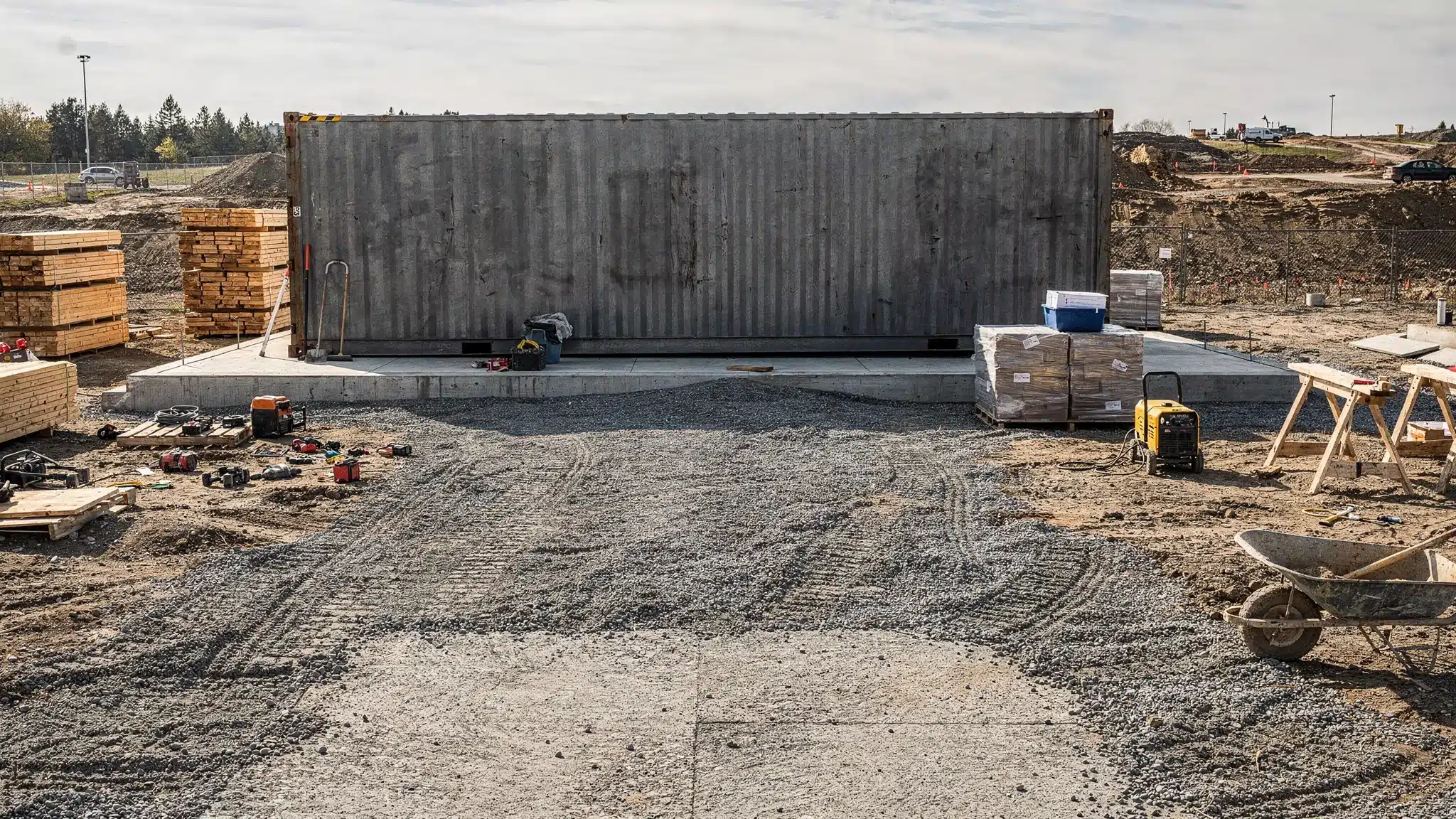
Corten steel helps the container shell resist weather exposure, but it is not magic. Containers still need proper drainage, periodic inspection, and maintenance around scratches, dents, and roof rust. A well-placed container on a gravel pad will typically perform better than one sitting directly in mud or standing water.
For materials like lumber, cabinetry, tile, electrical components, or boxed fixtures, this protection can reduce waste and reordering. That is often where the real savings show up, not just in the cost of the storage unit.
3. Faster access and fewer supply runs
Off-site storage looks affordable until crews start losing time. Every trip to retrieve tools, hardware, or replacement materials costs labor, fuel, and schedule momentum. On a busy build, those small delays stack up.
Construction containers keep materials at ground level and close to the work. Crews can load pallets, pipe, lumber, doors, windows, and equipment into one secure location, then pull what they need without leaving the jobsite.
This is especially useful for:
- Residential builders managing multiple lots in a subdivision
- General contractors staging materials before rough-in or finish work
- Remodelers working on occupied properties with limited interior storage
- Commercial crews storing equipment between phases
- Developers coordinating long lead-time materials before installation
Good storage also supports safer housekeeping. OSHA requires construction work areas, passageways, and stairs to be kept clear of debris and hazards under its construction housekeeping standard. A container does not replace a safety plan, but it gives crews a practical place to store materials instead of leaving them in walkways or exposed staging zones.
4. More durable than temporary sheds
A plywood shed can be useful, but it was not built for repeated transport, storm exposure, or heavy commercial use. Construction containers were.
Standard ISO containers are designed with a structural steel frame, corrugated steel panels, heavy-duty cargo doors, marine-grade plywood floors, and corner castings for lifting and stacking. This makes them far more durable than most traditional jobsite storage options.
That durability matters when the site is active. Forklifts, skid steers, delivery trucks, mud, ladders, lumber, and daily crew traffic all take a toll on storage structures. A container is less likely to be damaged by normal jobsite activity, and if purchased rather than rented temporarily, it can often be reused across future projects.
5. Better size options for different jobsite layouts
Not every site has the same space. A downtown Raleigh infill project may need compact storage, while a rural Wake County or Johnston County build may have room for a larger unit. Construction containers work well because they come in standardized sizes.
A 20ft container is often the best fit for tight jobsites, smaller contractors, residential remodels, and tool-heavy work. It provides substantial storage without requiring as much delivery clearance as a longer unit.
A 40ft container makes sense when you need to store bulky materials, palletized supplies, scaffolding, doors, windows, or equipment for a larger project. It usually offers a lower cost per square foot of storage than a smaller unit, assuming the site can handle delivery and placement.
A High Cube container adds one extra foot of exterior height, typically 9ft 6in instead of 8ft 6in. That extra height can be valuable for shelving, tall equipment, overhead clearance, or modified jobsite uses. Many contractors prefer 40ft High Cube units when they need maximum volume and easier interior organization.
| Container type | Typical exterior size | Why contractors choose it |
|---|---|---|
| 20ft standard | 20ft L x 8ft W x 8ft 6in H | Compact footprint, easier placement, strong tool and material storage |
| 40ft standard | 40ft L x 8ft W x 8ft 6in H | More capacity for lumber, pallets, fixtures, and multi-phase projects |
| 40ft High Cube | 40ft L x 8ft W x 9ft 6in H | Extra height for racks, tall items, and better working clearance |
| Refrigerated container | Varies by unit | Temperature-controlled storage for sensitive materials when power is available |
If you are still comparing sizes, Lease Lane Containers also has a practical guide to shipping container dimensions for 20ft, 40ft, and High Cube units.
6. More predictable grading than “whatever is available” storage
One of the most important advantages of buying a construction container from a knowledgeable supplier is grade transparency. Not every used container is the same, and not every unit belongs on an active construction site.
Here are the main grades contractors should understand:
| Grade | What it means | Best construction use |
|---|---|---|
| One-Trip | A nearly new container that has typically made one loaded trip from the factory before resale | Premium jobsite storage, customer-facing projects, modifications, long-term ownership |
| Cargo Worthy, or CW | Structurally sound and suitable for cargo transport when properly certified and documented | Heavy-duty storage, transport-related uses, higher-value materials, projects needing stronger structural confidence |
| Wind and Watertight, or WWT | Used container that should keep out wind and rain for stationary storage, but is not automatically certified for ocean freight | Cost-effective jobsite storage for tools, equipment, and building materials |
| As-Is | Sold with known or unknown issues and limited expectations | Usually not recommended for valuable construction materials unless inspected carefully |
For many contractors, a WWT container is the practical value choice for static jobsite storage. It should be secure and weather-resistant when properly inspected. A Cargo Worthy unit may be worth the upgrade if structural condition, transport use, or resale value matters. A One-Trip container is the best fit when appearance, long service life, or modifications are important.
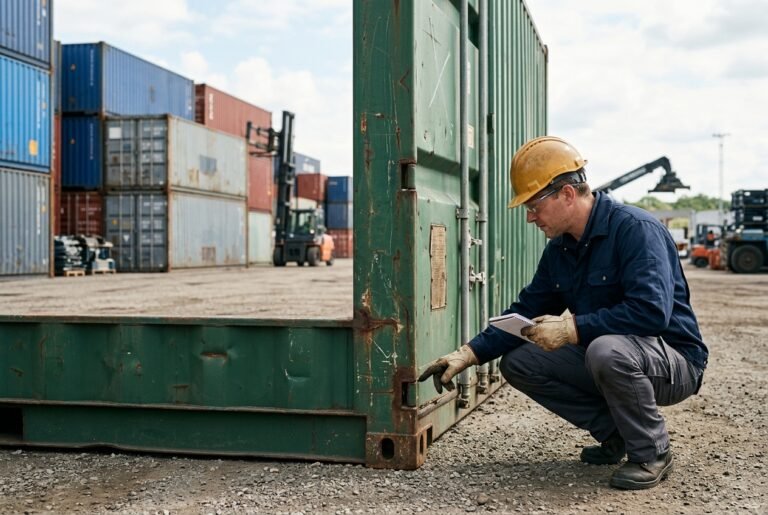
If you are comparing used containers, pay close attention to the roof, door seals, floors, corner posts, crossmembers, locking gear, and any daylight visible from inside the unit. A fresh coat of paint does not prove quality. The grade and inspection details matter more.
7. Lower total cost over multiple projects
Traditional storage can look cheaper upfront, especially if you only compare monthly fees or material costs. But contractors should compare total cost of use.
A jobsite shed may require labor to build, secure, maintain, and remove. Off-site storage adds travel time. Multiple gang boxes can create scattered inventory and duplicate purchases. A trailer may require stairs, stabilization, maintenance, and more setup planning.
A construction container can be purchased once and reused. For contractors with a steady project pipeline, that can create long-term value. Even if the unit is eventually sold, a well-maintained ISO container often retains practical resale value because it can be used by other contractors, farms, homeowners, small businesses, or logistics buyers.
The key is buying the right grade and size from the start. Overspending on a pristine One-Trip unit for rough storage may not be necessary. Buying a low-grade container for high-value materials can be a bigger mistake. The best value is the unit that matches the jobsite risk, storage duration, and access needs.
Pro-Tip: Prepare the site before the container arrives
A construction container performs best when the site is ready before delivery day. This is especially important in Raleigh and the Southeast, where clay soils, heavy rain, and soft access roads can cause placement problems.
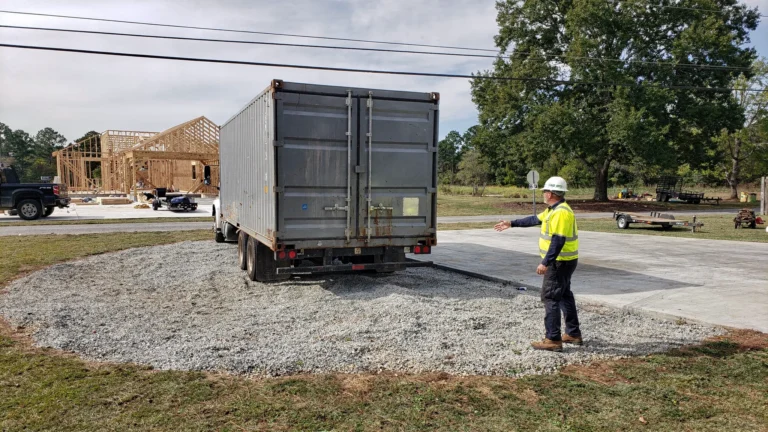
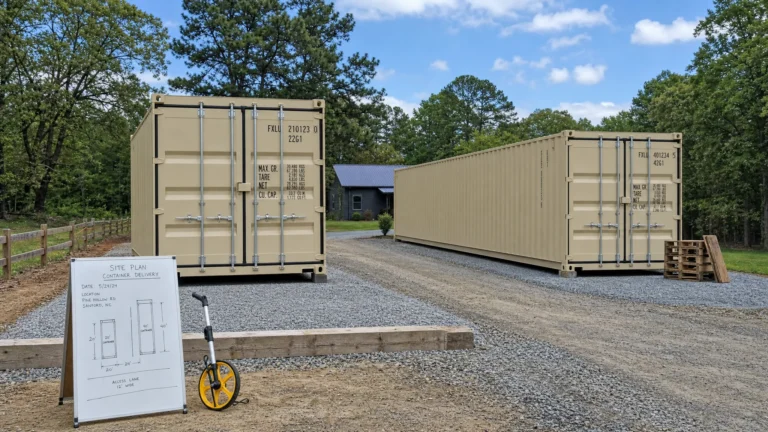
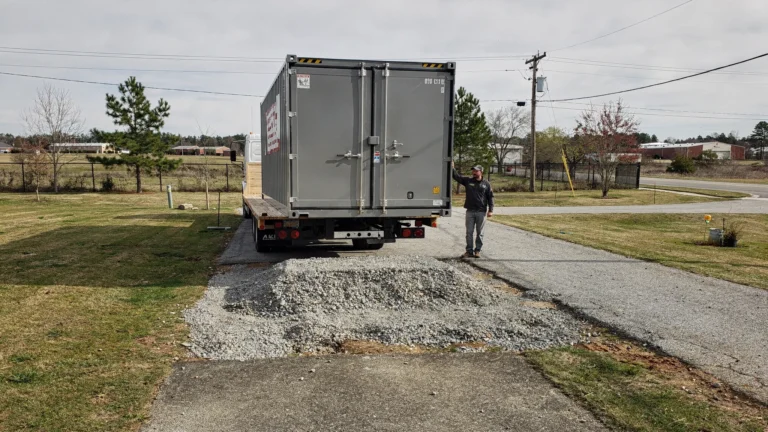
Before delivery, choose a level drop spot with enough truck access, overhead clearance, and room for the doors to swing open. A compacted gravel pad over geotextile fabric is often a strong option for temporary or semi-permanent jobsite storage because it improves drainage and reduces sinking. For longer-term placement, concrete pads, piers, or properly installed blocks can also work.
Avoid setting the container directly on wet soil if you can. Direct ground contact can trap moisture under the floor, increase corrosion risk, and cause the unit to settle unevenly. Uneven settlement can twist the frame and make cargo doors harder to open.
Also check permits, HOA rules, and jobsite requirements before scheduling delivery. In Raleigh, Wake County, and surrounding municipalities, rules can vary depending on zoning, duration of placement, visibility from the street, and whether the container is temporary storage or part of a larger structure. When in doubt, verify requirements before the truck is dispatched.
For a deeper planning checklist, review Lease Lane Containers’ guide to shipping container delivery requirements and the step-by-step article on proper shipping container ground preparation.
When traditional site storage may still make sense
Construction containers are not the answer for every situation. A small gang box may be better for crews that only need to secure hand tools overnight. A climate-controlled warehouse may be necessary for highly sensitive materials. A dedicated office trailer may be better if the main need is meetings, plan review, restrooms, or administrative workspace.
The best approach is often a combination. Many contractors use a construction container for bulk storage and security, then pair it with gang boxes for tools used daily by specific crews. On larger projects, a 40ft or High Cube container can handle materials while a separate office trailer supports project management.
The advantage of the container is that it gives the site a durable storage backbone. Once that is in place, the rest of the storage plan becomes easier to manage.
How to choose the right construction container for your jobsite
Start with the materials and equipment you need to protect. If you are storing hand tools, compressors, and boxed supplies, a 20ft WWT container may be enough. If you are staging doors, windows, lumber, cabinets, scaffolding, or palletized material, a 40ft or 40ft High Cube unit may be more efficient.
Next, match the grade to the risk. Choose One-Trip for the cleanest condition and longest expected service life. Choose Cargo Worthy when structural strength and transport suitability matter. Choose Wind and Watertight for cost-effective static storage where weather protection is the main requirement.
Finally, plan delivery before you buy. A 40ft container may be the best value on paper, but it still needs the right access, turning radius, overhead clearance, and drop zone. If the site is tight, a 20ft unit may save time and avoid placement complications.
Frequently Asked Questions
What is a construction container? A construction container is an ISO shipping container used for jobsite storage, tool security, material staging, or temporary workspace support. Most are 20ft, 40ft, or High Cube steel containers placed at ground level on a prepared surface.
Is a Wind and Watertight container good enough for construction storage? In many cases, yes. A WWT container is often a smart value for stationary jobsite storage because it should keep out normal wind and rain. It is not the same as Cargo Worthy, and it should still be inspected for roof condition, door gaskets, floor integrity, and corrosion.
Should contractors choose a 20ft or 40ft construction container? Choose a 20ft container for tighter sites, smaller crews, and tool-focused storage. Choose a 40ft container when you need more room for pallets, lumber, fixtures, scaffolding, or multi-phase material staging. If height matters, consider a High Cube.
Do construction containers need permits in Raleigh, NC? Permit requirements depend on location, zoning, use, duration, and whether the container is temporary storage or part of a larger structure. Contractors in Raleigh, Wake County, and nearby municipalities should verify local rules before delivery.
Are construction containers more secure than jobsite trailers? They can be, especially for tool and material storage. A steel ISO container with cargo doors, a lockbox, quality locks, and smart placement is difficult to access without tools and time. Trailers are useful for offices, but containers are often better for rugged ground-level storage.
Plan your next jobsite storage setup with Lease Lane Containers
Construction containers beat traditional site storage because they are secure, durable, weather-resistant, reusable, and built around standardized ISO dimensions. Whether you need a compact 20ft unit for a Raleigh remodel, a 40ft High Cube for a commercial build, or a used WWT container for cost-effective site storage, the right container starts with the right grade, delivery plan, and site preparation.
Lease Lane Containers LLC supplies new One-Trip and used shipping containers, including Cargo Worthy, Wind and Watertight, High Cube, and refrigerated options, with delivery support in North Carolina, the Southeast, and nationwide.
To choose the right construction container for your next project, contact the sales team at sales@leaselanecontainers.com or visit the Raleigh office.