Shipping Container Shipping Cost: A Full Buyer Guide
If you are researching shipping container shipping cost, you may be asking one of two different questions: how much it costs to deliver an empty container to your property, or how much it costs to use a container to move cargo by truck, rail, or ocean vessel. The numbers can look very different, and comparing quotes without knowing what is included can lead to surprise fees.
For buyers in Raleigh, across North Carolina, and throughout the Southeast, the most important point is this: the delivered cost is not just the price of the box. Size, grade, distance, offloading method, site access, and the container’s final use all affect the real budget.
This guide explains what goes into shipping container shipping cost, how to compare quotes, and how to avoid paying for the wrong container or the wrong delivery plan.
What “Shipping Container Shipping Cost” Really Means
The phrase can mean several things depending on your project. Before requesting quotes, identify which cost you need.
For most contractors, homeowners, farms, and small businesses, the question is usually: “What will it cost to buy a container and have it delivered to my site?” In that case, your quote should include the container itself, inland trucking, offloading, and any access-related fees.
For logistics managers, the question may be: “What will it cost to use this container for cargo transport?” That may involve a Cargo Worthy unit, drayage, port fees, ocean freight, documentation, customs brokerage, insurance, and destination handling. If you are exporting cargo, a basic Wind and Watertight storage container will not be enough.
A third scenario is relocating a container you already own. That cost depends on whether the container is empty or loaded, whether it can be lifted safely, how far it is moving, and what equipment is required at pickup and delivery.
The Main Cost Formula Buyers Should Use
A practical container budget looks like this:
Total delivered cost = container price + delivery distance + offloading method + site preparation + taxes, permits, and optional modifications
The mistake many buyers make is comparing only the advertised container price. A cheaper unit located far away, delivered by the wrong equipment, or placed on an unprepared site can cost more in the end than a properly quoted container from a supplier with local delivery experience.
In Raleigh and the surrounding Triangle area, for example, delivery can be affected by neighborhood access, narrow driveways, wet clay soil, tree canopy, HOA rules, and Wake County or municipal placement requirements. Across the Southeast, weather and ground stability are often just as important as mileage.
Typical Delivery Cost Ranges to Expect
Actual pricing changes with fuel, driver availability, distance, market demand, and equipment type. The ranges below are planning estimates only, not guaranteed quotes.
| Delivery scenario | Typical cost pattern | What affects the final number |
|---|---|---|
| Local delivery from a nearby yard or depot | Often a few hundred dollars to around $1,000 | Mileage, truck availability, access, and whether tilt-bed delivery works |
| Regional delivery across part of a state | Commonly higher than local delivery | Fuel, driver time, tolls, routing, and return trip requirements |
| Long-distance domestic delivery | Often priced by mile or as a flat lane quote | Distance, backhaul availability, route complexity, and scheduling |
| Crane, side-loader, or specialty placement | Can add a significant equipment charge | Obstacles, reach distance, weight, lift plan, and site safety |
| Failed delivery or return trip | Avoidable but expensive | Soft ground, blocked access, low wires, incorrect measurements, or no prepared pad |
For a reliable number, ask for a total delivered quote rather than a container price plus “shipping TBD.” If the container is being delivered to Raleigh, Durham, Cary, Chapel Hill, or another North Carolina location, share the delivery address, site photos, gate width, overhead clearance, and desired placement direction before the quote is finalized.
Size Has a Major Impact on Shipping Cost
The most common ISO shipping containers are 20ft and 40ft units. Both are built to international intermodal standards, but they move differently on trucks and require different amounts of placement space.
A 20ft container is easier to place on tighter residential, farm, and jobsite locations. It is often the practical choice for homeowners, small contractors, and businesses that need secure storage without taking over the entire property.
A 40ft container offers twice the length and much more storage volume, but delivery requires more straight-line space, more turning room, and a larger prepared pad. For contractors storing lumber, scaffolding, jobsite tools, or palletized inventory, the added capacity can make the shipping cost worthwhile.
A High Cube container is typically 9ft 6in tall on the exterior, compared with 8ft 6in for a standard container. That extra foot is valuable for equipment, shelving, office conversions, and modular builds. However, High Cube delivery requires careful overhead clearance planning, especially under trees, building overhangs, utility lines, and low bridges.
Refrigerated containers, also called reefers, are heavier and more complex. Shipping a reefer may cost more because of weight, electrical requirements, and the need to position it where power and ventilation are available.
Container Grade Affects Both Purchase Price and Shipping Purpose
Container grade does not usually change the trucking distance, but it strongly affects total project cost and whether the container is suitable for your use.
One-Trip Containers
A One-Trip container has typically made one loaded voyage from the factory before being sold into the storage or resale market. It is usually the closest thing to new, with Corten Steel construction, clean floors, strong door gaskets, intact corner castings, and minimal cosmetic wear.
One-Trip units cost more upfront, but they often make sense for customer-facing businesses, modular projects, offices, retail pop-ups, container homes, and long-term property storage where appearance and lifespan matter.
Cargo Worthy Containers
A Cargo Worthy container is used but structurally suitable for cargo transport when properly certified. It should have sound corner castings, frame rails, roof bows, floors, doors, and locking gear. For international shipping, the container must meet applicable inspection requirements, and the CSC plate matters.
The International Maritime Organization explains the role of the International Convention for Safe Containers, commonly called CSC, in container safety. If you plan to export cargo, ask about Cargo Worthy status, documentation, and whether a current survey is required by your carrier or freight forwarder.
Wind and Watertight Containers
A Wind and Watertight container, often called WWT, is a used container that should keep out wind and water under normal static storage conditions. It may have dents, surface rust, patches, previous repairs, or cosmetic wear, but it should not have active leaks.
WWT containers are often a cost-effective choice for jobsite storage, farm storage, household overflow, and tools or materials that do not require export certification. However, WWT does not mean Cargo Worthy, and it does not automatically mean the unit is suitable for stacking, structural modification, or ocean transport.
For a deeper explanation of these condition levels, read Lease Lane’s guide to used shipping container grades.
Why ISO Standards Matter When You Pay to Ship a Container
Most standard shipping containers are built around ISO dimensions and corner casting locations, which allows them to be handled by cranes, chassis, forklifts, ships, rail systems, and depots. ISO standards help keep 20ft and 40ft containers compatible with intermodal transportation equipment.
The ISO’s freight container standards, including ISO 668, define classification, dimensions, and ratings for Series 1 freight containers. For buyers, this matters because a true ISO container is much easier to transport, lift, place, and resell than a nonstandard box.
When comparing shipping container shipping cost, verify that the unit is an ISO shipping container if you need intermodal compatibility. This is especially important for logistics buyers, export cargo, and modular projects using standard container dimensions.
Delivery Method Can Change the Price Quickly
The same container can have very different shipping costs depending on how it is delivered and placed.
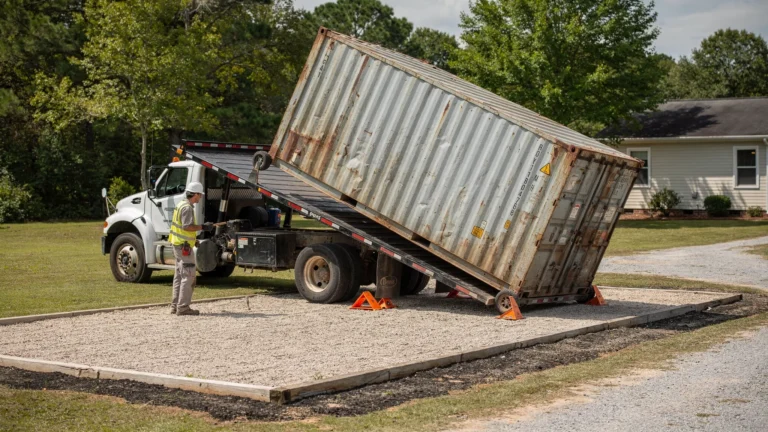
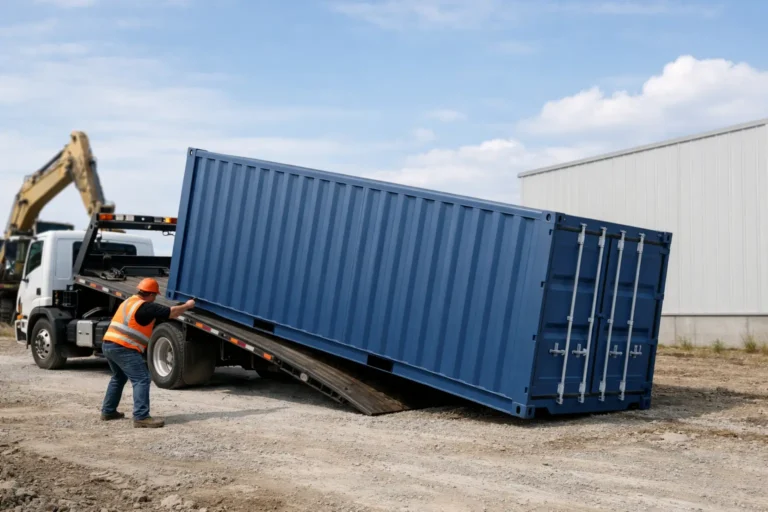
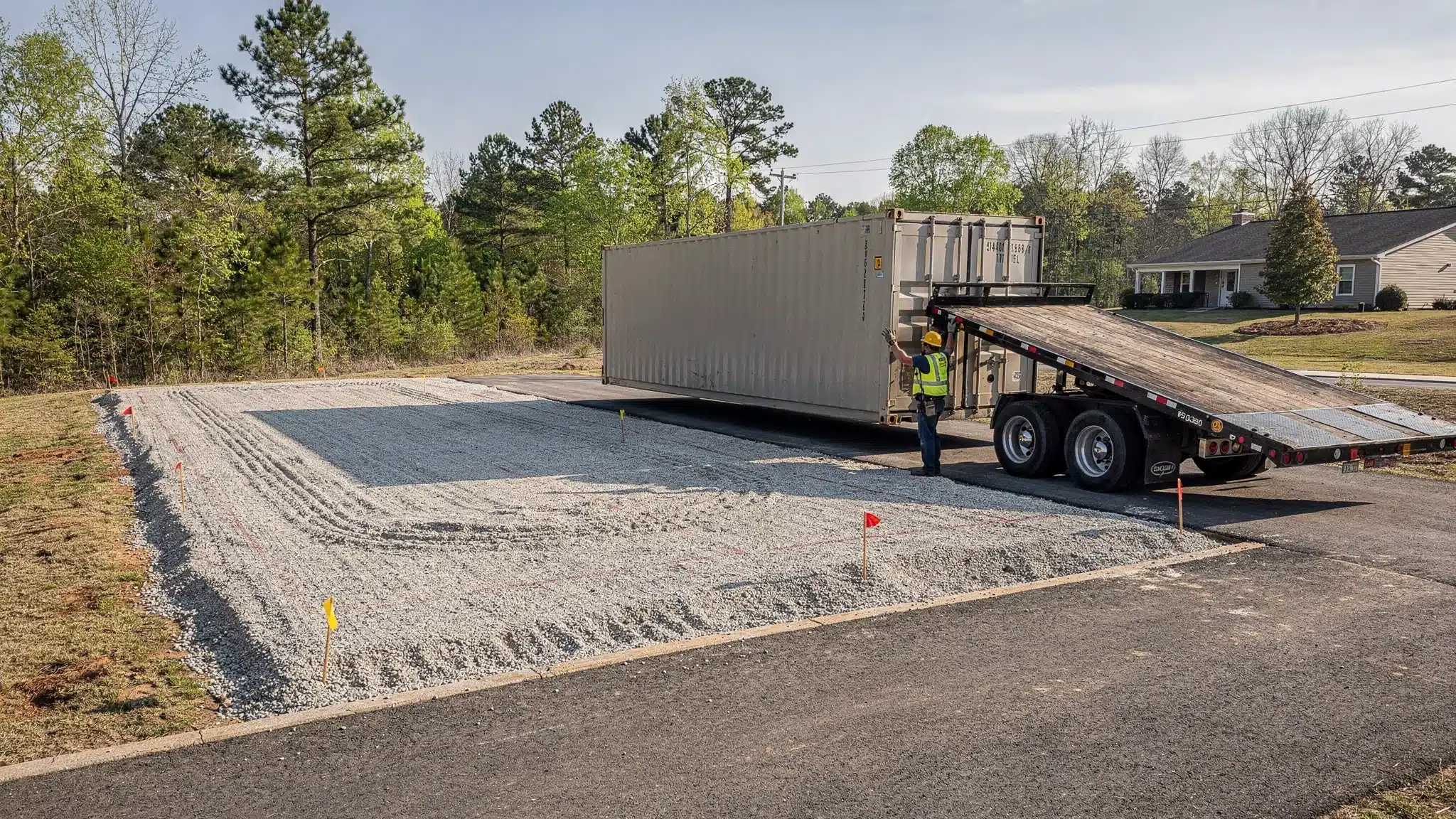
Tilt-bed delivery is common for ground-level placement. The trailer tilts, and the container slides off as the truck pulls forward. It is efficient, but it needs enough straight-line room and stable ground.
Flatbed or chassis delivery works well when a site has unloading equipment, such as a crane, large forklift, or reach stacker. Without offloading equipment, a flatbed quote may look cheaper at first but become more expensive once crane service is added.
Side-loader delivery can place a container beside the truck, which is useful for certain tight sites. Availability varies by region, and it is often priced differently from standard tilt-bed delivery.
Crane delivery is used when a container must go over a fence, onto a foundation, into a difficult backyard, or into a location a truck cannot access directly. Crane placement requires more planning, safe lift points, and enough space for outriggers.
Lease Lane Containers helps buyers think through delivery before the order is finalized. For more detail, see the company’s guide to shipping container delivery requirements.
What Changes the Cost in Raleigh and the Southeast?
Raleigh is well positioned for container buyers because it sits within reach of Southeast logistics corridors, port-linked inventory, and regional trucking routes. Still, local conditions affect final delivery pricing.
In North Carolina, buyers should think about:
- Distance from available inventory and trucking lanes
- Wake County, city, HOA, or commercial site rules
- Driveway width, road access, and turning radius
- Overhead clearance from power lines, trees, and rooflines
- Ground firmness after rain, especially on clay-heavy soils
- Whether the site needs gravel, concrete, blocks, or piers
- Whether a 20ft, 40ft, High Cube, or reefer unit is being delivered
A container going to a wide-open construction site near a major road is usually simpler than a container going behind a house, into a wooded farm lane, or onto a tight urban lot. The container may be the same, but the delivery risk is not.
Pro-Tip: Site Preparation Is the Easiest Way to Control Cost
A failed delivery is one of the most avoidable expenses in the container buying process. Before the truck arrives, prepare a stable, level, well-drained landing area.
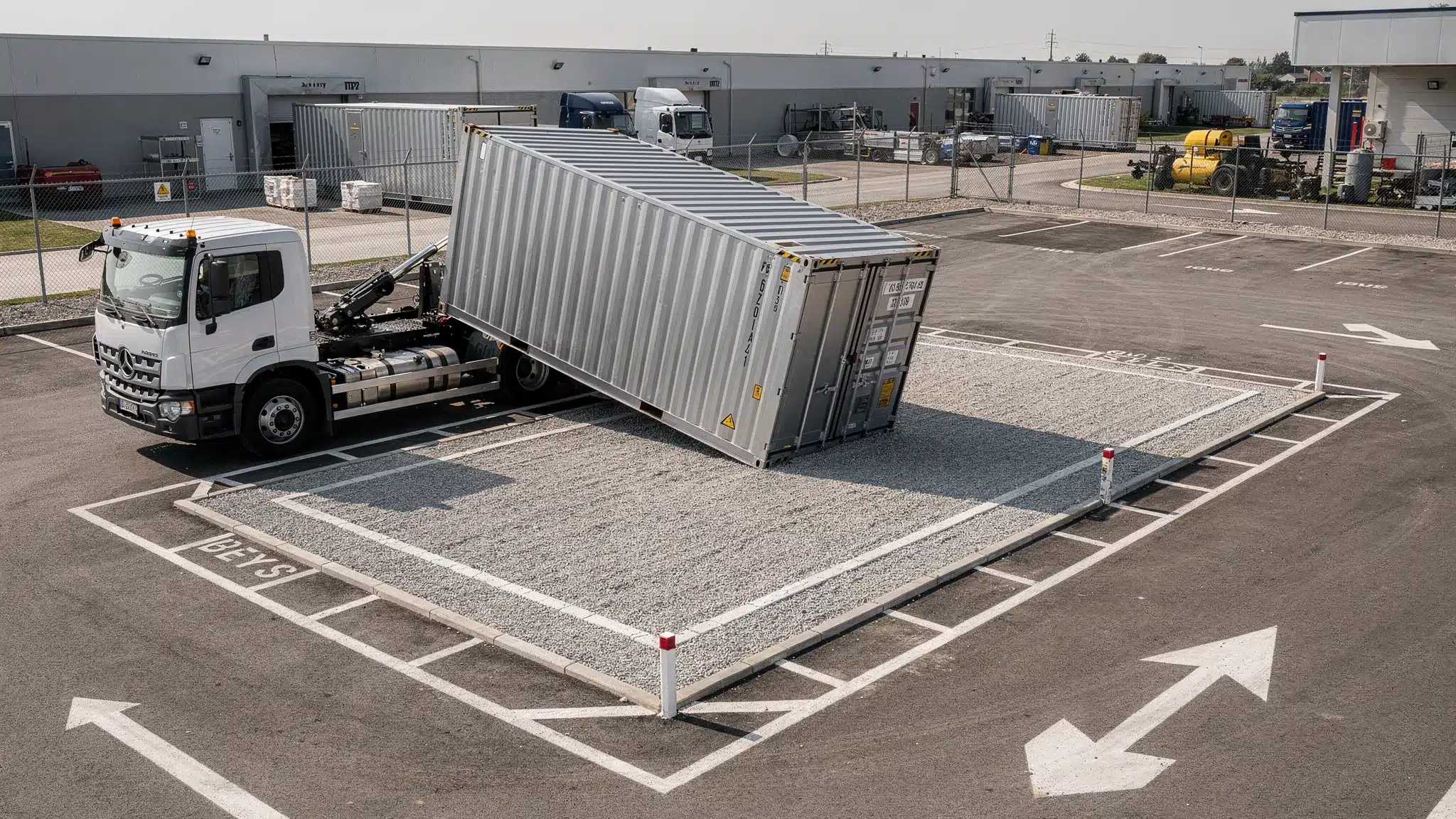
For most storage containers in Raleigh and the Southeast, a compacted gravel pad is a strong practical choice. Gravel helps with drainage, reduces mud, and keeps the Corten Steel understructure from sitting directly on wet soil. Concrete pads, piers, and properly placed blocks can also work when designed for the load.
The key is to support the container at the corners and keep it level. If the container twists, doors can bind, gaskets may not seal properly, and water can collect around the base. Poor leveling can make even a good One-Trip or Cargo Worthy container feel like a bad purchase.
Before delivery, mark the exact drop location, confirm door orientation, clear branches and vehicles, and check permits or HOA rules. For underground utility safety, contact 811 before digging if you are grading, trenching, installing piers, or running utilities.
How to Compare Quotes Without Getting Misled
A low quote is not always the best quote. Make sure every supplier is pricing the same container grade, size, delivery method, and service level.
Ask these questions before you approve a purchase:
- Is the quote for a One-Trip, Cargo Worthy, Wind and Watertight, refurbished, or as-is container?
- Is delivery included to my exact address, or is it estimated separately?
- What offloading method is included?
- Are taxes, fuel surcharges, tolls, permits, or equipment charges included?
- What happens if the driver cannot place the container because of access or ground conditions?
- Will I receive photos, container number, and grade details before delivery?
- Is the unit suitable for storage, modification, export, or only static use?
If you are buying for export, also ask about CSC status, survey requirements, and whether your carrier will accept the container. If you are buying for storage, ask for door, roof, floor, gasket, and light-test information.
Shipping Cost for Empty Containers vs Loaded Containers
Moving an empty container is simpler than moving a loaded one. A loaded container may exceed equipment limits, require a different trailer, need certified lifting points, or involve cargo securement rules.
If you plan to load a container before moving it, confirm the allowed weight with the carrier before loading. A standard ISO container has a maximum gross weight rating shown on its markings, but the truck, trailer, route, and local regulations also matter. Overweight loads can require permits, special routing, or unloading before transport.
For international cargo shipping, do not assume that purchasing a Cargo Worthy container automatically includes ocean freight. A container supplier can help you purchase the right box, but ocean freight typically involves a freight forwarder, carrier booking, terminal handling, customs documentation, and destination charges.
A Simple Budgeting Example
Imagine a small contractor near Raleigh needs secure storage for tools, fasteners, and materials. A 20ft WWT container might be the best value because it is compact, weather-resistant, and affordable for static jobsite use. The shipping cost will depend mostly on local trucking, tilt-bed access, and whether the jobsite has a prepared surface.
Now compare that with a real estate developer planning a modified 40ft High Cube office. A One-Trip High Cube unit may cost more upfront, and delivery may require more space, but the cleaner shell, added interior height, and better long-term condition may reduce repair and prep work.
Finally, consider a logistics manager exporting machinery. In that case, WWT is not the right grade. A Cargo Worthy unit with appropriate documentation is more important than finding the cheapest storage container.
The best budget is not the lowest container price. It is the lowest total cost for the correct size, grade, delivery method, and use case.
When It Makes Sense to Pay More for Delivery
Sometimes a higher delivery quote is the safer and cheaper decision overall. Paying for the right equipment can prevent property damage, rescheduling fees, unsafe unloading, and container damage.
A crane or side-loader may be worth it if the site has a fence, steep driveway, tight turn, limited straight-line room, or a foundation that requires precise placement. Similarly, choosing a closer inventory source can reduce scheduling delays even if the unit price is slightly higher.
For buyers comparing 20ft containers, 40ft containers, and High Cube units, delivery planning should happen before purchase, not after. Lease Lane’s ultimate shipping container buyer’s guide is a helpful next step if you are still deciding which size and condition fit your project.
Frequently Asked Questions
How much does it cost to ship a shipping container to my property? It depends on distance, size, delivery equipment, site access, and local conditions. A nearby tilt-bed delivery is usually much less expensive than long-distance hauling or crane placement. The best way to compare prices is to request a total delivered quote to your exact address.
Is shipping a 40ft container more expensive than shipping a 20ft container? Often, yes. A 40ft container needs more trailer space, more turning room, and a larger placement area. The delivery route and offloading method matter as much as the length of the container.
Does container grade affect shipping cost? Grade affects the container purchase price more than the trucking rate, but it can affect the overall project cost. One-Trip containers cost more but are cleaner and longer-lasting. Cargo Worthy containers are required for many transport and export uses. Wind and Watertight containers are usually best for static storage.
Can I ship cargo overseas in a Wind and Watertight container? Usually no. WWT means the container is suitable for basic weather-resistant storage, not necessarily ocean transport. For export, ask about Cargo Worthy status, CSC requirements, and carrier acceptance.
What information should I provide for an accurate delivery quote? Provide the delivery address, container size, grade, preferred placement location, site photos, driveway or gate width, overhead clearance, ground surface, and any obstacles such as trees, slopes, fences, or power lines.
Do I need a permit to place a shipping container in Raleigh or North Carolina? It depends on the property, municipality, zoning, duration, and use. A temporary jobsite storage container may be treated differently from a permanent structure or modified office. Always check local rules, HOA requirements, and site-specific restrictions before delivery.
Get a Clear Shipping Container Shipping Cost Before You Buy
The right container quote should tell you more than the price of the box. It should clarify the size, grade, delivery method, placement assumptions, and any site preparation needed to complete the job safely.
Lease Lane Containers LLC supplies new One-Trip and used shipping containers, including 20ft, 40ft, High Cube, Cargo Worthy, Wind and Watertight, and refrigerated options. Based in Raleigh, North Carolina, our team helps buyers across the Southeast and nationwide choose the right unit, plan the drop spot, and understand the total delivered cost before delivery day.
For help pricing your next container, email sales@leaselanecontainers.com or visit the Lease Lane Containers Raleigh office to speak with a local sales team member.