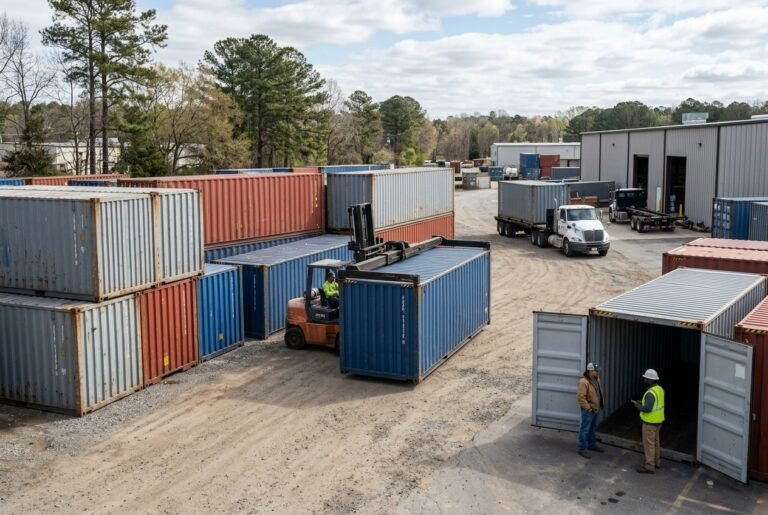
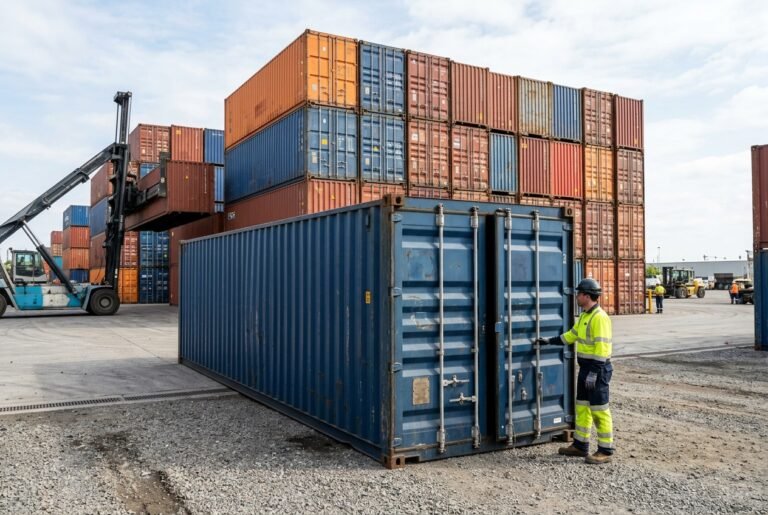
Is a Wind and Watertight Container Good Enough?
Table of Contents
- Table of Contents
- Understanding the Wind and Watertight (WWT) Standard
- What Defines a WWT Container?
- Typical Condition and Age of WWT Units
- When WWT is the Ideal Choice for Storage
- Protecting Agricultural and Industrial Equipment
- Cost-Effective Solutions for Household Goods
- Limitations for High-Value or Sensitive Cargo
- The Risk of Internal Condensation and ‘Container Rain’
- Structural Integrity vs. Cosmetic Appearance
- Managing Rust, Dents, and Patch Repairs
- WWT vs. Cargo Worthy (CW) and One-Trip Units
- Price Points and Longevity Comparison
- Suitability for Modifications and Living Spaces
- Why WWT Often Requires Extra Prep for Offices or Homes
- Key Inspection Points Before You Buy
- The Light Test and Gasket Verification
- Final Verdict: Matching the Grade to Your Specific Needs
- Final Checklist
Table of Contents
- Understanding the Wind and Watertight (WWT) Standard
- When WWT is the Ideal Choice for Storage
- Limitations for High-Value or Sensitive Cargo
- Structural Integrity vs. Cosmetic Appearance
- WWT vs. Cargo Worthy (CW) and One-Trip Units
- Suitability for Modifications and Living Spaces
- Key Inspection Points Before You Buy
- Final Verdict: Matching the Grade to Your Specific Needs
Buying a used shipping container often comes down to one central question: is a wind and watertight container good enough for what I need? The answer depends entirely on your intended use, your tolerance for cosmetic wear, and how long you plan to keep the unit on your property. A WWT-graded container can be a smart, budget-friendly purchase for the right application, but it can also be a costly mistake if you choose it for the wrong one. Thousands of buyers each year face this exact decision, and the difference between a great deal and an expensive headache often comes down to understanding what the grade actually means, what it protects against, and where it falls short. If you are storing farm equipment in rural Wake County or staging inventory for a small business near the Triangle, the grade you choose matters more than most sellers will tell you.
Understanding the Wind and Watertight (WWT) Standard
The WWT designation is one of three common grades applied to used shipping containers in the U.S. market. The other two are Cargo Worthy (CW) and One-Trip. Each grade reflects a different level of structural condition, cosmetic appearance, and functional reliability. Understanding where WWT falls on that spectrum is the first step toward making a confident purchase.
What Defines a WWT Container?
A wind and watertight container is exactly what the name suggests: a steel unit that keeps wind and water out. It does not carry an active CSC (Convention for Safe Containers) certification, which means it is not approved for international ocean freight or intermodal transport. The WWT grade confirms that the container’s roof, walls, floor, and doors still form an effective seal against the elements, but it makes no guarantees about structural load-bearing capacity for stacking or transit.
The inspection criteria for WWT are less rigorous than for Cargo Worthy units. There is no requirement for a certified surveyor to sign off. Instead, the seller or depot typically performs a visual and functional check: do the doors open and close properly, do the gaskets still compress to form a seal, and are there any visible holes or breaches in the corrugated steel panels? If the container passes those basic checks, it earns the WWT label.
This makes WWT the most common grade for containers sold into the domestic storage market. The unit is retired from shipping service but still functions as a secure, weather-resistant enclosure.
Typical Condition and Age of WWT Units
Most WWT containers are between 12 and 25 years old. They have spent years cycling through international shipping routes, enduring salt spray, tropical humidity, and the mechanical stress of being loaded onto chassis, rail cars, and vessel decks. That history leaves marks.
Expect surface rust on exterior panels, minor dents from handling, and some discoloration or paint fading. Floor boards, typically marine-grade plywood over steel cross-members, may show wear patterns from forklift traffic. Door hinges might be stiff. None of these issues disqualify the container from WWT status, as long as the shell remains sealed.
A container built in 2005 and graded WWT in 2025 has had a full career. It is not pristine, but it is still a 2,500-pound steel structure (for a 20ft unit) or roughly 3,700 pounds (for a 40ft unit) with decades of useful life remaining in a stationary storage role.
When WWT is the Ideal Choice for Storage
For a large percentage of buyers, a WWT container is not just “good enough” but genuinely the right choice. The key is matching the grade to the use case.
Protecting Agricultural and Industrial Equipment
Farmers and rural property owners across North Carolina and the Southeast are among the most frequent WWT buyers, and for good reason. A WWT 40ft shipping container provides 2,390 cubic feet of enclosed, lockable space for tractors, ATVs, feed, hay bales, fencing materials, and seasonal equipment. The steel construction resists rodents, keeps rain and snow out, and withstands high winds that would damage a fabric or wood-frame structure.
For equipment that already lives outdoors and just needs a roof and walls, a WWT container is a practical upgrade. A combine header worth $30,000 sitting under a tarp is far less protected than one stored inside a WWT unit that cost $2,500 to $4,000 delivered. The math is straightforward.
Industrial and construction buyers follow similar logic. Jobsite tools, scaffolding, generators, and materials all benefit from secure, weather-resistant storage. The container does not need to look new; it needs to keep contents dry and locked.
Cost-Effective Solutions for Household Goods
Homeowners storing furniture, seasonal decorations, sporting goods, or overflow belongings will find WWT containers more than adequate. The contents are not temperature-sensitive or humidity-critical, and the container provides a level of security that a typical backyard shed cannot match.
A 20ft WWT unit in the Raleigh area typically runs $1,800 to $3,200 depending on condition and delivery distance. Compare that to renting a 10×20 self-storage unit at $150 to $250 per month, and the container pays for itself within 12 to 18 months while sitting on your own property. For buyers who need storage for two years or more, the economics are hard to argue with.
Limitations for High-Value or Sensitive Cargo
WWT containers have real boundaries, and ignoring them leads to damaged goods and buyer regret. The most common failure point is not a leak from outside but moisture generated inside the container itself.
The Risk of Internal Condensation and ‘Container Rain’
Steel containers are excellent conductors of heat. When exterior temperatures drop at night, the interior steel surfaces cool rapidly. If the air inside the container holds moisture, whether from the ground, from stored goods, or from humid air that entered when the doors were open, that moisture condenses on the ceiling and walls. This phenomenon, known as “container rain,” can drip onto stored items for hours.
WWT containers are particularly susceptible because their door gaskets, while still functional, may not seal as tightly as those on newer units. Micro-gaps allow humid air in. Older floor boards may also absorb and release moisture. The result is an environment where electronics, upholstered furniture, paper documents, leather goods, and textiles can develop mold, mildew, or corrosion within weeks during warm, humid months.
If you are storing anything sensitive to moisture, a WWT container alone is not sufficient. You will need to add desiccant packs (calcium chloride hanging bags are the standard, at roughly $15 to $25 per unit), improve ventilation with aftermarket vents, or install a dehumidifier if power is available. Some buyers line the interior ceiling with rigid foam insulation to reduce condensation. These additions can bring a WWT container up to a functional standard for sensitive goods, but they add cost and effort that should be factored into your decision.
Structural Integrity vs. Cosmetic Appearance
One of the most common misconceptions about WWT containers is that visible rust or dents mean the container is failing. That is rarely the case.
Managing Rust, Dents, and Patch Repairs
Corten steel, the material used in shipping container construction, is designed to develop a stable oxide layer that actually protects the underlying metal. Surface rust on a Corten steel panel is not the same as structural corrosion on a car frame. A WWT container with orange-brown surface oxidation across its panels may still have walls that are 1.6mm thick and structurally sound.
Dents are similarly misunderstood. A 4-inch dent in a side panel from a forklift impact looks alarming but rarely compromises the container’s weather seal. The corrugated profile of shipping container walls provides significant rigidity, and a dent that does not puncture the steel does not affect wind and watertight performance.
Patch repairs are more nuanced. A welded steel patch over a hole or corroded section is common on WWT units. A well-executed patch, ground smooth and sealed with marine-grade paint, can last for years. A poorly done patch, with incomplete weld penetration or gaps at the edges, will eventually leak. When inspecting a WWT container, pay close attention to any patches. Run your hand along the edges. If you feel gaps or see daylight, that patch needs rework before the container qualifies as truly wind and watertight.
The rule of thumb: cosmetic wear is expected and acceptable. Structural compromise is not. Learn to tell the difference, and a WWT container becomes a reliable long-term asset.
WWT vs. Cargo Worthy (CW) and One-Trip Units
Understanding how WWT compares to other grades helps you decide whether to spend more or save.
Price Points and Longevity Comparison
Here is how the three primary grades stack up for a standard 20ft shipping container in the Southeast U.S. market as of 2025:
- One-Trip: $3,200 to $5,000. Manufactured overseas, shipped once with cargo, then sold. Near-new condition with fresh paint, intact gaskets, and a valid CSC plate. Expected stationary life of 25 or more years with minimal maintenance.
- Cargo Worthy (CW): $2,400 to $3,800. Used container that still holds a valid CSC certification. Approved for international shipping and intermodal transport. Structurally inspected by a certified surveyor. Expected stationary life of 15 to 20 years.
- Wind and Watertight (WWT): $1,500 to $3,200. Retired from shipping service. No active CSC certification. Keeps weather out but is not rated for transport loads. Expected stationary life of 10 to 15 years with basic maintenance.
The price gap between WWT and One-Trip can be $1,500 or more. For a buyer who needs ground-level storage on a farm or construction site, that savings is significant and the trade-off is purely cosmetic and age-related. For a buyer who might need to relocate the container by truck or who plans a 20-year placement, the CW or One-Trip grade offers better long-term value.
A practical way to think about it: WWT is the pickup truck with 180,000 miles. It runs, it hauls, and it costs a fraction of new. But you would not enter it in a show, and you plan your maintenance accordingly.
Suitability for Modifications and Living Spaces
Container offices, workshops, and living spaces have grown from a niche trend into a legitimate construction category. The grade of container you start with has a direct impact on your modification budget and timeline.
Why WWT Often Requires Extra Prep for Offices or Homes
Converting a shipping container into a habitable space requires insulation, electrical wiring, HVAC, and often structural cuts for windows and doors. Starting with a WWT container means starting with older steel, more surface preparation, and potentially weaker sections around patches or corroded areas.
Before cutting a 4-foot by 6-foot window opening in a WWT container wall, a fabricator needs to verify the steel thickness at the cut location. If corrosion has reduced the wall from its original 1.6mm to 1.0mm or less, the structural framing around that opening needs to be heavier to compensate. That adds labor and material cost.
Interior surface prep is another factor. A One-Trip container has clean, painted interior walls ready for insulation and framing. A WWT container may need grinding, rust treatment, and primer before any interior work begins. Budget an extra $500 to $1,500 for surface preparation on a 20ft WWT unit compared to a One-Trip.
Does that mean WWT is wrong for modifications? Not necessarily. For a basic workshop or seasonal office where cosmetic perfection is not the priority, a WWT container with sound structural bones can work well. But for a permitted residential conversion or a client-facing office space, starting with a One-Trip container reduces prep time, lowers risk, and often costs less overall when you factor in the modification budget.
Lease Lane Containers helps buyers in the Raleigh area and nationwide think through these trade-offs before purchasing. Choosing the right grade before delivery saves time, money, and frustration during the build phase.
Key Inspection Points Before You Buy
Whether you inspect the container yourself or rely on a supplier’s photos and documentation, knowing what to look for separates informed buyers from disappointed ones.
The Light Test and Gasket Verification
The single most effective inspection technique for a WWT container is the light test. Step inside the container, close the doors completely, and let your eyes adjust for 60 seconds. Any pinpoints of light visible through the walls, roof, or floor indicate breaches that compromise the wind and watertight seal. Even a small hole will show up clearly in a dark container during daylight hours.
Check these specific areas during your inspection:
- Door gaskets: Close the doors and look for gaps where the rubber seals meet the door frame. Press the gasket with your thumb; it should compress and spring back. Hardened, cracked, or flattened gaskets will not seal properly. Replacement gaskets run $150 to $300 per door.
- Roof panels: The roof takes the most weather abuse. Look for pooling areas, rust-through spots, and any soft or thin sections. Press gently with a broom handle; the steel should feel solid, not flexible.
- Floor condition: Check for soft spots, water staining, or delamination in the plywood flooring. Lift a corner if possible to inspect the steel cross-members underneath for corrosion.
- Corner castings and bottom rails: These are the structural skeleton of the container. Significant corrosion here is a deal-breaker, as these components cannot be easily repaired.
- Locking mechanism: Operate the locking bars (cam bars) through their full range. They should move smoothly and engage the keeper plates without excessive force.
If you are buying remotely and cannot inspect in person, ask your supplier for interior photos with the doors closed, close-up images of the roof and corner posts, and a clear description of any patches or repairs. Suppliers like Lease Lane Containers provide transparent grading guidance so buyers understand exactly what condition to expect before delivery.
Final Verdict: Matching the Grade to Your Specific Needs
A wind and watertight container is genuinely good enough for the majority of stationary storage applications. It protects tools, equipment, household goods, and inventory from weather and theft at a price point that makes economic sense for contractors, homeowners, farmers, and small business owners. The grade has earned its place as the workhorse of the domestic container market.
Where WWT falls short is in applications that demand structural certification for transport, long-term resistance to internal condensation without added measures, or a clean starting point for significant modifications. For those use cases, a Cargo Worthy or One-Trip container delivers better results despite the higher upfront cost.
The smartest approach is to define your use case first, then choose the grade that fits. Storage on a gravel pad for five to ten years? WWT is a strong choice. A permitted container office with insulation and electrical? Start with One-Trip. Need to ship cargo internationally? Cargo Worthy is the minimum.
If you are weighing your options and want to compare grades, sizes, and pricing side by side, browse Lease Lane Containers’ current inventory to see what is available for delivery to your site. The Raleigh-based team can walk you through grade differences, delivery planning, and site prep so you get the right container the first time.
Final Checklist
- Define your primary use case: storage, modification, or transport
- Match the grade to that use case: WWT for storage, CW for transport, One-Trip for modifications or long-term placement
- Budget for add-ons if choosing WWT: desiccants, vents, or surface prep as needed
- Perform or request the light test before accepting delivery
- Verify door gaskets, roof condition, and floor integrity
- Confirm delivery access: turning radius (minimum 60 feet for a tilt-bed truck), overhead clearance (14 feet minimum), and level ground at the placement site
- Ask your supplier for honest grading details and photos before committing