
Shipping Container Delivery Cost: What Changes Your Quote
Shipping container delivery cost is rarely a one-line number. A good quote reflects the container, the truck, the site, the distance, the schedule, and the risk of getting the unit safely onto the ground without damaging your property or the container.
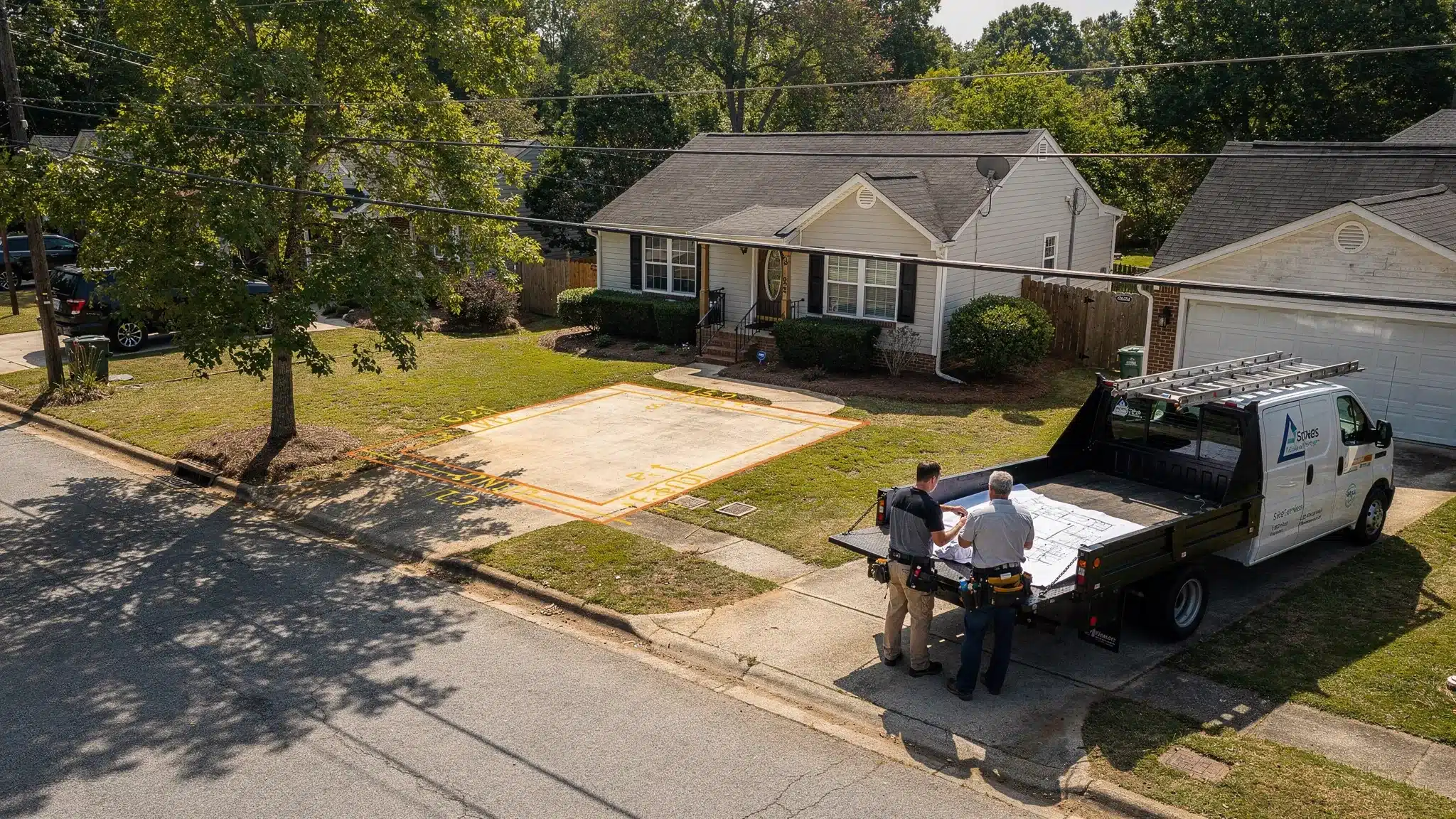
That is why two buyers in Raleigh, North Carolina can receive very different delivery quotes even if both are buying the same size container. A contractor with a wide gravel jobsite near a main road may be simple to serve. A homeowner with a narrow driveway, low tree limbs, and a backyard drop spot may need extra planning, a different trailer, or a crane.
The goal is not just to find the cheapest delivery line item. The goal is to understand what changes your quote so you can compare suppliers fairly, avoid failed deliveries, and budget for the true delivered cost.
What Is Usually Included in a Shipping Container Delivery Quote?
A professional container delivery quote usually includes more than the truck ride from point A to point B. Depending on the supplier and delivery method, it may include dispatch coordination, driver time, fuel, route planning, offloading equipment, and ground-level placement.
The key phrase to confirm is delivered and placed. Some sellers advertise a low container price but quote delivery separately. Others may include delivery to a certain area but charge extra for special placement, waiting time, difficult access, or second attempts.
When you compare quotes, ask whether the delivery price includes:
- Ground-level offload or only transport on a chassis
- One placement attempt at the marked drop spot
- Fuel, tolls, and mileage charges
- Waiting time if the site is not ready
- Crane, forklift, or side-loader equipment if needed
- Delivery to a residential, farm, commercial, or jobsite address
- Any local access restrictions, permits, or scheduling requirements
This is especially important in the Southeast, where rural properties, soft ground after rain, long gravel drives, and tree-covered residential lots can change the delivery plan quickly.
The Biggest Factors That Change Shipping Container Delivery Cost
The delivery portion of your quote is based on practical logistics. Below are the cost drivers that most often explain why one delivery is straightforward and another requires extra equipment or time.
| Cost factor | Why it changes the quote | Typical impact |
|---|---|---|
| Distance from depot or yard | More miles mean more fuel, driver time, and scheduling coordination | Higher cost as distance increases |
| Container size | 40ft units require more truck space and access than 20ft units | Can increase equipment and access requirements |
| Container type | High Cube, reefer, open side, or modified units may affect equipment choice | Can increase complexity |
| Delivery method | Tilt-bed, flatbed, crane, side-loader, and chassis delivery have different costs | Often one of the largest variables |
| Site access | Narrow gates, tight turns, slopes, trees, or overhead wires can require special handling | Can add fees or prevent standard delivery |
| Ground conditions | Soft soil, mud, steep grades, or poor drainage increase delivery risk | May require site prep or different equipment |
| Timing | Rush delivery, after-hours delivery, seasonal demand, or weather delays can affect scheduling | May add premiums or rescheduling costs |
| Permits and restrictions | HOA rules, municipal placement limits, or road restrictions can add steps | Varies by property and jurisdiction |
Distance and Location: The First Delivery Cost Driver
Distance is the easiest factor to understand, but it is not always as simple as miles from Raleigh to your property. A delivery quote considers the origin of the container, the delivery address, the truck’s route, and whether the driver can make other efficient stops on the same run.
For buyers in Raleigh, Durham, Cary, Wake Forest, Apex, and surrounding North Carolina communities, delivery may be simpler when inventory is positioned near the Triangle or along common freight lanes. Deliveries farther into rural areas, mountain regions, coastal properties, or out-of-state locations may require more planning.
Nationwide delivery works the same way. The best quote depends on locating the right unit as close as practical to the destination while still meeting your grade, size, and condition requirements. A low-priced unit several states away may not be the best deal once delivery is added.
Container Size: 20ft vs. 40ft vs. High Cube
A 20ft container is often easier to maneuver and place than a 40ft container. It requires less straight-line clearance for tilt-bed delivery and may fit sites that a longer trailer cannot access.
A 40ft container provides significantly more storage volume, but the delivery setup usually needs more room. The truck and trailer are longer, the drop zone must be clear, and the driver needs enough straight space to slide the container off the trailer safely.
High Cube containers add another consideration. A standard ISO container is typically 8 feet 6 inches tall on the outside, while a High Cube is typically 9 feet 6 inches tall. That extra foot is valuable for contractors, storage users, and conversion projects, but it also makes overhead clearance more important. Low branches, wires, carports, and building overhangs matter more when the container is taller and elevated on a trailer.
If you are still deciding between sizes, review Lease Lane’s guides to 20ft containers and 40ft containers before requesting a delivery quote. The best size is not only about storage capacity. It is also about whether the container can be delivered to your chosen location without expensive equipment.
Container Grade: Why Condition Matters to the Total Quote
Container grade usually affects the container purchase price more than the delivery fee, but it can still influence the total delivered quote. The grade determines what unit needs to be sourced, where it may be available, and whether it is suitable for storage, modification, or transport.
Lease Lane Containers works with common industry grades, including One-Trip, Cargo Worthy, and Wind & Watertight units.
| Grade | What it means | Best fit |
|---|---|---|
| One-Trip | A nearly new container that has generally made one loaded ocean voyage before resale | Premium storage, visible business use, offices, modifications, long-term projects |
| Cargo Worthy | A used container that is structurally suitable for cargo transport when properly inspected and documented | Export, logistics, stacking, heavy-duty storage, higher-value contents |
| Wind & Watertight | A used container that keeps out wind and water but is not necessarily certified for ocean freight | Jobsite storage, farm storage, residential storage, cost-conscious stationary use |
Most ISO shipping containers are built from Corten Steel, a weathering steel designed to resist corrosion better than ordinary mild steel. They also use standardized corner castings and dimensions that support intermodal handling. Those ISO standards are part of what makes containers practical for transport, stacking, and modular use.
A Cargo Worthy container may also involve documentation and inspection considerations, especially if it will be used for export. A Wind & Watertight container may be perfectly appropriate for stationary storage in Raleigh or elsewhere in North Carolina, but it should still be placed on a level base so the doors seal correctly and the frame does not twist.
For a deeper breakdown, see Lease Lane’s guide to used containers and container grades.
Delivery Method: The Equipment Behind the Quote
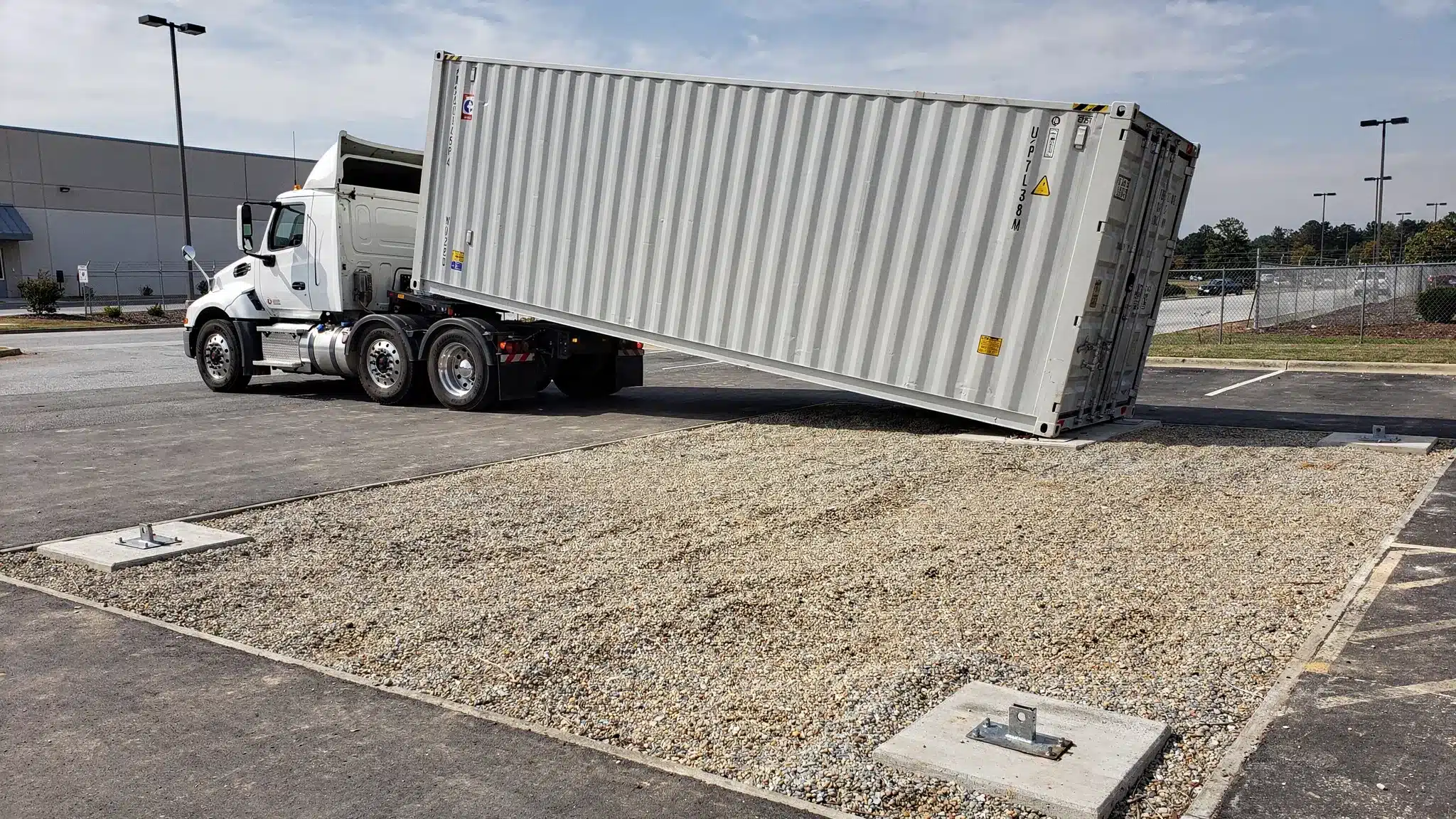
The delivery method can dramatically change the final price. A standard tilt-bed delivery is often efficient when the site has enough room. A crane or side-loader may be necessary when access is tight or the container must be placed over an obstacle.
| Delivery method | How it works | When it is commonly used | Cost impact |
|---|---|---|---|
| Tilt-bed trailer | Trailer tilts and slides the container onto the ground | Standard 20ft and 40ft ground drops with adequate straight space | Usually most efficient for simple drops |
| Flatbed with crane | Container is transported flat and lifted into place by crane | Tight sites, over-fence placement, precise positioning | Higher due to equipment and coordination |
| Side-loader | Container is lifted from the side of the truck | Sites with side access but limited rear unload space | Higher than basic tilt-bed in many cases |
| Chassis delivery | Container remains on a wheeled chassis | Temporary transport or logistics use | Different cost structure than ground placement |
| Roll-off style delivery | Container is rolled or slid off specialized equipment | Certain storage deliveries and shorter units | Depends on equipment and site |
For most homeowners, contractors, farms, and small businesses, the quote should specify whether the unit will be placed on the ground and how much room the truck needs. If the quote does not name the delivery method, ask before you commit.
Lease Lane’s shipping container delivery requirements guide explains clearance, turning radius, surface stability, and unloading methods in more detail.
Site Access: The Factor Buyers Underestimate Most
Site access is one of the most common reasons a delivery quote changes after the first conversation. A supplier can estimate delivery based on ZIP code, but the final plan depends on what the driver can safely access.
Important access questions include whether the truck can enter and exit without backing into traffic, whether there is enough turning room, whether the driveway can support the truck, and whether the drop zone is clear of overhead hazards.
In Raleigh and much of the Southeast, mature trees, narrow residential streets, sloped lots, clay soil, and sudden rain can complicate delivery. On job sites, the issue may be temporary fencing, dumpsters, equipment, stored materials, or other trades blocking the route.
A delivery quote can increase if the site requires:
- A smaller truck or specialty trailer
- A crane due to limited rear unload space
- Extra driver time for careful maneuvering
- A second delivery attempt because the site was not ready
- Rescheduling due to mud, storms, or blocked access
The easiest way to prevent surprises is to send photos or a short video of the route, driveway, gate, turning area, and proposed container pad before delivery is scheduled.
Placement Complexity: Exact Drops Take More Planning
There is a difference between dropping a container in an open yard and placing it precisely between two buildings, next to a loading dock, beside a barn, or behind a retail storefront.
Placement complexity increases when the driver has limited space to correct the container’s position. It also increases when the container doors must face a specific direction, when multiple containers must line up cleanly, or when the container must be set on pre-positioned blocks or piers.
For contractors and developers, exact placement matters because it affects security, workflow, and access to materials. For homeowners, it matters because a few feet can determine whether doors open properly, water drains away from the unit, and the container remains acceptable under HOA or local setback rules.
Permits, HOA Rules, and Local Restrictions
Delivery cost can also be affected by permitting and property restrictions. The truck delivery itself may be straightforward, but the placement of a container can be subject to local zoning, neighborhood rules, or temporary-use limits.
In Raleigh, Wake County, and nearby municipalities, rules can vary depending on whether the container is used for temporary jobsite storage, long-term residential storage, business inventory, construction, or a modified structure. HOA communities may have separate restrictions on visibility, duration, and placement.
Before scheduling delivery, confirm:
- Whether your city or county requires approval for container placement
- Whether your HOA allows containers and for how long
- Whether setbacks apply near property lines, easements, or structures
- Whether the delivery truck can legally access the road or driveway
- Whether utility markings are needed before site work or anchoring
Permit research may not be a direct delivery fee, but failing to confirm local rules can lead to costly relocation or removal.
Timing, Weather, and Seasonal Demand
Delivery schedules are affected by market demand, truck availability, weather, and site readiness. In North Carolina, heavy rain can turn a firm-looking yard into a poor delivery surface. Summer construction demand can tighten trucking schedules. Rural deliveries may require wider scheduling windows due to distance.
Rush delivery can cost more because it limits routing flexibility. Flexible delivery windows may help reduce cost because the dispatcher can pair your delivery with other efficient routes.
If your project is tied to a construction start date, retail opening, farm season, or equipment arrival, start quoting early. Waiting until the last minute can reduce options and increase the chance of premium scheduling.
Modifications and Specialty Containers
Modified containers and specialty units can change delivery requirements. A standard 20ft or 40ft dry container is typically simpler to transport than a unit with added doors, windows, insulation, HVAC, interior build-out, or heavy equipment installed.
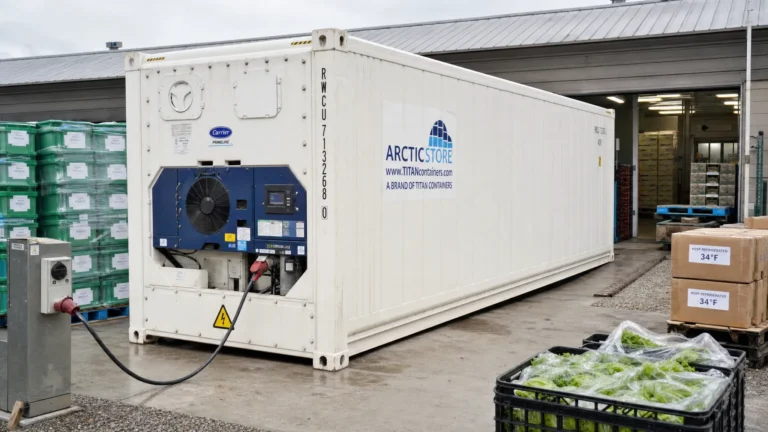
Refrigerated containers, also called reefers, deserve special attention. They are heavier than standard dry containers and require electrical planning after placement. A reefer delivery quote should account not only for the container drop, but also for where the unit will sit relative to power access, ventilation, and service clearance.
For office conversions, retail pop-ups, farm storage, and modular projects, ask whether modifications happen before or after delivery. Pre-modified units may require more careful handling and a more prepared site.
Pro-Tip: Prepare the Pad Before You Schedule the Truck
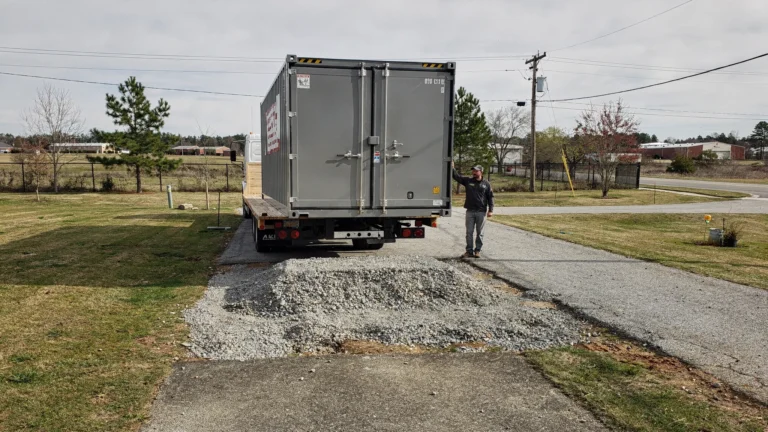
A level, stable pad is one of the best ways to control shipping container delivery cost. It reduces the chance of a failed delivery, helps the driver place the unit efficiently, and protects the container after it is set.
For most stationary storage uses, a compacted gravel pad with proper drainage is a strong option. Concrete slabs, concrete piers, pavers, railroad ties, and engineered footings may also work depending on your soil, budget, and project type. The goal is to support the container at the corners and keep the frame level.
A container that sits unevenly can rack over time, which means the steel frame twists slightly. That can make cargo doors harder to open, reduce gasket performance, and create drainage issues around the floor and underside. Even a Wind & Watertight unit with good door seals can perform poorly if it is set on soft or uneven ground.
Before delivery day, mark the four corners, confirm door orientation, clear the access path, and check overhead clearance. If you are unsure how much space the truck needs, review Lease Lane’s guide on how to prepare your site for container delivery.
Example Scenarios: Why Quotes Differ
The following scenarios show why delivery quotes can vary even when the container price is similar.
| Scenario | Delivery conditions | Why the quote changes |
|---|---|---|
| Raleigh contractor jobsite | Wide access, compacted gravel, standard 20ft WWT container | Simple routing and placement may keep delivery efficient |
| Rural farm storage | Long driveway, soft ground after rain, 40ft High Cube | Distance, ground conditions, and trailer access may increase planning |
| Urban small business pop-up | Tight alley, customer-facing placement, One-Trip container | Precision placement and appearance requirements may require extra care |
| Backyard residential storage | Narrow driveway, fence, low branches | Crane or alternate placement may be needed if tilt-bed access is not possible |
| Cold-chain reefer delivery | 40ft refrigerated unit near electrical service | Weight, service clearance, and power planning affect site requirements |
These examples are not price guarantees. They illustrate why a complete quote must consider both the container and the property.
How to Lower Delivery Cost Without Cutting Corners
The best way to reduce delivery cost is to remove uncertainty before the truck is dispatched. Suppliers can quote more accurately when they know the site, the container size, and the placement requirements.
Start by choosing the right container for the site, not just the largest unit in the budget. If a 40ft container forces crane delivery but two 20ft containers can be placed with standard equipment, the total project economics may change. If a High Cube is essential for interior clearance, plan overhead access early.
You can also reduce risk by preparing a firm, level surface and being flexible with scheduling. If the driver arrives and the pad is not ready, the gate is locked, vehicles block the route, or the ground is too soft, the delivery may fail and require a second trip.
When requesting a quote, provide:
- Delivery address and ZIP code
- Desired size, such as 20ft, 40ft, or 40ft High Cube
- Preferred grade, such as One-Trip, Cargo Worthy, or Wind & Watertight
- Intended use, such as storage, export, office, farm, retail, or construction
- Photos of the driveway, road approach, drop zone, and overhead clearance
- Notes about slopes, gates, fences, trees, wires, septic areas, or soft ground
- Required door orientation and any exact placement needs
That information helps the sales and dispatch team match the right container, trailer, and delivery plan from the start.
Watch for Vague or Incomplete Delivery Quotes
A low delivery number can be attractive, but incomplete quotes often cost more later. Be cautious if a seller cannot explain the delivery method, will not confirm the container grade, or refuses to discuss site access before taking payment.
A trustworthy quote should make it clear what you are buying, where the container is coming from, how it will be delivered, and what happens if the site is not ready. It should also distinguish the container price from delivery, taxes, modifications, and any special equipment.
Ask these questions before you approve a quote:
| Question | Why it matters |
|---|---|
| Is this price delivered to my property or only the container price? | Prevents surprise delivery charges |
| What delivery method is included? | Confirms whether the site can accept the truck |
| Is ground-level placement included? | Avoids confusion with chassis or transport-only quotes |
| What happens if the driver cannot access the drop spot? | Clarifies failed delivery or rescheduling fees |
| Does the quote match the grade I requested? | Prevents comparing One-Trip, Cargo Worthy, and WWT units unfairly |
| Do you need site photos before scheduling? | Helps avoid delivery-day problems |
A clear delivery quote protects both the buyer and the supplier. It also helps you compare total delivered cost rather than chasing the lowest advertised container price.
Frequently Asked Questions
What is the average shipping container delivery cost? Delivery cost depends on distance, container size, delivery method, site access, and scheduling. A local ground-level delivery with good access usually costs less than a long-distance delivery, crane placement, or difficult residential drop. The most accurate number comes from a quote based on your ZIP code and site photos.
Does a 40ft container cost more to deliver than a 20ft container? Often, yes, but not always. A 40ft container typically requires more truck space, more straight-line clearance, and more careful placement. However, distance, site access, and equipment choice can matter more than size alone.
Does container grade affect delivery cost? Grade affects the total quote mainly through the container price and availability. One-Trip units usually cost more than used units because they are closer to new. Cargo Worthy units are structurally suitable for freight use when properly inspected. Wind & Watertight units are commonly used for stationary storage. Delivery cost is more directly affected by size, location, truck type, and site conditions.
Can a shipping container be delivered onto grass or dirt? Sometimes, but it is not ideal. Soft ground can cause trucks to get stuck and containers to settle unevenly after placement. A compacted gravel pad, concrete pad, or properly supported corner foundation is usually better for long-term performance.
Do I need a permit to place a shipping container in Raleigh? It depends on the property, duration, use, zoning, and whether the unit is temporary storage or part of a modified structure. Raleigh, Wake County, nearby municipalities, and HOAs may have different rules, so confirm requirements before delivery.
What can cause a failed container delivery? Common causes include low branches or wires, narrow gates, blocked driveways, soft ground, steep slopes, unmarked placement areas, locked access, or insufficient room for the truck to unload. Sending photos and measurements before delivery greatly reduces this risk.
Get a Clear Shipping Container Delivery Quote
The best delivery quote is specific to your container, your site, and your schedule. Lease Lane Containers LLC helps buyers in Raleigh, across North Carolina, throughout the Southeast, and nationwide choose the right size, grade, and delivery plan for storage, construction, agriculture, logistics, and modular projects.
If you are ready to price a One-Trip, Cargo Worthy, or Wind & Watertight container, contact the Lease Lane Containers sales team at sales@leaselanecontainers.com. Include your delivery ZIP code, desired container size, grade, and site photos if available, or visit the Raleigh office to discuss your project with a local container specialist.
One Comment