How to Inspect Container Floors Properly
A container can look solid from the outside and still have a floor that creates expensive problems later. If you are buying a used unit for job-site storage, a workshop, or a build-out, knowing how to inspect container floors gives you a much clearer picture of the container’s real condition.
The floor matters for more than appearance. It carries point loads from pallets, tools, equipment, and foot traffic. It also tells you a lot about how the container was used, whether moisture has been trapped inside, and whether previous repairs were done correctly. For contractors and property owners who want no surprises, floor inspection is one of the fastest ways to separate a sound container from one that will need immediate work.
Why container floors deserve a closer look
Most standard shipping containers use marine-grade plywood fastened to steel cross members underneath. On many used containers, that plywood has seen years of forklift traffic, shifting cargo, moisture, and occasional chemical exposure. Even when a container is listed as Wind and Watertight, the floor can still show wear that affects long-term performance.
That does not always mean the unit is a bad buy. A used storage container with cosmetic floor wear may still be a strong value if the structure is sound and the price reflects the condition. The key is understanding the difference between surface wear and structural deterioration.
How to inspect container floors before you buy
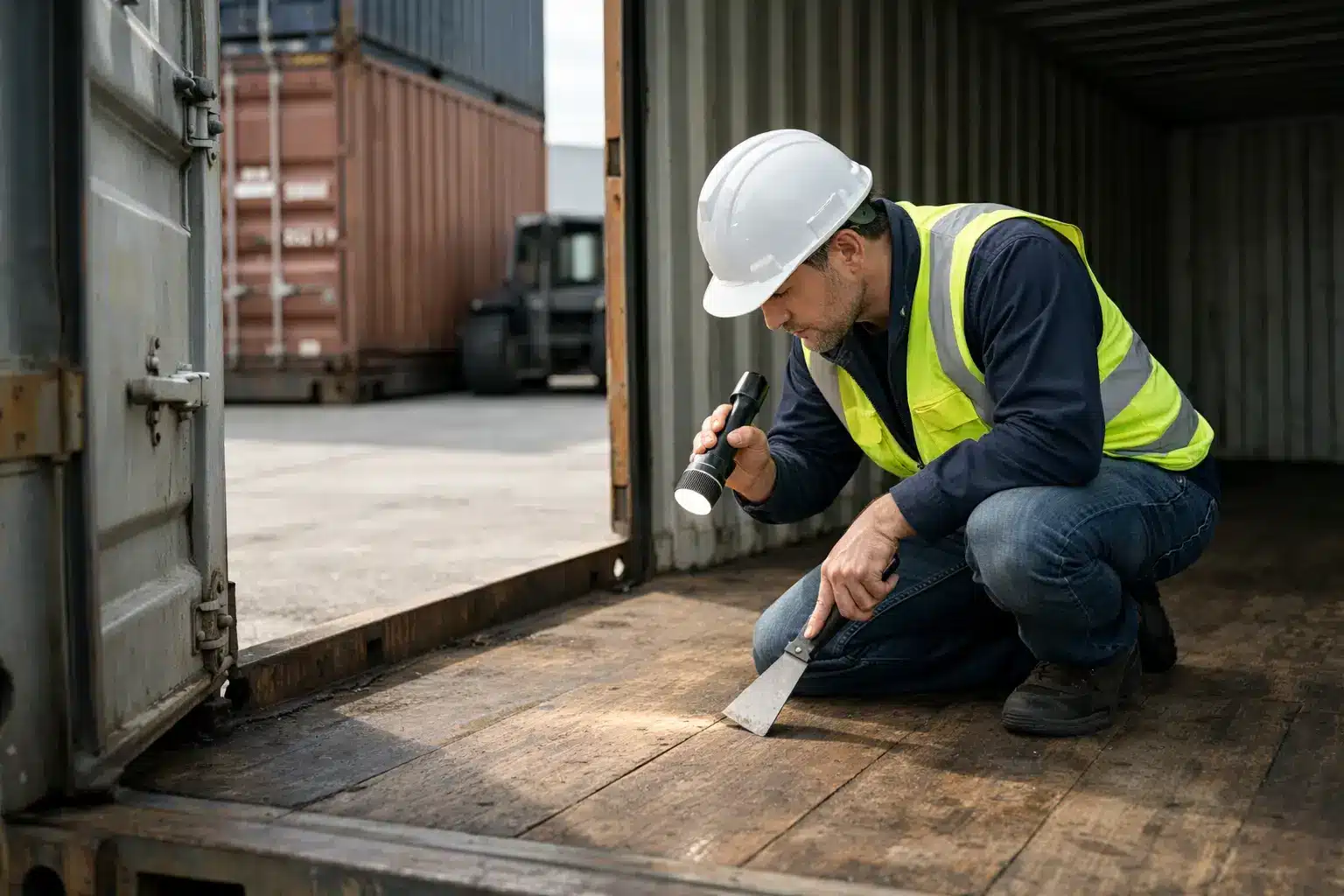
Start with the doors open and the interior fully lit. Natural daylight works well, but a bright flashlight helps reveal texture changes, patched areas, and moisture staining. If the container has cargo residue, sweep the floor first. Dirt can hide cracks, soft spots, and signs of delamination.
Begin with a slow visual pass from the door end to the front wall. Look for dark staining, uneven color, lifted edges, patches, gaps between boards, or circular wear patterns from repeated forklift turning. Scuffs and scrape marks are normal on used containers. What you are trying to spot are signs that the plywood layers are breaking down or that water has repeatedly entered the unit.
As you walk the floor, pay attention to how it feels underfoot. A sound container floor should feel firm and stable. Some minor flex can occur depending on load position and the age of the container, but soft or springy sections deserve closer review. If a spot feels weak, crouch down and inspect that area from several angles. What looks like a stain at eye level can turn out to be delamination or a poor-quality patch.
Check for soft spots and delamination
Delamination happens when the plywood layers begin to separate. It often shows up as bubbling, flaking, lifted veneer, or edges that appear swollen. In practical terms, that means the floor is losing integrity. Delamination can result from prolonged moisture, age, or chemical contamination.
A simple way to check is to press down with your boot in suspect areas and look for movement or surface cracking. You can also tap the floor lightly with a rubber mallet or similar tool. A solid floor tends to sound consistent. Hollow or noticeably different sounds may point to separation within the plywood or voids below a patch.
The extent matters. Small localized delamination near the door may be repairable and acceptable for basic storage use. Widespread separation across high-traffic sections is more serious, especially if you plan to store heavy equipment or convert the container into an office or habitable shell.
Look for moisture damage, not just active leaks
A dry day can hide a history of water intrusion. Look for blackened wood, tide-like stain marks, rusty fasteners, mold, or a musty odor. Check the floor near the door seal, side walls, and front corners, since those areas often reveal repeated moisture entry.
Keep in mind that floor damage does not always come from a roof leak. Condensation, wet cargo, and poor ventilation can also affect the plywood over time. If the floor shows moisture staining but the container roof and side walls are sound, the issue may be historic rather than ongoing. That is better than an active leak, but it still affects the floor’s service life.
If possible, inspect the underside as well. The steel cross members should not show advanced corrosion, bending, or impact damage. A decent-looking plywood floor on top can still sit over compromised steel below.
Watch for chemical contamination and cargo residue
This is one of the most overlooked parts of how to inspect container floors. Used containers may have carried industrial materials, agricultural products, oils, paints, or other cargo that left residue behind. Some floors are treated at the factory, and many are serviceable for general storage, but visible spills, strong odors, or unusual staining deserve caution.
Look for discolored patches that do not match normal wear patterns. Oily surfaces, white crystallized residue, or areas where the wood appears eaten away may suggest chemical exposure. That is especially relevant if the container will be used for tools, feed, household goods, retail inventory, or any interior conversion.
This is where the intended use matters. A contractor using the unit for rugged material storage may accept more cosmetic wear than a homeowner planning a workshop. If contamination is suspected and the end use is sensitive, it may make more sense to choose a cleaner grade or a one-trip container rather than trying to rehab a heavily used floor.
Inspect repairs carefully
A repaired floor is not automatically a problem. In fact, many quality used containers have had isolated sections professionally repaired and remain good candidates for storage. What matters is how the repair was done.
Look for replacement plywood sections that sit flush with the surrounding floor and are securely fastened. The patch should not rock, lift, or leave gaps. Sloppy repairs often show uneven edges, mismatched thickness, exposed fasteners, or weak support underneath. Those repairs can fail under concentrated loads.
Ask whether the repair was limited to the wood surface or whether any damaged steel cross members were addressed too. A new patch over a bent or corroded support only hides the issue for a while. Transparent grading and condition notes make a big difference here because they tell you whether the floor condition has already been evaluated against the container’s intended service level.
Pay extra attention to forklift impact zones
The area just inside the doors often takes the most abuse. Forklift tires, pallet jack traffic, and repeated loading can wear this section faster than the rest of the floor. It is common to see heavier scarring there, but deep rutting, crushed plywood, or patched thresholds should be reviewed carefully.
For commercial users, this matters because that doorway zone is where loads transition in and out. If it is weak, daily use becomes harder and less safe. For homeowners, it matters because that is usually the first place rain, mud, and debris collect.
What floor condition means for different container uses
Not every buyer needs the same floor standard. A used container for storing shovels, tires, or non-sensitive materials can tolerate more wear than a container being converted into a mobile office, farm workshop, or retail pop-up. Floor condition should match the job.
For heavy on-site storage, focus on firmness, support, and the absence of major rot or structural weakness. For agricultural use, cleanliness and moisture history are just as important because trapped moisture and residue can affect stored supplies. For build-outs, the floor becomes part of the finished system, so flatness, contamination, and repair quality matter more.
That is why a lower-priced used container is not always the cheapest option. If floor replacement or subfloor correction is likely, the upfront savings can disappear quickly.
Red flags that should change your decision
Some flaws are manageable. Others should push you to renegotiate, choose a different grade, or walk away. Broad areas of softness, severe delamination, active leaks, chemical odor, major patchwork, and damaged cross members below the floor all fall into the serious category.
The right response depends on the use case. If you need fast, secure storage for expensive tools or equipment, it rarely makes sense to gamble on a questionable floor. If the container is intended for a custom project, hidden floor problems can throw off timelines, labor, and budgeting.
A reputable seller should be able to explain the container grade clearly, describe known floor repairs, and tell you whether the unit is best suited for storage, transport, or refurbishment. That kind of transparency is often more valuable than a slightly lower advertised price.
A practical standard for buyers
If you want a simple benchmark, the floor should feel solid underfoot, show no widespread soft spots, have no clear evidence of active moisture issues, and contain only limited, well-executed repairs. For many buyers, that is the difference between a workable used container and one that creates cleanup, repair, and downtime from day one.
At Lease Lane Containers, that is why condition details matter as much as size and delivery logistics. A clear view of the floor condition helps buyers choose the right container grade for the job instead of paying for surprises later.
When you inspect a container, do not let fresh paint or straight side panels distract you. The floor tells the truth about how the unit has lived, and a careful look now can save you from a repair bill you never planned for.