Shipping Container 40ft High Cube: Size and Best Uses
When buyers compare large storage containers, the decision usually comes down to three practical questions: how much usable space do you need, can your site handle the delivery, and what condition grade is appropriate for the job? A 40ft High Cube is often the strongest answer when you need maximum capacity without moving into specialty container territory.
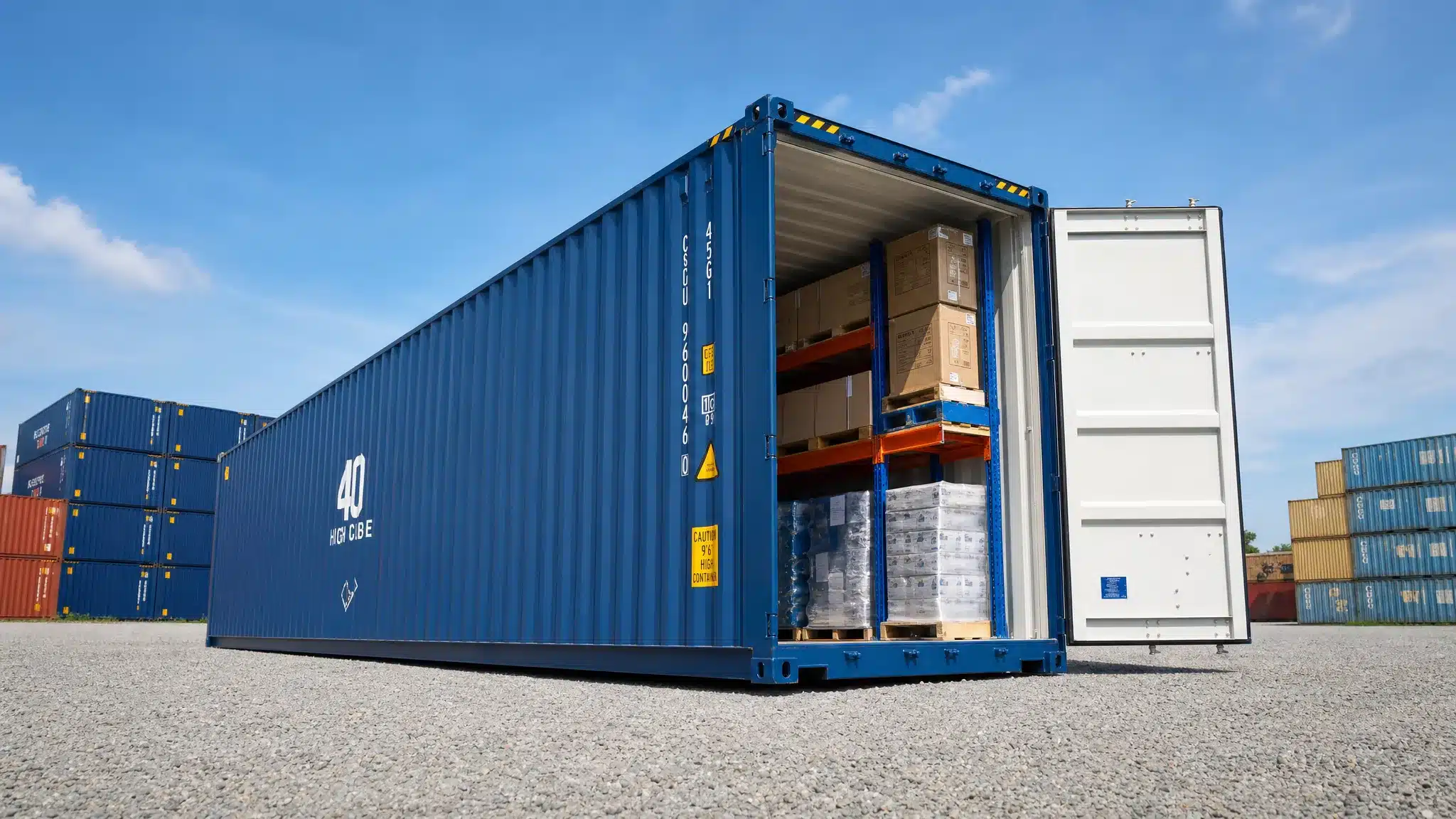
The key difference is height. A standard 40ft dry container is typically 8 ft 6 in tall on the exterior, while a 40ft High Cube is typically 9 ft 6 in tall. That extra foot can make a major difference for pallet racking, tall equipment, insulation, lighting, HVAC, or simply being able to walk and work more comfortably inside the unit.
For contractors in Raleigh, small businesses across North Carolina, farms in the Southeast, and logistics teams shipping nationwide, the 40ft High Cube offers one of the best combinations of length, vertical clearance, and long-term flexibility.
What Is a 40ft High Cube Shipping Container?
A 40ft High Cube is an ISO-style dry freight container with the same basic footprint as a standard 40ft container, but with one additional foot of exterior height. Like most dry cargo containers, it is built with corrugated Corten steel, steel corner castings, heavy cargo doors, marine-grade plywood flooring, and a structural frame designed for intermodal handling.
The term High Cube refers to the taller height, not a different width or length. In most cases, the container remains about 40 ft long and 8 ft wide, which is why it can still be handled by many of the same delivery and transport systems used for standard 40ft containers.
Exact dimensions vary slightly by manufacturer, production year, and container type. Always verify the measurements on the specific unit you are buying, especially if you are planning a modification, tight placement, or export shipment.
| Specification | Typical 40ft High Cube dry container |
|---|---|
| Exterior length | 40 ft |
| Exterior width | 8 ft |
| Exterior height | 9 ft 6 in |
| Interior length | About 39 ft 5 in |
| Interior width | About 7 ft 8 in |
| Interior height | About 8 ft 10 in |
| Door opening width | About 7 ft 8 in |
| Door opening height | About 8 ft 5 in |
| Interior capacity | About 2,680 cubic ft |
| Typical tare weight | About 8,600 to 8,900 lb |
| Typical max gross weight | About 67,200 lb, depending on data plate |
The dimensions and ratings of freight containers are standardized through international standards such as ISO 668, but real-world usability depends on more than the spec sheet. Door operation, floor condition, roof condition, ventilation, site leveling, and container grade all affect how well the unit performs.
40ft High Cube vs. Standard 40ft vs. 20ft Containers
The 40ft High Cube is not automatically the right choice for every buyer. It shines when vertical space matters, but it also requires more overhead clearance during delivery and more room on site than smaller units.
If you are working with a tight driveway, narrow gate, or small residential lot, 20ft containers may be easier to place. If you have enough room and want maximum storage per delivery, 40ft containers are often more cost-efficient per square foot.
| Container type | Exterior height | Typical interior height | Best fit | Main tradeoff |
|---|---|---|---|---|
| 20ft standard | 8 ft 6 in | About 7 ft 10 in | Tight sites, residential storage, smaller tool loads | Less total capacity |
| 40ft standard | 8 ft 6 in | About 7 ft 10 in | Long material storage, general jobsite use, warehouse overflow | Less vertical clearance |
| 40ft High Cube | 9 ft 6 in | About 8 ft 10 in | Tall inventory, shelving, equipment, workshops, conversions | More overhead clearance needed |
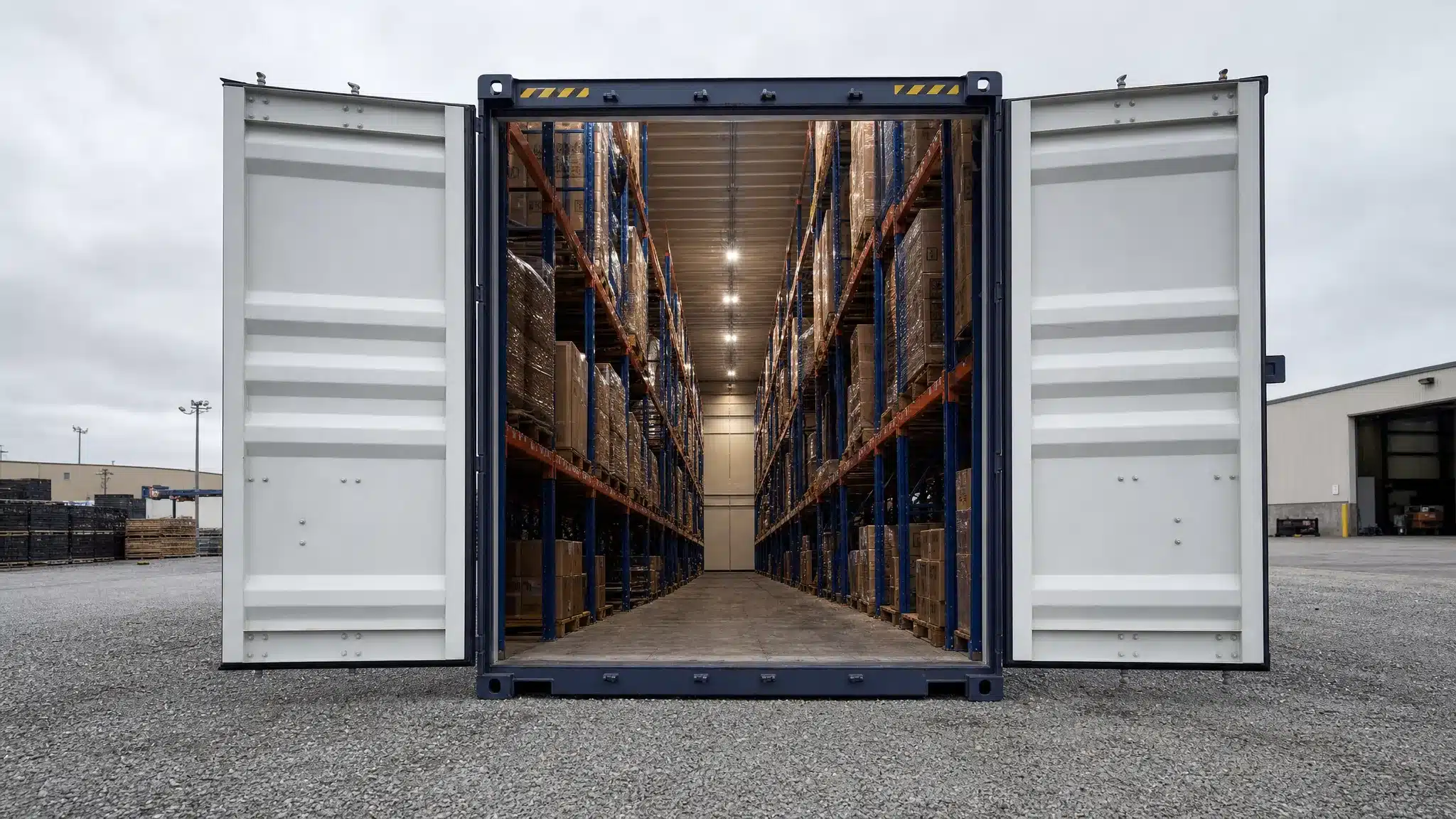
For buyers comparing sizes for the first time, the best approach is to think beyond floor area. A 40ft High Cube gives you roughly the same footprint as a standard 40ft container, but the extra height improves how you can organize the interior. That can mean taller pallet stacks, safer shelving layouts, better clearance above equipment, and more comfortable finished ceiling height after insulation.
Best Uses for a 40ft High Cube Container
A 40ft High Cube is most valuable when you need either bulk storage, vertical clearance, or a future-ready shell for modifications. Here are the most common use cases Lease Lane Containers sees among contractors, businesses, homeowners, agricultural buyers, developers, and logistics teams.
Construction Site Storage
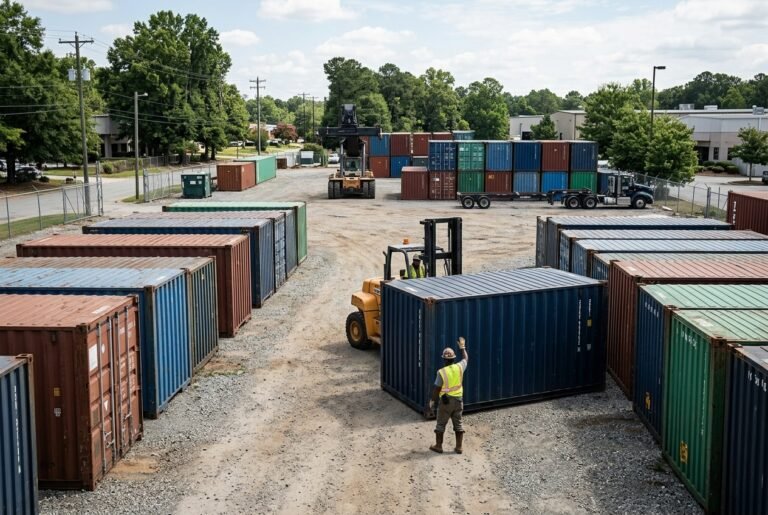
General contractors and home builders in Raleigh and across the Southeast often need secure, weather-resistant storage for tools, framing materials, fasteners, electrical supplies, plumbing inventory, and jobsite equipment. A 40ft High Cube gives crews more room to separate materials by trade or project phase.
The extra height is useful for shelving systems, ladders, tall boxed materials, and equipment that does not fit comfortably through a standard-height container door. On larger job sites, the added cubic capacity can reduce the need for multiple smaller containers, provided the site has enough room for delivery and placement.
For construction storage, Wind and Watertight or Cargo Worthy units are common choices depending on the value of the stored materials and the expected length of use.
Small Business Inventory and Warehouse Overflow
Retailers, e-commerce sellers, event companies, landscapers, and service businesses often need affordable overflow storage without committing to a larger warehouse. A 40ft High Cube can function as a secure inventory extension placed behind a shop, near a warehouse, or on a commercial property.
The High Cube height is especially helpful when using pallet racking or tall shelving. It also leaves more clearance for walking aisles, lighting, and ventilation. For customer-facing areas, newer one-trip containers may be preferable because they typically have cleaner paint, fewer dents, and a more polished appearance.
Agriculture and Rural Property Storage
Farmers, landowners, and rural property managers use 40ft High Cube containers for feed, seed, fencing supplies, irrigation equipment, spare parts, tools, and seasonal gear. The taller door opening can make loading bulky equipment easier, especially when using a tractor, pallet jack, or compact utility vehicle.
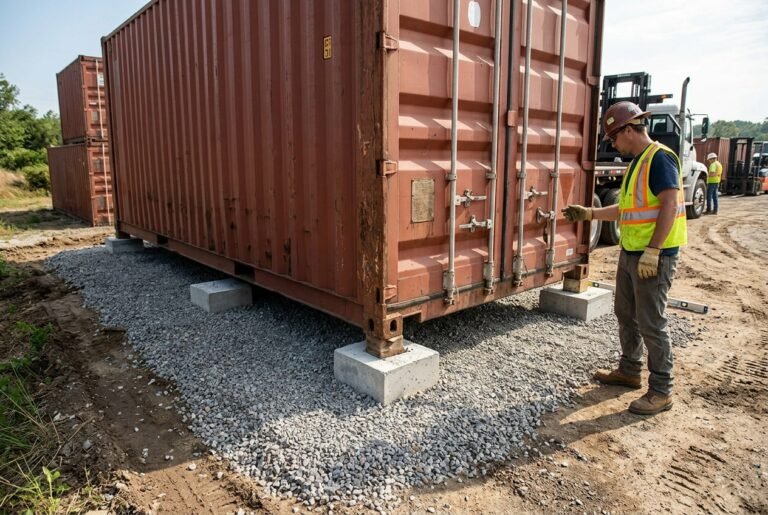
In humid North Carolina conditions, placement matters. A container sitting directly on soil can trap moisture underneath and accelerate corrosion. A gravel pad with drainage and corner support is usually a better long-term setup for rural land.
Workshops, Mobile Offices, and Modular Build-Outs
For modifications, the extra height of a 40ft High Cube is often worth the premium. Once you add floor finishes, insulation, ceiling panels, wiring, lighting, and HVAC, a standard-height container can start to feel tight. A High Cube gives builders more usable interior height after the build-out.
That makes it a strong starting point for workshops, mobile offices, hobby spaces, equipment rooms, and certain modular construction projects. If your project involves regular occupancy, grade selection becomes more important. A one-trip unit or clean Cargo Worthy unit is usually easier to modify and finish than a heavily worn storage-grade unit.
For more planning context, see Lease Lane Containers’ shipping container home office guide, which covers insulation, ventilation, structural cutouts, and permitting considerations.
Household and Long-Term Property Storage
Homeowners may choose a 40ft High Cube when they need long-term storage during renovations, estate transitions, property cleanouts, or large hobby projects. The capacity is substantial, so it works best for properties with plenty of placement room.
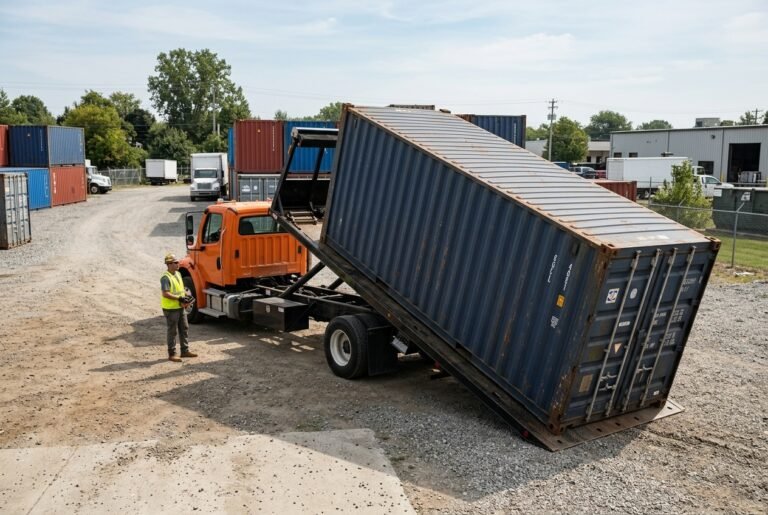
For residential driveways or smaller lots, measure carefully before ordering. A 40ft High Cube is long, tall, and heavy, and the delivery truck needs additional space to maneuver. If the property cannot support a clean delivery path, a smaller unit may be more practical even if it offers less total space.
Logistics, Export, and Regional Transport
For logistics managers, a 40ft High Cube is useful for bulky cargo that cubes out before it weighs out. In other words, the cargo fills the interior volume before reaching the container’s weight limit. Furniture, packaging materials, retail goods, lightweight machinery, and some manufactured products can benefit from the added height.
For international shipping, the container must be suitable for transport, not just storage. That usually means a Cargo Worthy container with a valid CSC plate or appropriate inspection documentation. The International Maritime Organization provides background on container safety requirements under the CSC framework.
Choose the Right Grade Before You Buy
Size tells you how much space you are buying. Grade tells you what condition the container is in and what it should be used for. This is one of the most important decisions when buying a 40ft High Cube, especially if the unit will be modified, shipped, stacked, or used to protect high-value inventory.
| Grade | What it means | Best use for a 40ft High Cube | Key consideration |
|---|---|---|---|
| One-Trip | Typically used for one loaded trip from factory to destination, with minimal wear | Conversions, visible business use, long-term storage, premium projects | Higher upfront cost, usually cleaner and easier to modify |
| Cargo Worthy | Inspected as structurally suitable for cargo transport | Export, regional freight, higher-value storage, structural reliability | May show cosmetic wear, but should meet transport-related structural expectations |
| Wind and Watertight | Keeps out wind and water when doors and seals are functioning properly | Stationary storage, job sites, farms, equipment storage | Not automatically certified for export or stacking |
| As-Is | Sold with known or unknown defects and limited assurances | Limited use only when buyer can inspect and repair | Higher risk of leaks, door issues, corrosion, or floor problems |
A one-trip 40ft High Cube is usually the preferred choice when appearance, lifespan, and modification potential matter. Expect minor handling marks, but fewer dents and less corrosion than most used units.
A Cargo Worthy unit is the right direction when the container may be loaded for transport, exported, or used in a more demanding structural application. It should be more than just dry inside. It should have sound corner castings, rails, flooring, doors, and frame integrity.
A Wind and Watertight unit can be a smart value for stationary storage. It should protect contents from rain and wind, but it is not the same as Cargo Worthy. For many contractors, farms, and property owners, WWT is practical and budget-conscious, as long as the unit is inspected honestly.
For a deeper breakdown of used containers, review how grades affect condition, pricing, and long-term suitability before comparing quotes.
When a 40ft High Cube May Not Be the Best Choice
The 40ft High Cube is spacious, but it is not always the most efficient option. If you only need to store a small tool package, a few household items, or limited seasonal inventory, a 20ft container may be easier to place and organize.
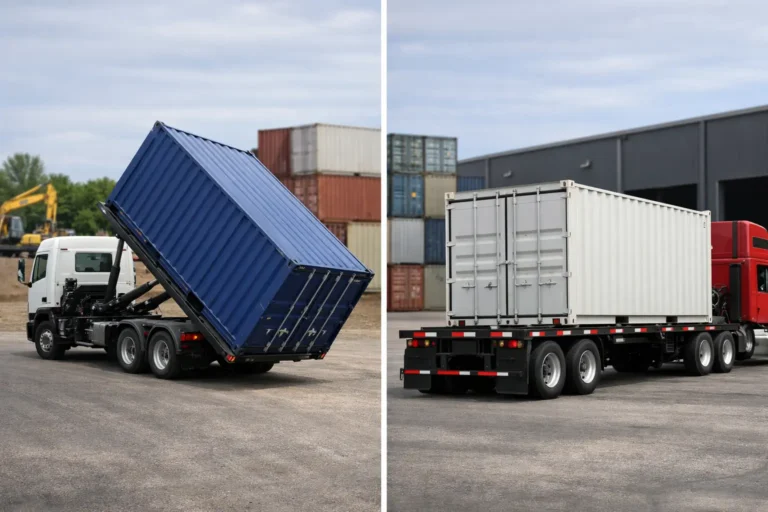
It may also be the wrong fit if your site has low tree limbs, overhead utility lines, a steep driveway, soft ground, or limited turning room. The container itself is 9 ft 6 in tall, but the delivery method can require much more overhead clearance, especially with tilt-bed placement.
Budget is another factor. If height does not matter for your application, a standard 40ft container may provide similar floor space at a lower total cost. The smart choice is the unit that fits the cargo, the site, the delivery method, and the intended lifespan.
Pro-Tip: Prepare the Pad Before the Truck Arrives
For a 40ft High Cube, site preparation is not a small detail. It directly affects delivery success, door operation, drainage, corrosion resistance, and long-term usability.
In Raleigh and much of North Carolina, clay soil and seasonal rain can create soft or uneven placement areas. A compacted gravel pad over stable soil is often a practical choice because it supports weight while allowing water to drain. For longer-term or modified containers, concrete piers, footings, or a slab may be appropriate depending on the project.
The container should be supported level, with attention to the four corner castings. If the frame twists because one corner settles, the cargo doors may become difficult to open. That is one of the most common avoidable problems after delivery.
Before delivery, confirm these items with your supplier and local authorities:
- The access route has enough width, turning room, and overhead clearance for the truck and container.
- The drop zone is level, compacted, and free of debris, vehicles, low branches, and overhead lines.
- Water drains away from the container rather than pooling under it.
- Door orientation is planned before the truck arrives.
- Raleigh, Wake County, HOA, zoning, and permit requirements have been checked where applicable.
- Underground utilities are marked before any digging, grading, or foundation work.
For underground utility marking before site work, use the national Call 811 system. For more placement planning, Lease Lane Containers also offers a detailed guide on shipping container delivery requirements.
Quick Buying Checklist
A 40ft High Cube is a serious purchase, and the best quote is not always the lowest number. A strong quote should match the container grade, actual condition, delivery method, and site requirements.
Use this checklist before committing:
- Confirm whether the unit is One-Trip, Cargo Worthy, Wind and Watertight, or As-Is.
- Ask for current photos of the exact unit or a clearly defined equivalent grade.
- Verify door operation, gasket condition, roof condition, floor condition, and corner castings.
- Confirm whether the quote includes delivery and placement, not just the container price.
- Measure the delivery route, final drop zone, and overhead clearance.
- Decide whether you need ventilation, shelving, lock upgrades, insulation, or future modifications.
- Check local permitting and HOA requirements before scheduling delivery.
For Raleigh-area buyers, local delivery experience matters because site conditions vary widely between urban lots, suburban driveways, commercial yards, and rural properties. For national buyers, the same principle applies: the container and the delivery plan should be matched before money changes hands.
Frequently Asked Questions
What are the dimensions of a 40ft High Cube shipping container? A typical 40ft High Cube dry container is about 40 ft long, 8 ft wide, and 9 ft 6 in tall on the exterior. Interior dimensions are usually about 39 ft 5 in long, 7 ft 8 in wide, and 8 ft 10 in tall, but exact measurements vary by manufacturer and unit.
How much taller is a High Cube than a standard 40ft container? A High Cube is typically one foot taller on the exterior. Standard 40ft containers are usually 8 ft 6 in tall, while 40ft High Cube containers are usually 9 ft 6 in tall.
Is a 40ft High Cube good for construction storage? Yes. It is a strong option for contractors who need secure storage for tools, materials, ladders, equipment, and jobsite inventory. The extra height makes shelving and tall-item storage easier than in a standard-height container.
Can a 40ft High Cube be used for international shipping? Yes, but it must be in the right condition. For export or intermodal transport, choose a Cargo Worthy unit with proper CSC documentation or inspection status. A Wind and Watertight unit may be fine for stationary storage but is not automatically suitable for ocean freight.
Do I need a permit for a 40ft High Cube in Raleigh, NC? It depends on where the container will be placed, how long it will remain, and whether it is being used for storage, business, or a modified structure. Check Raleigh, Wake County, zoning, HOA, and site-specific requirements before delivery.
What grade is best for a 40ft High Cube conversion? One-Trip is usually best for high-end conversions because it is cleaner and has less wear. Cargo Worthy can also work if the structure is sound and the cosmetic condition fits the project. WWT may be acceptable for basic storage, but it should be inspected carefully before any major modification.
Need help choosing the right 40ft High Cube for a Raleigh jobsite, North Carolina property, or nationwide delivery? Contact Lease Lane Containers LLC at sales@leaselanecontainers.com or visit our Raleigh office. Our local team can help you compare size, grade, delivery access, drop spot planning, and clear pricing before you buy.