Used Conex Boxes: What to Check Before You Buy
Buying used Conex boxes can be one of the most cost-effective ways to add secure storage, jobsite organization, inventory overflow space, or transport-ready capacity. But the key word is used. Two containers may both be listed as 20ft dry vans, yet one may be ready for cargo service while another may only be suitable for basic ground storage.
For contractors in Raleigh, farm owners across North Carolina, small businesses in the Southeast, and logistics teams buying nationwide, the best purchase starts with a disciplined inspection. A good used unit should match your use case, your delivery site, and the grade you are paying for.
Before you compare prices, compare condition. Here is what to check before you buy.
Start with the container grade, not the paint
The outside color tells you very little. The grade tells you much more. A used Conex box is usually built from Corten Steel, a weathering steel designed to resist corrosion better than ordinary steel. That durability is one reason ISO shipping containers remain popular for storage and transport, but even Corten Steel needs inspection after years of handling, stacking, salt exposure, and road miles.
Used containers are commonly sold in several condition categories. These are not just marketing labels. They affect price, expected remaining life, and whether the box should be used for storage, domestic movement, or international shipping.
| Grade | What it means | Best fit | What to verify |
|---|---|---|---|
| One-Trip | A newer container typically used for one overseas trip before resale | Buyers wanting the cleanest condition, better appearance, or modification-ready shells | Minimal dents, clean floors, smooth doors, and current specifications |
| Cargo Worthy (CW) | Structurally suitable for cargo transport when properly inspected and documented | Logistics, export use, heavy commercial storage, and buyers needing stronger assurance | Door operation, floor strength, frame integrity, and CSC documentation if shipping internationally |
| Wind & Watertight (WWT) | Sealed against wind and water, but not necessarily certified for cargo transport | Jobsite storage, farm storage, household storage, and inventory overflow | No active leaks, good door gaskets, no daylight through roof or walls |
| As-Is | Sold without a condition guarantee | Low-budget projects, parts, or repair work | Full repair cost, rust severity, leaks, and structural compromise |
If you want a deeper explanation of how these condition terms affect value, Lease Lane has a dedicated guide to used shipping container grades. For most buyers, the key distinction is simple: Cargo Worthy is the safer grade for transport-related needs, while Wind & Watertight is often sufficient for stationary storage.
Inspect the exterior shell carefully
A used Conex box does not need to look perfect to be a smart buy. Dents, faded paint, scrapes, decals, and surface rust are common. What matters is whether the container remains structurally sound, secure, and dry.
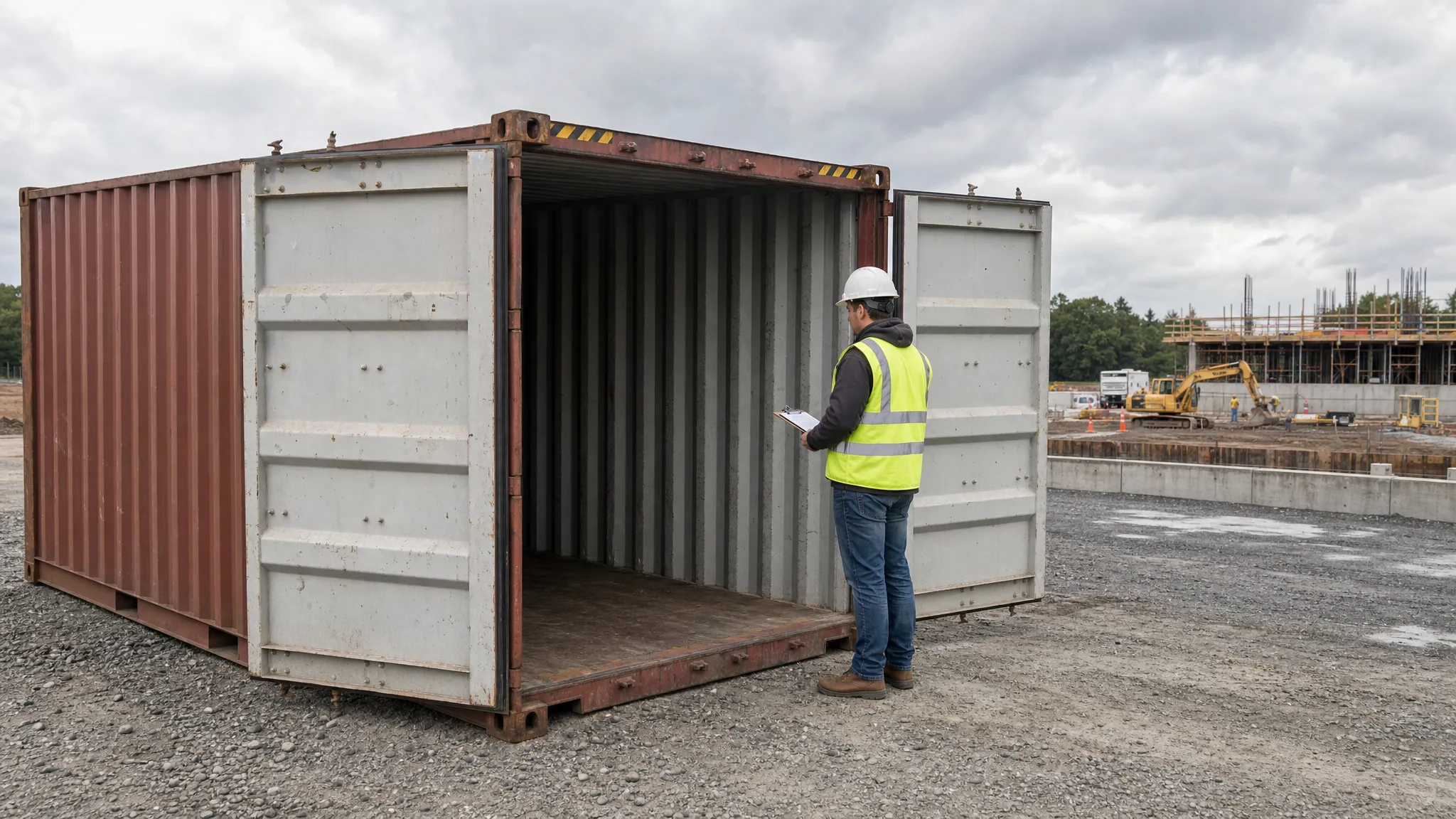
Start with the roof. Water sits on low spots, so roof dents can become future rust points. A shallow dent may not be a problem, but deep roof depressions that hold water deserve attention. From the outside, look for heavy corrosion, patches, pinholes, and soft areas. From the inside, close the doors and look for daylight through the ceiling.
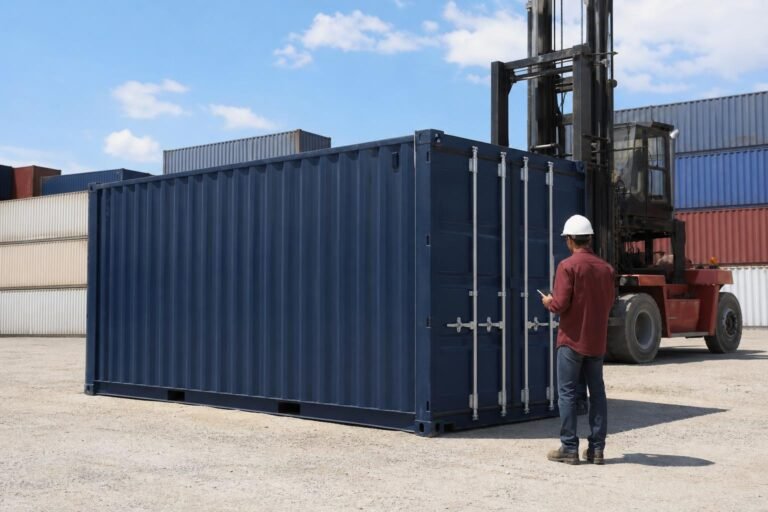
Next, inspect the corner posts and corner castings. These are critical structural components because ISO containers are designed to be lifted and stacked from the corners. If the corner posts are badly bent, cracked, or separated from the frame, walk away unless you are buying for a non-structural project and fully understand the repair cost.
The side walls should be checked for deep dents that bow inward, torn steel, weld repairs, or rust lines near the bottom rail. Surface rust can often be cleaned and coated. Scale rust, bubbling metal, and holes are different. Pay close attention to the bottom side rails because they carry significant load and are more exposed to moisture splashback.
The understructure also matters, especially on used units that have seen years of yard handling. Ask for underside photos if you cannot inspect in person. Crossmembers, forklift pockets, and the bottom rails should not show severe corrosion, crushing, or major missing sections.
Check the doors, seals, and locking gear
Doors are one of the most important inspection points on used Conex boxes. A container can have a solid shell but still be frustrating if the doors are difficult to operate.
Open and close both doors fully. The locking rods should rotate without excessive force. Hinges should be intact, and the cam keepers should engage properly. If the doors are racked because the frame is twisted, you may notice one door dragging, failing to seal, or requiring a pry bar to close.
Inspect the rubber gaskets around the doors. Dry, cracked, missing, or compressed seals can lead to water intrusion. WWT and CW units should keep weather out under normal conditions, so damaged gaskets should be discussed before purchase.
Look at the lock box if the unit has one. A lock box is a steel shield around the padlock area that helps reduce bolt cutter access. Not every used container includes one, so confirm whether it is present if security is important for your jobsite, farm, or business inventory.
Step inside and perform the daylight test
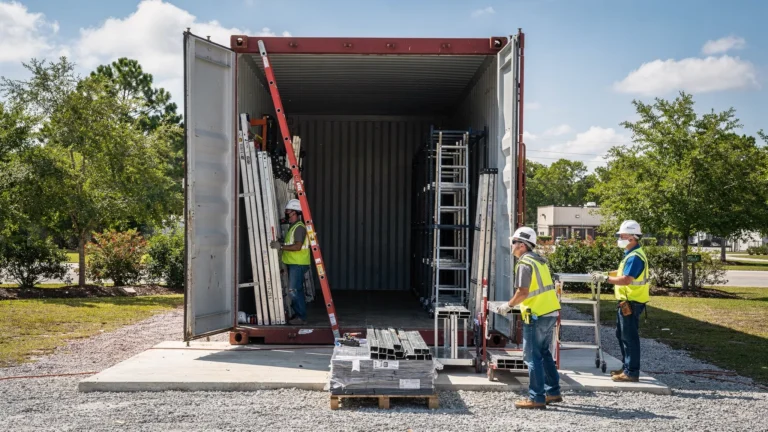
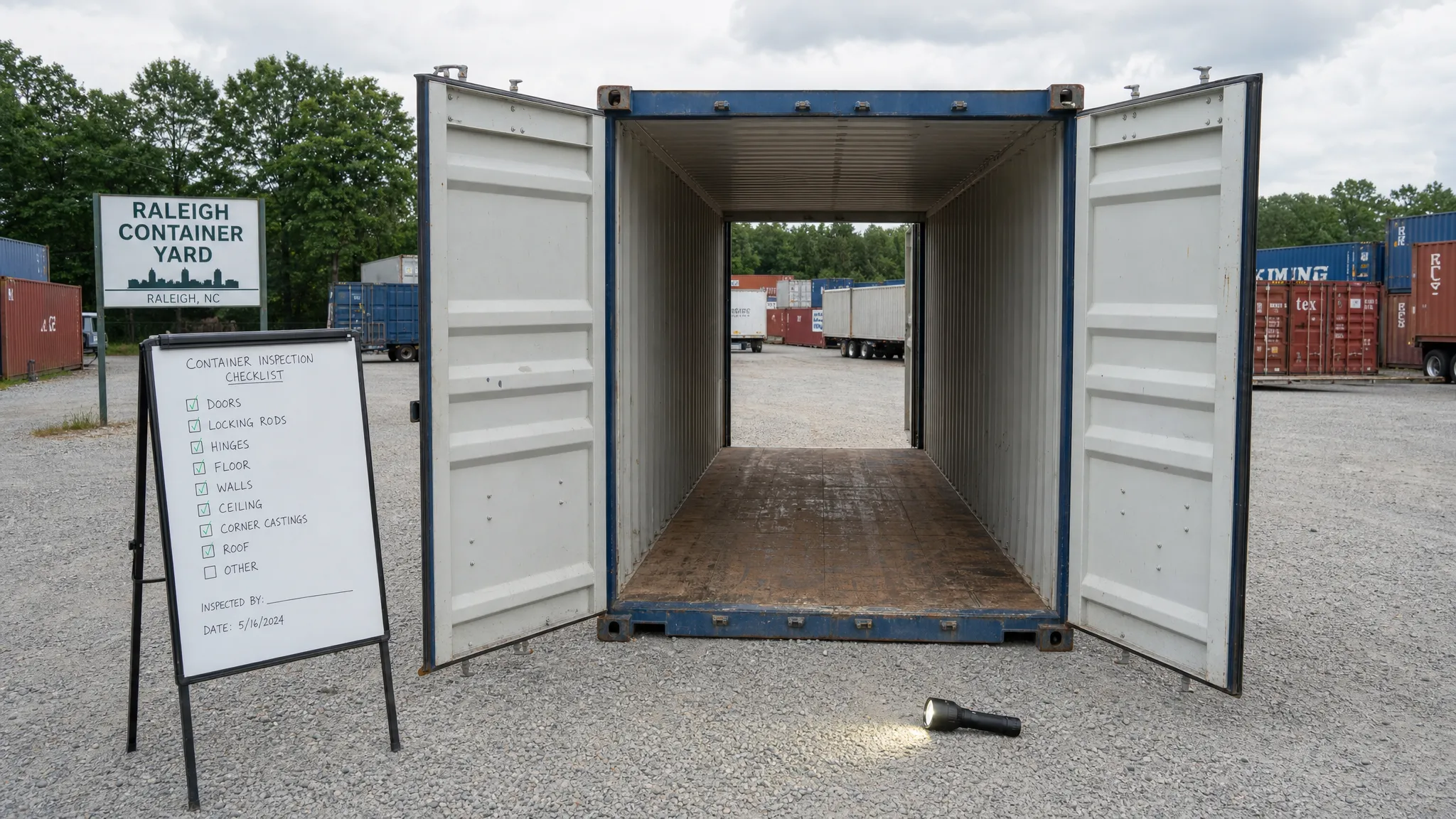
One of the simplest inspection methods is also one of the most reliable. Step inside the container during daylight, close the doors, and let your eyes adjust. If you see points of light through the roof, side walls, or door area, water can enter.
A container that fails the daylight test may still be useful for some purposes, but it should not be priced or represented as Wind & Watertight. For Raleigh-area contractors storing power tools, lumber, or finishes, even small leaks can become expensive quickly in humid weather.
The floor deserves equal attention. Standard dry van containers usually have heavy plywood or bamboo flooring installed over steel crossmembers. Check for soft spots, rot, delamination, chemical odor, oil staining, and signs of pest damage. A few scratches from cargo movement are normal. Spongy flooring is not.
Also check for odors. A used dry van may have carried a wide range of cargo. Strong chemical, fuel, mold, or animal smells can be difficult to remove, especially if you plan to use the box for retail storage, furniture, household goods, or a future office conversion.
Match the size and style to the job
Most buyers choose between 20ft and 40ft containers. A 20ft unit is easier to place on tighter residential lots, smaller construction sites, farms, and urban infill projects around Raleigh. A 40ft unit offers much more storage volume and often a lower cost per square foot, but it requires more delivery clearance and a longer level pad.
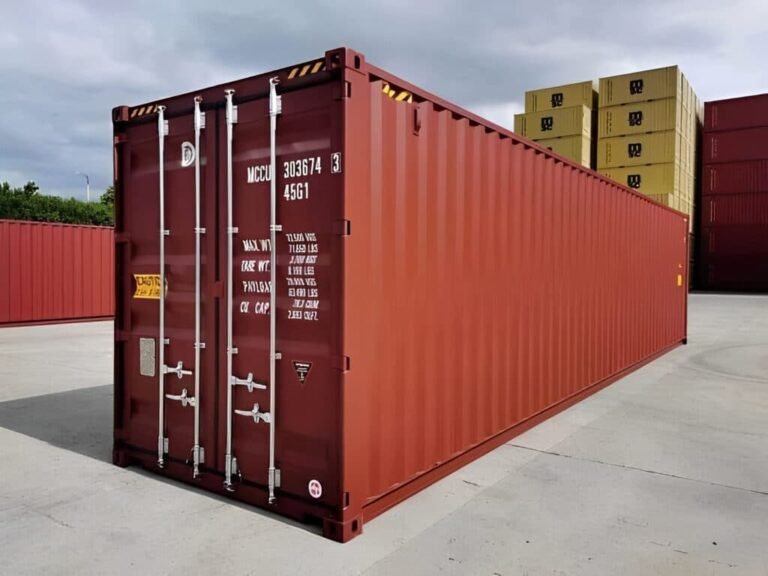
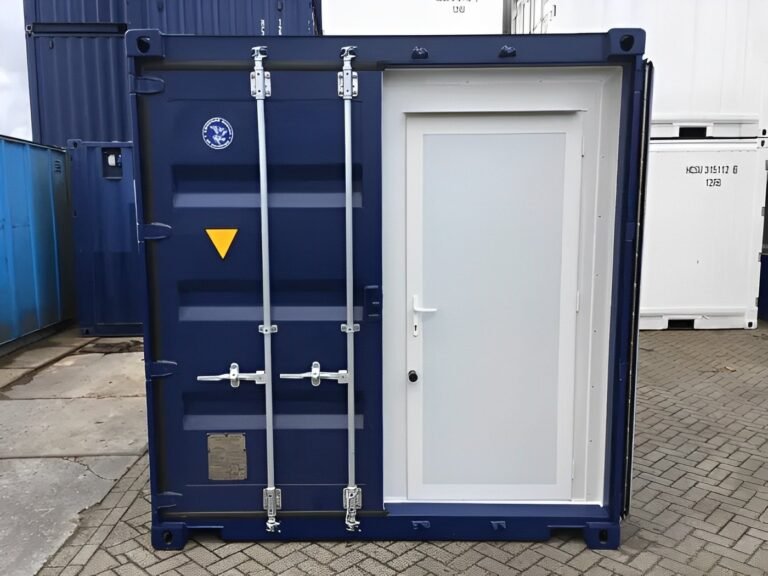
Height matters too. Standard containers are typically 8ft 6in high on the exterior. High Cube containers are typically 9ft 6in high, giving you an extra foot of vertical clearance. That can be useful for taller equipment, shelving, mobile office conversions, or modular builds. If you are planning modifications, High Cube units often provide a more comfortable interior feel.
For buyers who need a compact dry van that can support freight-oriented needs, the 20ft Used Cargo-Worthy Shipping Container for Sale – Dry Van is the type of unit to consider. If your priority is secure ground-level storage rather than cargo certification, ask the Lease Lane team about the 20Ft Used Shipping Container – Wind & Watertight, a practical WWT option for storage-focused buyers.
Compare delivered value, not just sticker price
A low advertised price can become expensive once delivery, condition, grade, and site requirements are added. In the Southeast, freight distance, local access, fuel costs, and unloading method all affect the final delivered cost. A Raleigh buyer may see a different delivered price than a buyer in rural eastern North Carolina, Charlotte, Atlanta, or another national delivery zone.
When comparing quotes, make sure each seller is quoting the same size and grade. A 20ft WWT unit should not be compared directly with a 20ft Cargo Worthy unit without adjusting for condition and intended use. A High Cube unit should not be compared with a standard-height dry van as if they are identical.
Ask whether the quote includes delivery to your property, whether the unit is guaranteed WWT or CW, and what happens if the container arrives in a condition that does not match the order. For a clearer view of how market factors affect your budget, review Lease Lane’s guide to Conex container prices.
Verify photos, documentation, and serial numbers
If you cannot inspect the exact unit in person, ask for current photos. Stock photos are helpful for general expectations, but they do not tell you the condition of the specific container being delivered.
Useful photos include all four sides, roof, interior, floor, door gaskets, locking gear, corner posts, bottom rails, and the container identification number. The container number helps tie the photos to the unit and reduces confusion when multiple boxes are moving through a depot.
For Cargo Worthy units intended for shipping, confirm what documentation is available. International shipping may require a valid CSC plate and carrier acceptance. ISO standards define container dimensions and structural expectations, but the practical question is whether your specific unit will be accepted for the route and cargo you have planned. If the container is only being used for ground storage, CSC documentation may be less important than WWT condition and door functionality.
Watch for common red flags
Used Conex boxes are durable, but not every used unit is a good buy. Be cautious when the seller cannot clearly state the grade, refuses to provide photos, or uses vague descriptions such as good condition without explaining whether the unit is WWT, CW, or As-Is.
Other red flags include roof holes, heavy floor rot, doors that do not close, missing gaskets, severe bottom rail corrosion, fresh paint that appears to hide rust without repair, and pricing that is far below the local market without a clear reason. A bargain unit can still be useful, but only if the condition is honestly represented and matches your project.
Payment and delivery clarity matter as well. Make sure the invoice includes the size, grade, delivery address, delivery method, and any condition guarantee. If the container is being placed at a jobsite in Raleigh, a rural property in North Carolina, or a commercial yard elsewhere in the USA, the delivery plan should be clear before the truck is dispatched.
Pro-Tip: prepare the site before delivery day
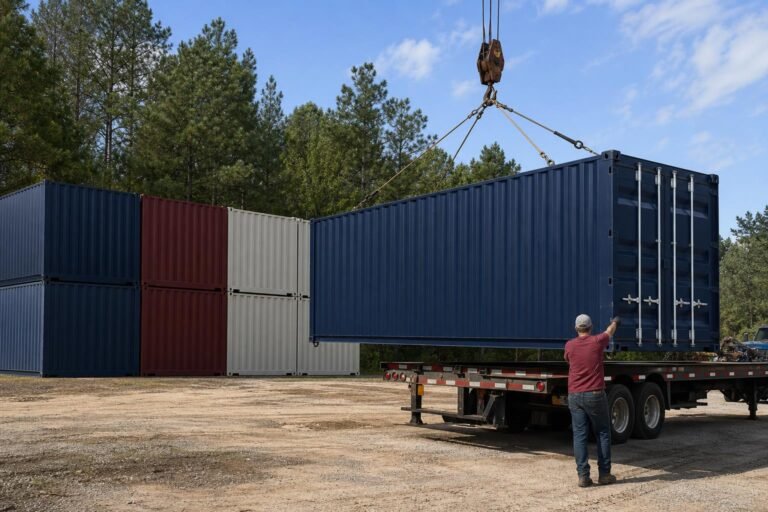
A good container can perform poorly if it is placed on an uneven or poorly drained site. Before delivery, choose a level area with enough truck access, overhead clearance, and room for the driver to unload safely. Tilt-bed deliveries need straight-line clearance, while crane or specialized deliveries may require different planning.
A compacted gravel pad is often a smart choice because it promotes drainage and helps keep the container off standing water. Concrete pads can work well too. Avoid placing a container directly in a low, muddy area where the bottom rails stay wet after rain. Supporting the four corners evenly is especially important because a twisted container can make doors difficult to operate.
For Raleigh and North Carolina buyers, also check local zoning and permit requirements before installation. Rules can vary by municipality, county, property type, duration of use, and whether the container is for temporary storage, commercial use, or a modified structure. If you are not sure what to ask before the truck arrives, Lease Lane’s delivery guide explains what to check before shipping containers are delivered.
The smartest choice depends on the use case
There is no single best used Conex box for every buyer. A general contractor may prioritize fast delivery, lockable storage, and WWT protection. A logistics manager may need Cargo Worthy condition and documentation. A homeowner may care about clean floors, easy door operation, and a smaller footprint. A developer planning a modular conversion may prefer a cleaner One-Trip or High Cube unit to reduce prep work.
The best buying decision comes from matching the grade to the job, inspecting the shell and interior, confirming delivery terms, and preparing the site before the container arrives. When those steps line up, used Conex boxes can deliver years of reliable service at a lower cost than many traditional storage or construction alternatives.
Frequently Asked Questions
Are Conex boxes and shipping containers the same thing? In most buying conversations, yes. Conex box is a common term for an ISO-style steel shipping container, especially when used for ground storage, jobsite storage, or military-style container applications.
Is a Wind & Watertight container good enough for storage? Usually, yes. WWT containers are commonly used for tools, equipment, household goods, farm supplies, and business inventory. They should keep out wind and rain, but they are not necessarily certified for cargo transport.
When should I choose a Cargo Worthy used container? Choose Cargo Worthy when the container may be used for freight movement, export, or heavier-duty commercial applications where structural condition and transport acceptance matter.
Should I buy a One-Trip container instead of a used Conex box? A One-Trip container is generally cleaner and newer, which can be better for modifications, retail uses, mobile offices, or appearance-sensitive sites. Used WWT or CW containers are often more cost-effective for storage and utility needs.
Do I need a permit for a used Conex box in Raleigh? It depends on the property, zoning, placement duration, and intended use. Always check with the local municipality or county before delivery, especially for commercial sites, visible residential placement, or modified containers.
Talk with Lease Lane before you buy
If you are comparing used Conex boxes in Raleigh, across North Carolina, throughout the Southeast, or anywhere in the USA, Lease Lane Containers LLC can help you choose the right size, grade, and delivery plan. For guidance on Cargo Worthy, Wind & Watertight, One-Trip, High Cube, refrigerated, or custom modular options, contact the sales team at sales@leaselanecontainers.com or visit the Raleigh office to discuss your project.