Used Truck Containers for Sale: What to Check
When buyers search for used truck containers for sale, they are often looking for one of three things: a ground-level shipping container delivered by truck, a container that can move on a chassis, or a retired truck body for storage. Those are very different assets, and confusing them can lead to the wrong grade, the wrong delivery method, or a unit that will not meet your storage or transport needs.
For most contractors, homeowners, small businesses, farms, and logistics teams in Raleigh, North Carolina and across the Southeast, the best starting point is an ISO shipping container made from Corten Steel. These units are built for intermodal transport, handled by corner castings, and commonly sold in 20ft and 40ft sizes. The key is knowing what to check before you pay, especially when the container has already spent years in service.
This guide focuses on the practical inspection points that matter most: grade, structure, doors, floor, paperwork, size, delivery access, and site preparation.
First, confirm what kind of container you are buying
The phrase used truck containers can mean different things depending on the seller. Before you compare prices, ask the seller to identify the asset clearly.
| Asset type | What it usually means | Best use | What to verify |
|---|---|---|---|
| ISO shipping container | A 20ft or 40ft steel container designed to ISO standards and moved by truck, rail, or ship | Ground-level storage, jobsite storage, modifications, cargo | Size, grade, serial number, door condition, roof, floor, delivery method |
| Container on chassis | An ISO container mounted on a road chassis or trailer frame | Transport, logistics, temporary mobile storage | Container grade, chassis title or VIN, tires, brakes, lights, roadworthiness |
| Truck body or van body | A box removed from a straight truck or trailer | Low-cost stationary storage | Frame condition, floor support, leaks, no ISO corner castings, limited stacking or lifting options |
If you need secure storage at a construction site in Raleigh, a ground-level ISO container is usually simpler than a truck body because it is rugged, lockable, and built with standardized corner posts and bottom rails. If you plan to ship cargo internationally or move loaded freight, you need to pay closer attention to Cargo Worthy condition, CSC plate details, and ISO compatibility.
ISO standards matter because standard container dimensions, strength requirements, and corner fittings allow equipment to be handled safely throughout the freight network. The commonly referenced dimensional standard is ISO 668 for Series 1 freight containers, but buyers should still verify the exact unit they are purchasing because condition varies widely in the used market.
Understand the grade before you inspect the price
A cheap container is not always a good container. Grade tells you the intended condition level, but it is not a substitute for inspection. Reputable sellers should explain the grade in writing and provide photos that match the actual unit or the condition range being sold.
| Grade | What it means | Best for | What to watch |
|---|---|---|---|
| One-Trip | A newer container that has usually made one cargo trip from the factory to destination | Clean storage, retail use, modular projects, mobile offices | Minor handling marks, door alignment, factory paint condition |
| Cargo Worthy, CW | Structurally suitable for cargo transport when properly certified | Export, regional freight, logistics operations | CSC plate, structural repairs, floor condition, valid inspection needs |
| Wind & Watertight, WWT | Keeps out normal wind and rain, but is not necessarily approved for cargo shipping | Jobsite storage, farm storage, household storage, inventory overflow | Door gaskets, roof dents, rust near bottom rails, patch quality |
| As-Is | Sold with no meaningful condition guarantee | Budget projects, parts, non-critical storage | Leaks, severe rust, twisted frame, unsafe floors, costly repairs |
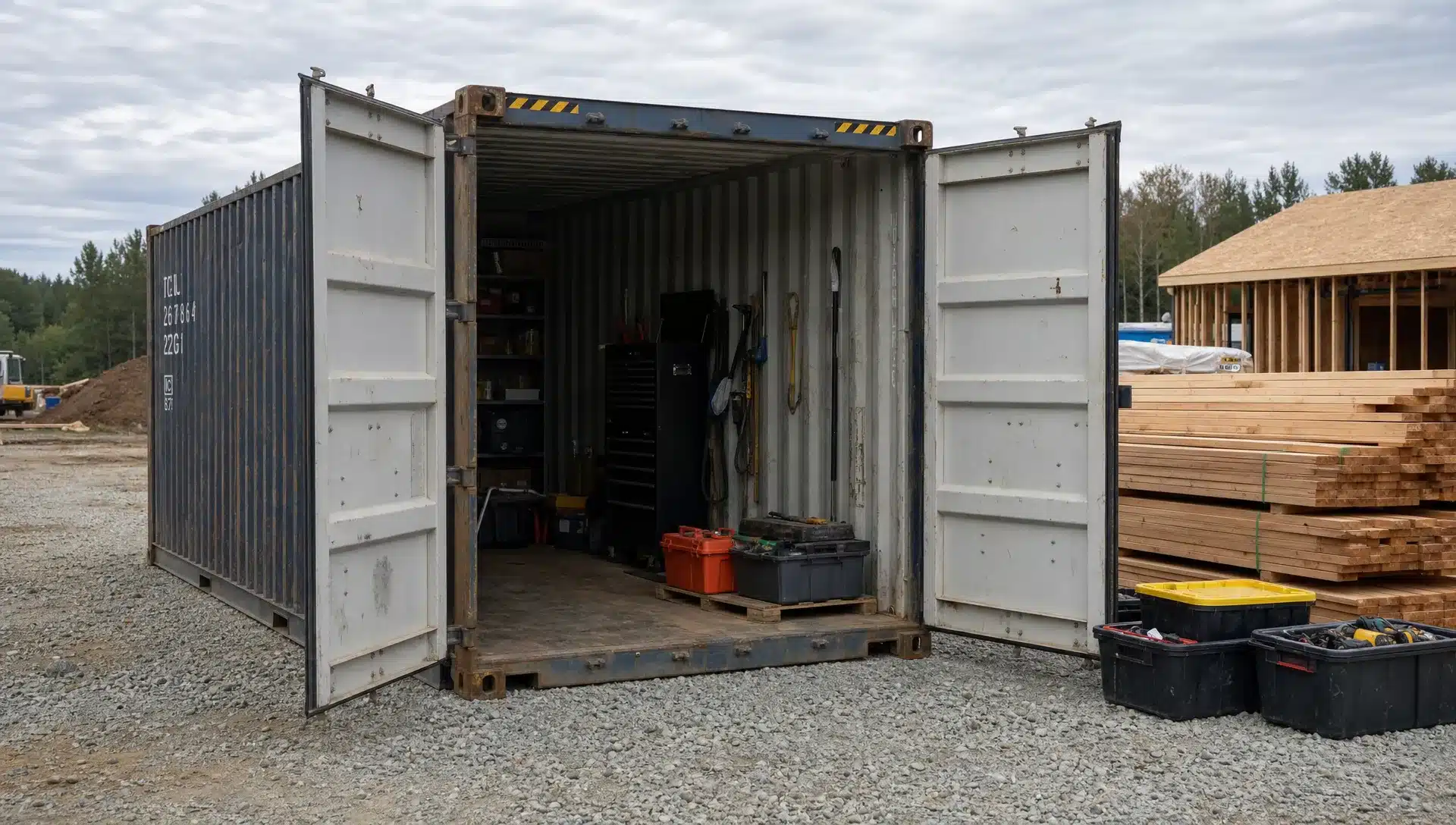
One-Trip containers cost more, but they are typically cleaner and better suited for customer-facing uses like pop-up retail, mobile offices, and modular builds. Cargo Worthy units are important when the container still needs to travel through freight channels. WWT containers are often a strong value for general contractors, home builders, farms, and homeowners who need durable on-site storage.
If you are comparing multiple used containers for jobsite or property storage, Lease Lane Containers also has a practical guide on what smart buyers check when purchasing used containers.
Check the structure, not just the paint
Fresh paint can hide problems, so start with the steel structure. Most ISO containers are built with Corten Steel, a weathering steel designed to resist atmospheric corrosion better than ordinary carbon steel. That does not mean it is rustproof. In humid regions like North Carolina, especially near red clay, standing water, and vegetation, corrosion can accelerate when drainage is poor.
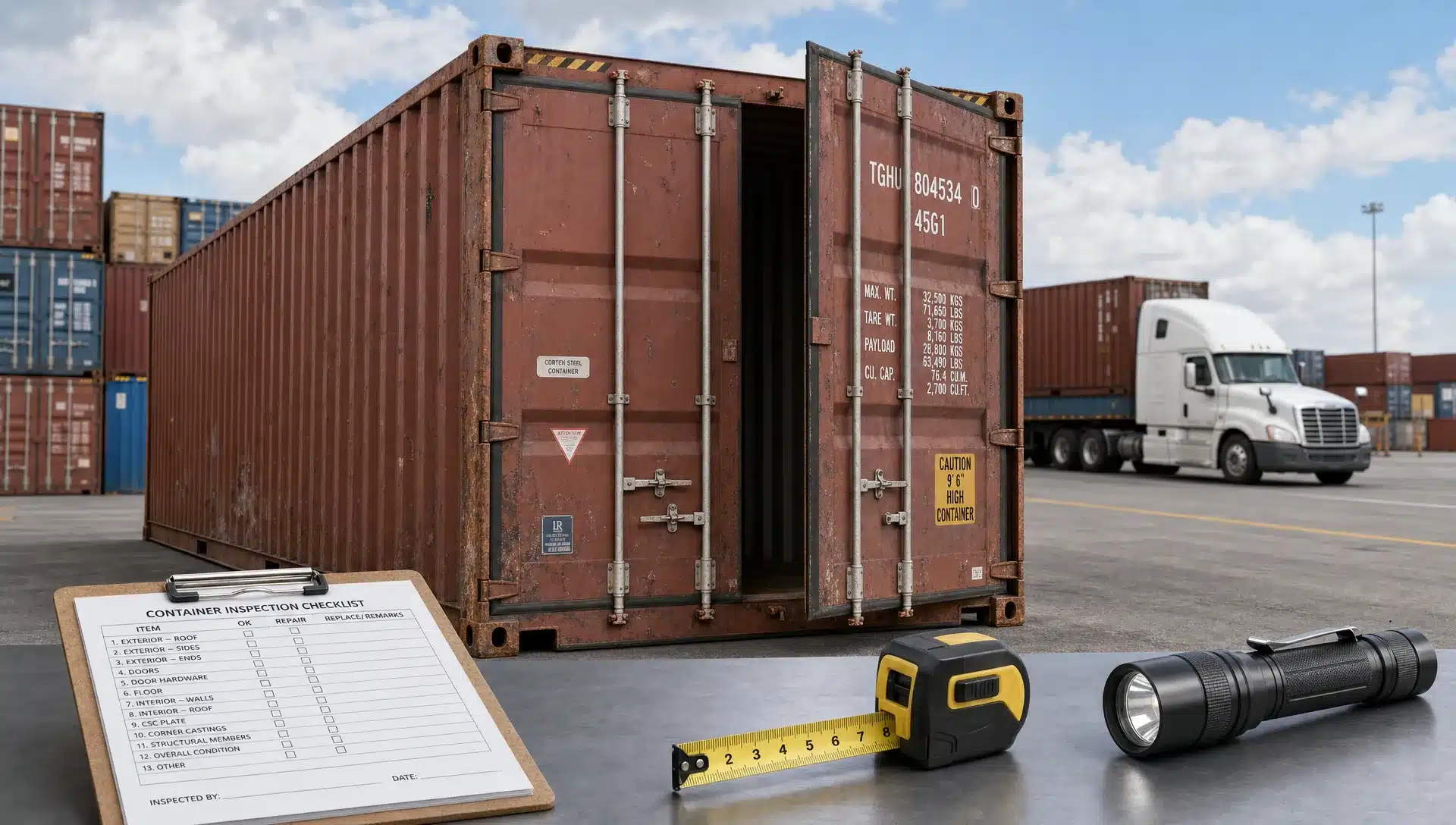
Stand back and look at the container from all four corners. The box should sit square, with no obvious twist, sag, or bow. The corner posts, top rails, bottom rails, and crossmembers carry the structural load. Damage in these areas matters more than cosmetic dents in a side panel.
Pay close attention to these areas:
- Corner posts and corner castings, which should not be cracked, crushed, or badly repaired.
- Bottom side rails, where rust can form from ground contact and trapped moisture.
- Roof panels, where dents can collect water and eventually create pinholes.
- Door frame and header, since a racked frame can make the doors hard to seal.
- Welded patches, which should be clean, continuous, and not simply covering deeper corrosion.
Surface rust is common on used units and is not automatically a deal-breaker. Heavy scale, holes, soft steel, or rust around structural members is a different issue. If you can flake off layers of metal by hand, the container may be beyond a normal WWT storage grade.
Inspect the doors like your storage depends on them
For most buyers, doors are where daily satisfaction is won or lost. A container with bad doors can technically look solid but still be frustrating to use.
Open and close each door fully. The locking bars should rotate without excessive force, the cam keepers should engage properly, and the handles should secure into their retainers. Door gaskets should be flexible, continuous, and seated well against the frame. Cracked or missing gaskets increase the risk of water intrusion, especially during heavy Southeast thunderstorms.
Look at the threshold and lower door corners. These areas are exposed to forklift wear, standing water, and impact damage. Rust or distortion here can make it difficult to keep the unit wind and watertight.
A simple field test is to step inside the container during daylight, close the doors, and look for light coming through the roof, sidewalls, or door seals. Light does not always mean a major leak, but it tells you where to inspect more closely.
Check the floor for safety, odors, and soft spots
Container floors are typically made from heavy plywood supported by steel crossmembers. In used containers, the floor may show gouges, forklift marks, stains, patches, or odors from previous cargo. That is normal within reason, but it should not feel unsafe.
Walk the entire floor. Look for soft spots, delamination, raised fasteners, rot, oily residue, chemical smells, or areas that flex more than the rest of the floor. For contractors storing tools and materials, a rough but solid floor may be acceptable. For retail inventory, household goods, seed, feed, or customer-facing uses, you may want a cleaner One-Trip unit or a carefully selected used unit.
If you are buying for agricultural storage in North Carolina, also consider ventilation and condensation. A sealed steel container can trap humidity if loaded with damp equipment, hay, or temperature-sensitive items. Vents, desiccants, spacing around contents, and good site drainage can all help reduce moisture problems.
Verify paperwork before sending money
Used container fraud is real, especially in online marketplaces where sellers use stock photos, vague descriptions, or unrealistically low prices. Before payment, make sure the paperwork matches the unit and the quote.
At minimum, ask for the container number, stated grade, size, delivery location, total delivered price, and seller invoice. For Cargo Worthy purchases, ask about inspection status and whether the CSC plate is present and legible. A CSC plate does not automatically prove current cargo suitability, but it is an important part of the documentation trail for transport use.
For a deeper breakdown of ownership documents, delivery terms, and condition language, review Lease Lane Containers' guide to paperwork, condition, and delivery when buying a used cargo container.
Choose the right size and type before you chase the lowest price
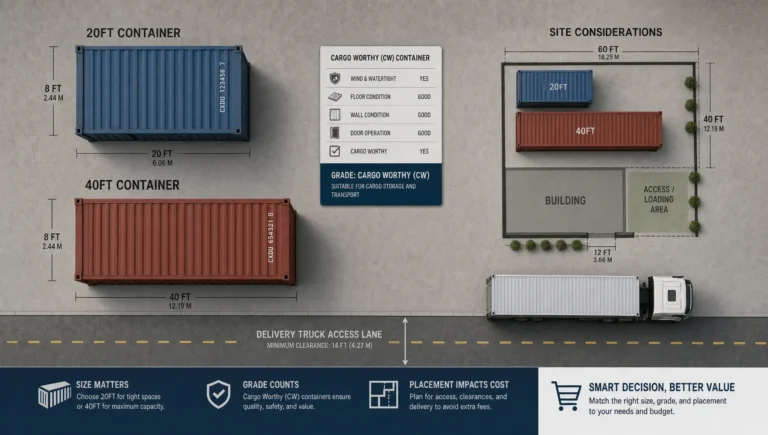
A container that is too small becomes expensive quickly. A container that is too large can create delivery problems, permit issues, or wasted space. Match the size to your site, inventory, and access route.
| Container type | Typical exterior size | Best fit | Buyer note |
|---|---|---|---|
| 20ft Standard | About 20ft long, 8ft wide, 8ft 6in high | Tight jobsites, residential storage, tools, small equipment | Easier to place on constrained Raleigh lots |
| 40ft Standard | About 40ft long, 8ft wide, 8ft 6in high | Bulk storage, inventory overflow, construction materials | Needs more truck access and a longer drop zone |
| 40ft High Cube | About 40ft long, 8ft wide, 9ft 6in high | Taller equipment, modular builds, mobile offices | Extra interior height is useful for modifications |
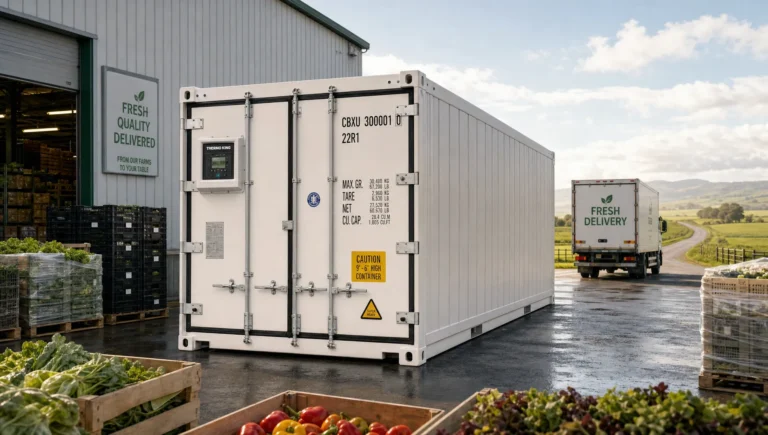
| Reefer container | 20ft or 40ft refrigerated unit | Cold storage, food, pharmaceuticals, specialty inventory | Requires power, airflow clearance, and equipment checks |
High Cube containers are popular for modifications because the extra height improves headroom after insulation, framing, and flooring. Reefers are specialized units, so buyers should check refrigeration machinery, electrical requirements, insulation condition, and service access, not just the steel shell.
Pro-Tip: Prepare the site before the truck arrives
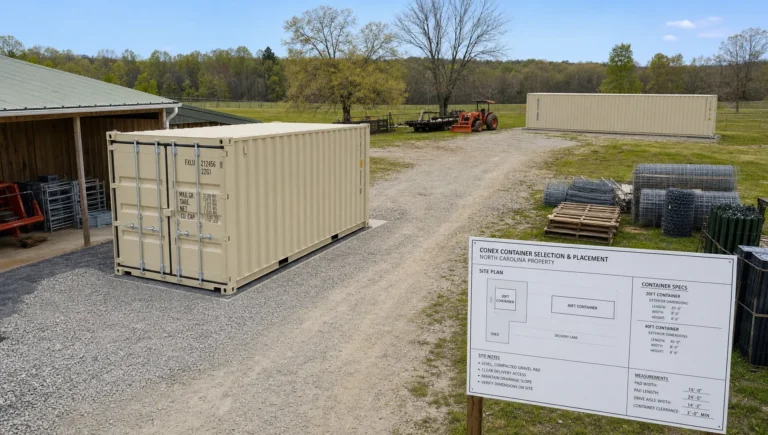
A good container can perform poorly if it is dropped on the wrong surface. In Raleigh and across the Southeast, clay soil, heavy rain, tree roots, and uneven lots can cause containers to settle out of level. When a unit twists, doors may become difficult to open and seals may not seat correctly.
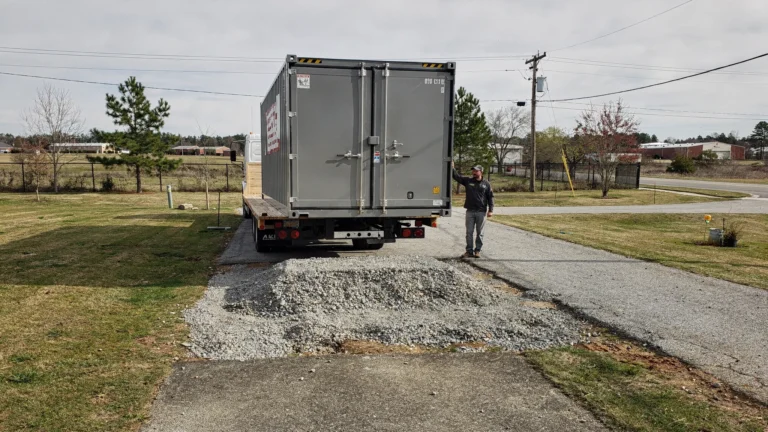
Prepare a firm, level pad before delivery. Gravel is often a practical choice because it promotes drainage and reduces ground contact. Many buyers place support under the four corner castings using concrete blocks, railroad ties, or a compacted gravel base, depending on the site and intended use. The goal is to keep the container level, keep water moving away from the floor structure, and prevent the bottom rails from sitting in mud.
Also confirm delivery access. A tilt-bed or roll-off truck needs room to enter, align, unload, and exit safely. Clear low branches, overhead wires, fences, parked vehicles, and soft ground. For a 40ft container, you may need significantly more straight-line space than the container length itself because the truck must pull forward as the unit slides off.
Permit requirements vary by city, county, zoning district, HOA, and intended use. Temporary construction storage may be treated differently than long-term residential storage or a modified office. Before placing a container in Raleigh, Wake County, or another North Carolina municipality, check local rules and any neighborhood restrictions.
Red flags when shopping used truck containers for sale
Some issues are repairable. Others are warnings to slow down or walk away. Be cautious if the seller avoids direct answers or cannot document what is being sold.
- The seller will not provide the container number or current photos.
- The quote does not state the grade, size, delivery terms, or taxes clearly.
- The unit is described as waterproof, but not Wind & Watertight or Cargo Worthy.
- The price is far below the local market with urgent payment pressure.
- Door damage is dismissed as cosmetic even when the doors do not seal.
- Photos show a different yard, different container numbers, or inconsistent colors.
- The seller cannot explain delivery access, truck type, or site requirements.
For Raleigh-area buyers, working with a local team can make a major difference. Delivery conditions in the Triangle, rural North Carolina, and the wider Southeast are not always the same as a flat container depot. A knowledgeable supplier can help you think through driveway width, slope, soil, drainage, and container orientation before the truck is dispatched.
Think in terms of total landed value
The lowest advertised container price is rarely the full cost. A better comparison is total landed value: the container grade, structural condition, cleanliness, delivery cost, site preparation, permit risk, and how long the unit will serve your purpose.
For example, a WWT used container with solid doors, good seals, and a clean floor may be the right value for a general contractor storing tools near downtown Raleigh. A Cargo Worthy unit may be worth the additional cost for a logistics manager moving freight through regional or international channels. A One-Trip High Cube may be the smarter choice for a developer planning a modular office or customer-facing build.
The right container is not just the one that arrives cheapest. It is the one that fits your use case, survives your site conditions, and does not create surprise repair or delivery problems.
Frequently Asked Questions
Are used truck containers the same as used shipping containers? Often, yes. Many buyers use the phrase to describe shipping containers delivered by truck. However, some sellers use it for truck bodies or containers mounted on chassis, so always confirm the asset type before buying.
Is Wind & Watertight good enough for storage? For many storage uses, WWT is a practical grade because the container should keep out normal wind and rain. It is not the same as Cargo Worthy, and it may not be approved for loaded cargo transport.
When do I need a Cargo Worthy container? Choose Cargo Worthy when the unit must move cargo through freight channels or meet transport-related inspection requirements. For stationary jobsite or property storage, WWT may be sufficient if the structure, doors, roof, and floor are sound.
Should I buy a One-Trip container instead of used? One-Trip containers are usually cleaner, newer, and better for modifications, retail, mobile offices, or long-term appearance-sensitive uses. Used containers can be a better value for contractors, farms, and businesses that need secure storage at a lower cost.
Can a container be delivered to a residential property in Raleigh? Often it can, but access, slope, ground conditions, zoning, and HOA rules matter. Confirm local requirements before delivery and prepare a level, well-drained drop spot.
Ready to check a used container before you buy?
Lease Lane Containers LLC helps buyers in Raleigh, North Carolina, across the Southeast, and nationwide choose the right 20ft, 40ft, High Cube, WWT, Cargo Worthy, One-Trip, and refrigerated container options for storage, transport, and custom modular needs.
If you are comparing used truck containers for sale and want clear pricing, condition guidance, and delivery planning, contact the sales team at sales@leaselanecontainers.com or connect with Lease Lane Containers to visit the Raleigh office and speak with a local container specialist.