Conex Box for Sale: How to Spot Quality Fast
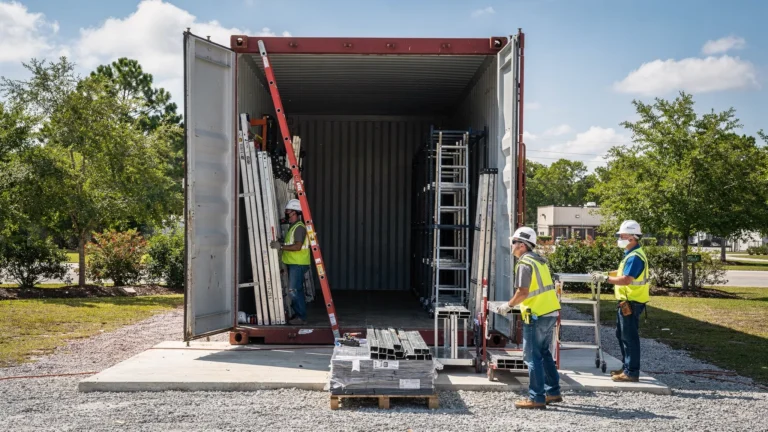
When you find a Conex box for sale, speed matters. Good inventory moves quickly, especially around Raleigh, North Carolina, where contractors, small businesses, farms, and developers often need secure storage before the next project phase starts.
But buying fast should not mean buying blind. A quality Conex box is more than a steel rectangle with fresh paint. It should have a believable grade, a sound Corten steel shell, doors that seal properly, a safe floor, and a delivery plan that fits your site.
This guide gives you a practical way to spot quality quickly, whether you are comparing photos online, walking a container yard, or reviewing a delivered quote from a seller in the Southeast or anywhere in the USA.
What “quality” means in a Conex box
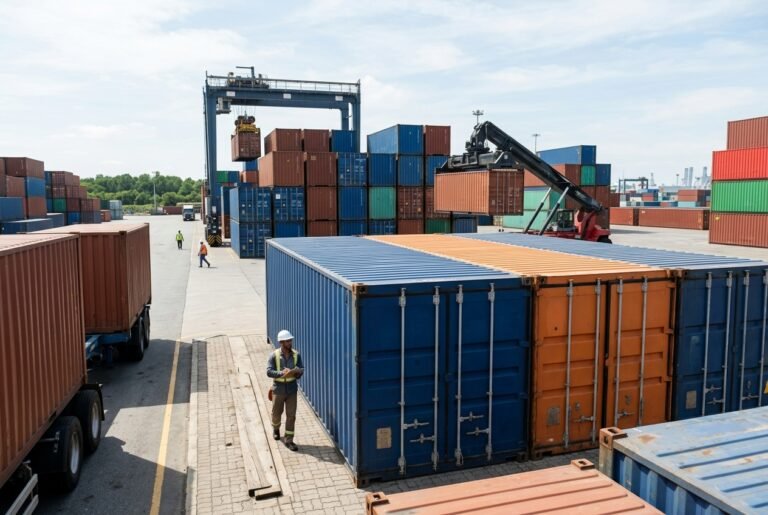
A Conex box, also called a shipping container, is built as an intermodal cargo unit. That means its frame, corner castings, and dimensions are designed around ISO standards so containers can be stacked, lifted, transported by truck, rail, and vessel, and used across different logistics networks.
For most buyers, quality comes down to five things:
- The container grade is clearly stated and matches the intended use.
- The frame, corner posts, and bottom rails are structurally sound.
- The roof, walls, and doors keep out wind and water.
- The floor is solid enough for your tools, inventory, equipment, or cargo.
- The seller provides clear photos, pricing, and delivery expectations before you pay.
A container can have dents, faded paint, and surface rust while still being a strong storage unit. The key is knowing which imperfections are normal and which ones signal leaks, unsafe flooring, structural weakness, or a grade that has been oversold.
Start with the grade: One-Trip, Cargo Worthy, or WWT
Before you inspect doors or rust, ask one question: what grade is the container?
Container grades are not just marketing labels. They tell you what level of condition and performance you should expect. At Lease Lane Containers LLC, buyers often compare One-Trip, Cargo Worthy, and Wind & Watertight options depending on budget, appearance, and use case.
| Grade | Fast meaning | Best for | What to verify |
|---|---|---|---|
| One-Trip | New or near-new container that has typically made one cargo trip into the United States | Clean storage, retail pop-ups, mobile office builds, long-term property use | Minimal dents, clean doors, strong seals, newer flooring, clear container ID |
| Cargo Worthy (CW) | Used container inspected as suitable to carry cargo | Export, regional transport, logistics, storage that needs higher structural confidence | Valid condition for cargo use, readable CSC plate when required, solid frame and floor |
| Wind & Watertight (WWT) | Used container that should keep out normal wind and rain | Jobsite storage, farm storage, equipment protection, inventory overflow | No daylight, functional doors, intact gaskets, no active roof or wall leaks |
A WWT container can be a smart buy for general contractors storing tools near Raleigh or homeowners needing long-term storage on rural property. It should not be presented as ocean-ready unless it also meets Cargo Worthy requirements with the right inspection and documentation.
For international shipping, documentation matters. The International Maritime Organization explains container safety requirements under the International Convention for Safe Containers, commonly tied to the CSC plate found on shipping containers.
The 10-minute quality scan
If you need to evaluate a Conex box quickly, move from the outside in. You are not trying to make the container look perfect. You are trying to confirm that the structure, shell, doors, and floor match the seller’s grade.
Check the frame first
Stand back 20 to 30 feet and sight down the sidewalls and roofline. Minor dents and waves in the corrugated Corten steel panels are common, especially on used containers. What you do not want to see is a twisted frame, bowed bottom rails, crushed corner posts, or corner castings that appear damaged.
Corner castings are critical because they are the standardized lift and stack points. If a container has been mishandled, overloaded, or dropped hard, the corners and bottom rails often show the evidence.
Read rust the right way
Corten steel is designed to resist weather better than ordinary mild steel, but it is not magic. Surface rust is normal on used containers, particularly around scratches, welds, and high-contact areas. Quality problems appear when rust becomes flaky, layered, swollen, or perforated.
Pay close attention to the lower side rails, door bottoms, threshold area, underside crossmembers, and any roof dents that may hold standing water. Rust near the floor line can eventually affect security, weather resistance, and long-term durability.
Test the doors before anything else
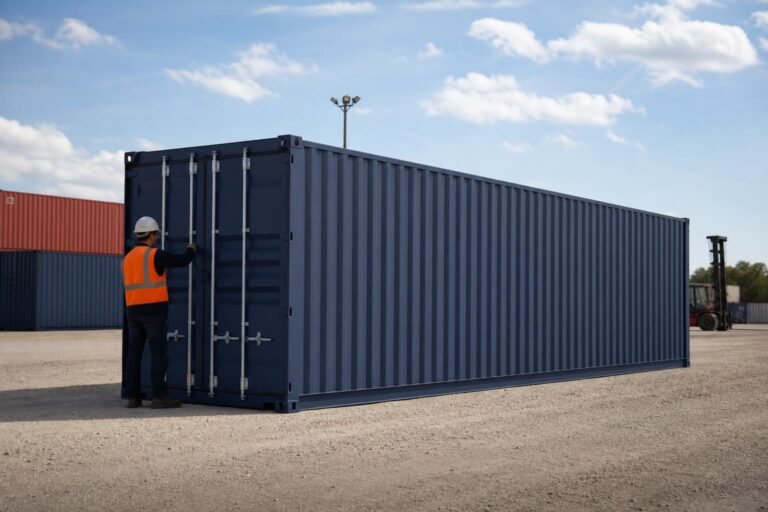
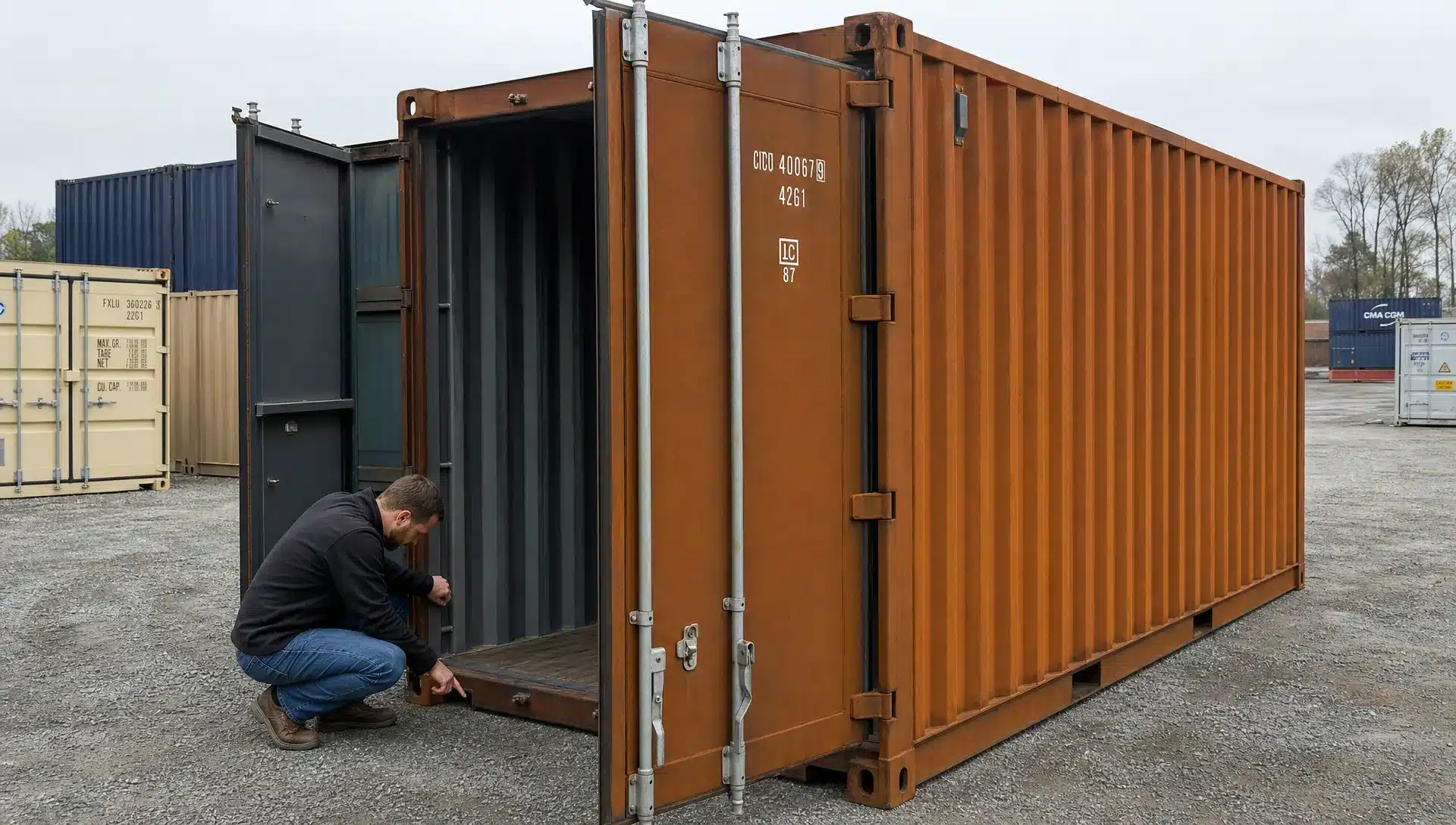
Doors tell you a lot about the container. If they are hard to operate, the issue may be simple hinge stiffness, but it can also mean the container is out of square. Both doors should open and close without excessive force. Locking rods should rotate, cams should engage, and the rubber gaskets should sit tight against the frame.
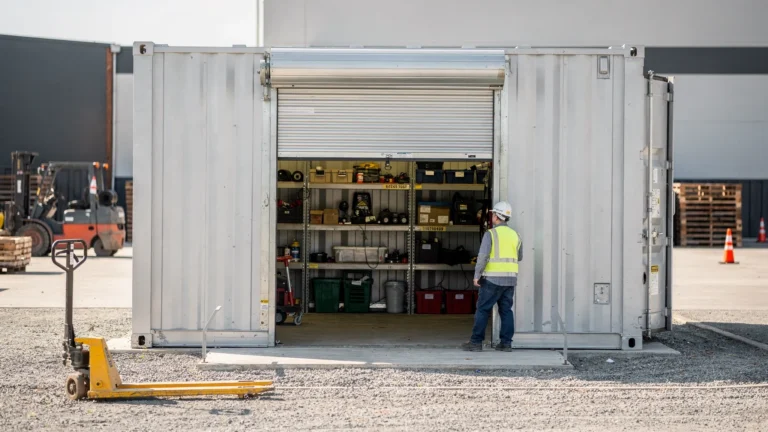
For a storage container, door function is not a small detail. Contractors in the Southeast often access tools and materials several times a day. A door that fights you on day one will not improve after months of humidity, dust, and jobsite use.
Look for daylight and water signs
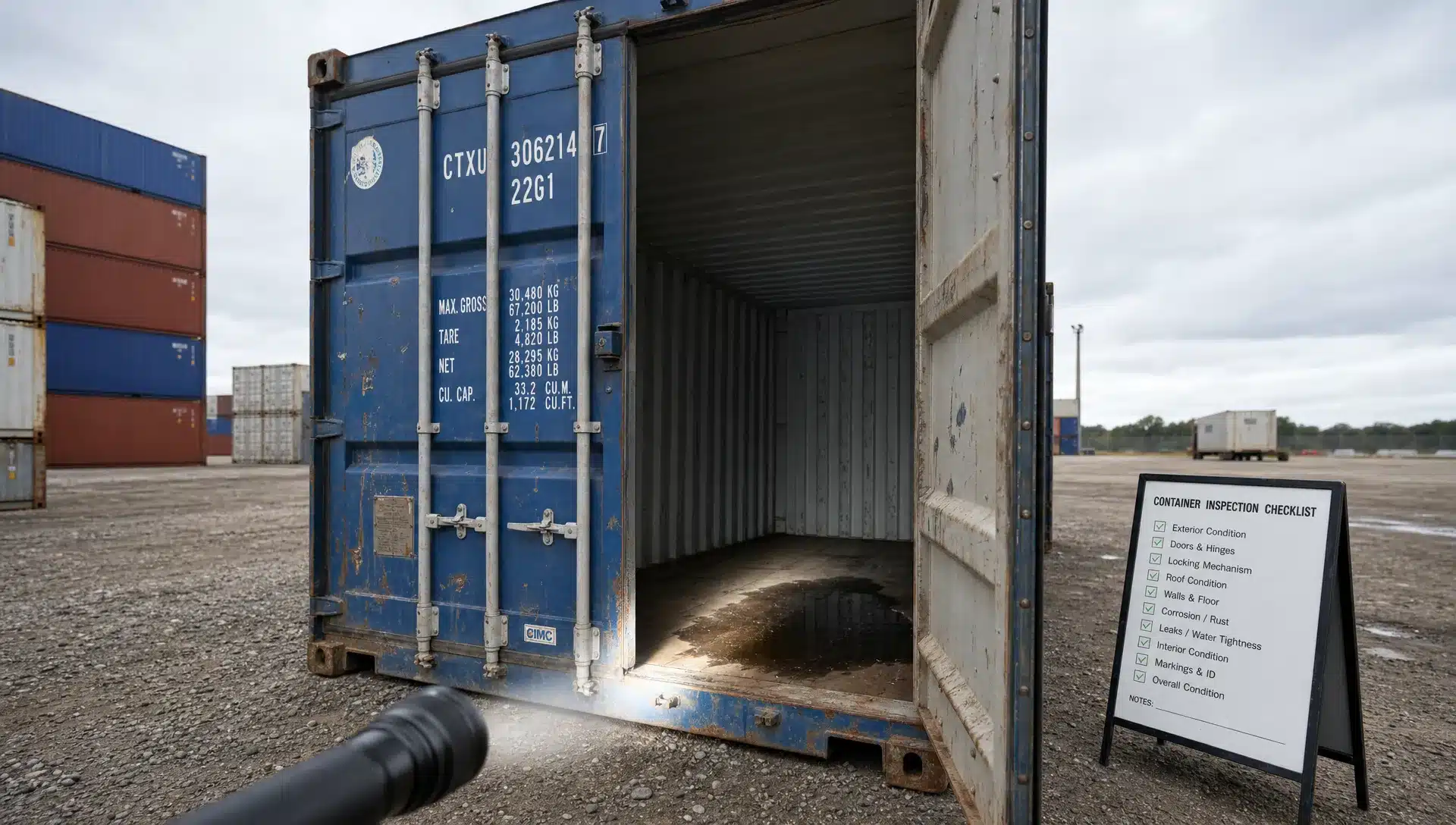
Step inside, close the doors, and let your eyes adjust. Any visible pinhole of daylight through the roof, wall seams, or corners is a leak risk. A WWT unit should not show daylight through the shell.
Also look for water stains, rust streaks, wet flooring, mildew odor, or discoloration along wall seams. These clues can be more useful than exterior paint because a fresh coat can hide old scars, while the inside often reveals the container’s actual history.
Walk the floor slowly
Most standard dry containers have heavy plywood floors supported by steel crossmembers. The floor should feel solid underfoot. Watch for soft spots, spongy sections, delamination, large patches, chemical odors, oil staining, or areas that flex more than the rest.
For tool storage or household goods, a few cosmetic scuffs may be fine. For forklifts, palletized inventory, machinery, or cargo transport, floor condition becomes much more important.
| Inspection area | Good quality signal | Warning sign |
|---|---|---|
| Frame and corners | Straight rails, solid corner posts, intact castings | Twisted frame, crushed corners, bowed bottom rails |
| Roof | No active leaks, no major pooling areas | Deep dents, pinholes, rust holes, water stains inside |
| Doors | Smooth operation, tight gaskets, working lock rods | Doors will not close, torn seals, bent locking hardware |
| Floor | Firm surface, normal wear, secure threshold | Soft spots, chemical odor, delamination, major patches |
| Seller details | Grade, photos, delivery terms, clear quote | Vague condition claims, one photo, no delivery specifics |
Match quality to the job, not just the price
The fastest way to make a poor buying decision is to ask only for the cheapest unit. The better question is: which size, height, and grade fit the job?
A 20ft container is often easier to place on residential properties, smaller construction sites, farms, and tight commercial lots. It provides secure ground-level storage without requiring as much delivery clearance as a longer box. If you are focused on a compact footprint, these 20ft container buying tips can help you compare size, grade, and delivery requirements.
A 40ft container usually offers more storage capacity for the money, but it needs more room for delivery, placement, and door swing. For builders, landscapers, and small businesses with larger lots, that extra length can be worth it.
High Cube containers add an extra foot of height compared with standard containers, typically giving you 9 ft 6 in exterior height instead of 8 ft 6 in. That extra clearance is valuable for palletized goods, taller equipment, shelving, insulation, and some modular office or workshop conversions.
Refrigerated containers, also called reefers, are a separate category. Quality checks should include the insulated box condition, door seals, refrigeration machinery, electrical requirements, and temperature performance needs. A reefer can be the right answer for cold chain storage, food distribution, agriculture, or specialty inventory, but it should be evaluated differently than a dry storage container.
Quality also shows up in the paperwork
A good seller should make the buying process easier, not more confusing. If you are comparing a Conex box for sale from multiple sources, look beyond the unit price and ask for the full delivered picture.
Ask for the exact size, grade, height, photos of all sides, interior photos, door photos, and the delivered price to your location. If the unit is being sold as Cargo Worthy, ask what documentation supports that claim. If it is WWT, ask whether the seller has verified that there are no visible leaks or daylight holes.
Delivery pricing can change the real value of a container quickly, especially if you are outside a major metro area or need a more difficult placement. To understand what affects the final number, review these Conex container pricing factors before comparing quotes.
If you are focused specifically on pre-owned inventory, a deeper used-container inspection checklist can help you slow down and verify the areas that matter most before purchase.
Raleigh and Southeast delivery realities
In Raleigh, the Triangle, and much of the Southeast, delivery planning is part of quality control. A strong container is not useful if the truck cannot safely place it where you need it.
Most ground-level container deliveries use a tilt-bed truck or trailer. The truck backs into position, tilts the bed, and slides the container into place. That process requires straight access, overhead clearance, and enough room beyond the final drop spot for the truck and trailer to pull forward.
Soft ground is another major factor. North Carolina clay, heavy rain, and unprepared driveways can create ruts or leave a container sitting unevenly. Uneven placement can twist the frame slightly, which may make doors harder to operate.
Local rules also matter. A rural agricultural property may have different expectations than a residential lot inside city limits or an HOA-controlled neighborhood. Before delivery, check with your municipality, county, or property manager about permit requirements, placement rules, screening, setbacks, and duration limits.
Lease Lane Containers LLC is headquartered in Raleigh and supports buyers across North Carolina, the Southeast, and nationwide delivery needs. The earlier you discuss access, surface conditions, and placement goals, the easier it is to choose the right truck, container, and drop location.
Pro-Tip: prepare the drop spot before delivery day
A quality container deserves a quality foundation. Even Corten steel and ISO-style construction perform better when the unit sits level, drains well, and stays off wet soil.
For long-term storage, prepare a level gravel pad, concrete strip footings, railroad ties, or concrete blocks under the main support points. Crushed stone is popular because it improves drainage and reduces direct ground contact. The pad should be close to level, slightly larger than the container footprint, and positioned so the doors can open freely.
| Site prep item | Why it matters |
|---|---|
| Level surface | Helps doors open and close correctly and reduces frame stress |
| Gravel or concrete support | Improves drainage and limits underside corrosion |
| Clear delivery path | Reduces the risk of failed delivery, property damage, or rescheduling |
| Overhead clearance | Protects trees, wires, building overhangs, and the delivery equipment |
| Permit check | Helps avoid fines, removal orders, or HOA conflicts |
If you are placing a container near Raleigh, check City of Raleigh, Wake County, or local jurisdiction requirements before the truck arrives. In other parts of North Carolina and the Southeast, rules vary widely, so confirm before you schedule delivery.
Fast red flags when shopping online
Not every listing deserves your time. Be cautious if a seller uses only one photo, avoids naming the grade, advertises a WWT unit as export-ready, refuses to provide delivery terms, or pressures you to pay before confirming inventory and placement details.
Also be careful with prices that look far below market. Sometimes a low price excludes delivery, reflects a lower grade, or uses photos that do not show the actual unit. A transparent seller should be able to explain what you are buying, where it is coming from, and how it will reach your site.
Frequently Asked Questions
What is the best grade if I only need storage? For most storage needs, a Wind & Watertight container is a practical choice if the doors work, the floor is solid, and there are no active leaks. If appearance and long-term condition matter more, consider a One-Trip unit.
Can a WWT container be used for international shipping? Not automatically. WWT means the unit should keep out wind and water, but it does not necessarily mean it is Cargo Worthy or approved for loaded ocean transport. Ask for Cargo Worthy status and supporting documentation if shipping is your goal.
Is a High Cube container worth it? A High Cube is worth considering if you need extra vertical clearance for shelving, pallets, equipment, insulation, or modular build-outs. The added height can make the interior feel more usable, especially for business storage or conversion projects.
How do I know if my site is ready for delivery? Your site should have truck access, firm ground, overhead clearance, and a level prepared pad. Gravel pads are often a strong option because they improve drainage and help keep the container stable over time.
Ready to compare quality with a local container team?
If you are looking for a Conex box for sale in Raleigh, across North Carolina, or anywhere in the USA, Lease Lane Containers LLC can help you compare One-Trip, Cargo Worthy, WWT, Standard, High Cube, and refrigerated options with clear delivery guidance.
For current availability, site preparation advice, and delivered pricing, contact the sales team at sales@leaselanecontainers.com or arrange a visit to the Raleigh office.