Hi Cube Containers vs Standard: Which Should You Buy
Most buyers start the standard versus High Cube question with a simple thought: “Do I really need the extra height?” That is the right place to start, but it is not the only factor. The better question is whether that extra foot of vertical clearance will reduce handling, protect your equipment, improve a future conversion, or make delivery and permitting more complicated than it needs to be.
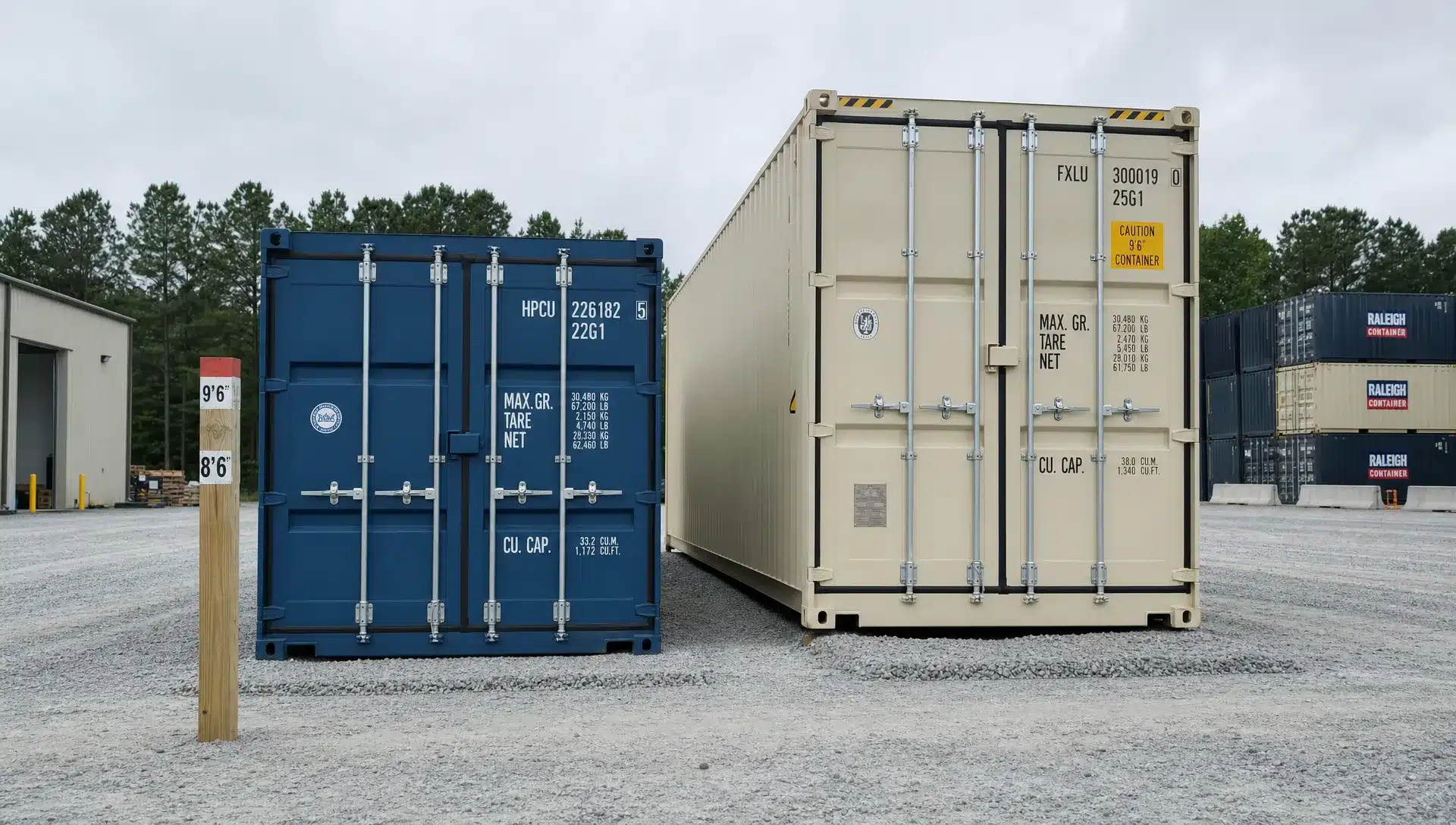
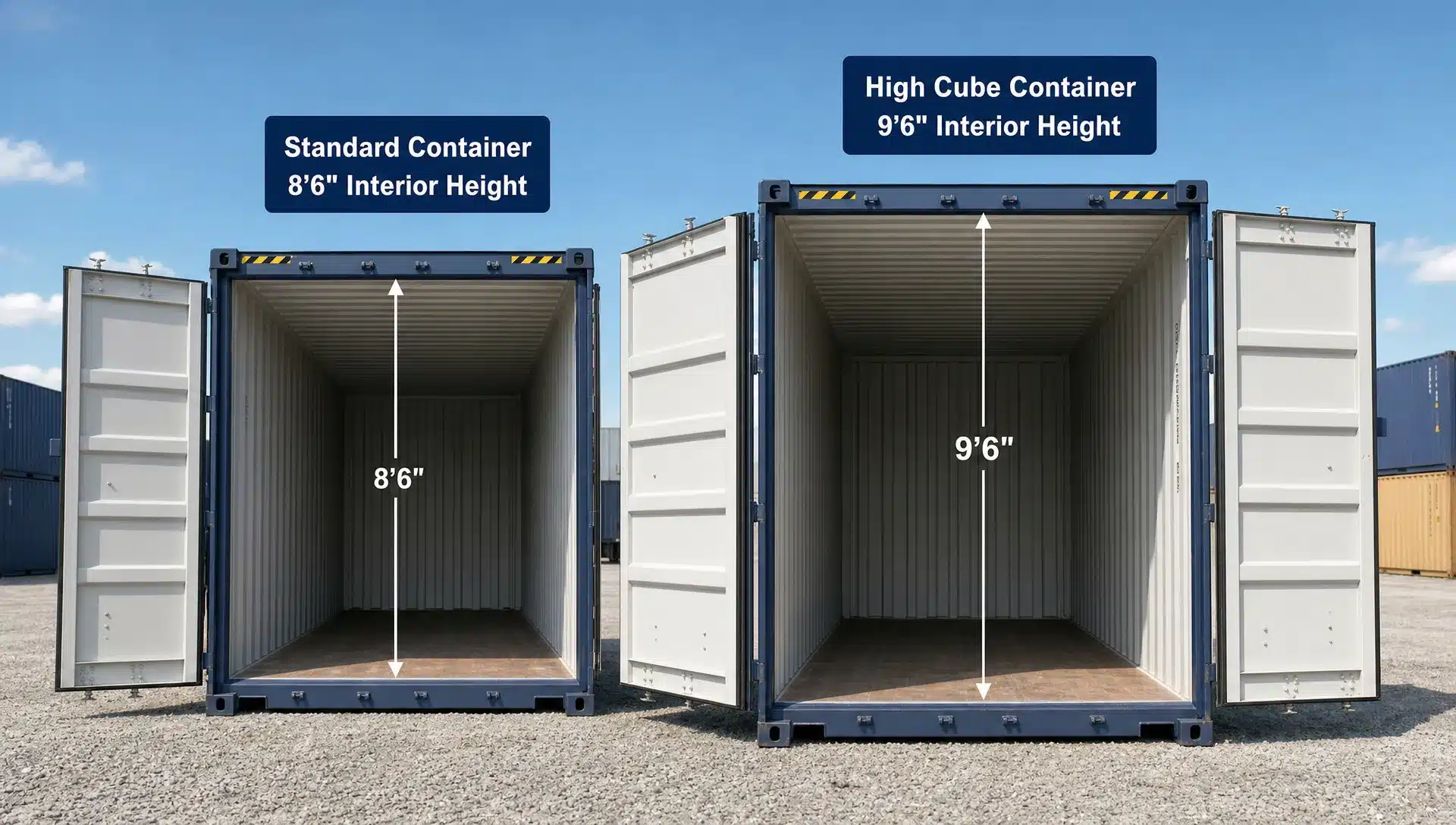
In the container industry, “Hi Cube containers” and “High Cube containers” usually mean the same thing. They are ISO-style steel containers with the same 8-foot exterior width as standard dry containers, but they are typically 9 feet 6 inches tall instead of 8 feet 6 inches. That extra foot can be a major advantage for contractors, farms, small businesses, modular builders, and logistics teams in Raleigh, across North Carolina, and throughout the Southeast.
The right choice depends on dimensions, grade, delivery access, intended use, and budget. Here is how to compare them before you buy.
The core difference: one extra foot of height
A standard shipping container is built for efficient cargo movement and ground-level storage. A High Cube container keeps the same general footprint, corner casting layout, Corten steel construction, and ISO handling concept, but adds height. That extra height changes how you store, load, rack, insulate, and convert the unit.
If you are still comparing exterior, interior, and door measurements across sizes, Lease Lane Containers has a detailed guide to shipping container dimensions for 20ft, 40ft, and High Cube units. For a quick overview, the table below shows the practical difference buyers usually care about.
| Container type | Typical exterior height | Typical interior height | Best for |
|---|---|---|---|
| Standard dry container | 8 ft 6 in | About 7 ft 10 in | Basic storage, tools, boxed inventory, lower-profile sites |
| High Cube container | 9 ft 6 in | About 8 ft 10 in | Tall equipment, racking, conversions, insulation, higher-volume storage |
Exact interior dimensions vary by manufacturer, floor condition, door design, and container age, so confirm measurements before purchasing. Still, the rule is simple: High Cube gives you roughly one more foot of usable height without increasing the container’s width.
That matters because storage capacity is not just about floor space. If you can add taller shelving, stack materials more safely, or fit a skid steer attachment without forcing the door, the added vertical space may pay for itself quickly.
When a standard container is the smarter buy
A standard container is often the best value when your storage needs are straightforward. General contractors storing hand tools, bagged materials, boxed fixtures, conduit, trim, or jobsite supplies may not need the extra height. Homeowners storing seasonal items, furniture, or garage overflow may also find that a standard unit does the job without paying for unused vertical clearance.
Standard units can also be easier to place in locations with overhead limits. Low tree branches, utility lines, covered loading areas, and tight urban delivery zones around Raleigh can make height an issue. A standard container keeps the profile lower, which may simplify placement and visual screening.
Budget is another reason to consider standard height. High Cube containers are often priced higher because they offer more usable volume and are in strong demand for conversions, agriculture, equipment storage, and modular projects. If your inventory is not tall and you do not plan to insulate or finish the interior, standard height may be more cost effective.
When Hi Cube containers are worth the upgrade
Hi Cube containers make sense when the extra height solves a real operational problem. For contractors, the added clearance can make it easier to store ladders, palletized materials, compressors, generators, compact equipment, and jobsite racking. For agriculture, it helps with feed storage, implements, pumps, irrigation equipment, and small machinery. For small businesses, it creates more usable vertical space for inventory overflow, mobile retail builds, and workshop layouts.
High Cube is also the preferred starting point for many modified containers. Once you add insulation, interior framing, electrical conduit, HVAC components, lighting, ceiling panels, or a finished floor, a standard container can start to feel low. A High Cube gives you more room to build upward while keeping the interior comfortable.
For developers and modular builders, that extra foot can be the difference between a cramped shell and a more flexible structure. It does not automatically make every conversion easy, but it gives designers more room for mechanical systems and interior finishes.
If your project involves standing-height comfort, overhead storage, or future modifications, the upgrade is often easier to justify. For a deeper use-case discussion, review Lease Lane’s guide on when a High Cube shipping container is worth it.
Container grades matter as much as height
Height is only one part of the buying decision. You also need to understand grade. A High Cube container in poor condition may be a worse buy than a clean standard container, depending on your project.
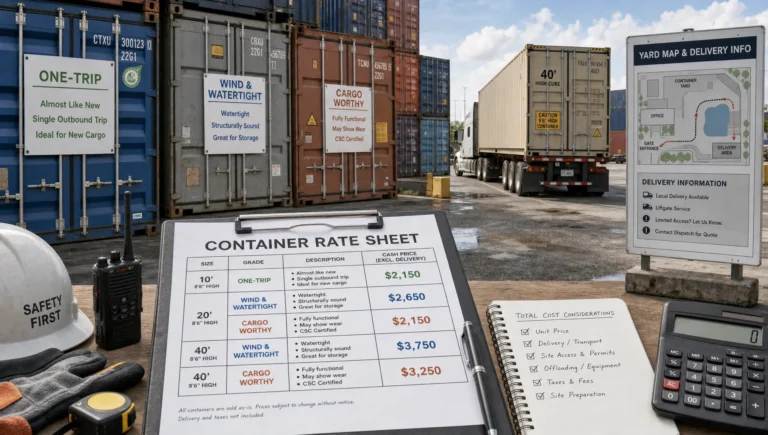
Lease Lane Containers works with common industry grades, including One-Trip, Cargo Worthy, and Wind and Watertight. These terms are important because they describe condition, structural suitability, and expected use.
| Grade | What it means | Best for |
|---|---|---|
| One-Trip | A newer container that has usually made one cargo trip before resale. It typically has cleaner paint, fewer dents, and less wear than used units. | Long-term storage, customer-facing sites, modifications, retail, offices, premium property use |
| Cargo Worthy | A used container considered structurally suitable for cargo transport, often with inspection requirements tied to shipping use. | Export, regional transport, logistics, freight, buyers needing stronger documentation |
| Wind and Watertight, or WWT | A used container that should keep out wind and water but may have dents, patches, surface rust, or cosmetic wear. It is not automatically certified for ocean freight. | Ground storage, construction sites, farms, low-cost inventory storage |
One-Trip is generally the best choice when appearance, longevity, and modification potential matter. Cargo Worthy is the right conversation if the container may move freight or need transport-related documentation. WWT is often practical for stationary storage when the main requirement is keeping contents dry and secure.
A buyer in Raleigh storing power tools on a construction site may be satisfied with a WWT used unit if budget is the top priority. A boutique owner building a container pop-up in the Southeast may prefer a One-Trip High Cube because the cleaner shell saves time and improves the finished result. A logistics manager shipping goods internationally should ask specifically about Cargo Worthy condition, CSC plate status, and required inspection documentation.
For more technical buying details, including floors, doors, weights, and ratings, Lease Lane’s overview of shipping container specifications every buyer should know is a useful companion to this comparison.
20ft High Cube vs 40ft High Cube: which size fits?
Once you decide that High Cube height is useful, the next question is size. A 20ft unit is easier to fit on tighter properties, residential lots, farms, and smaller construction sites. A 40ft unit delivers more storage volume per placement and is often preferred for larger jobsites, warehouses, modular builds, and long-term inventory overflow.
For buyers who want maximum enclosed volume and a cleaner starting point for long-term use, a 40ft High Cube Shipping Container – One Trip is a strong option to evaluate. It is especially relevant when you need extra height, strong steel construction, and dependable storage capacity in one unit.
If your site has a smaller footprint but you still need the 9-foot-6-inch High Cube height, the 20Ft High Cube Container – One Trip (9FT 6′ High) can be the better fit. It is particularly useful for equipment or plant storage where the added height matters but a full 40ft container would be too long for the available drop spot.
Pro-Tip: prepare the site before you choose the height
Before buying a standard or High Cube container, confirm that your site can accept the delivery. This is especially important in Raleigh neighborhoods, rural North Carolina properties, and active construction sites where access conditions can change quickly.
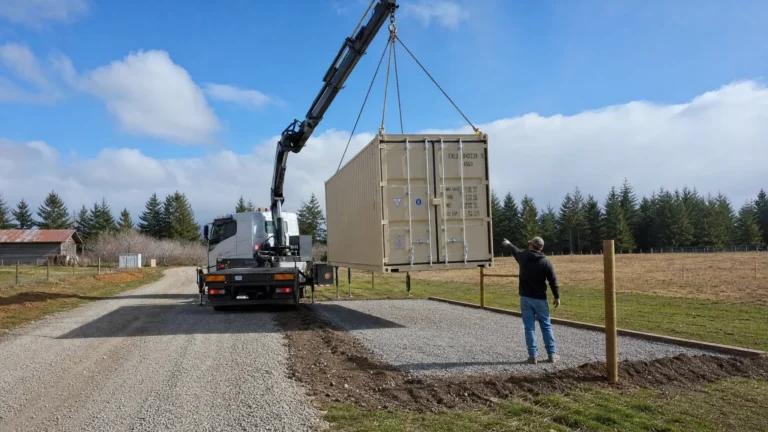
A container should sit on a firm, level surface. Gravel pads, concrete strips, asphalt, compacted stone, or properly placed railroad ties can help keep the unit off wet soil and improve door operation. If one corner settles, doors may become difficult to open and close, even when the container itself is structurally sound.
High Cube containers also require more overhead awareness. The container is taller, and delivery equipment may need additional clearance while tilting or setting the unit. Before the truck arrives, look for branches, wires, roof overhangs, fences, slopes, soft ground, tight turns, and parked vehicles. A clear approach is just as important as the final resting spot.
Permits and rules vary by municipality, county, zoning district, HOA, and jobsite. In Raleigh and nearby communities, do not assume that a container can remain indefinitely without checking local requirements. If the container will be used for a business, construction project, residential storage, or modified structure, confirm whether placement limits, screening rules, setbacks, or temporary-use permits apply.
Cost and value: do not compare price alone
A standard container may have the lower upfront cost, but the best value depends on how you will use the space. If a standard unit forces you to rent a second container, leave equipment outside, or limit future modifications, the cheaper option may not stay cheaper.
High Cube containers often deliver value in three ways. They increase cubic storage capacity, improve layout flexibility, and preserve more interior height after modifications. For a mobile office, workshop, storage barn, or retail conversion, that flexibility can reduce compromises later.
On the other hand, if your contents are low, your site has overhead restrictions, and appearance is not a major factor, a used standard WWT container may be the practical choice. The key is to match height, grade, and condition to the job, not to buy the biggest container by default.
Quick decision table
Use this table as a practical starting point before talking with a container specialist.
| Buyer situation | Better choice | Why |
|---|---|---|
| Basic household storage or boxed inventory | Standard container | Lower profile and often more cost effective |
| Jobsite tools plus tall ladders, racks, or equipment | High Cube container | Extra height improves access and organization |
| Mobile office, workshop, or retail conversion | High Cube One-Trip | More interior clearance after insulation and finish work |
| International shipping or freight movement | Cargo Worthy unit | Condition and documentation matter more than height alone |
| Farm, land, or rural equipment storage | High Cube or standard, depending on equipment height | Measure machinery and door clearance before buying |
| Tight urban or residential placement | 20ft standard or 20ft High Cube | Shorter length can simplify delivery and placement |
The most common mistake is choosing only by exterior length. Measure the tallest item you plan to store, the width of equipment that must pass through the doors, and the clearance needed for shelving or ventilation. Then compare that against the container’s actual interior height and door opening.
Frequently Asked Questions
Are Hi Cube containers and High Cube containers the same thing? Yes. “Hi Cube” is a common shorthand for “High Cube.” Both typically refer to containers that are 9 feet 6 inches tall instead of the standard 8 feet 6 inches.
Is a High Cube container always better than a standard container? No. A High Cube is better when you need extra vertical clearance, racking, equipment storage, or modification space. A standard container may be better for basic storage, lower budgets, or sites with overhead restrictions.
What grade should I buy for jobsite storage? Many jobsite storage buyers choose Wind and Watertight used containers because they are practical for stationary storage. If appearance, cleaner condition, or modification potential matters, consider One-Trip. If the unit will be used for cargo transport, ask about Cargo Worthy condition.
Can I convert a standard container into an office? Yes, but a High Cube is often more comfortable because insulation, framing, flooring, lighting, and HVAC can reduce usable interior height. The extra foot helps preserve headroom.
Do High Cube containers require special delivery planning? They can. The added height may affect clearance under trees, wires, rooflines, and gates, especially during tilt-bed delivery. Always plan the drop spot and access route before purchase.
Should I buy a 20ft or 40ft High Cube container? Choose 20ft when space is tight or the site is residential, agricultural, or compact. Choose 40ft when you need maximum storage volume, long-term inventory capacity, or more room for a conversion.
Ready to choose the right container?
If you are comparing Hi Cube containers and standard containers in Raleigh, North Carolina, the Southeast, or anywhere in the USA, Lease Lane Containers can help you match the right size, grade, and delivery plan to your project. Email sales@leaselanecontainers.com or visit the Lease Lane Containers team at the Raleigh office to review current options, site access, and clear pricing.