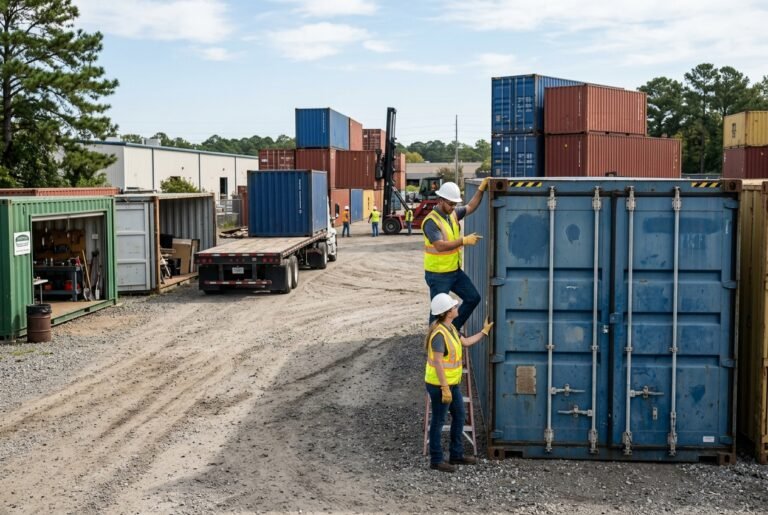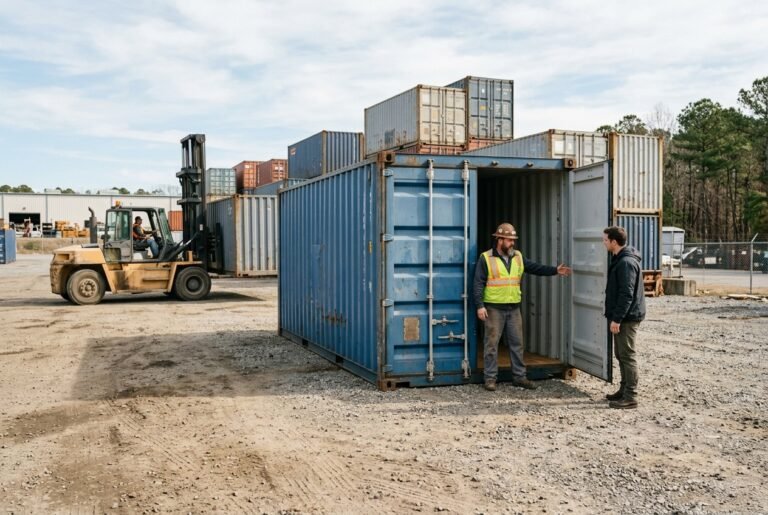
Buy Cargo Container Units With Confidence
Buying a cargo container should feel practical, not risky. Whether you are a general contractor storing tools on a jobsite in Raleigh, a small business adding inventory space, a homeowner building long-term property storage, or a logistics manager sourcing units for transport, the right decision comes down to four things: size, grade, condition, and delivery plan.
The challenge is that many listings look similar at first glance. A 20ft container and a 40ft container may both be made from Corten Steel and built to ISO standards, but their condition, certification status, door function, flooring, roof integrity, and delivered cost can vary widely. That is why a confident purchase starts before the quote. You need to know what you are buying, what it is suitable for, and what will happen when the truck arrives.
This guide explains how to buy cargo container units with fewer surprises, with a focus on the Raleigh, North Carolina market and the wider Southeast, while still applying to buyers across the USA.
Start with the job the container needs to do
A cargo container is a steel asset, not just a box. The best option for you depends on how the unit will be used over the next several years.
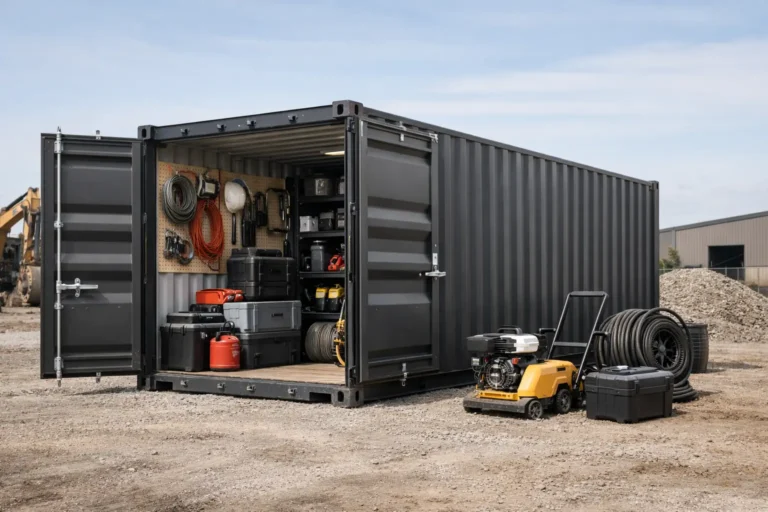
A contractor may need secure ground-level storage for tools, lumber, fasteners, and equipment. A homeowner may want a Wind and Watertight container for seasonal storage, farm supplies, or workshop overflow. A retailer may prefer a cleaner one-trip container for a pop-up shop or modification project. A freight buyer may need a Cargo Worthy unit that can be inspected and approved for transport.
Before comparing prices, define your use case clearly:
- Stationary storage: Focus on water tightness, door operation, floor condition, and site drainage.
- International or regional shipping: Focus on Cargo Worthy condition, ISO integrity, markings, and inspection requirements.
- Retail, office, or modular conversion: Focus on appearance, structural condition, clean interiors, and modification potential.
- Cold storage: Consider a refrigerated reefer container, plus power requirements and maintenance needs.
If you are still comparing container types, Lease Lane Containers has a helpful overview of standard, High Cube, reefer, and specialty cargo containers that can help narrow the field before you request a quote.
Choose the right size and configuration
Most buyers start with either a 20ft or 40ft unit. Both are common across Raleigh, the Southeast, and national shipping lanes, but they solve different problems.
A 20ft container is easier to place on tight residential lots, urban jobsites, and smaller commercial properties. It is often a strong fit for general contractors, home builders, homeowners, and agricultural users who need secure storage without taking up too much ground space.
A 40ft container provides significantly more floor space and is common for larger construction projects, inventory overflow, and long-term business storage. If you need extra vertical clearance, a 40ft High Cube container adds approximately one additional foot of exterior height compared with a standard-height unit.
| Container type | Common exterior size | Best fit | Key consideration |
|---|---|---|---|
| 20ft standard dry container | 20ft L x 8ft W x 8ft 6in H | Jobsite storage, residential storage, farm use | Easier placement and smaller footprint |
| 40ft standard dry container | 40ft L x 8ft W x 8ft 6in H | Bulk storage, construction materials, inventory | Requires more delivery clearance |
| 40ft High Cube container | 40ft L x 8ft W x 9ft 6in H | Equipment, racking, modifications, mobile offices | Extra height may affect permits or placement |
| Refrigerated reefer container | Usually 20ft or 40ft | Cold chain, food, pharma, events | Requires compatible power and maintenance planning |
For many buyers, the choice is not only about cubic capacity. It is about access. A 40ft container may be more efficient per square foot, but if a tilt-bed truck cannot safely enter, turn, and unload, a smaller unit may be the better decision.
Understand container grades before you compare prices
Container grade is one of the most important parts of the buying process. It tells you how the container is generally expected to perform, but it is not a substitute for photos, inspection notes, and a clear seller conversation.
One-trip containers
A one-trip container is typically manufactured overseas, loaded with cargo once, shipped to its destination, and then sold into the storage or modification market. These are often the cleanest and newest units available outside of brand-new factory-direct inventory.
One-trip containers are a strong choice when appearance matters, such as retail pop-ups, offices, modular builds, customer-facing storage, or long-term property storage where you want fewer cosmetic flaws. They are usually made from Corten Steel, include ISO corner castings, and have minimal wear compared with older used containers.
They cost more than used units, but for buyers planning modifications or long-term use, the cleaner shell can reduce headaches.
Cargo Worthy containers
A Cargo Worthy container is a used unit that is structurally suitable for cargo transport when it meets applicable inspection and documentation requirements. In practice, Cargo Worthy units are often selected by logistics managers, exporters, and buyers who need more than basic storage condition.
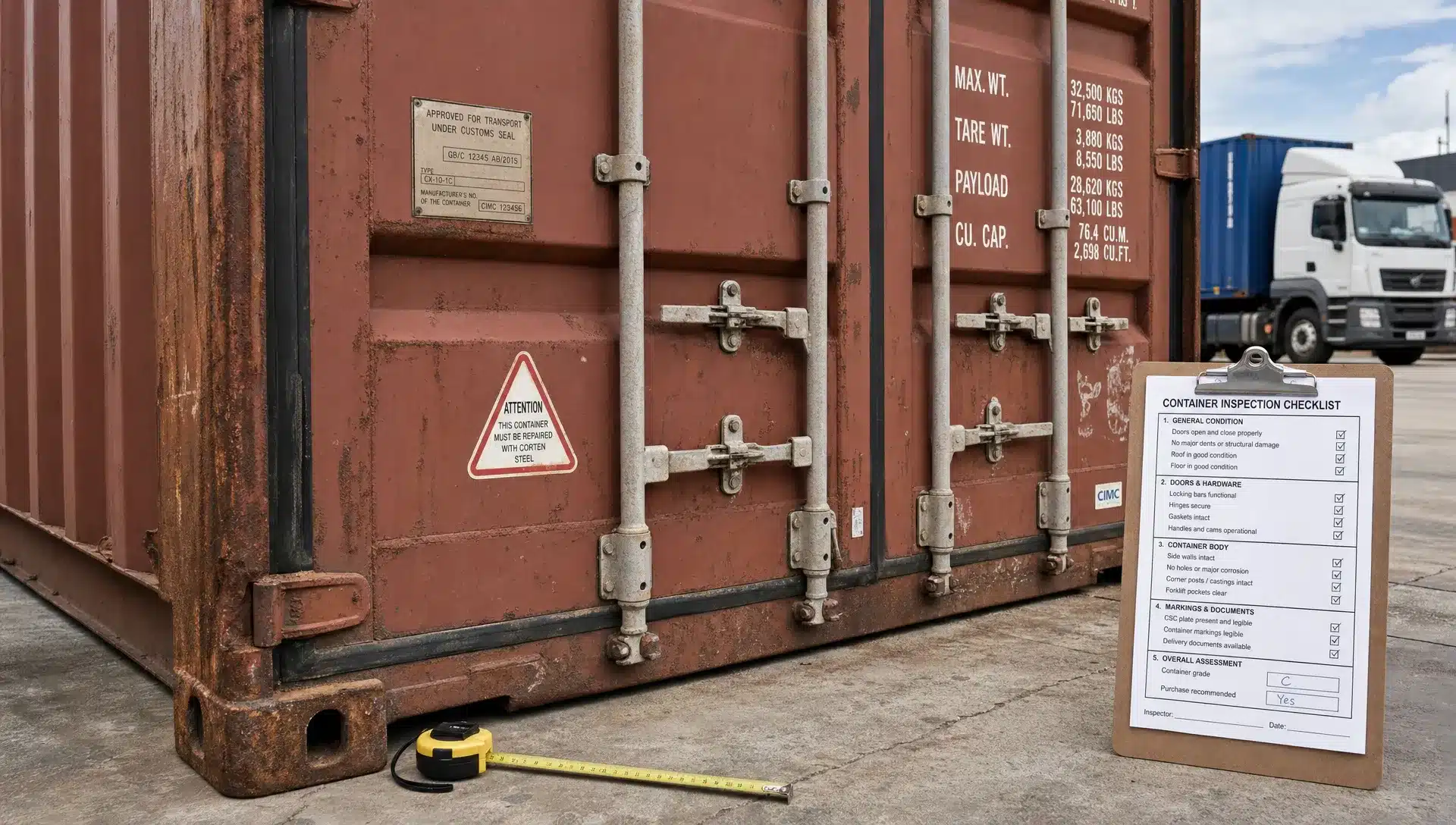
Cargo Worthy does not mean cosmetically perfect. The container may show dents, surface rust, patches, or previous repairs. The key is that the structure, doors, floors, corner posts, and roof are fit for shipping use when properly inspected. If you plan to ship goods internationally, ask about the CSC plate, inspection status, and any documentation needed by your carrier or freight forwarder.
For a deeper explanation of this grade, review Lease Lane Containers’ guide to buying a Cargo Worthy container with confidence.
Wind and Watertight containers
Wind and Watertight, often shortened to WWT, means the container should keep out wind and rain when used for stationary storage. This grade is common for contractors, homeowners, farms, and businesses that need secure storage but do not intend to move loaded cargo through intermodal shipping networks.
A WWT container may have dents, rust, older paint, floor wear, or repairs. That can be perfectly acceptable if the doors seal correctly, the roof does not leak, and the structure meets your storage needs. However, WWT should not be confused with Cargo Worthy. A WWT unit is usually not represented as ready for ocean shipping.
Used containers and “as-is” units
Used containers can be excellent values, but the grade must be clear. If a seller uses vague language like “good condition” without saying WWT, Cargo Worthy, or one-trip, ask more questions. If a container is sold “as-is,” assume you need to verify everything before purchase, especially roof condition, floor integrity, door function, and water tightness.
Lease Lane Containers also has a practical checklist for what smart buyers check when evaluating used containers, which is especially useful if you are comparing multiple used units.
Inspect the container like a professional
Even when you are buying through a reputable supplier, knowing what to inspect helps you ask better questions and understand the value of what you are purchasing.
Start with the roof. Water intrusion often begins at roof dents, punctures, failed patches, or areas where standing water collects. From inside the container, close the doors and look for daylight. A few tiny pinholes may be repairable, but visible gaps or active leaks should be discussed before purchase.
Next, check the doors. Container doors should open, close, latch, and seal without excessive force. Locking bars, cams, keepers, hinges, and gaskets all matter. A cheap unit with hard-to-operate doors can become frustrating on a jobsite where crews need daily access.
The floor is also critical. Most dry containers use heavy-duty marine-grade plywood flooring supported by steel crossmembers. Look for soft spots, holes, chemical odors, delamination, or major contamination. For homeowners, retail users, and agricultural buyers, interior cleanliness may matter just as much as structural function.
| Inspection area | What to check | Why it matters |
|---|---|---|
| Roof | Dents, holes, patches, daylight, signs of leaks | Protects stored goods from water damage |
| Doors | Gaskets, hinges, locking bars, smooth operation | Affects security and daily usability |
| Floor | Soft spots, holes, odors, stains, delamination | Supports stored goods and equipment |
| Corner posts and castings | Bends, cracks, major impact damage | Critical for ISO handling and structural integrity |
| Side walls | Dents, rust, repairs, punctures | Impacts weather resistance and appearance |
| Undercarriage | Crossmembers, corrosion, visible damage | Important for durability and transport suitability |
For Cargo Worthy buyers, pay extra attention to corner posts, corner castings, door alignment, and understructure. These are central to safe handling and intermodal movement.
Look at total delivered cost, not just the container price
A low advertised price can be misleading if it does not include delivery, site requirements, taxes, or any needed repairs. The real number is the total delivered cost for the exact grade, size, and location.
In Raleigh and throughout North Carolina, delivery conditions can vary significantly. A straightforward industrial lot with wide access is different from a wooded residential property, a farm road after heavy rain, or a downtown construction site with limited turning radius.
Ask whether your quote includes delivery, what equipment will be used, and what site conditions are required. Tilt-bed delivery is common for ground placement, but it needs room for the truck to approach, tilt, unload, and pull forward. Larger units generally require more straight-line clearance than smaller units.
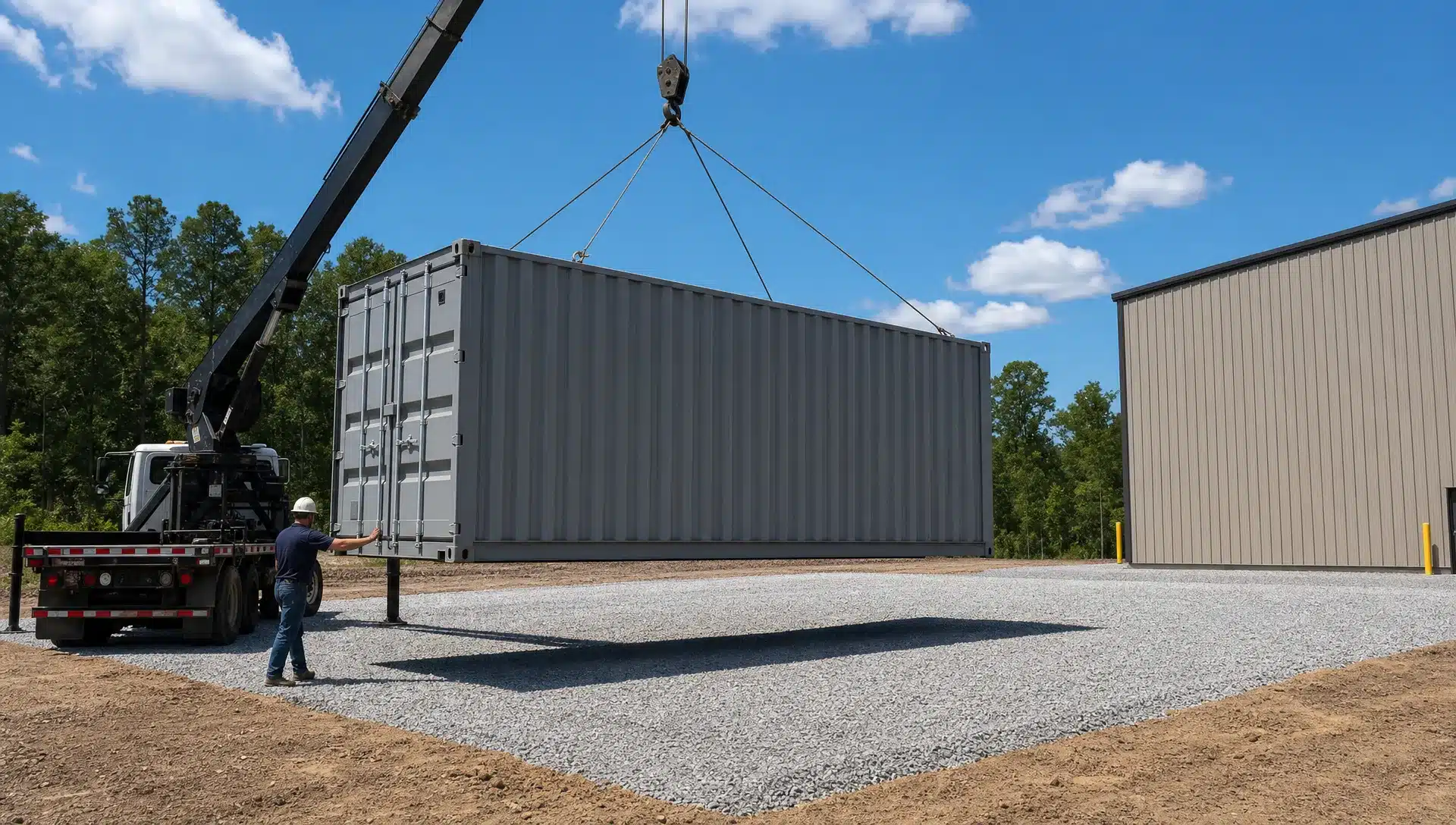
If you are comparing two sellers, make sure the quotes match. A one-trip 40ft High Cube container delivered to a rural property is not the same offer as a used WWT 40ft container priced before freight. Grade, size, origin, delivery distance, and placement complexity all affect the final value.
Pro-Tip: Prepare the site before delivery day
A container is only as stable as the surface beneath it. Good site preparation protects the container, makes the doors easier to use, and reduces the chance of drainage problems.
For most storage applications, choose a level location with firm ground and positive drainage away from the container. A compacted gravel pad is often preferred because it helps water drain and reduces ground contact with mud. Concrete pads can also work well, especially for permanent commercial or modular applications.
Avoid placing a container directly in a low area where water collects. Even Corten Steel, which is designed to resist atmospheric corrosion better than ordinary mild steel, performs best when moisture is managed properly. Continuous standing water around the base can accelerate corrosion and make access difficult.
Before delivery, confirm:
- The approach path is wide enough and free of low branches, wires, fences, vehicles, and soft ground.
- The drop area is level from side to side and from end to end.
- The doors will face the direction you actually want to use.
- There is room for the truck to unload and exit safely.
- Local zoning, HOA rules, or permit requirements have been checked.
In Raleigh, Wake County, and surrounding North Carolina communities, rules can differ by jurisdiction, property type, and intended use. A temporary construction storage container may be treated differently from a long-term residential storage unit or a modified office. Always confirm local requirements before scheduling delivery.
Match the container grade to your buyer profile
Different buyers need different levels of condition, appearance, and certification. Paying for more grade than you need can waste budget, but buying below your needs can create bigger costs later.
| Buyer type | Common use | Recommended starting point |
|---|---|---|
| General contractors and home builders | Tool, material, and equipment storage | WWT or Cargo Worthy, depending on security and condition needs |
| Homeowners and agriculture | Long-term property storage, feed, supplies, equipment | WWT for value, one-trip if appearance and cleanliness matter |
| Small business owners | Inventory overflow, retail pop-up, mobile workspace | One-trip or clean Cargo Worthy, often High Cube for modifications |
| Real estate developers | Modular concepts, site offices, container-based builds | One-trip or carefully selected Cargo Worthy units |
| Logistics managers | Export, regional transport, cargo movement | Cargo Worthy with appropriate inspection and documentation |
For stationary jobsite storage in the Southeast, many buyers find that a solid WWT container is the right balance of cost and performance. For shipping, Cargo Worthy is the safer starting point. For modification projects, one-trip units often provide the cleanest foundation.
Questions to ask before you commit
A trustworthy supplier should be comfortable answering detailed questions. Clear answers protect both sides and help ensure the container delivered is the container you expected.
Ask these questions before you buy:
- What is the exact grade: one-trip, Cargo Worthy, WWT, or another condition category?
- Is the container made to ISO standards with standard corner castings and container dimensions?
- Are current photos available for the actual unit or a representative unit from the same inventory pool?
- Does the price include delivery to my property, or is delivery quoted separately?
- What delivery equipment will be used, and how much clearance is required?
- Are there known issues with doors, roof, floor, odor, rust, or previous repairs?
- If I need shipping use, what documentation or inspection status is included?
- What should I prepare before the driver arrives?
This is also the right time to discuss modifications, if applicable. Windows, man doors, vents, insulation, electrical work, roll-up doors, and interior finishes can change how the container should be selected and placed. A modification project often benefits from a cleaner starting unit, especially a one-trip or carefully inspected Cargo Worthy container.
Why local guidance matters when buying in Raleigh
Cargo containers move through national supply chains, but delivery is local. That is why Raleigh-area buyers benefit from working with a team that understands North Carolina properties, regional access issues, and Southeast weather conditions.
Clay-heavy soils, summer storms, wooded lots, sloped driveways, rural access roads, and active construction sites can all affect placement. A seller that only focuses on the container price may miss the practical details that determine whether delivery goes smoothly.
Lease Lane Containers LLC is headquartered in Raleigh, NC, and supplies new one-trip and used shipping containers, including 20ft and 40ft units, Standard, High Cube, and refrigerated options. The company emphasizes transparent grading, including Wind and Watertight and Cargo Worthy units, along with delivery coordination and site preparation guidance for local and national buyers.
That combination matters. A good container purchase is not just a transaction. It is a sequence of decisions that should fit your property, your budget, and your long-term use.
Frequently Asked Questions
What is the best grade when I buy cargo container units for storage? For stationary storage, a Wind and Watertight container is often a practical choice because it is designed to keep out wind and rain while offering strong value. If you want a cleaner appearance or plan to modify the unit, consider a one-trip container.
Do I need a Cargo Worthy container for jobsite storage? Not always. Cargo Worthy is most important when the container may be used for shipping or transport. For construction storage in Raleigh or elsewhere in North Carolina, WWT may be sufficient if the roof, doors, floor, and seals are in good condition.
What is the difference between a standard container and a High Cube container? A standard container is typically 8ft 6in tall on the exterior, while a High Cube container is typically 9ft 6in tall. The extra height is useful for racking, equipment, mobile offices, and modification projects.
Can I place a shipping container directly on the ground? It is possible, but not always ideal. A level gravel pad, concrete pad, or properly supported base usually performs better because it improves drainage, reduces settling, and helps the doors operate correctly over time.
Do I need a permit for a container in Raleigh? Permit and zoning requirements vary by location, property type, duration, and use. Check with the City of Raleigh, Wake County, your municipality, or your HOA before delivery, especially for long-term placement or modified containers.
Buy with a clear plan and a local expert on your side
The safest way to buy a cargo container is to match the unit to the job, confirm the grade, inspect the right components, and prepare the delivery site before the truck arrives. When those pieces are handled correctly, a container can provide years of secure, flexible storage or become the foundation for a larger business, logistics, or modular project.
If you are ready to compare 20ft, 40ft, Standard, High Cube, refrigerated, one-trip, Cargo Worthy, or WWT options, contact the Lease Lane Containers sales team at sales@leaselanecontainers.com or visit the Raleigh office to discuss your site, delivery plan, and container needs with a local team that understands North Carolina and serves buyers nationwide.