Weight of a 20ft Shipping Container Explained
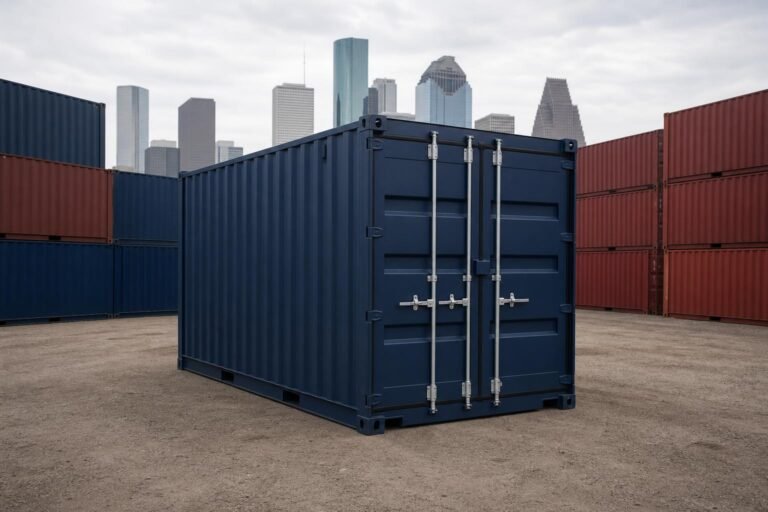
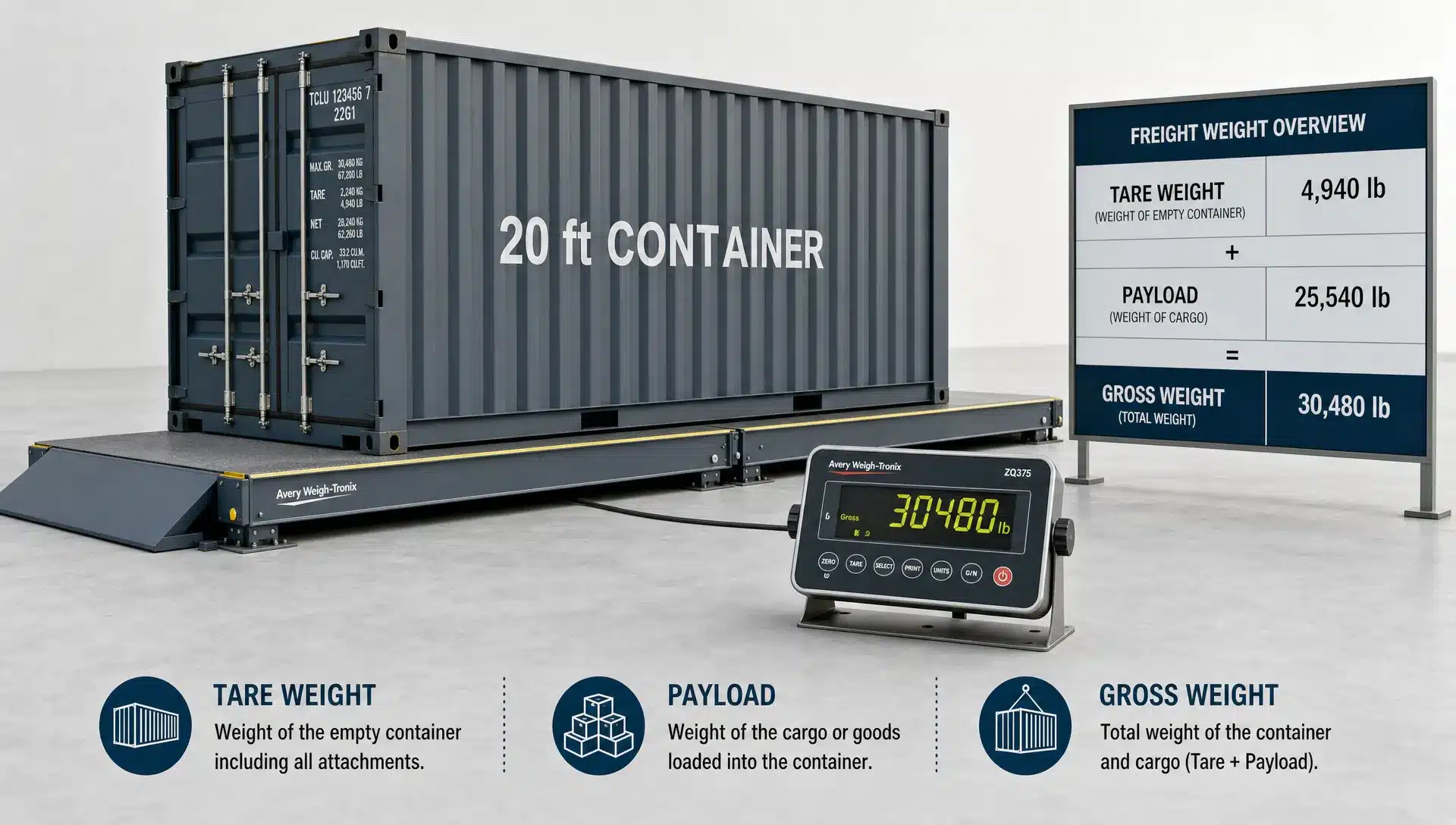
A typical empty 20ft shipping container weighs about 4,800 to 5,200 pounds, depending on the manufacturer, floor construction, repairs, and container type. That empty weight is called the tare weight, and it is the number most buyers care about when planning delivery, placement, and site preparation.
But tare weight is only one part of the story. If you are buying a 20ft container for a Raleigh jobsite, a farm in eastern North Carolina, a small business storage yard, or transport use anywhere in the U.S., you should also understand payload capacity and maximum gross weight. Those figures determine how much cargo the unit is rated to carry under ISO standards and how safely it can be handled.
Quick answer: the three weight numbers that matter
Every standard ISO shipping container has three key weight terms. You may see them on the container’s CSC plate, door markings, or manufacturer specification sheet.
| Weight term | What it means | Typical 20ft dry container figure |
|---|---|---|
| Tare weight | Empty container weight | About 4,800 to 5,200 lb |
| Payload capacity | Maximum cargo weight the container is rated to carry | About 60,000 to 62,000 lb |
| Maximum gross weight | Container plus cargo at full rated capacity | Commonly 67,200 lb, or 30,480 kg |
For most storage buyers, tare weight is the practical number. It tells you what is being delivered to your property before you load tools, inventory, household goods, seed, feed, or construction materials inside.
For logistics managers and buyers using containers in intermodal freight, the maximum gross weight matters more. A 20ft container may be rated for a very heavy payload, but the actual legal road weight depends on tractor, chassis, axle configuration, route, permits, and state regulations.
Typical weight of a 20ft shipping container by type
Not every 20ft container weighs the same. A standard dry van is usually lighter than a refrigerated container, and a High Cube unit may weigh slightly more because of the extra height and steel.
| 20ft container type | Typical empty weight | Typical use case | Buyer note |
|---|---|---|---|
| 20ft standard dry container | 4,800 to 5,200 lb | Jobsite storage, business inventory, household storage, transport | Most common 20ft option |
| 20ft High Cube dry container | 5,100 to 5,400 lb | Taller equipment, bulky materials, modified spaces | Offers extra interior height |
| 20ft refrigerated container | 6,700 to 7,500 lb | Cold storage, food, agriculture, medical or event use | Heavier due to refrigeration machinery and insulation |
| 20ft open-top or specialty unit | Varies widely | Oversized machinery, scrap, specialty loading | Always confirm the data plate |
These are typical ranges, not a substitute for the exact specifications on the unit you purchase. Containers are built by different manufacturers, and small differences in Corten Steel panels, crossmembers, wood flooring, corner castings, and repair history can change the final tare weight.
If you are also comparing footprint, door opening, and cubic capacity, our shipping container dimensions guide for 20ft and 40ft units explains the size differences that often go hand in hand with weight.
Tare weight vs. payload vs. gross weight
The most common mistake buyers make is confusing empty weight with loaded weight.
A 20ft dry container may weigh roughly 5,000 lb empty, but that does not mean the delivery site only needs to handle 5,000 lb forever. Once you load it, the total weight becomes the tare weight plus the weight of everything inside.
For example, a 4,900 lb container loaded with 8,000 lb of tools, palletized material, and equipment has an approximate loaded weight of 12,900 lb. A unit loaded with tile, pavers, machinery parts, or bulk agricultural supplies can become much heavier very quickly.
This distinction is especially important for general contractors and home builders in the Southeast. A container used for secure tool storage may stay relatively light. A container used for masonry supplies, roofing materials, flooring, or mechanical equipment can place much more pressure on the ground surface.
The payload rating is an engineering and transport rating. It tells you what the container structure is designed to carry when loaded correctly. It does not automatically mean a tilt-bed truck, roll-off truck, driveway, gravel pad, or private access road can safely handle that weight.
Why the weight matters for delivery in Raleigh and the Southeast
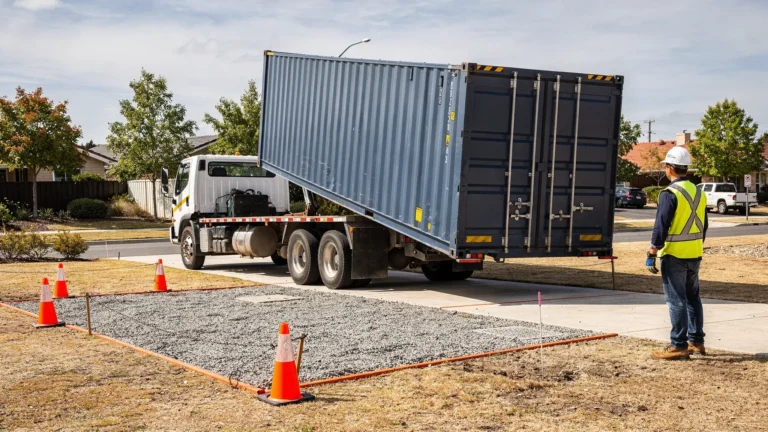
For most Lease Lane Containers customers, the container is delivered empty, then loaded after placement. That makes the initial delivery simpler, but the tare weight still affects equipment selection, drop location, and ground preparation.
A 20ft container is often easier to place than a 40ft container because it has a smaller footprint and lower empty weight. It can fit on many residential lots, construction sites, farms, retail back lots, and small business properties where a longer unit would be difficult to maneuver.
Still, Raleigh and the wider North Carolina region present site-specific challenges. Clay soils can soften after heavy rain. Rural access roads may be narrow. Urban jobsites may have limited turning space. Residential driveways may not be built for repeated heavy truck traffic.
Before delivery, think about the complete path from the road to the drop spot. The truck needs enough clearance to approach, tilt, unload, and pull away. The container itself is about 20 feet long, but the delivery truck needs substantially more working room than the container’s final footprint.
For another buyer-focused look at scale, footprint, and planning considerations, this 20 foot container size guide is a useful companion reference when deciding whether a 20ft unit is the right fit.
Does container grade affect weight?
Container grade usually affects condition, certification, and use case more than it affects weight. A used Wind & Watertight container and a Cargo Worthy container of the same model may have similar tare weights, but they are not the same product from a buyer’s perspective.
One-Trip containers
A One-Trip container is typically manufactured overseas and used for one cargo move before being sold. It is usually the cleanest option, with minimal dents, fresher paint, tighter door seals, and less surface wear. Buyers choose One-Trip units when appearance, long service life, and lower prior wear matter.
One-Trip containers are still built from marine-grade Corten Steel and to ISO-style dimensions, but they may not be necessary for every storage use. For a visible retail pop-up, mobile office conversion, or customer-facing property, the cleaner condition can be worth considering.
Cargo Worthy containers
Cargo Worthy, often shortened to CW, means the container is structurally suitable for cargo transport when properly inspected and certified. It should have sound corner castings, doors, floors, walls, and frame components. For logistics managers, exporters, and buyers who may put the unit back into transportation service, CW status is important.
If your priority is a used 20ft unit with transport-oriented structural condition, the 20ft Cargo-Worthy Shipping Container Dry Van is the type of option to evaluate because the grade focuses on cargo fitness, not simply basic storage condition.
Wind & Watertight containers
Wind & Watertight, or WWT, means the container is intended to keep out wind and rain for ground-level storage. A WWT unit can be a cost-effective choice for homeowners, contractors, farms, and small businesses that do not need international shipping certification.
WWT does not mean the container is unsafe. It means the unit is being sold for storage rather than certified cargo movement. For many Raleigh-area jobsite and property storage needs, that is often enough.
Grade A used containers
Some buyers want a cleaner used unit without necessarily paying for a One-Trip container. In that case, a higher-grade used container can be a practical middle ground. For example, the Grade A Standard 20Ft Shipping Container may be relevant for storage buyers comparing condition levels among standard 20ft options.
For a broader buying framework beyond weight, our guide on how to shop for a 20 ft shipping container for sale covers grade selection, inspection points, and matching the container to your intended use.
How much weight can the floor hold?
A 20ft shipping container is designed to carry heavy cargo, but floor performance depends on how the weight is distributed. The marine-grade plywood or bamboo flooring is supported by steel crossmembers. It handles palletized loads well when the weight is spread across a reasonable area.
Problems happen when buyers place extremely heavy point loads in one small location. Examples include compact machinery with narrow steel feet, safes, dense stone, engines, or loaded pallet racks with small contact points.
If you plan to store heavy equipment, use load-spreading methods such as timber mats, steel plates, or wider bases. Forklift traffic also deserves attention. A container floor can handle normal cargo activity, but repeated forklift use with heavy concentrated loads should be planned carefully.
Pro Tip: prepare the site before a 5,000 lb container arrives
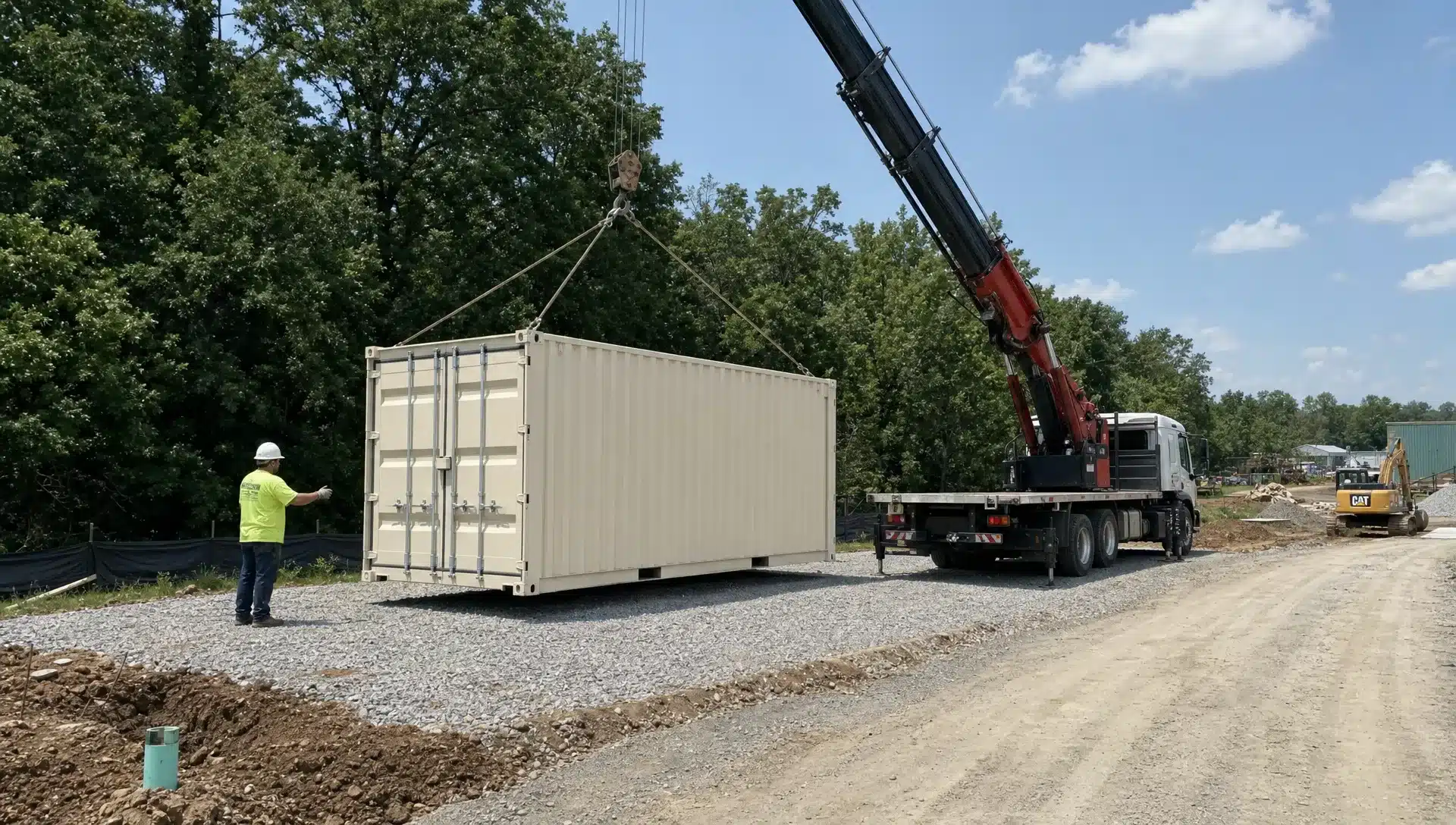
A 20ft container does not need a full concrete foundation for most storage applications, but it does need a stable, level surface. Good site preparation protects the container doors, floor, and frame.
Use this practical checklist before delivery:
- Choose a level drop spot with firm access for the delivery truck.
- Place the container on compacted gravel, concrete, asphalt, railroad ties, or treated blocking under the corner castings.
- Keep the container slightly elevated so water drains away from the floor and Corten Steel underside.
- Avoid placing the unit directly in low, wet soil, especially in clay-heavy areas common around Raleigh and central North Carolina.
- Confirm local zoning, permit, HOA, or jobsite requirements before the delivery date.
The most important detail is door alignment. If the four corners are not supported evenly, the frame can twist enough to make the cargo doors difficult to open and close. A small amount of preparation before delivery can prevent months of frustration.
Can you move a loaded 20ft container?
Sometimes, but it depends on the loading method, equipment, road legality, and total weight. Many storage containers are delivered empty and should not be assumed movable once fully loaded.
A container loaded with household goods may be manageable for certain equipment. A container loaded with stone, equipment, water tanks, or dense inventory may require a crane, heavy forklift, container handler, or specialized trucking arrangement. The container may be structurally rated for the cargo, but the delivery equipment and site may not be.
If you expect to move the container later, tell the sales team before purchasing. The right plan may involve choosing a Cargo Worthy unit, limiting loaded weight, positioning it for future access, or selecting a delivery method that supports your long-term use.
20ft vs. 40ft container weight: which is easier to place?
A 40ft container generally weighs about 8,000 to 9,000 lb empty, depending on type and build. That makes it significantly heavier than most standard 20ft dry containers. It also requires more room for delivery and placement.
A 20ft unit is often the better choice when space is tight, access is limited, or the buyer wants ground-level storage near a building, barn, workshop, or active jobsite. A 40ft container is useful when maximum storage volume matters and the property can support the longer footprint.
For small businesses, farms, and contractors around Raleigh, the decision often comes down to access rather than price alone. If a truck cannot safely reach or unload the larger unit, the better value is the container that can be delivered and used without site problems.
Frequently Asked Questions
What is the empty weight of a 20ft shipping container? Most standard 20ft dry containers weigh about 4,800 to 5,200 lb empty. The exact tare weight should be verified on the CSC plate or unit specifications.
How much can a 20ft shipping container carry? Many standard 20ft dry containers have a payload capacity of roughly 60,000 to 62,000 lb, with a maximum gross weight commonly around 67,200 lb. Actual legal transport weight depends on trucking equipment, route, and regulations.
Does a High Cube 20ft container weigh more? Usually, yes. A 20ft High Cube container is about one foot taller than a standard unit and may weigh several hundred pounds more, depending on manufacturer and construction.
Is a Cargo Worthy container heavier than a WWT container? Not necessarily. Cargo Worthy and Wind & Watertight are condition and use classifications. They do not automatically create a major weight difference between otherwise similar containers.
Do I need a concrete pad for a 20ft container? Not always. Many 20ft containers perform well on compacted gravel, asphalt, concrete, or properly placed blocking. The key is level support under the corner castings and good drainage.
Get the right 20ft container for your site
The weight of a 20ft shipping container affects delivery access, foundation planning, future relocation, and safe loading. If you are not sure whether you need One-Trip, Cargo Worthy, WWT, Standard, High Cube, or Reefer equipment, Lease Lane Containers can help you compare options based on your use case and site conditions.
For help choosing a container in Raleigh, across North Carolina, or for nationwide delivery, contact the Lease Lane Containers sales team at sales@leaselanecontainers.com or visit the Raleigh office to discuss your project with a local container specialist.