Construction Storage Container Guide for Job Sites
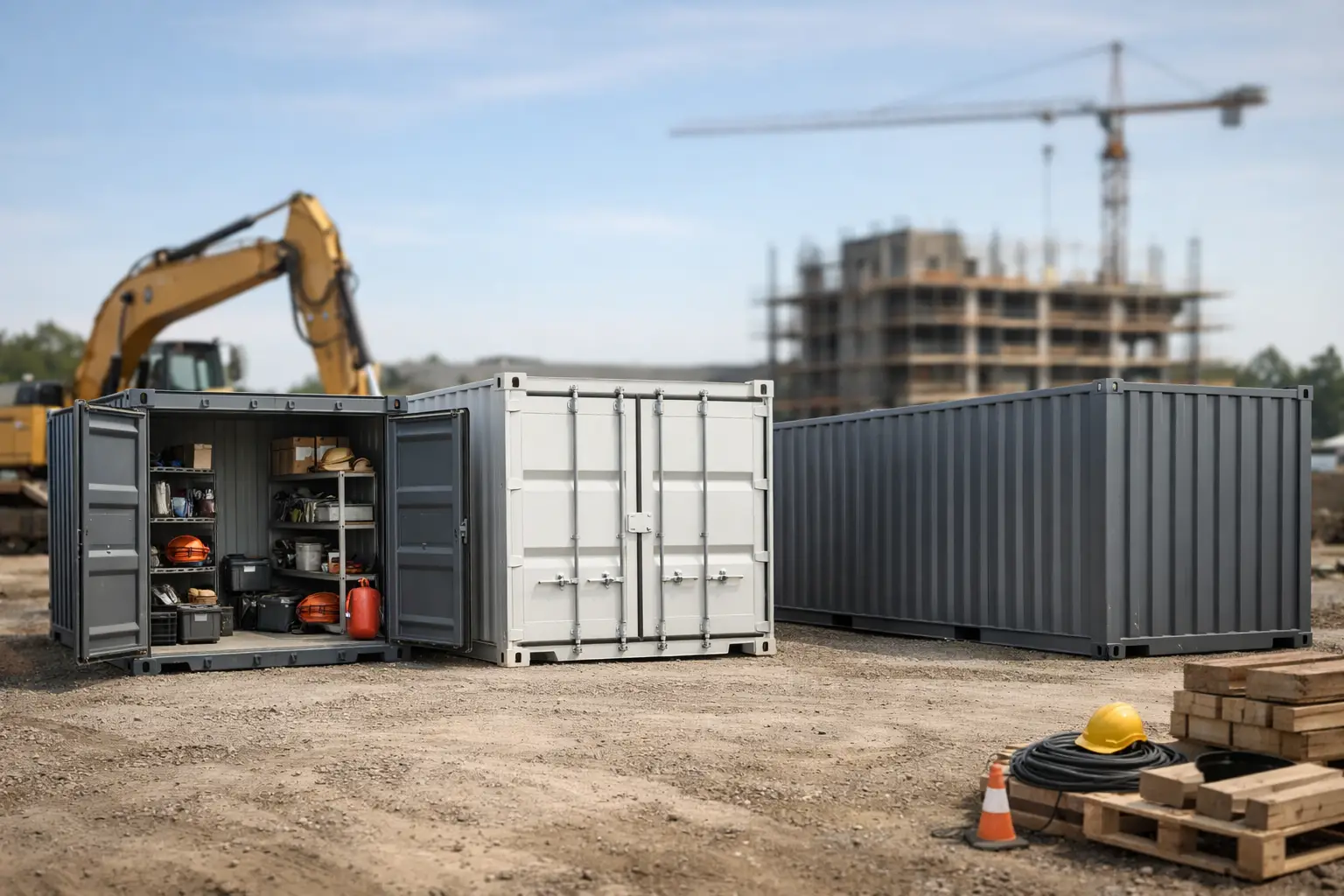
A storage container can solve an immediate job-site problem: expensive tools left exposed, materials stacked under tarps, or crews losing time locating equipment. But a container that is the wrong size, condition, or delivery fit can create a different problem. This construction storage container guide focuses on the decisions that prevent surprises before the container reaches your site.
Start With the Storage Load, Not the Container Price
The lowest advertised price is not always the lowest project cost. A contractor storing palletized materials, welding equipment, generators, and job boxes needs a different layout than a homeowner storing seasonal equipment or a retailer holding boxed inventory. Begin with what must fit inside, how often people need access, and whether a forklift, pallet jack, or hand cart will be used.
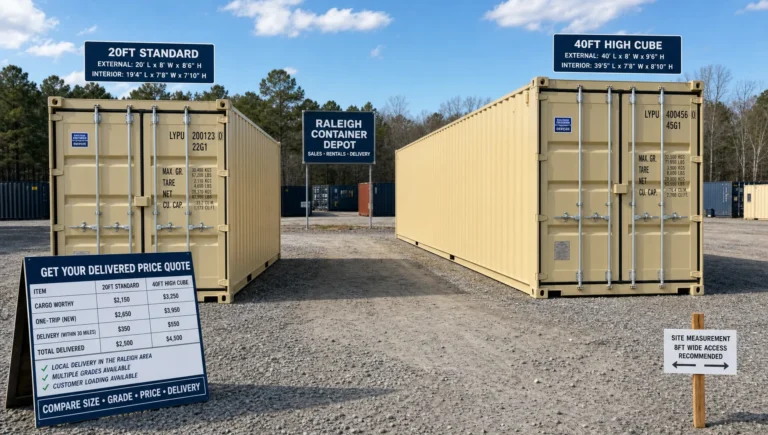
A 20-foot container is often the practical choice for tight urban lots, residential properties, and smaller construction phases. Its footprint is roughly 20 feet long by 8 feet wide, with about 160 square feet of floor space. It can hold substantial equipment without consuming the working area around a building pad.
A 40-foot container provides roughly 320 square feet of floor space and works well for larger material inventories, multi-trade projects, agricultural operations, and longer-term equipment storage. The trade-off is delivery access. A 40-foot unit requires more room to maneuver and a longer clear path for the delivery truck.
High-cube containers add approximately one foot of interior height compared with standard units. That extra clearance matters when storing tall racking, bulky equipment, long-handled tools, or materials that need to be loaded with a forklift. It may not be worth the added cost if storage is limited to low-profile boxes and hand tools.
Before selecting a length, sketch the floor plan. Reserve a central aisle rather than filling the container wall to wall. A container with enough capacity but no access path becomes a locked warehouse where crews waste time moving everything to reach one item.
Construction Storage Container Guide to Container Grades
Condition should be specified in writing, not assumed from photos. Shipping containers are built from Corten steel and designed for international transport, but they may have very different cosmetic and structural histories by the time they are offered for sale.
A new, or one-trip, container has generally made a single cargo voyage from the manufacturer. It is usually the best fit when appearance matters, such as a client-facing job site, retail overflow location, mobile office conversion, or residential property. It will typically have fewer dents and less surface wear, though “new” does not mean untouched. Handling equipment and ocean transport can still leave minor marks.
A used Wind and Watertight, often shortened to WWT, container is a practical storage choice when the priority is keeping equipment dry and secure. It should have functioning cargo doors, an intact roof, and no openings that allow wind or water intrusion. Used units often show dents, repairs, surface rust, and prior shipping labels. Those cosmetic conditions are normal and should be expected at the right price.
Cargo Worthy containers meet a higher standard for transport and are generally suitable for international shipping when accompanied by the required inspection documentation. For stationary construction storage, Cargo Worthy condition may be more than necessary. It can make sense if the container will later be shipped, exported, or repositioned through an intermodal network.
Refurbished containers can be a good middle ground when presentation matters but a one-trip unit is outside the budget. Ask what refurbishment includes. A fresh coat of paint does not automatically mean roof repairs, door service, floor treatment, or structural corrections were completed. Clear grading and verified specifications reduce the risk of paying for a cosmetic fix when the project needs dependable storage.
Prepare the Site Before Delivery Is Scheduled
Containers are strong at their corner castings, the reinforced points that carry stacking and lifting loads. They still need a stable, reasonably level base. A poor site can cause doors to bind, allow water to collect beneath the floor, and complicate future relocation.
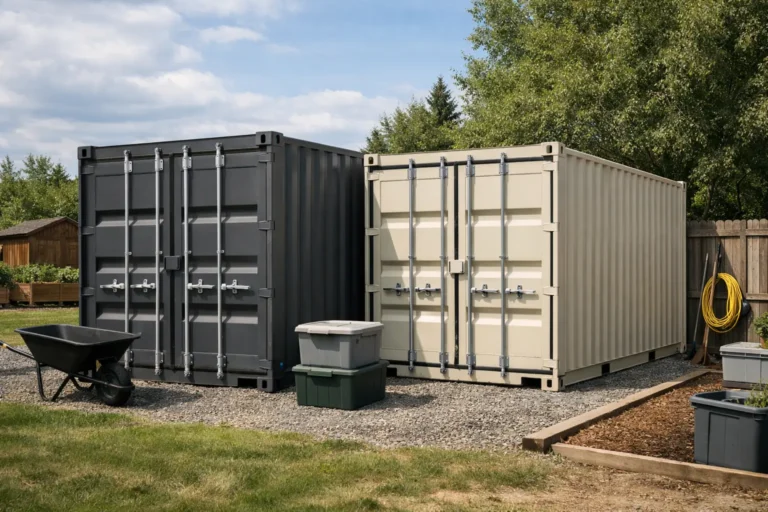
For temporary job-site use, compacted gravel with properly placed concrete blocks, railroad ties, or similar supports can work when engineered for the ground conditions and container load. Permanent installations may call for a gravel pad, concrete piers, or a full slab. The goal is to support the corners, keep the container out of standing water, and avoid excessive twist along its length.
Do not place a loaded container directly on soft soil. It may settle unevenly after rain or under concentrated weight. If a container will hold dense materials such as tile, fasteners, steel components, or palletized supplies, confirm that both the site base and the container floor are suitable for the expected load.
Drainage deserves the same attention as the base. Grade the site so water moves away from the container, not toward the doors. Elevating the unit slightly improves airflow beneath the steel floor and helps reduce moisture exposure over time.
Confirm Truck Access and Unloading Space
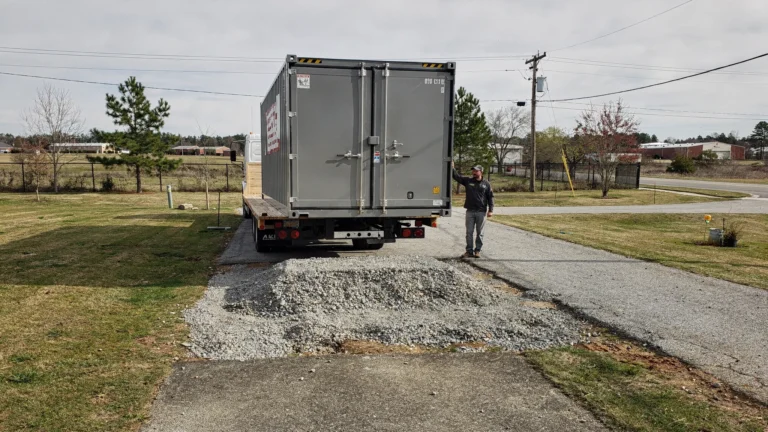
A container can fit on the property yet still be difficult to deliver. The truck needs a safe approach, turning room, overhead clearance, and a clear drop zone. Check for low branches, utility lines, gates, parked vehicles, soft shoulders, steep slopes, and narrow driveways before placing an order.
Delivery method matters. Tilt-bed delivery rolls the container off the truck and generally needs clear space in front of the final placement area. Ground-level delivery equipment can place a container more precisely in some situations, but site conditions, container size, and local access determine what is feasible. Share photos, measurements, and any known obstacles with the provider early. That is the best way to receive an accurate delivery plan rather than an unexpected rescheduling charge.
If doors need to face a particular direction, mark that orientation on the site plan. Turning a container after delivery may require equipment that was not included in the original delivery scope.
Build Security Into the Layout
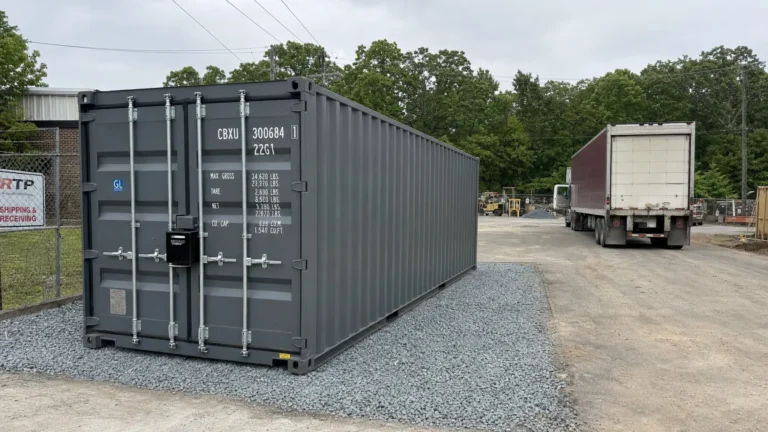
A steel container is a strong starting point, not a complete security system. Cargo doors are designed for freight transport and should be secured with a quality lockbox or protected lock housing. This shields the padlock from bolt cutters and makes forced access more difficult.
Place the doors where supervisors can see them when possible. A container hidden behind material stacks may be convenient for staging, but it can also give thieves privacy. Exterior lighting, cameras, site fencing, and a documented key-control process add layers that matter more than any single hardware upgrade.
Inside, use shelving and designated zones to keep high-value tools from disappearing into mixed inventory. Equipment closest to the doors should be items used daily. Reserve the rear for surplus materials, seasonal tools, or backup inventory. For larger sites, two smaller containers can be more efficient than one long unit if separate crews need access at the same time.
Plan Modifications Around Future Use
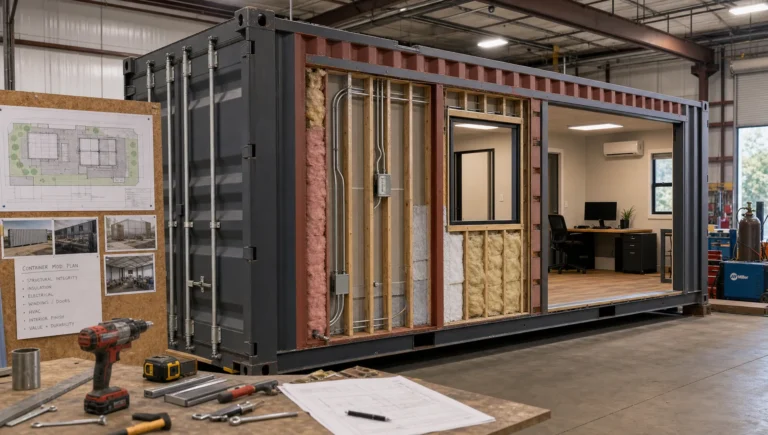
Containers can be modified with personnel doors, windows, vents, electrical service, shelving, lockboxes, and roll-up doors. The right modification depends on the use case. A container used strictly for tools may need only a lockbox and basic shelving. A container used as a field office needs ventilation, insulation, power planning, and local code review.
Cutting large openings into the sidewall changes how the container carries load. A qualified fabricator should reinforce openings for doors, windows, or connected modular structures. This is especially relevant for 40-foot units, high-cube containers, and builds intended to remain in place long term.
Ventilation is frequently overlooked. Condensation can form when warm, humid air meets cooler steel surfaces, particularly in the Southeast. Passive vents, moisture control products, and sensible storage practices help protect cardboard packaging, power tools, and sensitive materials. Avoid storing chemicals, fuel, propane cylinders, or other hazardous materials unless the container is configured and permitted for that specific purpose.
Questions to Ask Before You Buy
A clear quote should identify the container size, grade, condition, delivery method, destination, and any modifications. It should also explain what is included and what can change due to access limitations. Ask whether the listed price covers delivery, whether taxes or handling fees apply, and whether offloading equipment is required.
Request current photos when cosmetic condition matters. Confirm door operation, floor condition, roof integrity, and whether the container is WWT or Cargo Worthy. If your project has a fixed mobilization date, discuss delivery timing before committing to a container that must be moved from another depot.
The best container is not necessarily the newest or largest unit available. It is the one with verified condition, enough usable space, a prepared site, and a delivery plan that works the first time. When those details are handled before the truck arrives, the container becomes what it should be: dependable storage that keeps the project moving.