
Can a Container Be Delivered to Driveway?
If you’re asking can a container be delivered to driveway, you’re usually trying to avoid one problem: paying for a container and then finding out the truck cannot place it where you need it. The short answer is yes, in many cases a shipping container can be delivered to a driveway. The better answer is that it depends on driveway size, truck access, surface strength, slope, overhead clearance, and local rules.
That is where most delivery issues happen. Not with the container itself, but with the approach path and the drop area.
Can a container be delivered to driveway? Yes, but site conditions decide
A standard 20-foot or 40-foot container can often be placed on a private driveway if the site is prepared correctly and the delivery equipment matches the location. For residential buyers, a 20-foot container is usually the easier fit. For contractors and commercial users, a 40-foot container may still work, but it requires more turning room and more clear space for unloading.
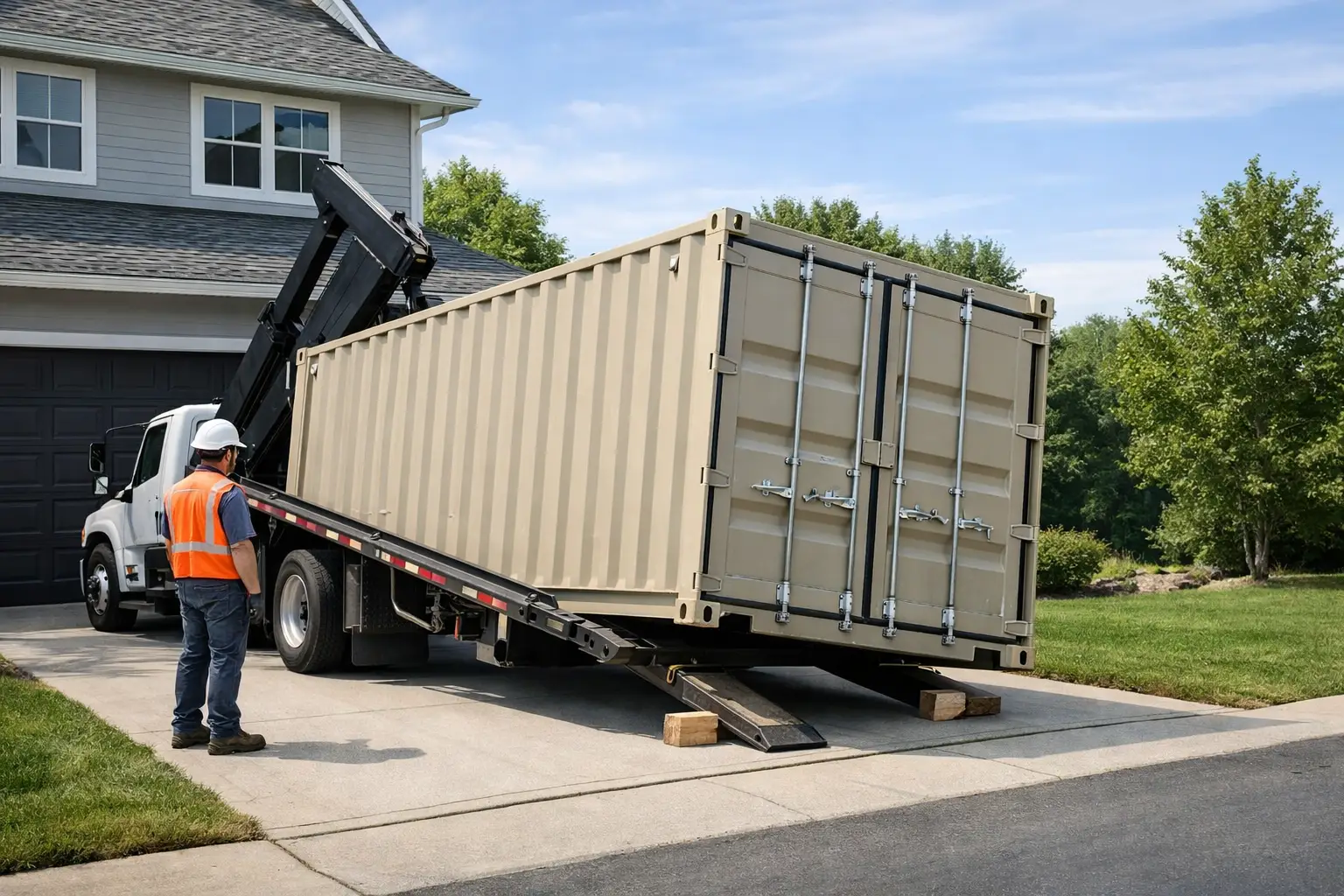
Most driveway deliveries use either a tilt-bed truck or a flatbed with a forklift or crane arrangement, depending on the market and the site. Tilt-bed delivery is common because it allows the driver to slide the container off the rear of the truck directly onto the ground. That method is efficient, but it needs enough straight-line space in front of the drop spot.
As a rule, the truck needs more room than the container itself. A 20-foot container does not just need 20 feet of space. The driver may need 60 to 100 feet of straight clearance to line up and unload safely. A 40-foot container can require even more.
The five things that matter most before delivery
The first is access. Can a full-size truck enter the property, turn, and back into position without hitting a fence, gate, retaining wall, parked vehicle, or tree line? Narrow neighborhood streets and sharp turns are common trouble spots, especially in subdivisions.
The second is overhead clearance. Utility lines, tree limbs, carports, and basketball goals can all stop a delivery. During tilt-bed unloading, the front end of the container rises as it slides off the truck. That temporary lift means vertical clearance matters just as much as side clearance.
The third is surface condition. A container is heavy even before you load it. A used 20-foot unit can weigh around 5,000 pounds empty, while a 40-foot unit is often closer to 8,000 pounds empty. Add the weight of the delivery truck and the pressure on the driveway becomes significant. Concrete generally performs better than asphalt, especially in hot weather. Gravel can work if it is compacted and level, but soft ground, pavers, or decorative stone often create problems.
The fourth is slope. A mild grade may be manageable. A steep driveway is a different story. If the truck cannot stay stable during unloading, the driver should not attempt the placement. Safety comes first, and reputable carriers will stop the job rather than force a bad drop.
The fifth is local regulation. Some cities, HOAs, and counties restrict container placement in front yards, on residential driveways, or near property lines. This matters more often than buyers expect.
What type of driveway works best?
The best driveway for container delivery is straight, wide enough for truck access, relatively level, and built on a solid base. Concrete is typically the most reliable surface. Thick, well-supported asphalt may work for lighter placements, but it can rut or crack under concentrated wheel loads, especially during summer heat.
Gravel driveways are common in rural and agricultural settings and can be suitable when they are compacted properly. If the gravel is loose, muddy, or recently spread, the truck may sink or shift during delivery. That risk goes up with 40-foot containers and heavier equipment.
Paver driveways are the most uncertain. They may look solid, but individual sections can shift under heavy axle loads. If appearance matters, this is worth discussing in advance because even a successful delivery can leave marks or settling.
Why 20-foot containers are easier for driveway delivery
For most residential sites, the 20-foot container is the practical choice. It needs less room to maneuver, puts less overall stress on the surface, and is easier to place with standard tilt-bed equipment.
A 40-foot container is still possible on some driveways, particularly in rural or commercial settings, but it demands more from the site. The truck is longer, the turning radius is wider, and the unloading path needs to stay clear from start to finish. If your driveway has a tight entrance or a curve near the drop area, a 40-foot delivery may not be realistic.
That does not mean it is off the table. It means a site review should happen before anyone promises a drop.
Can a container be delivered to driveway without damage?
Sometimes yes, but no honest provider should guarantee a zero-mark delivery on every driveway type. Heavy trucks can leave tire impressions, edge cracking, or scuffing depending on the surface and weather conditions. That is especially true on older asphalt, decorative finishes, and softer shoulders near the driveway edge.
The right question is not whether any mark is possible. It is whether the driveway is structurally suitable for the delivery method being used. A transparent delivery team will explain the risks up front. That is better than a vague promise followed by avoidable damage.
If you are concerned about the finish, ask whether wood dunnage or protective boards can be used at contact points. These do not eliminate every risk, but they can help distribute weight and reduce scraping where the container lands.
What drivers usually need from you
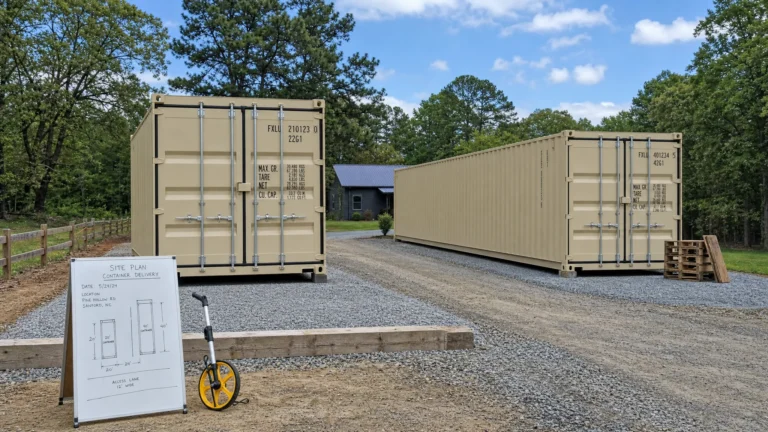
A good delivery starts before the truck arrives. The driver or dispatcher will typically need photos of the driveway entrance, the full approach path, and the intended drop location. Measurements help too, especially width between obstacles, gate openings, and overhead heights.
If possible, provide a simple description of the route from the main road to the drop point. Mention tight turns, low branches, soft shoulders, septic areas, or anything that would affect a large truck. This is particularly useful on rural properties where satellite images do not show current conditions.
For customers in areas with variable terrain, including parts of North Carolina and the broader Southeast, weather can change site conditions quickly. A driveway that was firm last week may not be suitable after several days of rain.
When driveway delivery is not the best option
Some properties technically allow a driveway drop, but it is still not the smartest choice. If the driveway is your only access point and the container will block daily traffic, another placement area may be better. The same applies when the container needs to sit for years and the driveway is not the ideal long-term foundation.
For job sites, farms, and commercial lots, a level gravel pad or compacted base away from regular vehicle traffic is often the better answer. It gives the container more stable support and keeps your driveway available for normal use.
If you plan to convert the container into an office, workshop, or tiny home shell, placement matters even more. You may want room for doors to swing open fully, electrical access, drainage, and future site work. A convenient driveway drop today can become an expensive reposition later.
The best way to avoid delivery surprises
Start with verified dimensions and honest site photos. Know the container size you want, but stay open to the idea that a different size or delivery method may fit the property better. Ask whether the quote includes tilt-bed delivery, how much straight clearance is required, and whether the carrier has reviewed your access path.
This is also the right time to ask about container condition. If the unit will sit in a visible residential setting, appearance may matter as much as structural grade. A Wind and Watertight container gives you basic weather resistance, while a one-trip container usually offers the cleanest exterior and least cosmetic wear. Neither grade changes the laws of physics on your driveway, but it does affect long-term satisfaction.
A reliable container provider should be direct about what can and cannot be done. That clarity is part of the service, not an extra.
In many cases, a container can be delivered to a driveway without issue. The key is treating delivery like a logistics decision, not just a purchase. When access, surface, equipment, and placement are evaluated early, the process is straightforward and there is far less chance of paying for surprises after the truck shows up.

Love how 🌻 you bring people together through your amazing creative work