Container Sales Tips for First-Time Buyers
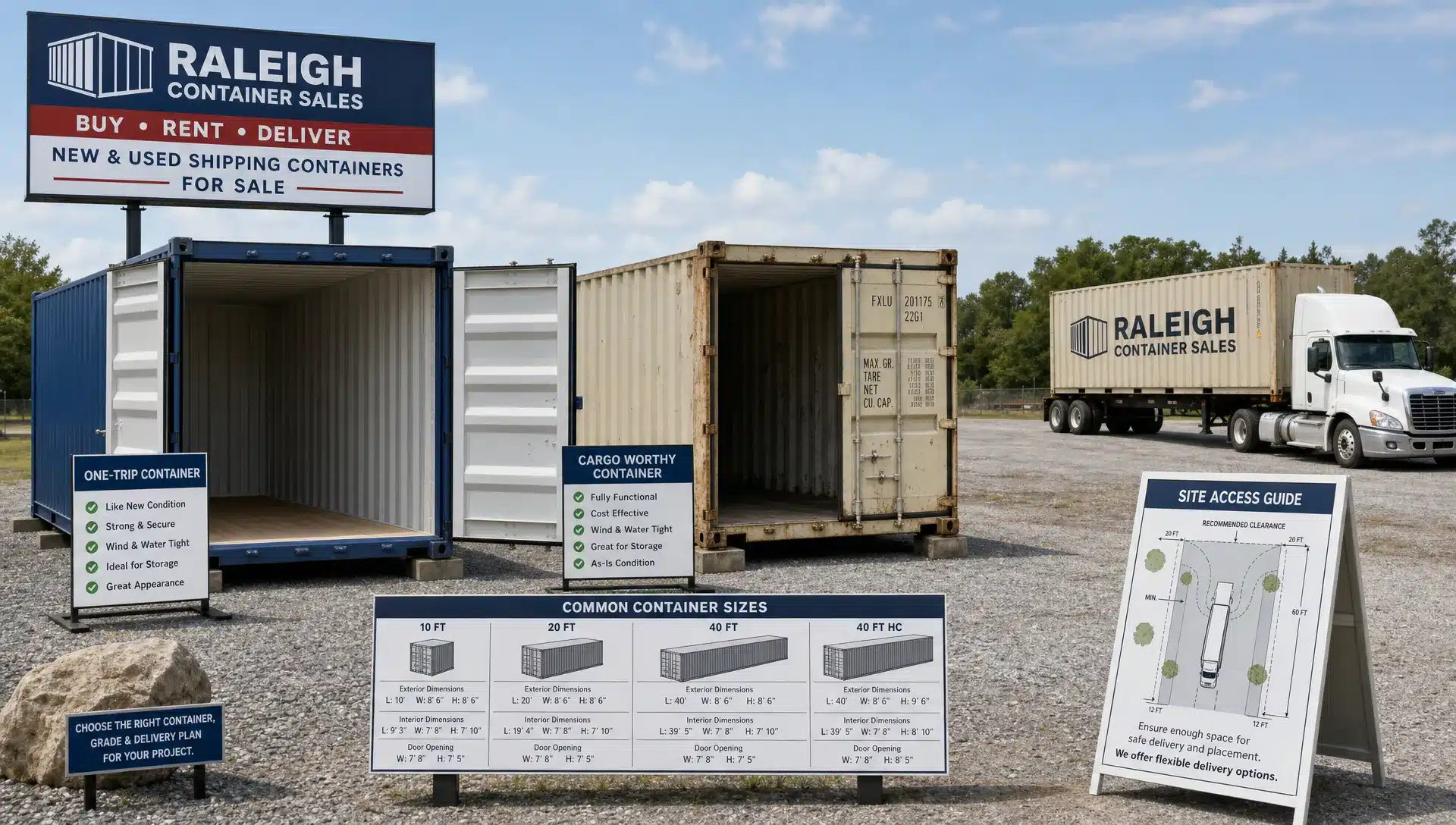
Buying a shipping container for the first time should feel practical, not confusing. The container sales market includes everything from nearly new One-Trip units to well-used storage boxes, and the right choice depends on what you need the container to do, where it will sit, and whether it must travel again.
For buyers in Raleigh, across North Carolina, and throughout the Southeast, the stakes are often straightforward: keep tools dry on a construction site, protect farm equipment, add overflow inventory space, create a mobile office, or purchase a Cargo Worthy unit for transport. The tips below will help you compare options confidently, understand the language sellers use, and avoid paying for the wrong container.
If you want a step-by-step buying reference alongside this article, Lease Lane Containers also offers a container purchase checklist for first-time buyers that can help you organize questions before you request pricing.
Start With the Job the Container Needs to Do
A first-time buyer often starts with the question, “What size container should I buy?” A better starting point is, “What problem does this container need to solve?” The answer affects size, grade, delivery method, and budget.
A general contractor storing tools and jobsite materials in Raleigh may need a secure Wind & Watertight unit with easy ground-level access. A logistics manager moving freight internationally may need a Cargo Worthy container that meets ISO standards and can be certified for transport. A small business planning a retail pop-up may care more about exterior appearance, doors, ventilation, and future modifications.
| Use case | Common priority | Grade often considered |
|---|---|---|
| Construction site storage | Security, weather protection, fast delivery | WWT or One-Trip |
| Home or farm storage | Long-term durability, clean interior, value | WWT, CW, or One-Trip |
| Retail pop-up or mobile office | Appearance, modification potential, clean structure | One-Trip or high-quality CW |
| Domestic or international shipping | Structural integrity, transport eligibility | Cargo Worthy |
| Cold storage | Temperature control, tested refrigeration system | Reefer unit |
Once you define the job, every other decision becomes easier. You can avoid overspending on cosmetic condition if the unit will sit behind a jobsite fence, or avoid underbuying if the container will become part of a customer-facing project.
Know the Three Container Grades Before You Compare Prices
Container grade is one of the most important terms in container sales. It tells you more than age alone, but it does not tell you everything. A “used” container can range from a solid storage unit to a heavily worn box that needs repairs, which is why grade and inspection both matter.
One-Trip Containers
A One-Trip container is typically manufactured overseas, loaded with cargo once, and shipped to the United States. These units are usually the newest containers available for sale, with cleaner interiors, stronger cosmetic appeal, and less wear on doors, floors, and roof panels.
Most standard shipping containers are built with corrugated Corten Steel, a weathering steel designed to resist corrosion better than ordinary steel when properly maintained. One-Trip containers are also built to ISO standards for intermodal shipping, meaning they follow dimensional and structural conventions used across global transport.
Choose a One-Trip unit if appearance matters, if you want the longest expected service life, or if you plan to modify the container into an office, cabin, retail space, or specialty structure.
Cargo Worthy Containers
A Cargo Worthy container is a used container considered structurally suitable for shipping cargo. It may have dents, surface rust, old decals, or floor wear, but the frame, corner castings, doors, and overall structure should support transport use.
Cargo Worthy is often the right grade for logistics managers, exporters, and businesses that need more than stationary storage. If the unit will be used for international shipping, ask whether it has a valid CSC plate or can be inspected and certified as needed.
Wind & Watertight Containers
Wind & Watertight, often shortened to WWT, means the container should keep out normal wind and rain when the doors are closed. WWT units are popular for jobsite storage, property storage, agriculture, and inventory overflow.
A WWT unit is not automatically Cargo Worthy. It may be excellent for dry ground storage but not suitable for ocean transport. That distinction matters. If you only need storage in Raleigh or elsewhere in the Southeast, WWT can be a practical and cost-effective choice. If you need freight movement, ask about Cargo Worthy options instead.
If you are leaning toward a used unit, review Lease Lane’s guide on used containers for sale near you to understand how to separate real value from a low sticker price.
Choose the Right Size: 20ft, 40ft, Standard, or High Cube
Most first-time buyers compare 20ft and 40ft containers first. Both are commonly 8 feet wide. Standard units are typically 8 feet 6 inches tall, while High Cube containers are typically 9 feet 6 inches tall. Always confirm exact dimensions, door opening, tare weight, and payload capacity for the specific unit you are buying.
| Container type | Best fit | Key consideration |
|---|---|---|
| 20ft Standard | Tight sites, tools, home storage, smaller lots | Easier to place where access is limited |
| 40ft Standard | Large inventory, equipment, building materials | More storage per delivery, but needs more space |
| 40ft High Cube | Tall items, modifications, office builds | Extra interior height improves usability |
| Reefer container | Cold storage, food, pharma, event use | Requires power planning and mechanical checks |
In Raleigh neighborhoods, rural North Carolina properties, and active construction sites, access often determines size as much as storage volume. A 40ft unit may offer better value per square foot, but it also needs more turning room, a longer drop area, and a more deliberate door orientation plan.
For many contractors and homeowners, a 20ft container is easier to place and relocate. For builders, developers, agricultural operations, and businesses with substantial inventory, a 40ft or High Cube unit may make more sense.
Inspect the Container Like a Buyer, Not a Browser
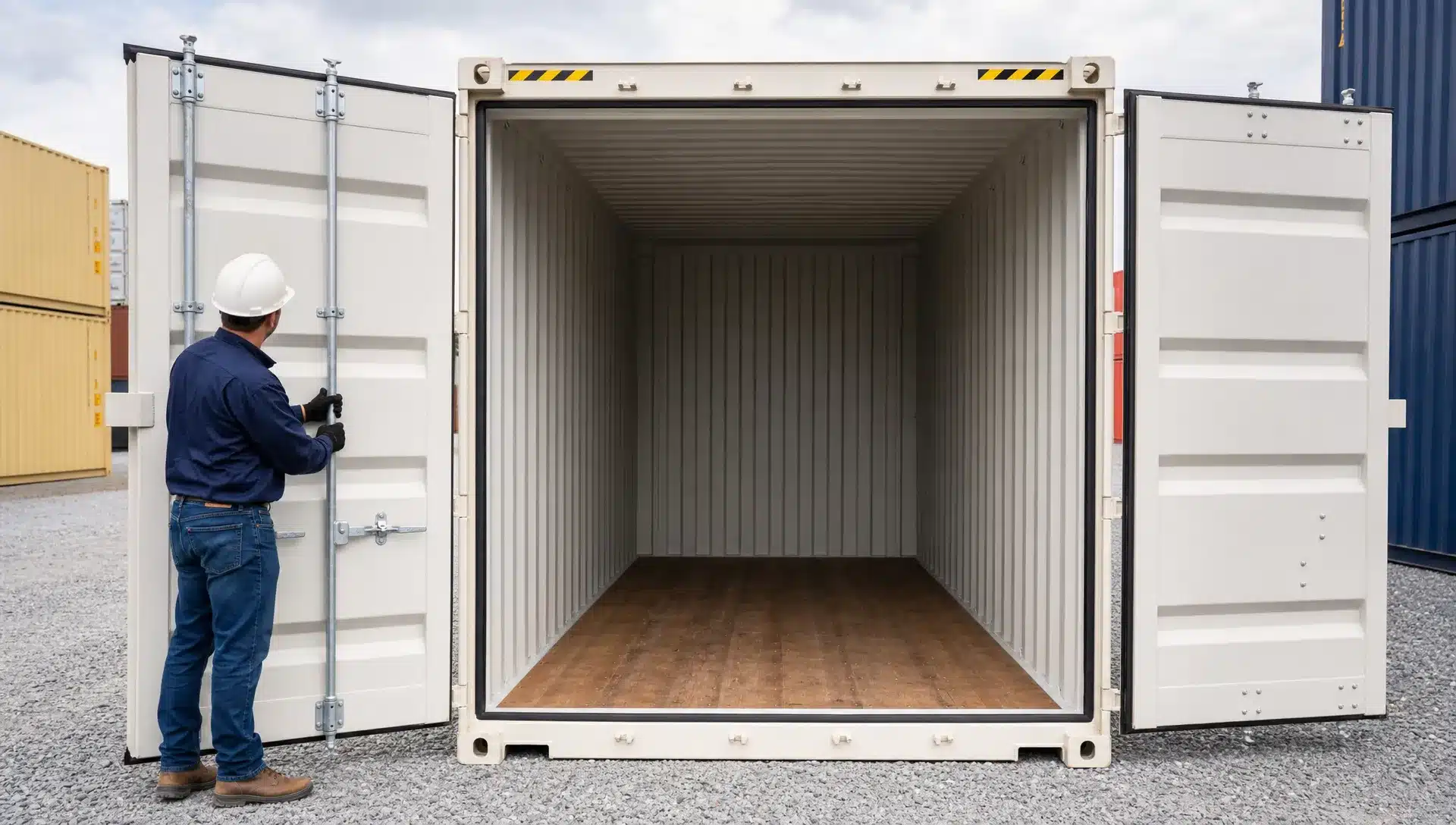
Photos are useful, but they do not replace inspection details. Even if you are buying remotely and using a reputable supplier, ask direct questions about condition. Container quality is about weather protection, structure, door operation, floor integrity, and security.
Look closely at the roof because standing water and roof dents can become future leak points. Check door gaskets, locking rods, hinges, and the lower door area where rust often appears. Walk the floor if possible, watching for soft spots, delamination, oil contamination, or strong odors. Inspect corner posts and crossmembers for structural damage, especially if you plan to ship or stack the unit.
A few dents and surface rust are normal on used shipping containers. Holes, severe corrosion, twisted frames, doors that do not close properly, and patched areas with poor workmanship are different concerns. If you want a deeper inspection framework, Lease Lane’s guide on how to spot quality containers before you buy explains what quality should mean beyond a clean photo.
Compare the Delivered Price, Not Just the Container Price
One of the most common first-time buyer mistakes is comparing only the advertised container price. The number that matters is the total delivered cost.
A realistic quote should clarify the container grade, size, delivery location, delivery method, taxes or fees when applicable, and any requested modifications. A low container price can become less attractive if delivery is vague, the unit grade is unclear, or the seller cannot explain what condition you should expect.
Ask these questions before you commit:
- What grade is the container: One-Trip, Cargo Worthy, or WWT?
- Is the quoted price delivered to my site or picked up from a depot?
- Are there photos of the actual unit or representative photos?
- What delivery truck will be used, and how much space is required?
- Are there additional charges for difficult access, waiting time, or rescheduling?
- What payment terms and documentation will I receive?
Clear pricing protects both sides. It helps you plan your budget and helps the delivery team understand what your site requires before the truck arrives.
Plan Delivery Before You Buy
A container is not like a small shed that can be carried into place by hand. Delivery planning affects whether the drop is smooth, delayed, or impossible. This is especially important in Raleigh and the surrounding Triangle area, where sites can range from urban lots with tight access to rural properties with long gravel drives.
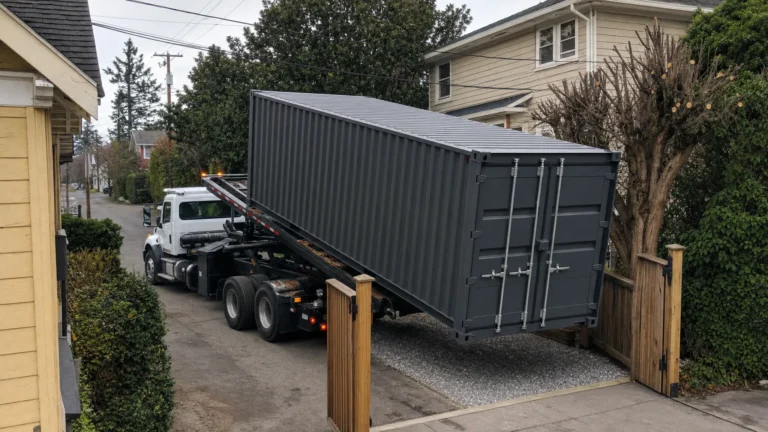
Most ground-level deliveries use a tilt-bed or roll-off style truck. The truck needs room to enter, straighten, tilt, and pull forward as the container slides into position. A 20ft container may require far less clearance than a 40ft container, but both require firm ground and overhead clearance.
Before delivery, confirm:
- Driveway width and turning radius
- Overhead wires, tree limbs, gates, and rooflines
- Slope, drainage, and soil firmness
- Door orientation when the container is dropped
- Whether the truck can exit safely after placement
For more detail, Lease Lane’s container delivery planning tips walk through the access and placement questions buyers should answer before delivery day.
Pro-Tip: Prepare the Site Before the Truck Arrives
A container performs best when it sits level, drains properly, and remains off constantly wet soil. Poor site prep can make doors harder to open, accelerate corrosion, and create water pooling around the base.
For most storage uses, a compacted gravel pad is a practical solution. Gravel helps with drainage, reduces mud, and provides a stable surface for the container’s corner castings and bottom rails. Concrete pads can also work well, especially for long-term commercial or modified container use. Railroad ties or concrete blocks may be used in some situations, but they must be placed carefully so the container is supported evenly.
If you are placing a container in Raleigh, Wake County, or another North Carolina municipality, check local zoning, HOA rules, and permit requirements before delivery. Rules can vary based on property type, visibility from the street, duration of use, and whether the container is used for storage, construction, business operations, or occupancy.
A simple site prep rule: level, firm, drained, and accessible. If any of those four conditions are missing, solve them before scheduling delivery.
Understand When Modifications Change the Buying Decision
If you plan to add roll-up doors, windows, vents, insulation, electrical, HVAC, shelving, or office build-out features, container condition becomes more important. A heavily worn WWT unit may be fine for storing landscaping equipment, but it may not be the best shell for a polished mobile office or customer-facing retail space.
High Cube containers are often preferred for modifications because the extra foot of height makes the interior feel less cramped. That height is valuable when adding insulation, ceiling panels, lighting, or ducting. One-Trip units are also popular for modifications because they usually offer cleaner steel, straighter panels, and better appearance.
For modular projects, real estate development, or container-based structures, involve your supplier early. Cutting openings changes structural behavior, and reinforcements may be needed around doors, windows, and large side openings. The container is a steel structure, not just a box, so modifications should be planned with care.
Watch for Red Flags in Container Sales
The shipping container market has many reliable suppliers, but first-time buyers should still be cautious. Demand for containers has also led to scams and misleading listings in many markets.
Be careful if a seller cannot explain grade differences, refuses to discuss delivery requirements, advertises prices far below the market without a clear reason, or pressures you to pay quickly through unusual methods. Also be cautious with listings that use only stock images and provide no company information, no delivery process, and no written confirmation of what you are buying.
A trustworthy supplier should be able to discuss size, grade, condition, delivery, site prep, and use case in plain language. They should also help you avoid buying more container than you need or buying too little container for the job.
Frequently Asked Questions
What is the best container grade for a first-time buyer? It depends on your use. One-Trip is best when appearance and long service life matter. Cargo Worthy is best for transport needs. WWT is often the best value for stationary storage when the container only needs to keep contents secure and dry.
Is a Cargo Worthy container always better than WWT? Not always. Cargo Worthy is better if the unit needs to travel or meet transport requirements. For ground storage on a construction site, farm, or business property, a good WWT container may be the more cost-effective choice.
Should I buy a 20ft or 40ft container? A 20ft container is easier to place on tight sites and is often enough for tools, household storage, or smaller inventory. A 40ft container provides more space and better storage value per square foot, but it requires more delivery clearance and a larger prepared area.
Do shipping containers need a foundation? They do not always need a full foundation, but they do need a level, stable, well-drained base. A compacted gravel pad is a common option for storage containers because it supports drainage and reduces ground moisture.
Can I place a shipping container anywhere on my property in Raleigh? Not necessarily. Local zoning, HOA rules, and permit requirements may apply. Check with the relevant local authority before delivery, especially if the container will be visible, used commercially, modified, or kept long term.
Ready to Buy Your First Container?
The best container purchase is not simply the cheapest unit available. It is the container that matches your use case, grade requirements, site conditions, delivery access, and long-term plans. Whether you need a 20ft WWT storage unit for a Raleigh jobsite, a 40ft High Cube for a modification project, a Cargo Worthy unit for transport, or a refrigerated container for cold storage, a knowledgeable local team can help you make the right call.
For clear container sales guidance, nationwide delivery support, and practical advice from a Raleigh-based team, contact Lease Lane Containers LLC at sales@leaselanecontainers.com or visit the Raleigh office to discuss your project.