

40ft High Cube Container Dimensions Explained
A foot of extra height does not sound like much until a pallet rack, mini excavator attachment, or framed interior build is suddenly too tall for a standard container. That is why 40ft high cube container dimensions matter so much at the buying stage. For contractors, farm operators, and property owners, that extra vertical space can be the difference between a container that works on day one and one that creates loading headaches, wasted space, or retrofit costs.
If you are comparing real options before deciding on dimensions alone, browse our 40ft shipping containers to see which units fit storage, commercial, and conversion use cases best.
What are the 40ft high cube container dimensions?
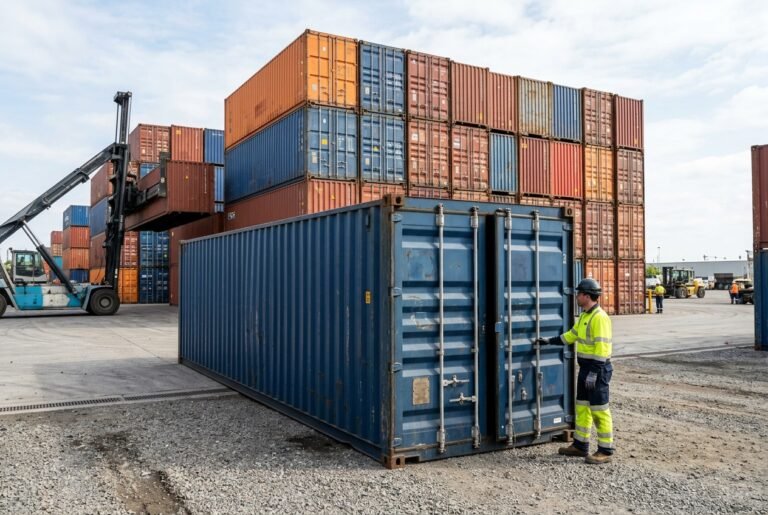
A 40ft high cube shipping container is built to the same standard length and width as a standard 40ft container, but it is 1 foot taller overall. In most cases, the exterior dimensions are 40 feet long, 8 feet wide, and 9 feet 6 inches high.
Inside, the dimensions are typically about 39 feet 5 inches long, 7 feet 8 inches wide, and 8 feet 10 inches high. Door opening dimensions are usually close to 7 feet 8 inches wide by 8 feet 5 inches high. Exact measurements can vary slightly by manufacturer, flooring type, and container age, so verified specifications always matter when you are planning shelving, insulation, framing, or equipment access.
For buyers deciding between standard, high cube, used, and one-trip options, our Buyers Guide helps connect specs to the right real-world use case.
That extra height is the main reason buyers choose a high cube. You keep the same footprint on the ground, but gain more vertical clearance and more cubic storage volume.
Why the extra height matters in real use
For job-site storage, the value is straightforward. Taller equipment, stacked materials, and palletized inventory fit with more breathing room. If you are storing gang boxes, conduit, irrigation supplies, or boxed retail overflow, the added interior height makes loading easier and reduces the chance of damaging goods near the ceiling.
For modification projects, the difference is even more noticeable. Once you add a subfloor, insulation, ceiling framing, lighting, or HVAC components, interior headroom starts disappearing fast. A standard-height container can feel tight after a build-out. A high cube gives you more flexibility for mobile offices, workshops, and container-based structures.
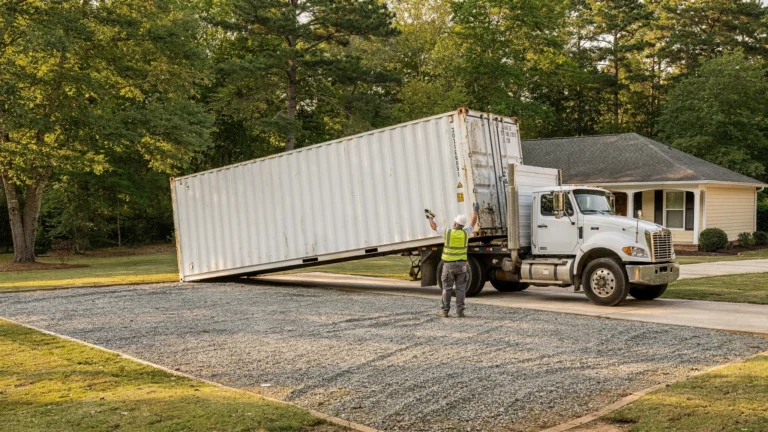
There is a trade-off, though. The extra exterior height can affect delivery clearance. Tree limbs, power lines, gate openings, and sloped access points become more important when a truck is carrying a container that already stands taller than standard.
Exterior vs interior dimensions
Buyers often focus on outside measurements first, because they need to know whether the container fits the site. That is the right starting point, but interior dimensions are what determine day-to-day usability.
If you are planning delivery around gates, branches, or overhead wires, review our Shipping Policy before finalizing the site layout.
Exterior dimensions
A typical 40ft high cube container measures 40 feet in length, 8 feet in width, and 9 feet 6 inches in height. Those are the dimensions that matter for site layout, setback planning, and delivery path review.
If the container will sit beside a building, fence line, or retaining wall, leave working room around it. Even if the container technically fits, tight spacing can make door access, maintenance, and future pickup difficult.
Interior dimensions
Interior measurements are slightly smaller because of the steel wall corrugations, structural framing, and marine-grade plywood floor. In practical terms, expect roughly 39 feet 5 inches of usable length, 7 feet 8 inches of usable width, and 8 feet 10 inches of interior height.
That interior height is the key advantage. Standard 40ft containers usually offer about 7 feet 10 inches of inside height. A high cube gives you about 12 more inches, which is significant when stacking goods or building out the space.
Door opening dimensions
The door opening is often overlooked until delivery day. On a 40ft high cube, the rear door opening is usually around 7 feet 8 inches wide and 8 feet 5 inches high.
That means your cargo has to clear the opening, not just fit inside the container. Tall riding mowers, compact equipment, crated machinery, and prefab components may fit the interior dimensions but still be limited by door height.
Weight, capacity, and what the dimensions do not tell you
Dimensions are only part of the picture. Weight ratings matter just as much if you are loading dense materials or using the container for long-term commercial storage.
A typical 40ft high cube container has a tare weight around 8,700 to 9,000 pounds, depending on build specs. Maximum gross weight is commonly 67,200 pounds. Payload capacity is often in the range of 58,000 pounds, though exact ratings vary.
Cubic capacity is generally around 2,700 cubic feet. That is one of the biggest reasons high cubes are popular for inventory, agricultural supplies, furniture storage, and conversion projects. You get more volume without increasing the container footprint.
Still, more volume does not automatically mean more practical storage. If you are storing dense items like tile, fasteners, engine parts, or bagged feed, floor loading and total weight can become the limiting factor before the container is physically full.
For a closer look at how condition affects usable storage space, door function, and long-term value, review our Container Conditions guide.
40ft high cube container dimensions for common use cases
For construction firms, a 40ft high cube works well when materials need to stay secure but accessible. Long tools, boxed fixtures, ladders, job-site consumables, and palletized stock all benefit from the extra height. If crews are in and out daily, better vertical clearance also makes the space easier to organize.
If your team needs a longer unit for job-site tools, materials, and secure access, compare our 40ft shipping containers to see which condition level fits daily use.
For agricultural operators, high cubes are often a practical fit for seasonal storage. Irrigation components, seed, hand tools, spare parts, and feed-related supplies can be stacked more efficiently. In rural settings, the extra room is useful, but delivery access still needs to be checked carefully, especially on soft ground or narrow drives.
For homeowners, the appeal usually comes down to flexibility. A 40ft high cube can serve as long-term storage, a workshop shell, or the base for a cabin or office project. The added headroom makes the interior feel less confined, which matters if the container will be occupied or upgraded rather than used strictly for storage.
Site planning and delivery clearance
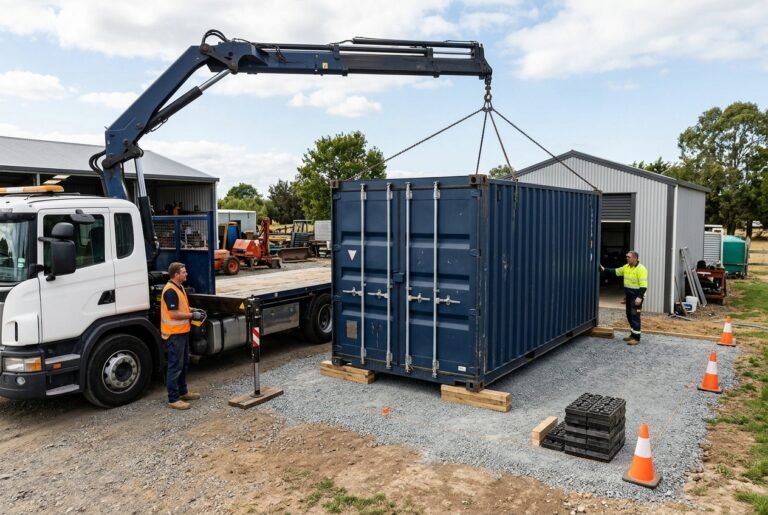
This is where dimensions become real-world logistics. A 40ft high cube container does not just need a spot to sit. It needs enough clearance to arrive, unload, and operate properly.
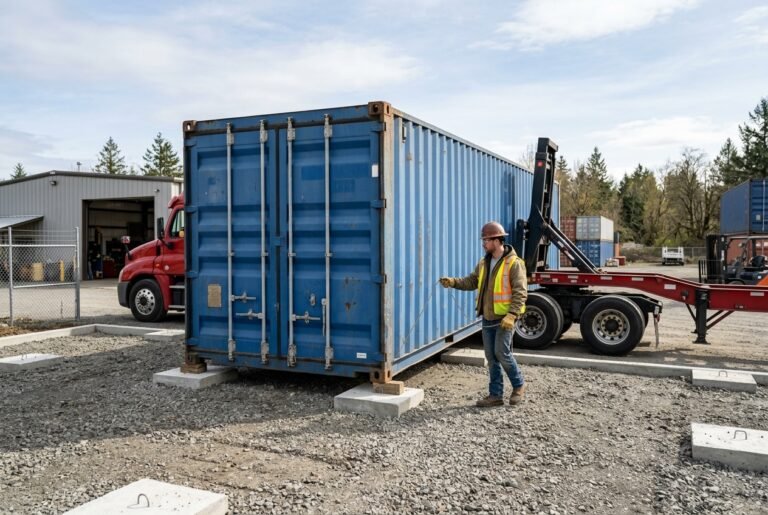
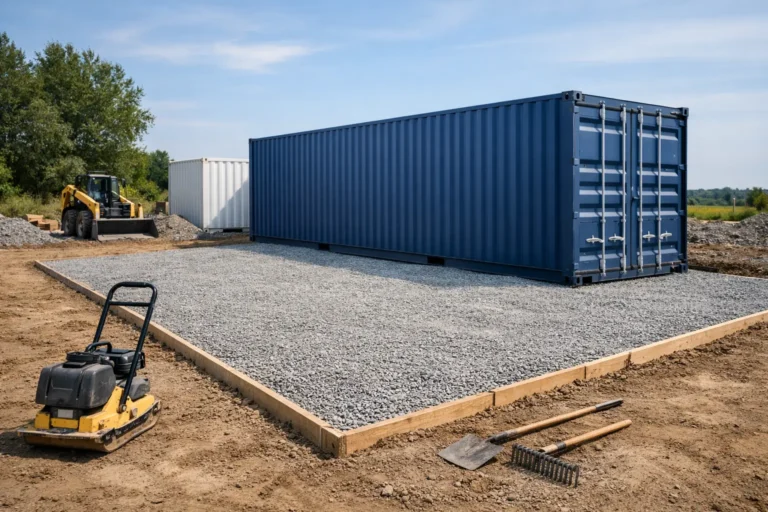
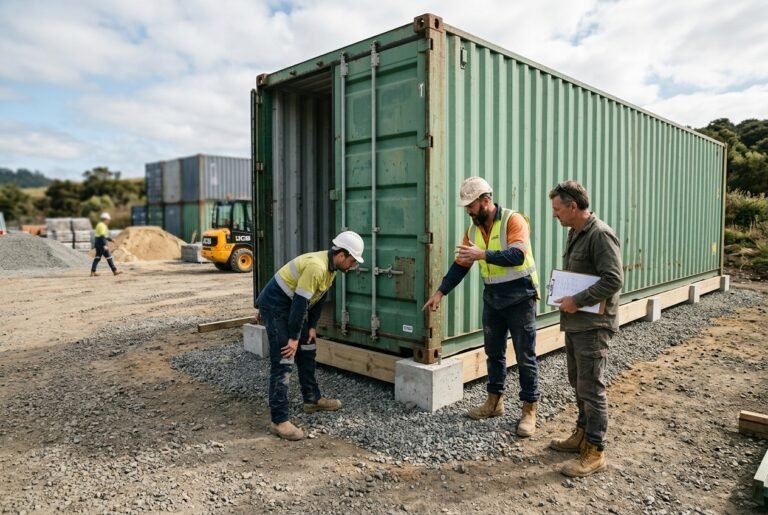
For ground placement, the site should be level, stable, and accessible to a delivery truck. Buyers often prepare for the 40-foot container itself but forget the truck and unloading angle. Tilt-bed delivery needs overhead clearance during the slide-off process, and that clearance requirement can be higher than the container’s resting height.
As a rule, plan for enough linear space to accommodate both the truck and container during unloading. You also want room in front of the doors so they can swing fully open. If the site has low branches, utility lines, soft soil, or a tight turning radius, those issues should be addressed before scheduling delivery.
If you are unsure whether your property has enough access for a 40ft delivery, contact our team before ordering so you can avoid redelivery fees and clearance surprises.
This is where a transparent seller adds real value. Verified dimensions help, but so does a clear review of the drop-off method. At Lease Lane Containers, that is part of avoiding hidden delivery problems and surprise charges.
Standard 40ft vs 40ft high cube
If you are deciding between the two, the question is usually not whether a high cube is better. It is whether the added height solves a specific problem worth paying for.
A standard 40ft container may be enough if you are storing tools, boxed materials, or equipment with modest height requirements. It can also be easier to place in areas with tighter overhead clearance.
A 40ft high cube makes more sense when you need better stacking efficiency, taller cargo access, or room for insulation and interior framing. For many commercial buyers, the extra height is worth it because it improves usability from the start. For some residential buyers, it is the better long-term choice if there is any chance the unit will later become a workshop, office, or modified structure.
If appearance, straighter panels, and more predictable dimensions matter for future build-out, compare our one-trip shipping containers as the cleaner upgrade path.
Condition, grading, and dimensional consistency
A one-trip container usually offers the cleanest condition and the most consistent dimensions, especially for doors, flooring, and overall structural alignment. Used containers can still be excellent storage assets, but cosmetic wear, repaired panels, or older flooring may slightly affect interior planning.
That does not mean used is a poor choice. It means the grade should match the job. A Wind & Watertight container may be a smart solution for secure storage. A Cargo Worthy or one-trip unit may be the better fit if appearance, door operation, or modification work is a priority.
When a buyer asks about dimensions, the real question is often broader: will this unit fit the site, the cargo, and the intended use without extra cost later? That is the right question to ask.
For buyers balancing dimensions, condition, and long-term cost, our used shipping containers can still be a smart value when the grade matches the job.
A 40ft high cube gives you more than an extra foot of height. It gives you more margin for loading, planning, and future use. If you verify the specs, match the grade to the job, and prepare the site properly, that extra space usually pays for itself in fewer constraints and fewer surprises.
9 Comments