Best 20ft shipping container in Atlanta, Georgia | 2026 Guide
Table of Contents
- Table of Contents
- Atlanta 20ft Shipping Container Quick Facts
- 20ft Shipping Container in Atlanta: What You Need to Know
- Top 20ft Shipping Container Options in Atlanta
- Budget-Friendly: Wind and Watertight Grade
- Mid-Range: Cargo Worthy Grade
- Premium: One-Trip Containers
- High Cube Option
- How to Choose the Right 20ft Shipping Container in Atlanta
- Verify the Grade and Condition
- Understand Georgia Regulations
- Ask the Right Questions
- Red Flags to Watch For
- Atlanta 20ft Shipping Container Market in 2026
- Atlanta 20ft Shipping Container FAQ
- How much does a 20ft shipping container cost in Atlanta?
- Do I need a permit to place a shipping container on my property in Atlanta?
- How long does delivery take?
- What site preparation do I need for delivery?
- Can I modify a 20ft container after purchase?
- Is a 20ft container big enough for my needs?
- Get 20ft Shipping Container in Atlanta Today
- Final Checklist
Table of Contents
- Atlanta 20ft Shipping Container Quick Facts
- 20ft Shipping Container in Atlanta: What You Need to Know
- Top 20ft Shipping Container Options in Atlanta
- How to Choose the Right 20ft Shipping Container in Atlanta
- Atlanta 20ft Shipping Container Market in 2026
- Atlanta 20ft Shipping Container FAQ
- Get 20ft Shipping Container in Atlanta Today
- Final Checklist
Atlanta’s growth over the past decade has turned the city into one of the Southeast’s most active markets for shipping containers. Between construction booms in Midtown, warehouse expansions near Hartsfield-Jackson, and residential storage needs spreading across DeKalb and Fulton counties, the demand for practical, affordable container solutions has surged. A 20ft shipping container hits a sweet spot for most buyers: compact enough to fit on a residential driveway or tight job site, yet spacious enough to hold roughly 1,170 cubic feet of materials, equipment, or inventory. If you’re searching for the best 20ft shipping container in Atlanta for 2026, the decisions you make around grade, condition, and delivery logistics will determine whether you get solid value or an expensive headache. This guide breaks down pricing, provider selection, market trends, and the practical details that Atlanta buyers need to get right the first time. Whether you’re a contractor staging tools near a Buckhead renovation or a small business owner storing overflow inventory in Conyers, the right container purchase starts with understanding your local options and the factors that separate a smart buy from a regrettable one.
Atlanta 20ft Shipping Container Quick Facts
Here’s what Atlanta buyers need to know before going any further:
- Typical pricing ranges from $2,200 to $5,500 for a 20ft container in the Atlanta metro area, depending on condition and grade. One-trip containers sit at the higher end, while wind and watertight units start closer to $2,200.
- Delivery timelines in metro Atlanta usually fall between 5 and 14 business days from order confirmation. Locations inside the I-285 perimeter may require additional coordination for tight streets and overhead clearance.
- Standard exterior dimensions for a 20ft container are 20 ft long x 8 ft wide x 8 ft 6 in tall, with roughly 1,170 cubic feet of interior volume. High cube versions add an extra foot of height, bringing total interior height to approximately 9 ft 6 in.
- Georgia does not require a special permit for placing a shipping container on private property in most unincorporated areas, but City of Atlanta zoning regulations and some suburban municipalities (Decatur, Marietta, Roswell) may require a temporary use permit or site plan approval.
- Local providers stand out when they offer transparent grading, clear delivery logistics, and honest condition assessments. Buyers who skip these details often end up with containers that don’t match their expectations.
Lease Lane Containers, based in Raleigh, North Carolina, delivers to the Atlanta metro area and provides container buying guidance that covers grades, sizing, and delivery planning before you commit to a purchase.
20ft Shipping Container in Atlanta: What You Need to Know
Atlanta’s shipping container market reflects the city’s position as a logistics hub. With the Port of Savannah roughly 250 miles southeast and major rail lines running through the metro, containers flow into the region consistently. That supply chain proximity keeps prices competitive compared to landlocked cities further from port access.
The 20ft container is the most popular size for non-commercial buyers in Atlanta. Contractors working sites in Midtown, Buckhead, or along the BeltLine corridor choose this size because it fits on tighter urban lots where a 40ft unit simply won’t work. Homeowners in neighborhoods like Grant Park, East Atlanta Village, and Kirkwood use them for backyard storage, workshop conversions, or holding furniture during renovations. Small businesses along the Buford Highway corridor and in industrial pockets near the airport use them for inventory overflow and seasonal stock.
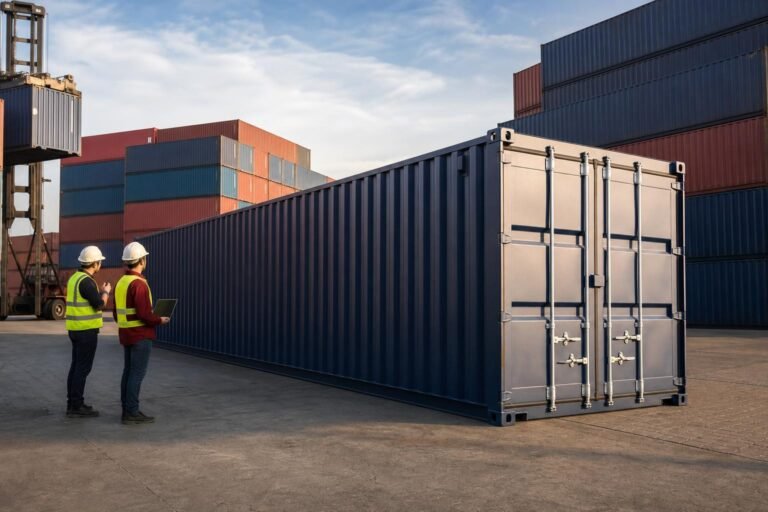
Three container grades dominate the Atlanta market. One-trip containers have made a single voyage from the manufacturer (typically in China) to a U.S. port. They arrive in near-new condition with minimal cosmetic wear. Cargo worthy containers have been inspected and certified for international shipping, meaning they’re structurally sound with some surface rust and dents. Wind and watertight units are retired from active shipping but still keep weather out. They show the most cosmetic wear but remain fully functional for storage.
Location matters more than most buyers realize. A container destined for a property in Sandy Springs with a steep driveway and low-hanging power lines requires different delivery planning than one heading to a flat lot in McDonough. Understanding your site conditions before you order prevents costly delivery failures and re-scheduling fees.
Top 20ft Shipping Container Options in Atlanta
Budget-Friendly: Wind and Watertight Grade
For buyers who need functional storage without cosmetic concerns, wind and watertight containers offer the lowest entry point. Expect to pay between $2,200 and $3,000 in the Atlanta market for a 20ft unit in this grade. These containers have visible wear: surface rust, dents, patched areas, and faded paint. The doors open and close, the seals keep moisture out, and the floor remains solid.
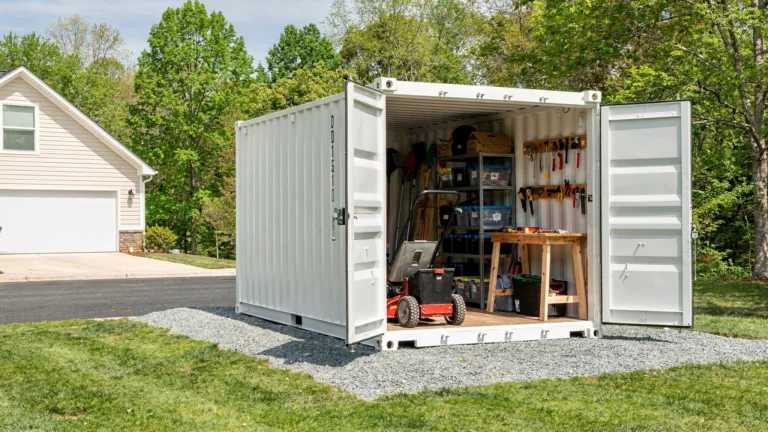
This tier works well for homeowners storing lawn equipment, contractors holding non-sensitive materials, or farms keeping feed and tools dry. If appearance matters to you or your HOA, this isn’t the right choice. But for raw utility on a budget, it’s hard to beat.
Mid-Range: Cargo Worthy Grade
Cargo worthy containers cost between $3,000 and $4,200 for a 20ft unit in Atlanta. These have been inspected and meet the structural standards required for ocean transport. You’ll see some cosmetic damage, but the container’s integrity is verified. Floors are solid, corner castings are intact, and doors seal properly.
This is the most popular tier for small businesses and contractors who need a container that looks presentable and functions reliably. If you’re placing a container on a commercial property or a visible area of a job site, cargo worthy strikes the right balance between cost and condition.
Premium: One-Trip Containers
One-trip containers run between $4,200 and $5,500 for a 20ft unit. They arrive with factory-fresh paint, clean interiors, and minimal handling marks. For buyers planning container office conversions, retail pop-ups, or any project where appearance matters, this is the grade to choose.
Atlanta’s growing interest in container-based commercial spaces, particularly along the BeltLine and in developing areas like West End, has driven steady demand for one-trip units. Lease Lane Containers offers one-trip and used shipping containers with clear grading so buyers know exactly what they’re getting before delivery.
High Cube Option
A high cube shipping container adds roughly 12 inches of interior height compared to standard units. For a 20ft high cube, expect to pay a $300 to $800 premium over the equivalent standard-height container. This extra clearance matters if you’re building out a workspace, storing tall equipment, or converting the container into a livable or commercial space. The additional height also improves airflow and comfort for anyone spending time inside.
How to Choose the Right 20ft Shipping Container in Atlanta
Picking the right container isn’t just about price. A structured approach saves you from common mistakes that cost Atlanta buyers hundreds or thousands of dollars every year.
Verify the Grade and Condition
Ask any seller for specific photos of the actual unit you’ll receive, not stock images. Reputable suppliers provide images of the container’s exterior walls, roof, floor, door seals, and corner castings. If a seller can’t show you the specific container, that’s a red flag worth taking seriously.
For used shipping containers, inspect for these issues or request documentation:
- Rust penetration through walls or roof panels (surface rust is normal; holes are not)
- Floor condition, including soft spots, water damage, or missing patches
- Door operation: both doors should swing freely and latch securely
- Seal integrity around door gaskets
- Corner casting condition (cracked or bent castings compromise structural safety)
Understand Georgia Regulations
Georgia doesn’t have a statewide container placement permit, but local jurisdictions set their own rules. The City of Atlanta requires containers on residential property to comply with zoning setback requirements, and some neighborhoods fall under historic preservation overlays that add restrictions. Fulton County’s planning department (404-612-0700) can clarify requirements for unincorporated areas. DeKalb County has similar processes through their zoning division.
If you’re placing a container for commercial use, check with your local building inspector about foundation requirements and fire code compliance. Containers used as occupied spaces (offices, retail) trigger different permit requirements than those used purely for storage.
Ask the Right Questions
Before committing to any supplier, get clear answers on these points:
- What is the exact grade of this container, and can you provide photos of the specific unit?
- What’s included in the delivery price, and what are the site requirements for drop-off?
- Is there a warranty or return policy if the container doesn’t match the described condition?
- How is delivery planning handled for my specific address?
- Can you confirm the container’s CSC plate status (for cargo worthy units)?
Red Flags to Watch For
Avoid sellers who won’t provide specific unit photos, who quote prices dramatically below market rates, or who can’t explain the difference between container grades. A $1,500 “20ft container” in Atlanta almost certainly has structural issues that make it unsuitable for anything beyond scrap. Sellers who pressure you to pay in full before seeing photos or documentation are another warning sign.
Atlanta 20ft Shipping Container Market in 2026
The Atlanta container market in 2026 reflects several converging trends. Construction activity across the metro remains strong, driven by mixed-use developments in Midtown, continued BeltLine expansion, and suburban growth in Gwinnett and Cherokee counties. Each of these projects generates demand for on-site storage, and 20ft containers remain the default choice for job site staging.
Pricing has stabilized compared to the volatility of 2021-2023, when pandemic-era shipping disruptions pushed container costs to historic highs. A one-trip 20ft container that sold for $6,500 or more in 2022 now sits closer to $4,500 to $5,500. Used shipping container prices have settled into a more predictable range, making 2026 a favorable year for buyers who postponed purchases during the price spike.
Seasonal patterns affect availability. Spring and summer bring the highest demand as construction projects ramp up and homeowners tackle renovation and storage projects. Buyers who order between October and February typically find shorter delivery windows and occasionally better pricing as demand softens.
Atlanta’s market compares favorably to other Georgia metros. Savannah’s proximity to the port means slightly lower prices on average, but Atlanta’s larger supplier network gives buyers more options for grade selection and delivery scheduling. Smaller Georgia markets like Augusta, Macon, and Columbus have fewer local suppliers, which often means longer delivery timelines and higher transport costs.
One notable 2026 trend is increased interest in container modifications for commercial use. Atlanta’s food truck and pop-up retail scene has expanded into container-based storefronts, particularly in neighborhoods like Ponce City Market’s surrounding blocks and the Westside Provisions District. This demand has tightened supply for one-trip containers specifically, so buyers targeting that grade should plan purchases 2-3 weeks ahead of their needed delivery date.
Atlanta 20ft Shipping Container FAQ
How much does a 20ft shipping container cost in Atlanta?
Prices range from approximately $2,200 for a wind and watertight unit to $5,500 for a one-trip container. Delivery costs vary based on distance from the supplier’s depot and site accessibility, typically adding $200 to $600 within the metro area. Properties outside I-285 or in areas requiring specialized delivery equipment may see higher transport fees.
Do I need a permit to place a shipping container on my property in Atlanta?
In the City of Atlanta, residential container placement generally requires compliance with zoning setback rules. Some neighborhoods have additional restrictions through historic preservation or HOA covenants. Unincorporated areas of Fulton and DeKalb counties have different requirements. Contact your local zoning or planning office before ordering. For commercial use, building permits are typically required.
How long does delivery take?
Most suppliers can deliver within 5 to 14 business days to the Atlanta metro area. Factors that extend timelines include inventory availability for specific grades, site access challenges, and seasonal demand peaks during spring and summer months.
What site preparation do I need for delivery?
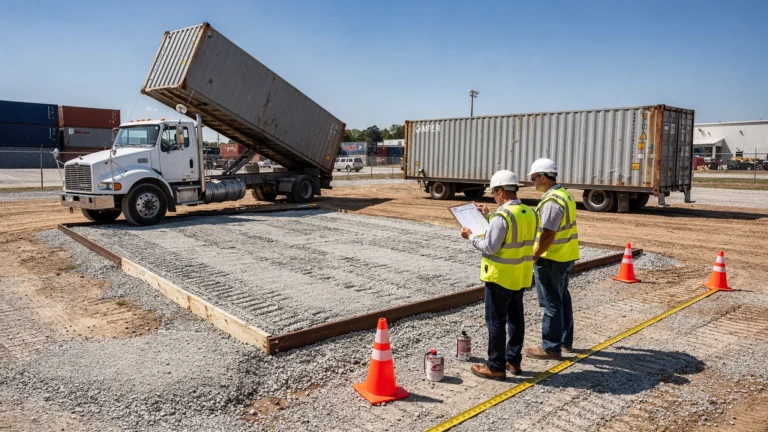
A flat, level surface is essential. Gravel pads work well and cost between $500 and $1,500 depending on size and depth. Concrete piers or railroad ties are alternatives for softer ground. You’ll need a clear path at least 12 ft wide and 14 ft of overhead clearance for the delivery truck. Tilt-bed trucks require roughly 100 ft of straight approach for safe placement. Lease Lane Containers provides delivery planning support to help buyers assess site access, turning radius, and clearance requirements before scheduling.
Can I modify a 20ft container after purchase?
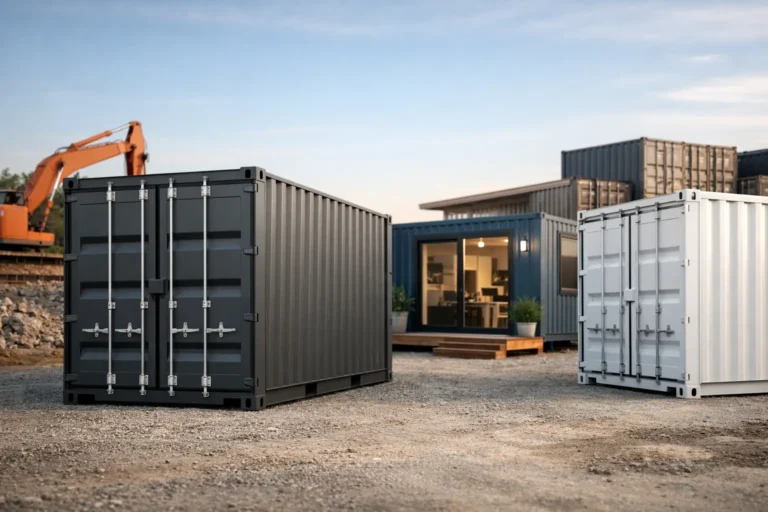
Yes. Common modifications include adding ventilation, installing roll-up doors, cutting windows, adding insulation, and electrical wiring. For container office conversions or occupied spaces, work with a licensed contractor familiar with Georgia building codes. One-trip containers are the preferred base for modifications because their structural integrity and clean condition make fabrication work easier and more predictable.
Is a 20ft container big enough for my needs?
A standard 20ft container holds roughly 1,170 cubic feet. As a rule of thumb, that’s equivalent to about one and a half standard single-car garages. It comfortably stores the contents of a small apartment or a significant amount of construction materials and tools. For larger needs, a 40ft container doubles the capacity, but requires substantially more site space and delivery clearance.
Get 20ft Shipping Container in Atlanta Today
If you’ve read this far, you have a solid understanding of what the Atlanta market offers and what to look for. Here’s how to move forward efficiently.
Start by confirming your site conditions. Measure your available space, check overhead clearance for delivery trucks, and verify any zoning or HOA restrictions with your local jurisdiction. Having this information ready before you contact a supplier eliminates back-and-forth and speeds up the process.
Decide on your grade based on your intended use. Storage-only applications can go with wind and watertight. Visible commercial placement or modification projects warrant a one-trip container. Everything in between fits the cargo worthy category.
Request quotes from at least two suppliers, and ask for photos of the specific unit you’d receive. Compare not just the container price but the total delivered cost, including transport, placement, and any site prep requirements.
Lease Lane Containers works with Atlanta-area buyers regularly, providing clear guidance on container grades, dimensions, and delivery logistics from their Raleigh, North Carolina base. Their team helps you plan site access, compare container options, and avoid the common pitfalls that turn a straightforward purchase into a frustrating experience.
Final Checklist
Use this before placing your order:
- Confirmed site dimensions and verified the container fits with required setbacks
- Checked overhead clearance (minimum 14 ft) and approach path width (minimum 12 ft)
- Verified local zoning and permit requirements with your municipality
- Selected the appropriate container grade for your use case
- Requested and reviewed photos of the specific container unit
- Confirmed total delivered price including transport and placement fees
- Verified door operation, seal condition, and floor integrity (for used units)
- Planned site preparation: gravel pad, concrete piers, or level ground
- Confirmed delivery timeline and scheduling with your supplier
Finding the right 20ft shipping container in Atlanta comes down to preparation, honest supplier communication, and understanding your site requirements. The market in 2026 favors informed buyers who know what questions to ask. To compare sizes, grades, and current availability, browse available inventory from Lease Lane Containers. If you have questions about your specific project or delivery logistics, contact the team for straightforward guidance before you commit.