Best Accessories for Storage Containers On Site
A shipping container solves the immediate problem of secure space. The next problem is making that space work without creating daily delays, damaged inventory, or a security weak point. The best accessories for storage containers are not necessarily the most expensive additions. They are the components that match what you store, who needs access, and the conditions at your site.
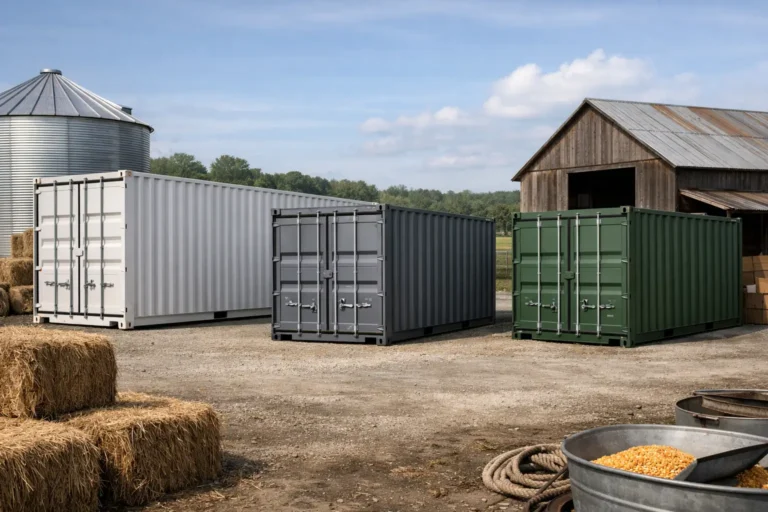
A contractor storing power tools has different priorities than a farm operator storing parts and feed supplies. A homeowner using a 20-foot container as a workshop has different access and moisture-control needs than a retailer holding seasonal inventory. Start with the job the container must perform, then add only the accessories that improve security, organization, safety, or access.
Start With the Container’s Intended Use
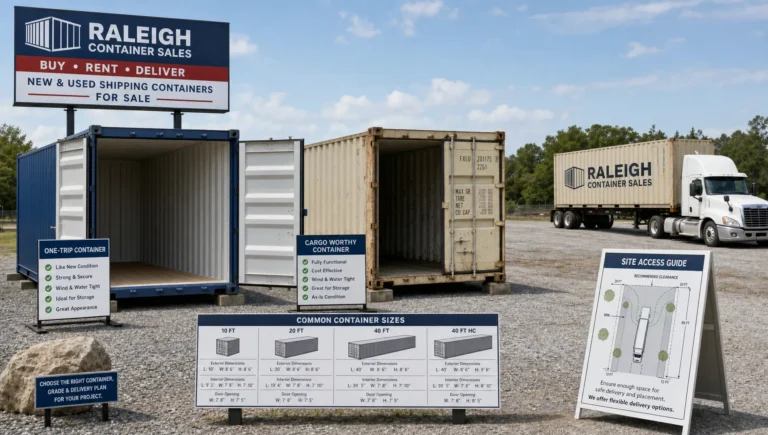
Before ordering accessories, confirm the container grade, dimensions, door condition, and placement plan. A Wind and Watertight container is designed to keep weather out, but it is not automatically set up as a climate-controlled storeroom. A Cargo Worthy container has a structurally sound frame suitable for ocean transport, but that rating alone does not determine whether the interior is organized for your operation.
For high-value tools and materials, prioritize physical security and controlled access. For inventory or archived materials, focus on shelving, condensation control, and lighting. If equipment with wheels will move in and out, access ramps and door clearances should be addressed before delivery.
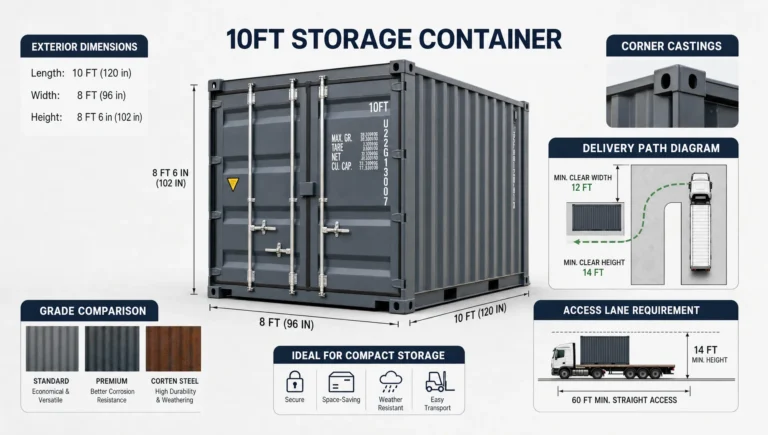
The container itself also affects your options. A standard 20-foot unit is often ideal for compact job-site storage, while a 40-foot high-cube container provides more headroom for tall shelving and bulk storage. Avoid buying accessories based only on interior length. Measure the usable space after allowing room for door operation, walkways, and safe loading.
Security Accessories That Address Real Risks
Lockboxes and high-security locks
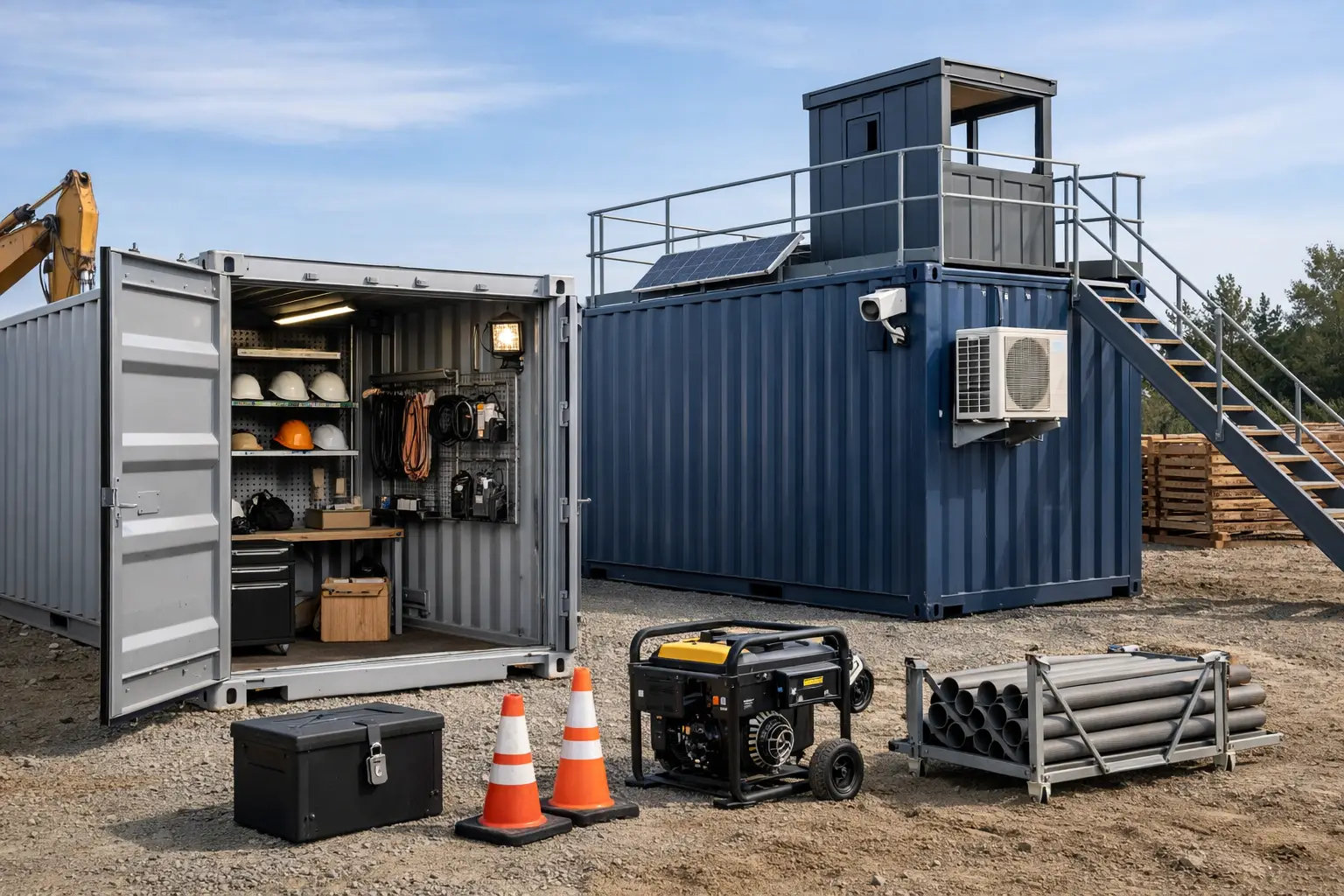
A welded steel lockbox is one of the most practical upgrades for a storage container holding valuable equipment. It covers the lock area and limits access for bolt cutters, pry bars, and other common forced-entry tools. For construction sites, remote properties, and commercial overflow storage, a lockbox should be considered a baseline security measure rather than a cosmetic add-on.
Pair the lockbox with a purpose-built puck lock or discus-style lock sized for the enclosure. The lock should sit recessed within the lockbox whenever possible. A standard padlock may be convenient, but an exposed shackle is easier to attack and can become a liability when the container is left unattended overnight.
Security works best when the container is positioned intelligently. Place the doors where they are visible from the work area or property, but leave enough clearance for delivery equipment and full door swing. Do not assume that a fence alone replaces a secure locking system.
Personnel doors for frequent entry
Opening both cargo doors repeatedly is inefficient when workers need small items throughout the day. A steel personnel door can create a more convenient point of entry, especially for workshop conversions, inventory rooms, and staffed job sites. It also reduces wear on the original cargo-door hardware.
There is a trade-off. Cutting a side opening changes the container wall and must be reinforced correctly to preserve structural integrity. This is not a place for an unplanned field modification. Use a qualified fabricator who understands container corrugation, steel framing, and weather sealing.
Organization Accessories That Protect Inventory
A container with loose materials stacked along the walls becomes difficult to use quickly. It also makes it harder to see missing items, inspect stock, or retrieve heavy supplies safely. Organization accessories should create defined storage zones while keeping a clear central aisle.
Shelving and racking
Freestanding steel shelving is a strong choice for boxed materials, fasteners, maintenance supplies, and smaller tools. For tall containers, vertical shelving can use space that would otherwise remain empty. Anchor shelving carefully to the floor or approved structural points so it cannot shift during loading or when a container is moved.
For heavier parts, pallet racking may be appropriate, but calculate the expected load rather than relying on shelf size alone. The container’s marine-grade plywood floor is durable, yet point loads from rack legs, machinery, and pallets can damage the floor over time. Distributing weight with suitable base plates or runners can prevent localized wear.
Do not fill every wall with racking. A narrow aisle may look efficient on paper but slows down a crew carrying tools or moving material with a pallet jack. In most working containers, access is as valuable as total storage capacity.
Tie-down points and cargo restraint
Containers often include factory tie-down rings near the lower side rails. These are useful for securing equipment, generators, rolling carts, and bulky materials with rated straps or chains. If additional restraint points are needed, use hardware designed for the anticipated load and installed without compromising the container wall or floor.
Cargo restraint is especially useful when the container may be relocated. A container that is stationary today can still require transport later, and unsecured shelving or equipment can shift in transit.
Moisture-Control Accessories for Long-Term Storage
Steel containers can experience condensation when warm, humid air meets cooler steel surfaces. This is commonly called container rain, and it can affect cardboard packaging, wood products, tools, electronics, and textiles even when the container has no leak.
Passive vents and desiccants
Passive vents improve airflow and can reduce trapped humidity. They are useful in general storage containers, particularly in the Southeast where heat and humidity can be persistent. Properly installed vents should shed water and be placed to support air movement without creating an easy entry point for pests or intruders.
Desiccants are a practical secondary measure for sealed inventory, sensitive tools, and short-term humidity control. They are not a substitute for ventilation if the container is opened frequently or holds moisture-producing materials. Check and replace them on a regular schedule.
Insulation and interior liners
Insulation can reduce temperature swings and condensation, but the right approach depends on how the container will be used. Closed-cell spray foam can provide effective coverage and moisture resistance, while framed interior walls may create a cleaner finish for an office or workshop. Both options reduce usable interior width and can make future repairs or modifications more involved.
For basic equipment storage, ventilation and disciplined packing may be enough. For climate-sensitive inventory, electronics, or an occupied workspace, insulation may need to be paired with electrical service and active heating or cooling.
Access and Safety Equipment for Daily Operations
A container door sill is elevated above grade, so loading access deserves more attention than many buyers expect. A properly rated container ramp allows wheeled equipment, dollies, and hand trucks to move safely inside. Select a ramp based on the heaviest load, the wheel type, and the available approach distance. A light-duty ramp is not appropriate for a skid steer, forklift, or loaded pallet jack.
Interior LED lighting is another high-value addition. Battery-powered lights can work for occasional access, while hardwired LED fixtures make more sense for a container used as a workshop, parts room, or frequent-access inventory space. Any electrical installation should be planned around code requirements, weather exposure, and the power source available at the site.
Exterior lighting and cameras can support security, but they should not distract from the basics: a lockbox, a quality lock, a stable placement surface, and clear control over who has keys or access codes.
Match Accessories to the Delivery and Site Plan
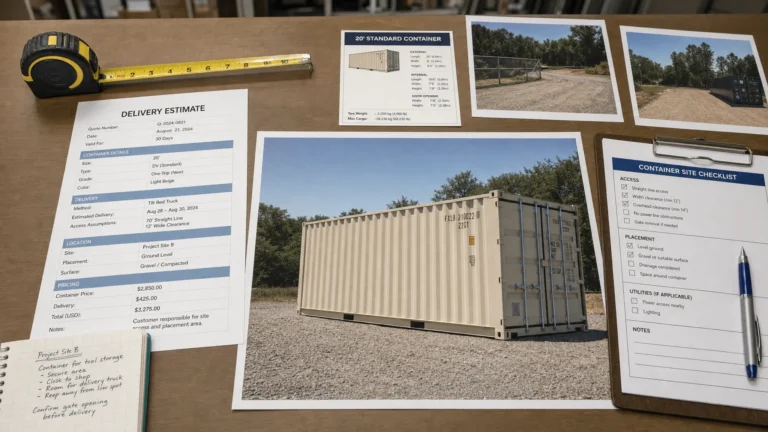
The best accessory package can fail if the container is placed on an unsuitable site. The ground should be firm, reasonably level, and capable of supporting the container and its stored load. Concrete piers, gravel pads, or properly placed support blocks can help maintain drainage and keep the container doors operating correctly.
Leave enough room around the container for delivery. Tilt-bed and ground-level delivery methods require clear approach space, overhead clearance, and a path free of soft ground, parked vehicles, and low branches. If you plan to add a ramp at the cargo doors, account for that footprint before final placement.
For containers that may be exposed to high winds or kept in a long-term location, anchoring systems can be worthwhile. The right solution depends on soil conditions, local exposure, container size, and whether the unit needs to remain movable. A site-specific recommendation is better than a one-size-fits-all anchor kit.
A Practical Priority Order for Storage Container Accessories
If budget requires a phased approach, start with security, then access, then organization and environmental control. For most job-site containers, that means a lockbox and high-security lock first, followed by a ramp or lighting if daily use requires it. Shelving, vents, insulation, and custom doors can follow once you know how the container is actually being used.
Buy accessories that solve a documented operating problem, not accessories that merely look useful in a catalog. A well-secured container with clear aisles, dry inventory, and safe access will serve a crew or property owner far better than an overbuilt unit with features no one uses. The right setup is the one that keeps your materials protected and your work moving without surprises.