How to Choose a High Cube Container for Storage
A high cube container can solve a storage problem that a standard-height unit cannot – but only if the extra height works for your cargo, site, and delivery plan. When customers ask how to choose a high cube container, the answer is rarely just “get the tallest one.” The right choice depends on what must fit inside, how often it will move, the condition you can accept, and whether a delivery truck can place it safely.
For contractors, agricultural operators, and property owners, the value of a high cube is straightforward: more usable vertical clearance without increasing the container’s footprint. That added space can make a meaningful difference for stacked materials, tall equipment, shelving, workshop layouts, and modular build-outs. It also introduces a few practical considerations that should be confirmed before purchase.
Start With the Extra Height You Are Actually Buying
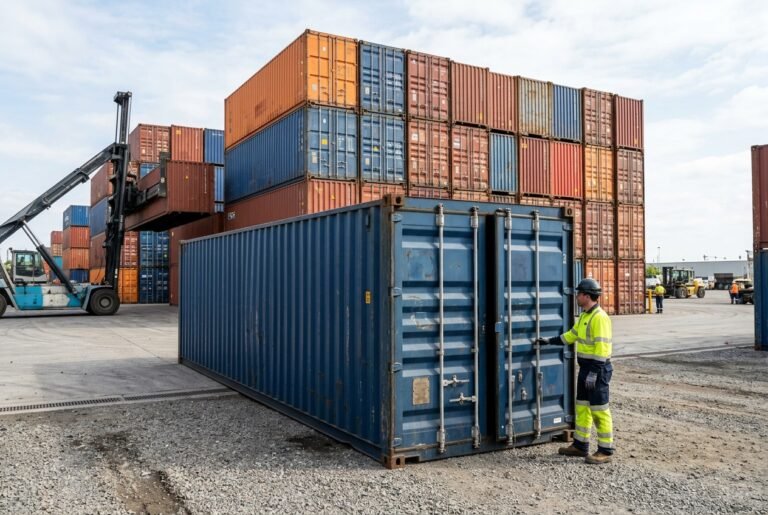
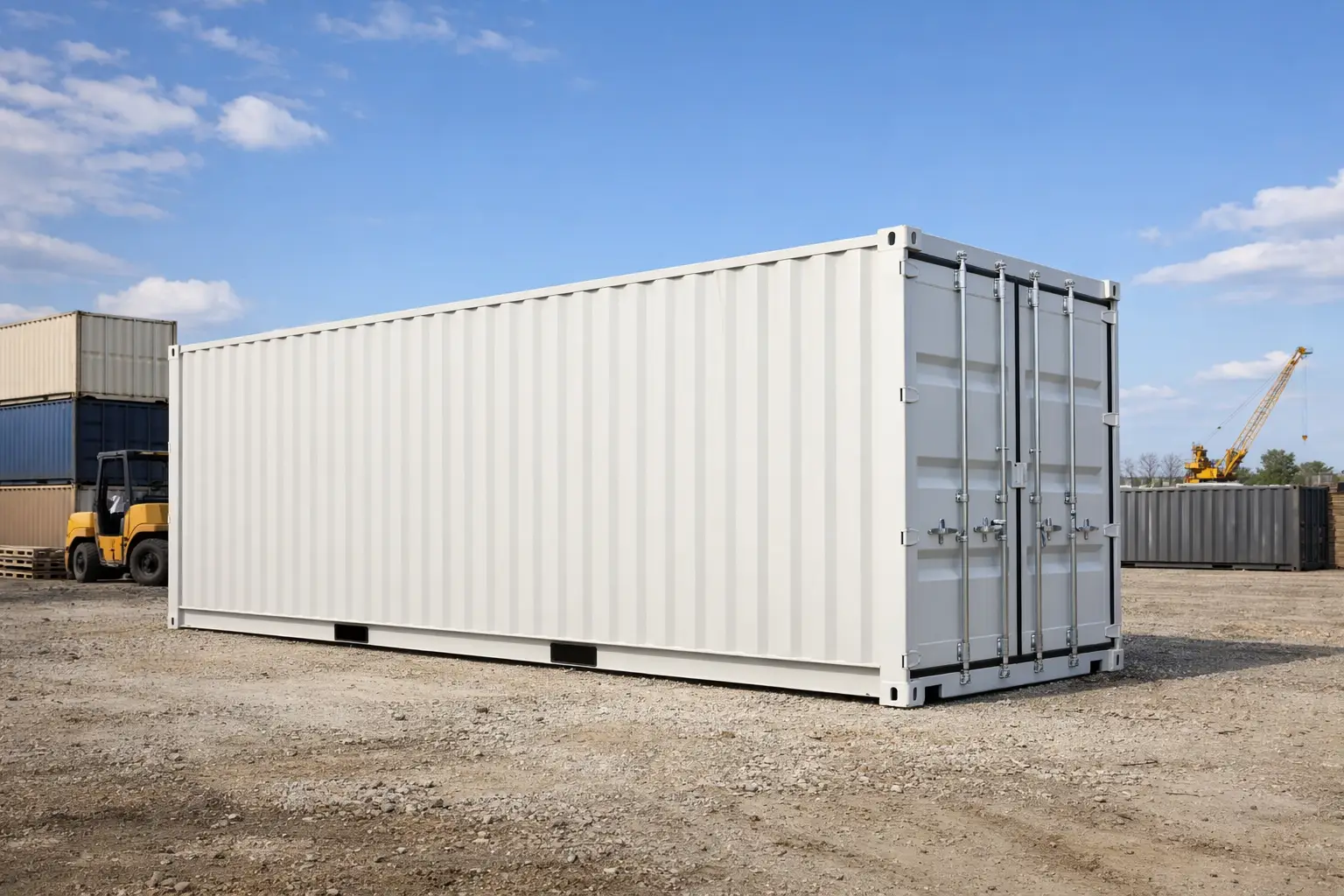
A standard shipping container is typically 8 feet 6 inches tall externally. A high cube container is typically 9 feet 6 inches tall externally. That one additional foot is the defining feature.
On a common 40-foot high cube, interior height is generally about 8 feet 10 inches, compared with roughly 7 feet 10 inches in a standard 40-foot container. Exact interior dimensions can vary slightly by manufacturer, floor condition, and container age, so verified specifications matter when equipment clearance is tight.
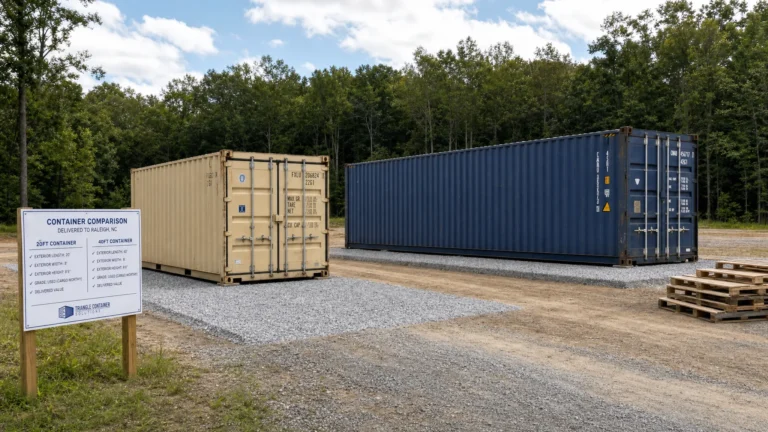
The footprint does not change. A 40-foot high cube remains approximately 40 feet long and 8 feet wide outside. If your site already has a designated container pad, the high cube may fit the same ground space while giving you noticeably more volume.
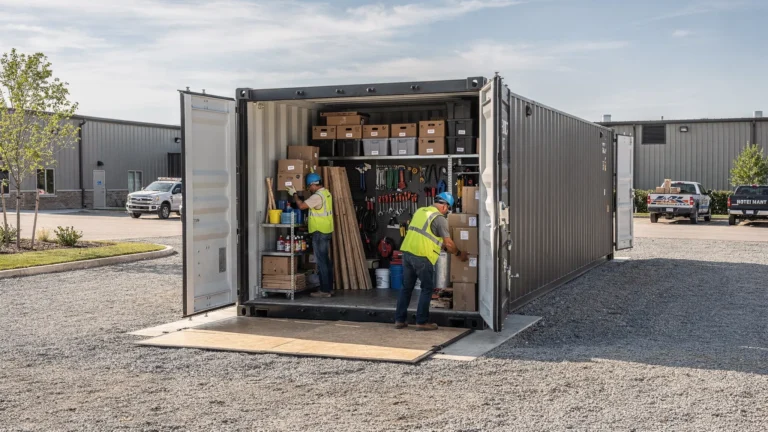
That said, extra height is only useful if you can use it. A homeowner storing lawn equipment and boxed household goods may be well served by a standard-height 20-foot unit. A contractor storing scaffold components, tall tool cabinets, palletized supplies, or rack systems may benefit immediately from a 40-foot high cube. For a workshop, office conversion, or container home shell, the added headroom often improves the finished space substantially after insulation, framing, and ceiling materials are installed.
Choose the Length Before You Choose the Condition
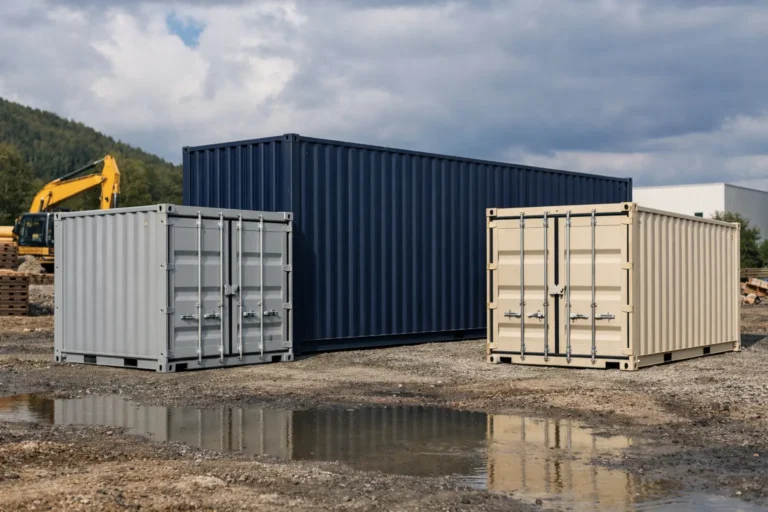
High cube containers are most commonly available in 40-foot and 45-foot lengths. Availability varies by depot and region, and 20-foot high cubes are less common than standard 20-foot containers. Start by calculating both storage volume and access requirements.
A 40-foot high cube is often the practical choice for job-site storage, inventory overflow, agricultural supplies, and larger workshop projects. It provides significant capacity while remaining a familiar format for delivery planning. A 45-foot high cube offers more interior length, which can be useful for retail inventory, modular projects, or large equipment storage, but it also requires more placement room and may have more limited local availability.
Do not choose length based on square footage alone. Consider how the container will be loaded. A long container filled from the doors inward can become inefficient if workers need frequent access to items stored near the front wall. In that case, shelving along one side, a clear center aisle, or a tunnel container with doors at both ends may be a better operational solution than simply buying more length.
Match Container Grade to the Job
A high cube container is not automatically new, clean, or suitable for every purpose. Condition grading should be discussed in plain terms before you commit.
A new, or one-trip, high cube has typically made a single loaded voyage from its manufacturing origin. These units usually offer the cleanest appearance, newer door hardware, and minimal floor wear. They are often preferred for customer-facing retail uses, residential properties, offices, and projects where exterior appearance matters.
A used Wind and Watertight, or WWT, container is generally the practical choice for secure storage. It should have functioning doors, a weather-resistant shell, and a serviceable floor, but it may show dents, patches, surface rust, prior repairs, or cosmetic wear. For construction materials, farm tools, and job-site equipment, a WWT high cube often provides the right balance of durability and price.
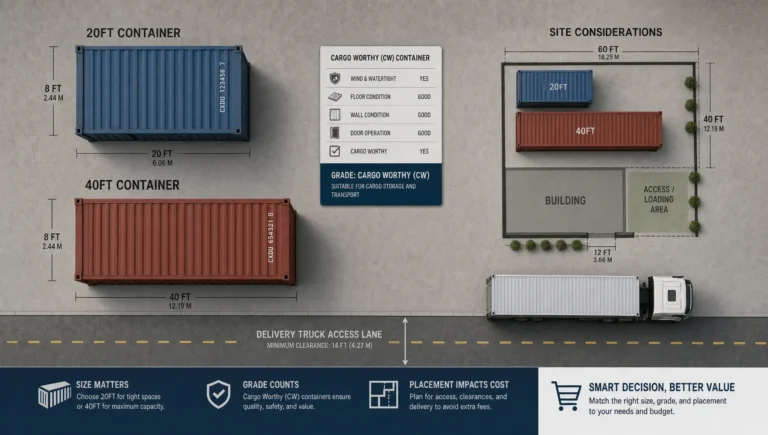
Cargo Worthy containers meet standards required for international shipping at the time of certification. If you plan to export goods, a Cargo Worthy unit and a current inspection certificate may be necessary. If the container will remain on your property as static storage, paying for Cargo Worthy status may not be necessary unless you need the added assurance of a more tightly defined inspection standard.
Ask for the grade in writing, along with current photos when available. “Used” is not a complete specification. Clear grading reduces the risk of receiving a container whose cosmetic condition or repair history does not fit your project.
Inspect the Features That Affect Daily Use
The steel shell gets most of the attention, but the doors, floor, ventilation, and lock protection determine how convenient the container will be after delivery.
First, confirm the door configuration. Standard cargo doors at one end work well for most storage applications. If you need to retrieve materials regularly, plan the interior around door access rather than filling the entire floor from wall to wall. Containers with factory-installed lockboxes provide recessed protection for a padlock and are a worthwhile security feature for tools, equipment, and high-value inventory.
Next, check the flooring. Most shipping containers use marine-grade plywood over steel cross members. Look for significant soft spots, broken boards, contamination, or excessive damage around the door threshold. For equipment with concentrated wheel loads, confirm whether the floor can handle the intended use and consider a steel plate or load-distribution approach where needed.
Ventilation also deserves attention. Shipping containers are designed to keep cargo protected, not to function as climate-controlled buildings. Temperature swings and humidity can create condensation inside any steel container. Passive vents, moisture control, insulation, or a dehumidification plan may be appropriate for paper goods, electronics, furniture, or sensitive inventory. For a finished office or workshop, ventilation and insulation should be designed as part of the conversion, not added as an afterthought.
Plan Delivery Around High Cube Clearance
A high cube’s 9-foot-6-inch height can complicate delivery where tree limbs, utility lines, gates, or carports are close to the access route. The container may fit on the pad but still be impossible to place safely if the truck cannot reach the location or raise the unit during unloading.
Ground-level delivery using a tilt-bed truck is often convenient because the container can be set directly onto prepared supports. However, the truck needs a long, straight approach and substantial overhead clearance while the container is elevated. A rule-of-thumb clearance of about 14 feet may be appropriate in many situations, but the actual requirement depends on the truck, container length, slope, and placement method. Low wires and overhanging branches must be evaluated before the truck arrives.
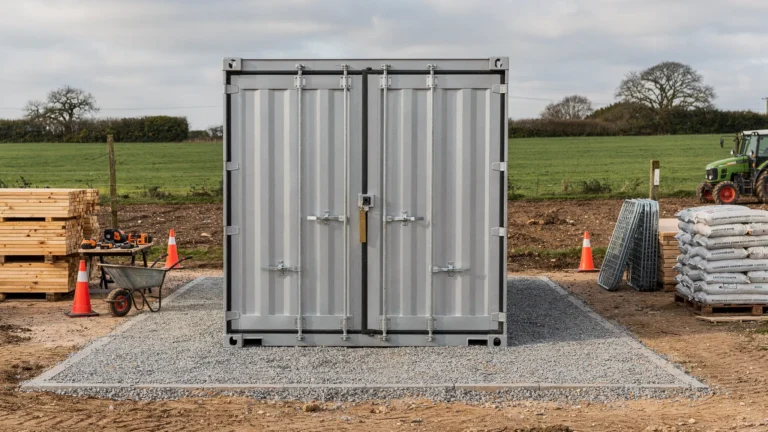
Prepare a stable, level base that supports the corner castings and allows water to drain away. Railroad ties, concrete blocks, gravel pads, and concrete piers can all work when properly planned for the soil conditions and container use. Avoid placing a container directly on uneven ground. Poor support can cause the frame to twist, making doors difficult to operate and creating drainage issues.
For restricted sites, a truck with a different delivery configuration or a local crane arrangement may be necessary. This is where clear delivery details matter more than a generic freight quote. Share gate width, driveway surface, turns, slope, overhead obstacles, and final placement location before scheduling.
Consider Whether You Will Modify the Container
High cubes are popular for conversions because their added interior height leaves more room after finishing work. But modifications change the structural behavior of the container.
Cutting large openings for windows, personnel doors, roll-up doors, or connected modules may require steel reinforcement. Removing side-wall sections without a structural plan can weaken the container’s corrugated Corten steel shell. Welding and cutting can also damage protective coatings, so exposed metal should be treated and repainted to limit corrosion.
If you intend to add electrical service, climate control, interior walls, or plumbing, decide that before the container is delivered. A clear design helps you select the right door orientation, container condition, and placement direction from the beginning. It also prevents the common mistake of setting a container with its doors facing a fence, slope, or area with no practical loading access.
Use a Pre-Purchase Checklist
Before approving a high cube container, confirm these operational details with your supplier:
- The exact length, exterior height, and approximate interior clearance
- The condition grade: one-trip, WWT, refurbished, or Cargo Worthy
- Door operation, floor condition, vents, and lockbox availability
- Current container photos or verified condition information
- Delivery method, site clearance, placement direction, and base preparation
- Total price, including delivery and any agreed modifications
A high cube container is a durable, flexible asset when its dimensions, grade, and delivery requirements are matched to the work ahead. The best purchase is not necessarily the newest or largest unit. It is the one that arrives with verified specifications, sits correctly on a prepared site, and gives you the clearance and access your operation will need long after delivery day.