Shipping Container Versus Portable Shed Which Fits Best?
A locked-up tool trailer is useful until the job grows, the inventory gets expensive, or the weather turns. The real question in a shipping container versus portable shed decision is not which structure looks better on day one. It is which one can protect your equipment, fit your site, and keep working without creating delivery or maintenance surprises.
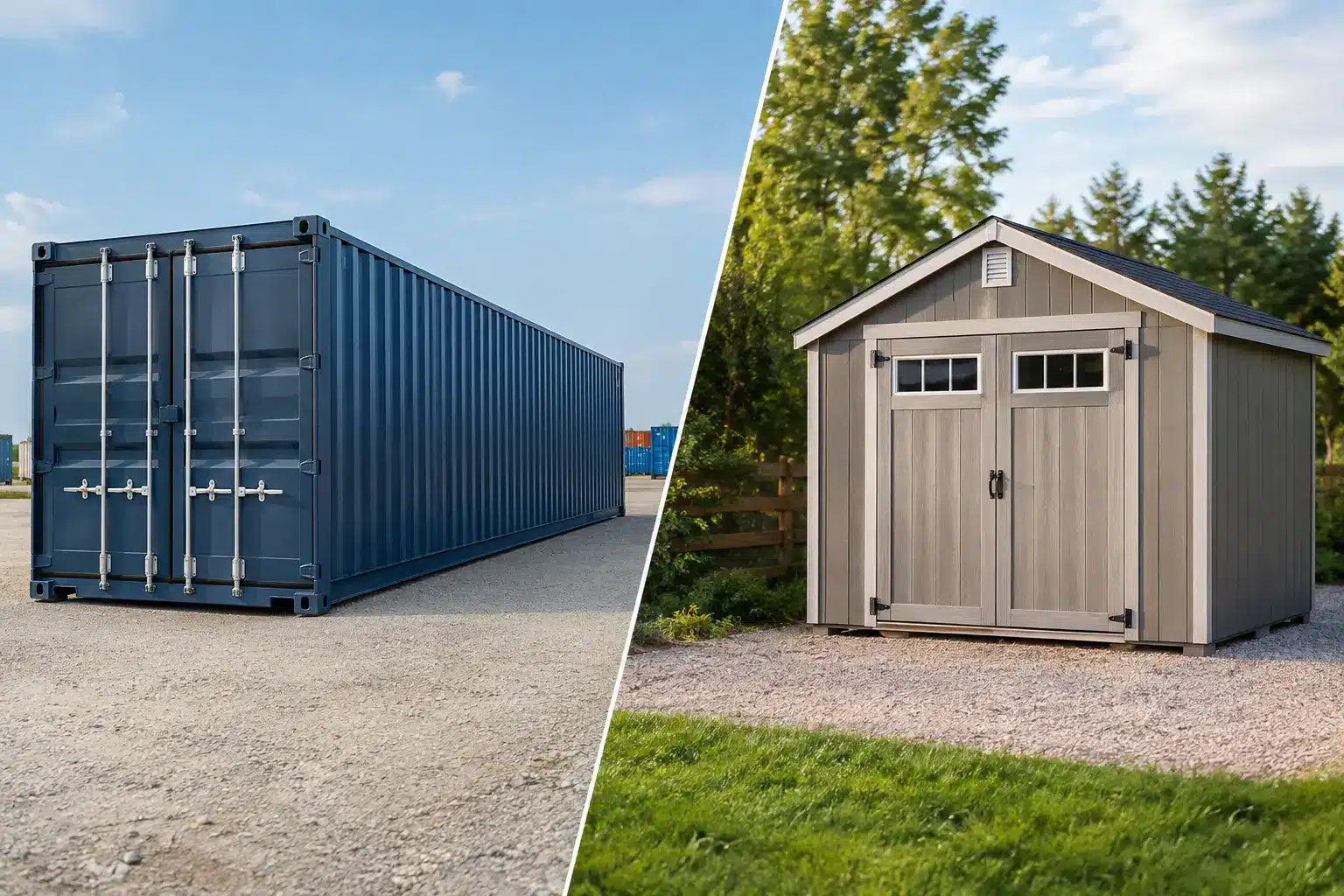
For contractors, agricultural operators, and property owners, both options can solve a storage problem. Their strengths are different. A portable shed is often easier to make look residential. A shipping container brings a steel cargo structure designed for repeated handling, long-distance transport, and secure storage. The right answer depends on what you are storing, how long you need the space, and how prepared the delivery site is.
Shipping Container Versus Portable Shed at a Glance
A portable shed is generally a wood-framed or light-gauge metal building delivered as a finished unit or assembled on site. It can be a practical choice for lawn equipment, household storage, and workshops where appearance is a primary concern. Sheds are available in many roof styles, siding colors, and door configurations.
A shipping container is an ISO-built steel unit with a structural frame, corrugated Corten Steel walls, heavy-duty cargo doors, and a marine-grade plywood floor in most standard dry containers. Common sizes include 20-foot and 40-foot units, with high-cube containers providing additional interior height. These dimensions make containers especially useful for jobsite materials, farm equipment, retail overflow, and long-term inventory storage.
The comparison becomes clearer when you look beyond the purchase price. Security, access, foundation requirements, delivery clearance, local rules, and expected lifespan all affect the total cost of ownership.
Security and Structural Strength
If theft prevention is a major concern, a shipping container usually has the advantage. Its steel construction, recessed cargo doors, and heavy locking gear are built to protect freight in ports, rail yards, and truck transport. Adding a lockbox helps shield a high-security padlock from bolt cutters and tampering.
That does not mean every container is identical. A used unit may show dents, surface rust, patches, or cosmetic paint wear from its working life. Condition should be stated clearly. For storage, a Wind & Watertight container means the unit is intended to keep wind and rain out, while a Cargo Worthy container meets a higher structural standard commonly used for shipping. A one-trip container typically offers the cleanest exterior and interior condition, though it costs more.
Portable sheds can be secured with quality doors, hasps, deadbolts, and upgraded windows. Still, their wall assemblies are commonly easier to breach than corrugated steel. For a contractor storing generators, copper, power tools, or specialty equipment, that difference can matter more than curb appeal.
Site Preparation and Delivery Are Not the Same
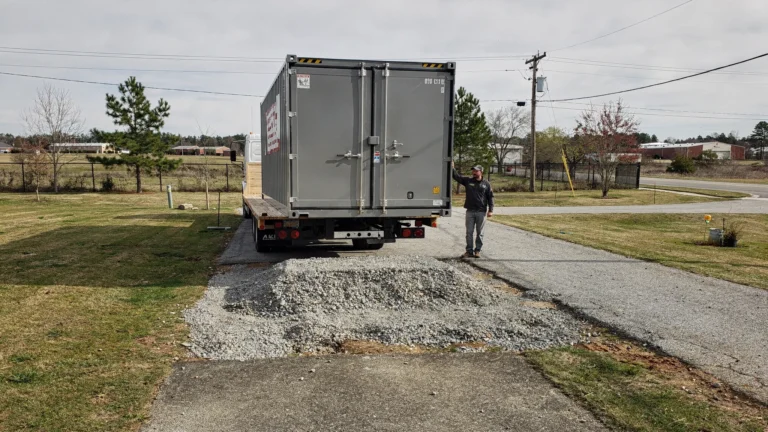
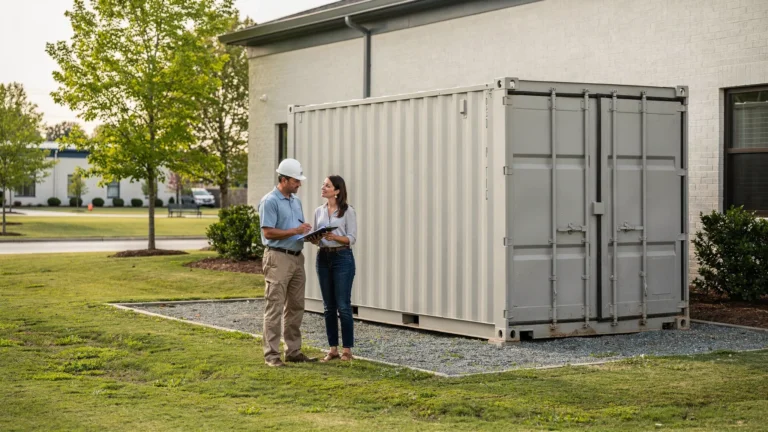
Both structures need a level, well-drained base. Skipping that step is one of the fastest ways to create door alignment, water drainage, and long-term maintenance problems.
A portable shed may be placed on gravel, concrete blocks, skids, or a slab depending on its design and local requirements. Because many sheds have a finished floor close to grade, drainage around the perimeter deserves close attention. Water sitting against wood framing or siding can shorten its service life.
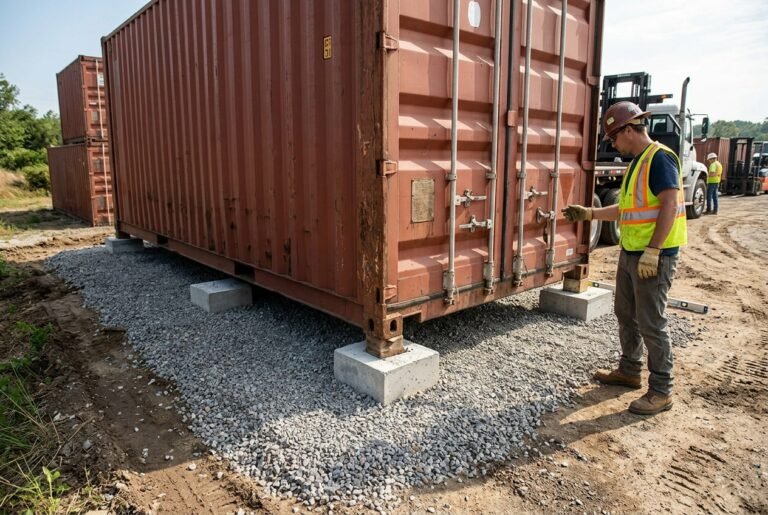
Shipping containers are designed to bear weight at their corner castings. A compacted gravel pad, concrete piers, railroad ties in appropriate applications, or a full concrete slab can work when properly planned. The goal is to keep the container level, supported at the corners, and elevated enough for water to move away from the structure. On soft ground, a container can settle or twist, making cargo doors difficult to operate.
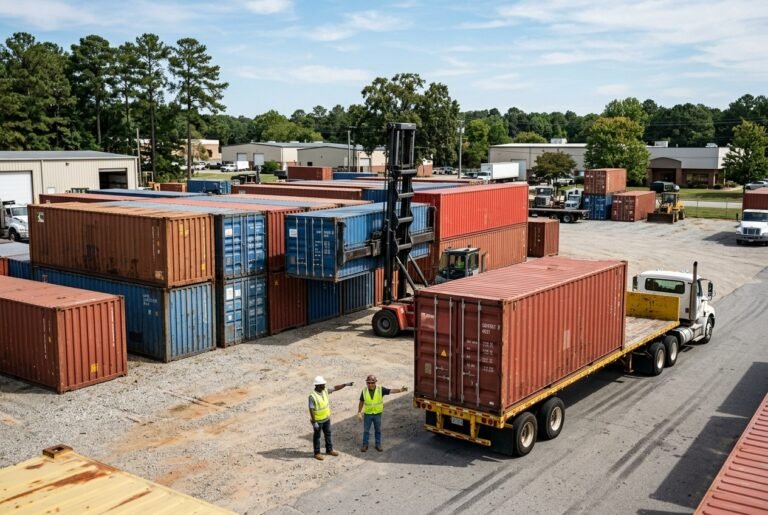
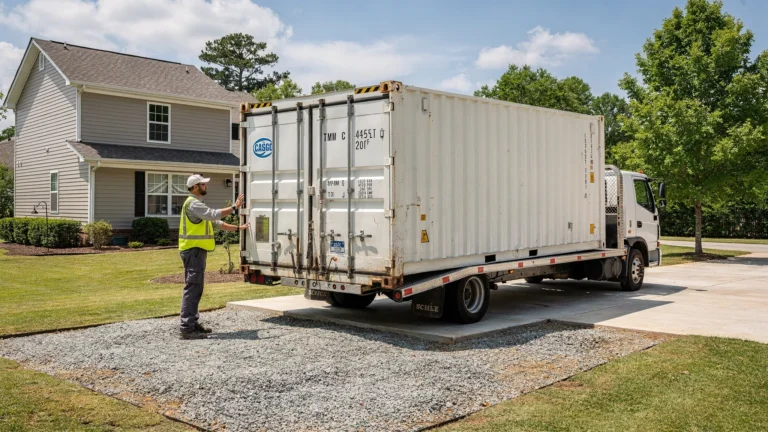
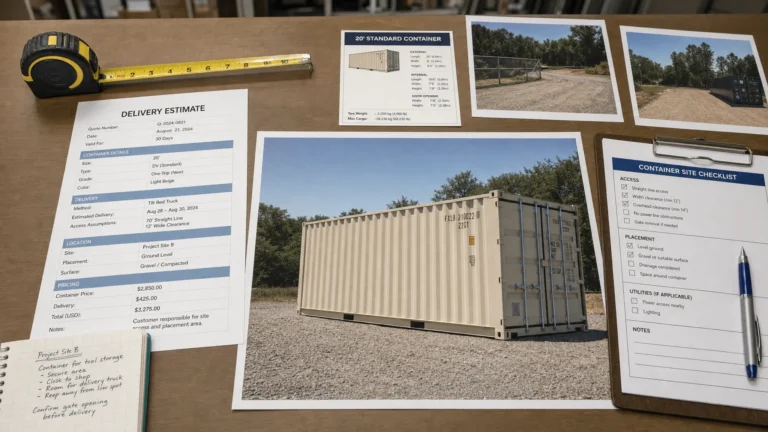
Delivery logistics deserve the same attention as the foundation. A container is typically delivered by tilt-bed truck or ground-level delivery equipment. The driver needs adequate truck access, turning room, overhead clearance, and a clear placement path. A 40-foot container requires substantially more room than a 20-foot unit, especially when it is being slid off a trailer.
Portable shed delivery has its own access requirements. The route must accommodate the shed’s width, height, and transport trailer. Fences, low branches, gates, septic systems, and steep driveways can complicate either delivery. Before ordering, measure the access route and identify obstacles. Clear specifications and a realistic delivery plan prevent costly day-of-delivery changes.
Upfront Price Versus Long-Term Value
A shed can have a lower entry price in some sizes, particularly for basic backyard storage. It may also include windows, a pedestrian door, and a finished exterior without additional work. For a homeowner who needs seasonal storage and wants a structure that blends with a neighborhood, that value is real.
A shipping container can be the stronger long-term value when storage needs are larger or security is non-negotiable. A standard 20-foot container provides roughly 160 square feet of enclosed floor area. A 40-foot container provides roughly 320 square feet. The usable rectangular interior makes it easy to rack materials, stage inventory, or store equipment in an organized layout.
Do not compare only the advertised base price. Include the cost of site work, delivery, permits, tie-downs if required, modifications, and future maintenance. A low-priced container that is not clearly graded may need repairs or repainting. A low-priced shed may need upgraded locks, flooring, roofing, or structural repairs sooner than expected. Clear pricing and verified condition are more useful than an attractive number that leaves out the difficult parts.
Weather Resistance and Maintenance
Shipping containers are built to travel through rain, salt air, temperature changes, and heavy handling. Their steel shell is highly durable, but steel is not maintenance-free. Inspect roof seams, door seals, and areas of damaged paint. Treat active corrosion early, particularly in humid or coastal environments.
Condensation is the most common storage issue inside a container. When warm, humid air meets a cooler steel roof, moisture can form on the interior surface. Ventilation, moisture absorbers, insulation, or a vapor-control strategy may be appropriate depending on what you store and your climate. This is especially relevant in the Southeast, where humidity can damage paper goods, textiles, electronics, and certain tools.
Portable sheds require regular inspection of roofing, siding, trim, caulking, and floor framing. Wood structures can perform well for years when properly maintained, but they are more vulnerable to pests, rot, and moisture intrusion. Metal sheds reduce some rot concerns, yet lighter panels can be more susceptible to denting and wind damage if not properly anchored.
When Appearance or a Finished Workspace Matters
A portable shed often wins when the building must match a home, comply with neighborhood preferences, or serve as a simple finished backyard workspace. It is usually easier to select colors, rooflines, and trim that fit the property from the start.
A container can also become a workshop, office, retail pop-up, or modular building shell, but those uses require planning. Adding personnel doors, windows, electrical service, insulation, HVAC, and interior finishes changes both the cost and the permitting picture. Cutting openings without proper reinforcement can affect structural performance. For a finished build, start with the layout and intended use rather than modifying a container piece by piece.
For temporary jobsite offices or secure material storage, the container’s industrial appearance is often a benefit rather than a drawback. It communicates durability and can be repositioned as the project moves, provided future loading and transport are planned correctly.
Choose Based on the Risk You Need to Manage
Choose a portable shed when visual integration, a lighter-duty storage need, and an accessible residential delivery route are the main priorities. It can be an efficient choice for garden tools, seasonal equipment, and a modest workshop where security risks are limited.
Choose a shipping container when you need secure, weather-resistant storage for valuable equipment, commercial inventory, construction materials, or agricultural supplies. It is particularly well suited to sites where a standard rectangular footprint, strong lock protection, and long service life matter more than a traditional building appearance.
Before committing, confirm local zoning and permit rules, measure the delivery route, decide what container grade or shed construction level fits the contents, and prepare the base before the truck arrives. The best storage structure is the one that arrives with a clear plan behind it – no fine print, no surprises, and no preventable problems after placement.