Container Delivery Planning Tips for a Smooth Drop
A smooth container drop is rarely a matter of luck. It comes from matching the right container, the right delivery equipment, and the right site preparation before the truck ever leaves the yard.
For homeowners, general contractors, small businesses, farms, developers, and logistics teams, container delivery is the point where planning becomes physical. A 20ft or 40ft steel unit has to travel through your gate, driveway, jobsite, or yard, then land squarely on a stable surface. If the access path is too tight, the ground is too soft, or the door orientation is wrong, a simple drop can turn into a delay, a re-delivery fee, or a container that is difficult to use.
This guide walks through the practical planning steps Lease Lane Containers recommends for customers in Raleigh, North Carolina, across the Southeast, and nationwide.
Start by matching the container to the drop location
Before scheduling delivery, confirm what container you are buying and why it fits the location. The best delivery plan for a compact residential storage unit is not the same as the plan for a 40ft High Cube going onto a construction site.
The three grade terms buyers should understand are:
- One-Trip: A newer container that has typically made one loaded voyage from the factory. These units are usually the cleanest, have stronger cosmetic appeal, and are often preferred for visible business storage, office conversions, modular builds, or long-term property use.
- Cargo Worthy (CW): A used container that remains structurally suitable for cargo transport when properly inspected and certified. CW units are a strong choice for export, regional transport, logistics use, or higher-value storage where frame integrity matters.
- Wind and Watertight (WWT): A used container that keeps out wind and rain but is generally intended for stationary ground storage rather than export. WWT containers often show cosmetic wear, but they can be cost-effective for contractors, farms, and overflow inventory.
Most ISO shipping containers are built with Corten Steel, a weathering steel designed to resist harsh outdoor conditions. That durability is a major advantage, but it does not replace good placement. Even a strong Corten Steel container can develop door alignment issues, floor moisture problems, or underside corrosion if it is dropped on unstable ground.
If you are still deciding on size, review our guide to 20ft shipping container pricing and use cases or compare larger options in our 40ft High Cube container guide. For used units, start with our used shipping container grades explained guide.
Measure the access path, not just the drop spot
Many failed deliveries happen because the final pad is ready, but the truck cannot reach it. Container delivery requires a complete route check from the street or entrance to the exact placement area.
Walk the route slowly and look for:
- Gate posts, fences, parked vehicles, mailboxes, retaining walls, and tight turns.
- Low tree limbs, utility lines, roof overhangs, signs, and canopies.
- Soft shoulders, steep slopes, wet grass, septic areas, irrigation lines, and uneven transitions from pavement to dirt.
- Narrow neighborhood roads, cul-de-sacs, construction traffic, or limited turnaround space.
A container itself is about 8 feet wide, but the delivery truck and trailer need more usable room. Many carriers prefer a clear path around 12 feet wide or more, with additional space at turns. Exact requirements depend on trailer type, container size, driver approach, and site conditions.
| Container type | Typical exterior size | Delivery planning note |
|---|---|---|
| 20ft standard | 20 ft x 8 ft x 8 ft 6 in | Easier for residential driveways and tighter jobsites, but still needs extra unloading length. |
| 40ft standard | 40 ft x 8 ft x 8 ft 6 in | Requires more straight-line access, wider turns, and a larger prepared pad. |
| 40ft High Cube | 40 ft x 8 ft x 9 ft 6 in | Same footprint as a 40ft standard, with extra height that affects overhead clearance. |
| Refrigerated container | Varies by size | Requires delivery access plus electrical planning, airflow clearance, and service access. |
High Cube containers are especially important to plan for. The extra foot of height is valuable for storage, equipment, insulation, and office conversions, but it makes overhead obstacles more critical during transport and unloading.
Choose the right delivery method before dispatch
The delivery method affects how much room is needed and how the container will land. Do not assume every truck can place every container in every location.
| Delivery method | Best fit | Planning concern |
|---|---|---|
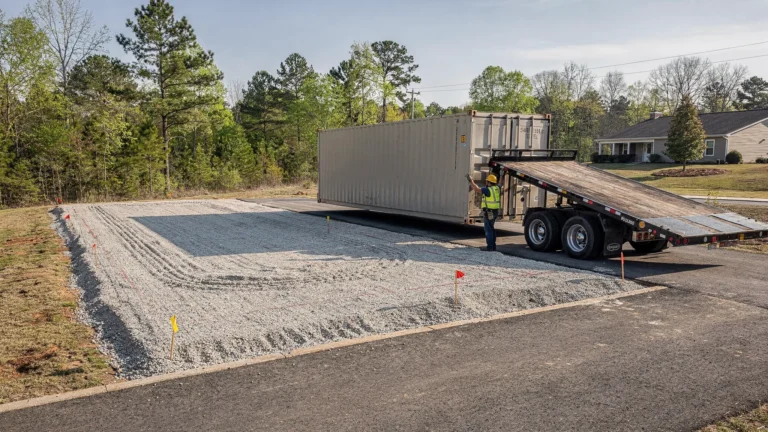
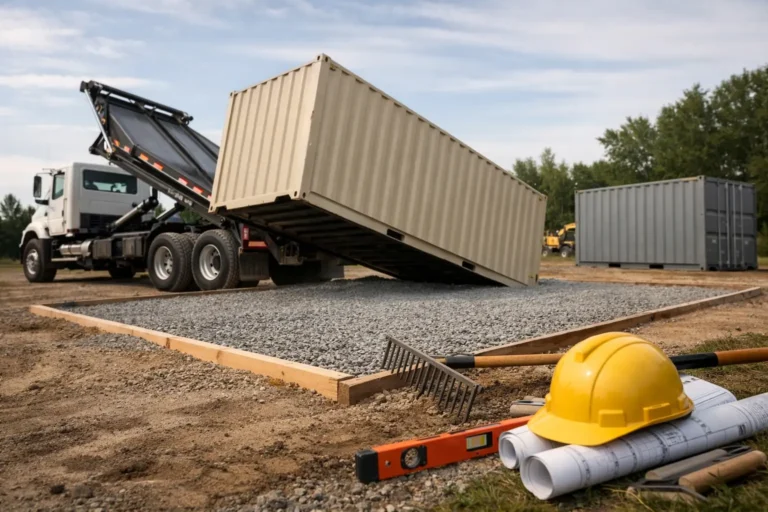
| Tilt-bed or roll-off | Common ground-level delivery for 20ft and 40ft containers | Needs a straight approach because the container slides off the trailer as the truck pulls forward. |
| Flatbed or chassis | Transporting the container to a site with unloading equipment | Customer may need a crane, forklift, reach stacker, or other equipment to offload. |
| Side-loader | Placing a container beside the truck where space allows | Needs side clearance and a firm surface for stabilizers. |
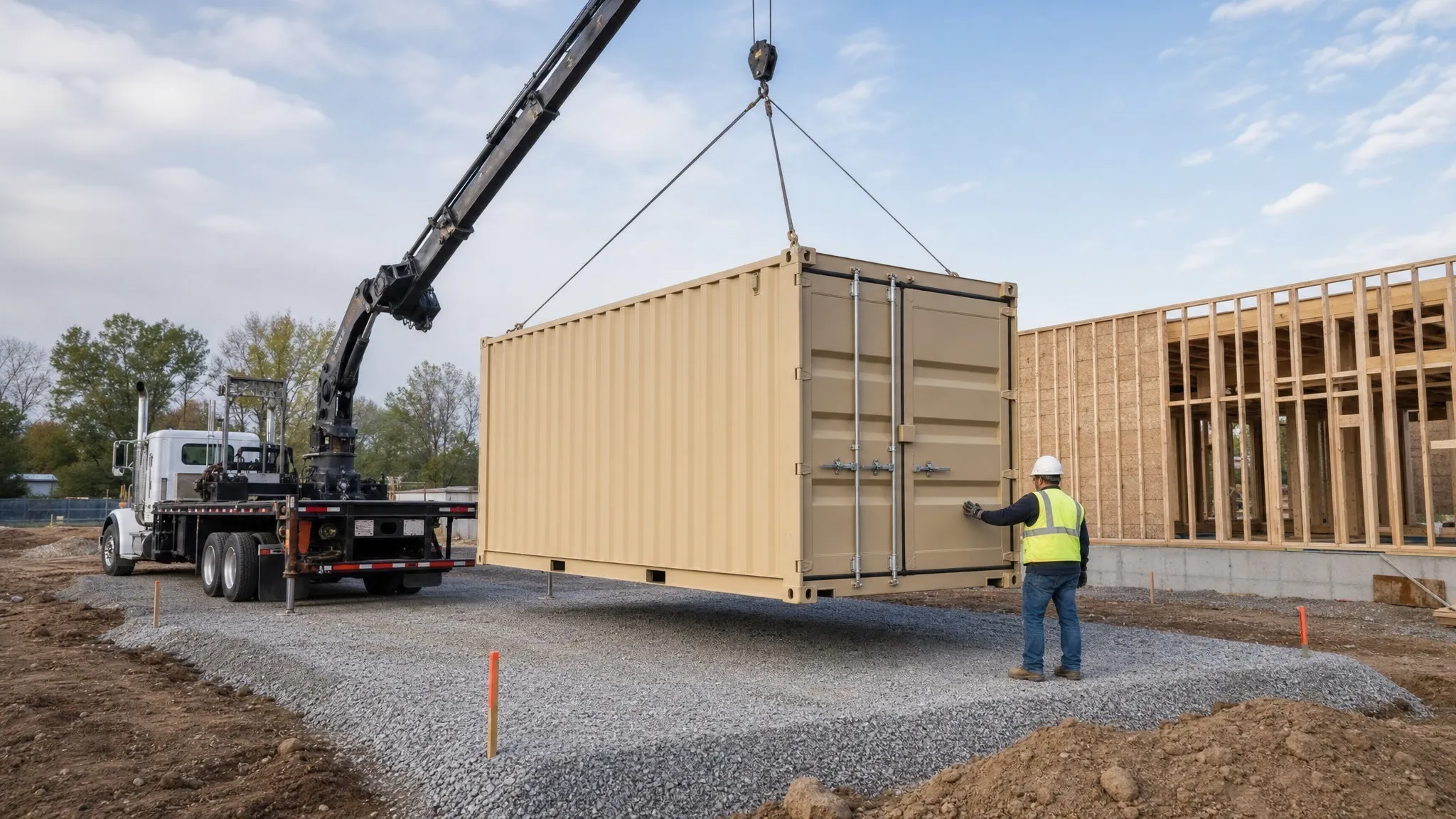
| Crane-assisted delivery | Tight sites, over-obstacle placement, or precise positioning | Requires crane access, lift planning, overhead clearance, and added coordination. |
For most storage buyers, ground-level placement is the goal. If you are buying a Cargo Worthy unit for export or regional logistics, chassis delivery may also come into the conversation depending on how the container will be loaded and moved after arrival.
If your property has a tight turn, steep approach, low limbs, or limited straight-line space, send photos and measurements before delivery is scheduled. A quick review can help determine whether a tilt-bed is suitable or whether a crane or alternate placement method is safer.
Mark the exact drop zone and door orientation
A container can be structurally sound and delivered on time, but still become frustrating if the doors face the wrong way. Door orientation should be planned around how you will use the unit, not only how the truck can unload it.
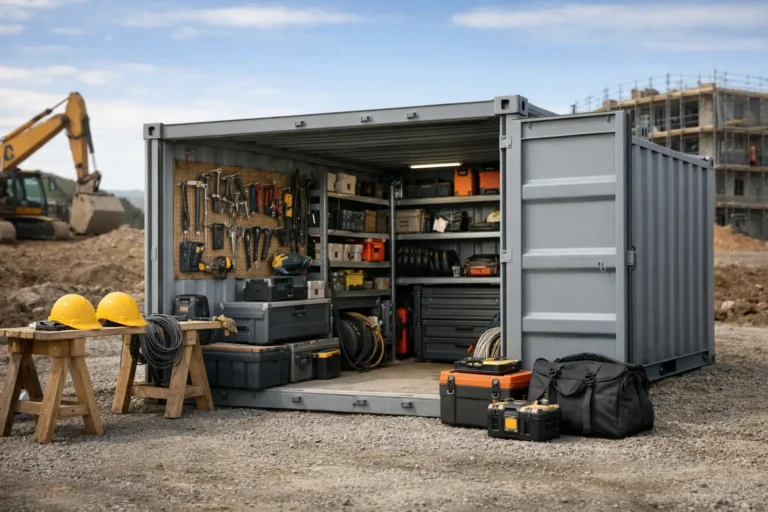
For a jobsite in Raleigh or elsewhere in the Southeast, contractors often want doors facing the work area for quick tool access. A farm may prefer doors facing a gravel lane so tractors or UTVs can pull up. A small business storing inventory may need the doors pointed toward a loading area, security camera, or warehouse entrance.
Before delivery day, mark the drop zone clearly. Use cones, flags, stakes, spray paint, or lumber to show the four corners. Mark the door end with a large arrow or sign. If the driver arrives and the placement is unclear, the final decision may happen under time pressure, which increases the chance of regret.
Also consider future access. Leave room for the doors to swing open fully, for pallet jacks or hand trucks to maneuver, and for maintenance around the sides. If you plan to add vents, a lockbox, shelving, roll-up doors, insulation, electrical, or office modifications later, leave working space for those upgrades.
Pro-Tip: Build the pad for both the container and the truck
Pro-Tip: A good pad is not just about supporting the container after it lands. It also needs to support the delivery truck long enough for safe unloading.
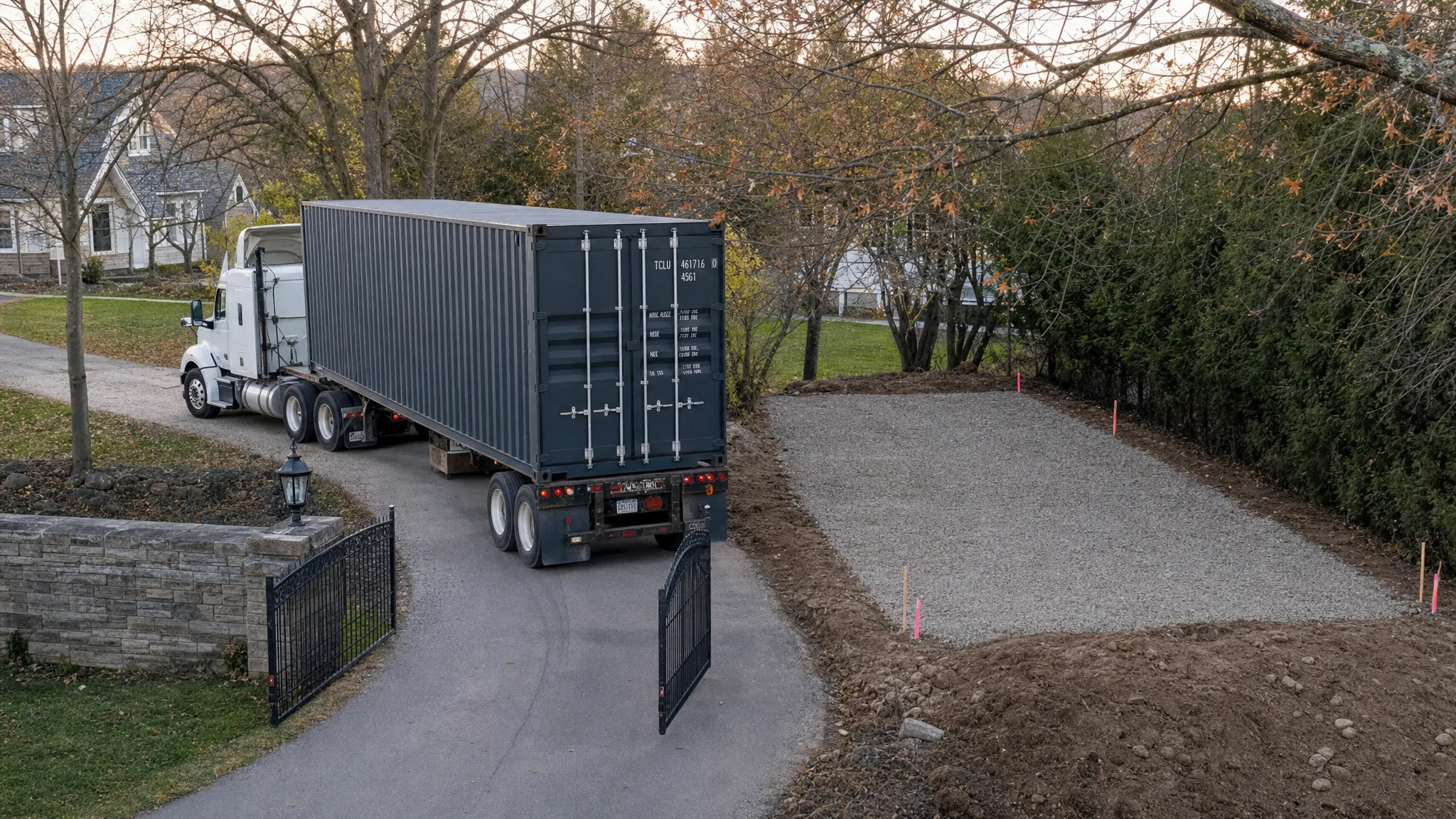
For many sites, a compacted gravel pad is a practical choice. It improves drainage, reduces mud, and helps keep the container underside away from standing water. A typical pad should be level, firm, and slightly larger than the container footprint so the corner castings have solid support. Concrete slabs, piers, and engineered footings may be better for permanent installations, modular construction, offices, or sites with heavy loading.
Leveling matters because ISO containers are strongest at the corner castings and structural frame. If one corner is unsupported or the pad twists the frame, the doors can bind. That is especially inconvenient on WWT and Cargo Worthy used containers where door hardware may already have normal wear.
Avoid placing containers directly on soft soil, wet grass, or uncompacted fill. In North Carolina’s humid climate, drainage is just as important as strength. Standing water under a Corten Steel container can accelerate underside corrosion over time, especially around crossmembers and flooring.
For Raleigh, Wake County, and surrounding municipalities, also check permit and zoning requirements before the delivery date. Rules can vary based on property type, zoning district, duration of placement, visibility, setbacks, and whether the container is being used for storage, construction, business operations, or an occupied conversion.
Check permits, HOA rules, and utility markings early
Permitting is not the driver’s responsibility. It is the property owner’s responsibility to confirm that the container can be placed where planned.
In Raleigh and across North Carolina, requirements may differ between city limits, county property, commercial jobsites, agricultural land, and residential neighborhoods with HOA restrictions. A temporary construction storage container may be treated differently from a permanent container workshop, retail pop-up, or modified office.
If you are placing the container near buried utilities, septic systems, irrigation, or planned trenching, call 811 before work begins. North Carolina customers can start with NC811 to request utility markings. Do not guess where underground lines are located, and do not ask a driver to place a loaded truck over a questionable area.
For overhead utilities, do not measure close to live lines yourself. Contact the utility provider if clearance is uncertain. Delivery equipment may rise during unloading, especially with tilt-bed and roll-off methods, so overhead space must be evaluated conservatively.
Prepare for weather and soil conditions
Weather can make a good delivery plan unreliable. A site that looks firm on Monday can become too soft after a heavy rain. This is common in the Southeast, where clay soils, humidity, and storm runoff can quickly change ground conditions.
If the truck must cross grass or dirt, think about recent rainfall, slope, and drainage. A delivery truck carrying a steel container is heavy, and ruts can form quickly. Mud can also prevent the driver from getting the right angle for placement.
If the forecast is poor, it may be smarter to reschedule than risk a failed drop. A delay is inconvenient, but a stuck truck, damaged yard, or unsafe unload can be much more expensive. Share site updates with your delivery coordinator if conditions change after scheduling.
Set a delivery-day communication plan
The best delivery days are simple because everyone already knows the plan. Before the driver arrives, confirm the delivery window, site contact, phone number, address, gate access, and final placement notes.
Use this checklist the morning of delivery:
- Move vehicles, trailers, equipment, dumpsters, and materials out of the access path.
- Unlock gates and confirm any gate codes with the site contact.
- Keep children, pets, workers, and visitors away from the unloading area.
- Walk the route one final time for new obstacles, low branches, parked cars, or soft spots.
- Have the decision-maker on site or reachable by phone for final placement approval.
- Confirm the door direction and marked corners before the driver begins unloading.
- Take photos of the site and container once placement is complete.
Drivers can often make small adjustments, but they cannot overcome unsafe conditions or force equipment into a space that does not fit. Clear communication protects your property, the driver, and the container.
Inspect the container before the driver leaves
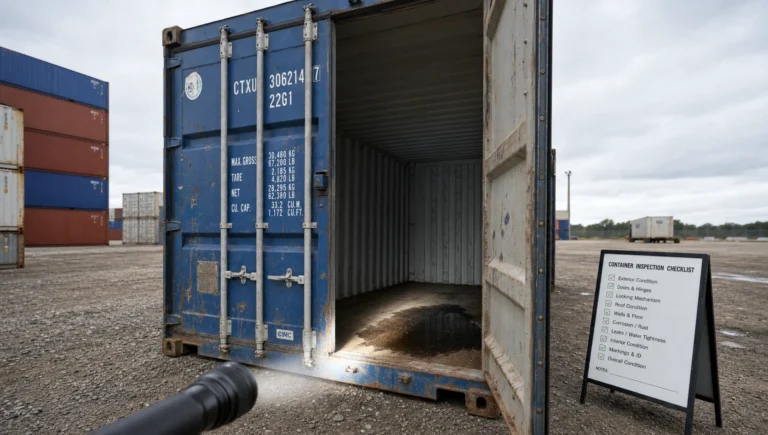
Once the container is placed, inspect it promptly. You are not trying to perform a full marine survey on delivery day, but you should confirm that the unit matches your order and arrived in expected condition.
Check the exterior, doors, roof, floor, and locking hardware. For a One-Trip container, look for clean overall condition with minor handling marks. For a Cargo Worthy container, verify that the structural components and documentation match what was quoted, especially if the unit is intended for transport. For a WWT container, confirm that the doors close, the gaskets seal reasonably, and there are no obvious holes or major leaks.
A simple light test can help with storage containers. Step inside during daylight, close the doors safely, and look for pinholes of light along walls, roof seams, and door gaskets. Never lock yourself inside, and always have another person present if you are inspecting from the interior.
| Inspection point | What to confirm |
|---|---|
| Container size | Confirm 20ft, 40ft, standard, or High Cube as ordered. |
| Grade | Verify One-Trip, Cargo Worthy, or WWT matches the quote. |
| Doors | Check that both doors open, close, latch, and seal properly. |
| Roof and walls | Look for punctures, severe dents, or active leak concerns. |
| Floor | Check for soft spots, strong odors, chemical residue, or damage. |
| Placement | Confirm the unit is level enough for door operation and practical use. |
If anything looks inconsistent with the order, document it immediately with photos and contact the seller.
Common planning mistakes that create delivery problems
Most container delivery issues are preventable. The same mistakes show up on residential properties, construction sites, farms, and commercial lots.
| Mistake | Why it causes problems | Better approach |
|---|---|---|
| Planning only the pad, not the route | The truck may not reach the drop zone. | Measure gates, turns, overhead clearance, and turnaround space. |
| Dropping on soft ground | The container can settle, twist, or trap moisture underneath. | Use compacted gravel, concrete, piers, or properly leveled supports. |
| Ignoring door orientation | The container may be inconvenient or unsafe to access. | Mark the door end before delivery. |
| Waiting on permits or HOA approval | Delivery may need to be postponed or reversed. | Check rules before scheduling. |
| Choosing delivery by price alone | The wrong equipment can create delays or added fees. | Compare total delivered and placed cost, not just transport cost. |
A smooth drop is a coordinated plan, not a last-minute decision. The more information you provide upfront, the easier it is to select the right truck, route, and placement method.
Frequently Asked Questions
How much space do I need for container delivery? It depends on the container size, delivery truck, and unloading method. A 20ft container typically needs less straight-line room than a 40ft container, but both require clear width, overhead clearance, firm ground, and enough space for the truck to pull forward during unloading.
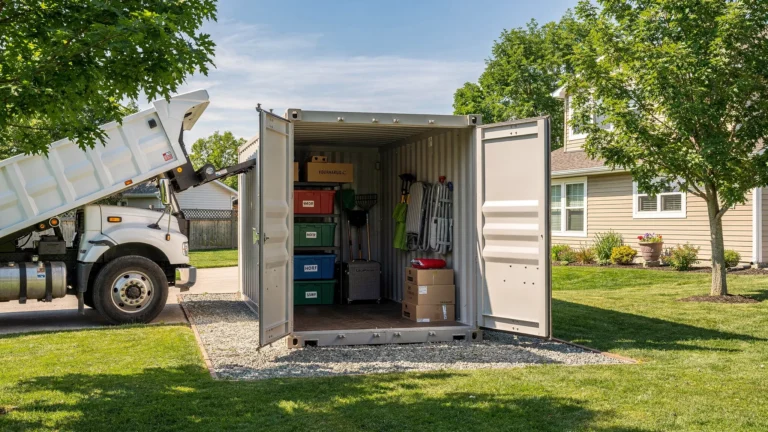
Can a shipping container be delivered onto gravel? Yes, compacted gravel is one of the most practical surfaces for storage containers because it supports drainage and helps prevent moisture buildup under the container. The pad should be level, firm, and sized to support the container’s corner castings.
Do I need a permit for a shipping container in Raleigh, NC? It depends on the property, zoning, duration of use, and whether the container is temporary storage, business storage, or a modified structure. Check with the appropriate Raleigh, Wake County, municipal, or HOA authority before scheduling delivery.
Is a High Cube container harder to deliver than a standard container? A High Cube has the same 8-foot width as a standard ISO container but is 9 feet 6 inches tall instead of 8 feet 6 inches. The extra height is useful, but it makes overhead clearance more important, especially near trees, wires, and building overhangs.
What grade is best for a storage container delivery? For stationary storage, WWT can be a cost-effective choice if the unit is structurally sound and seals properly. Cargo Worthy is better when transport certification or stronger structural assurance matters. One-Trip is best when appearance, longevity, and modification potential are priorities.
Plan your container delivery with Lease Lane Containers
If you are preparing for container delivery in Raleigh, North Carolina, anywhere in the Southeast, or across the U.S., Lease Lane Containers can help you choose the right size, grade, and delivery approach for your site.
For a clear delivered quote, send your ZIP code, preferred container size, grade, site photos, and placement notes to sales@leaselanecontainers.com. You can also visit the Raleigh office to talk with the Lease Lane Containers team about One-Trip, Cargo Worthy, WWT, High Cube, refrigerated, and custom modular container options.