Container Open Side vs Standard: Which Is Better?
Choosing between an open side container and a standard shipping container is not about which unit is universally better. It is about how you need to load, access, secure, and use the space after delivery.
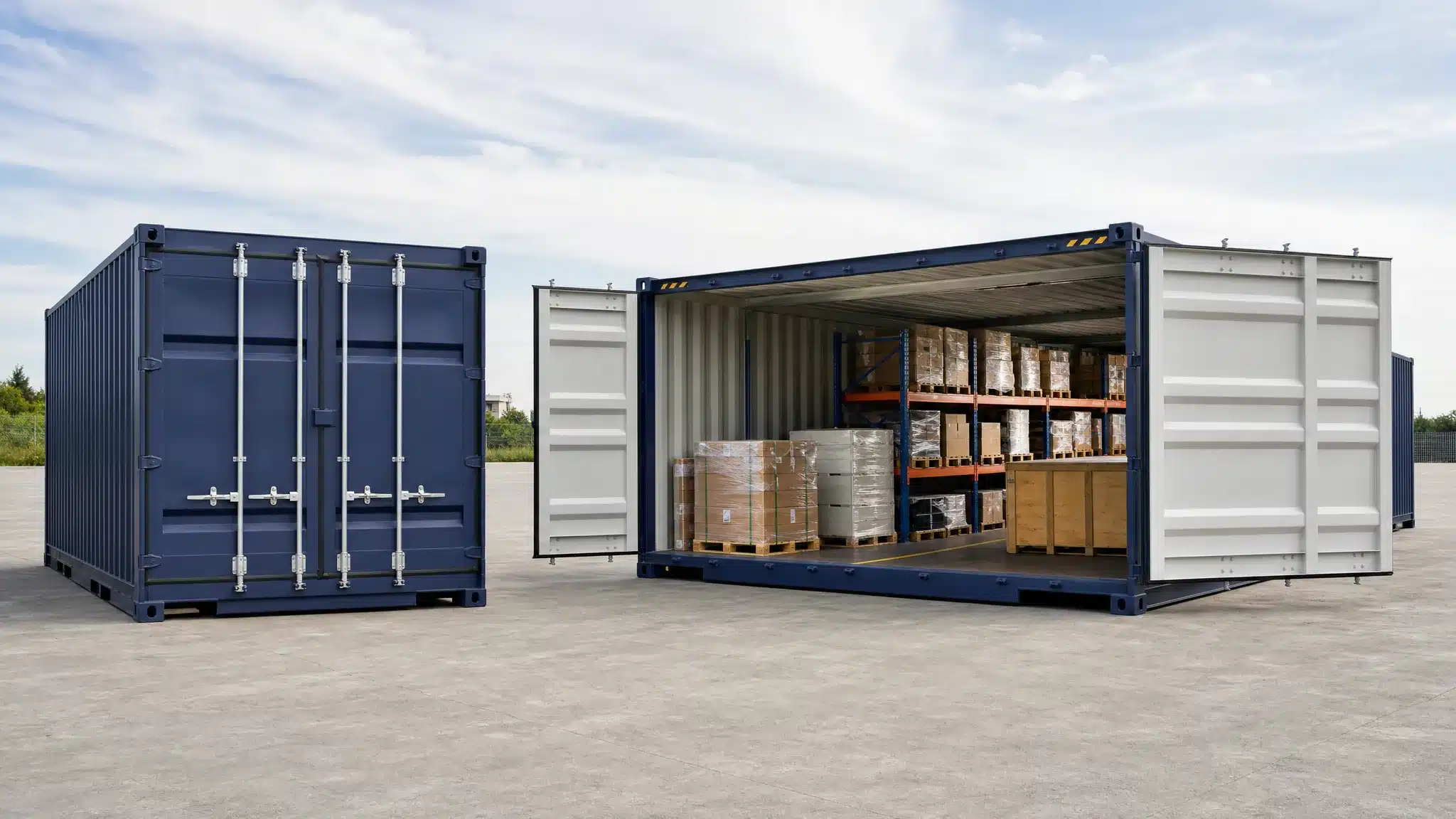
A standard container is the familiar ISO dry container with cargo doors on one end. An open side container has additional doors along the long side, giving you wide lateral access to cargo, tools, displays, or build-out space. Both can be built from Corten Steel, both can follow ISO standards, and both can be useful for buyers in Raleigh, North Carolina, across the Southeast, and nationwide.
The difference shows up in day-to-day operations. If you need affordable, secure storage for tools or household items, standard usually wins. If you need frequent access along the full length of the unit, side loading with a forklift, or a customer-facing layout, open side may be worth the premium.
Quick answer: which is better?
For most buyers, a standard shipping container is the better value because it is easier to source, simpler to secure, generally less expensive, and available in more condition grades. For businesses that need fast access from the side, such as contractors staging materials, retailers building a pop-up, or farms handling bulky supplies, an open side container can be the better operational choice.
| Factor | Standard container | Open side container |
|---|---|---|
| Access | End doors only | Full or partial long-side door access |
| Typical cost | Lower | Higher due to specialty design and limited supply |
| Availability | Widely available in 20ft, 40ft, and High Cube | More limited, often found as one-trip or specialty inventory |
| Security | Fewer door points to protect | More hinges, gaskets, and locks to inspect |
| Best for | General storage, export, jobsite tools, household goods | Retail, events, pallet access, staged inventory, wide equipment |
| Delivery planning | Focus on end-door orientation | Requires long-side clearance for door operation |
| Export use | Common when Cargo Worthy and properly certified | Possible only if unit is Cargo Worthy and documentation is verified |
If you are searching for a container open side configuration because standard end doors feel limiting, start by mapping how often you will access the items inside. Access pattern is usually the deciding factor.
What is a standard shipping container?
A standard shipping container, often called a dry container or dry van container, is the most common container type in the market. It has corrugated Corten Steel walls, corner castings, forklift pockets on many 20ft units, marine-grade plywood flooring, and cargo doors at one end.
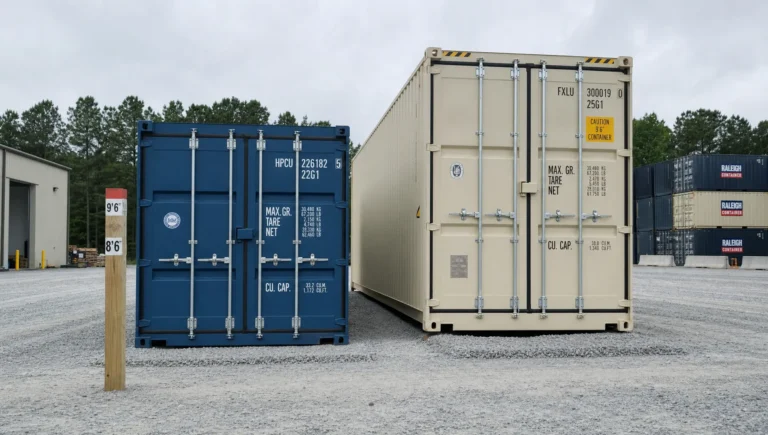
Standard containers are built around ISO dimensions, which is why they work across ships, rail, trucks, and depots. A typical 20ft standard container measures about 20 feet long, 8 feet wide, and 8 feet 6 inches high. A typical 40ft standard container keeps the same width and height but doubles the length. A 40ft High Cube container adds one extra foot of exterior height, making it about 9 feet 6 inches tall.
For buyers comparing sizes, Lease Lane Containers has more detailed resources on 20ft shipping container pricing and 40ft High Cube container uses. Standard containers are popular with general contractors, home builders, homeowners, farms, and small businesses because they provide dependable enclosed storage without unnecessary complexity.
What is an open side container?
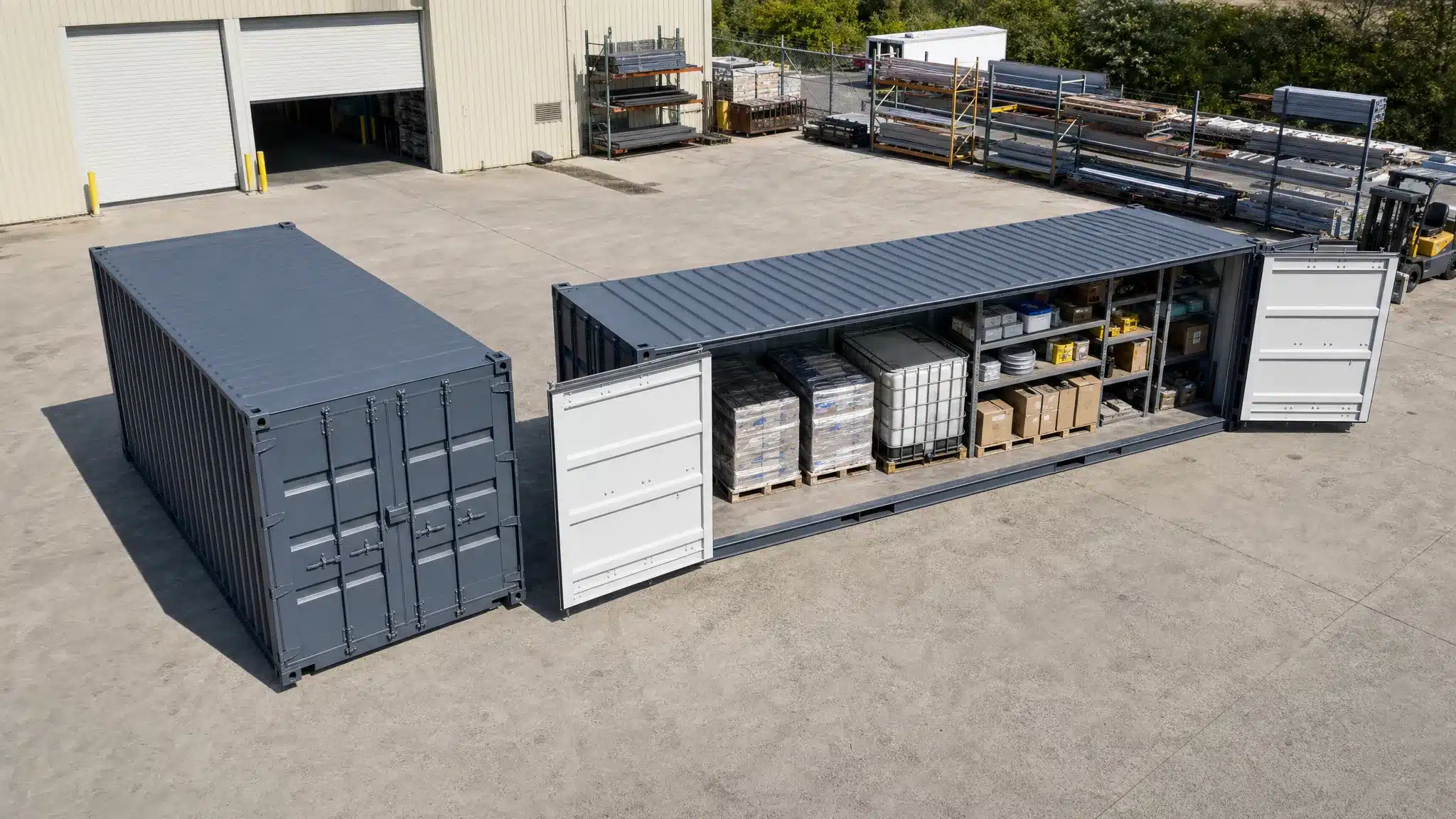
An open side container is a specialty container with door panels along one long side of the unit. Instead of accessing everything through the end doors, you can open the side and reach materials across the container length. Depending on the model, the side opening may be full length or segmented with multiple locking door panels.
The key advantage is access. Pallets, shelving, retail displays, construction materials, event equipment, and bulky goods can be loaded and retrieved without creating a long aisle from the end doors. This is especially useful on active job sites around Raleigh and the Research Triangle, where crews need to move fast and avoid digging through a packed unit.
Open side containers still need a strong frame because large side doors change the way loads are supported. Reputable units are reinforced to maintain structural integrity. If the container will be used for shipping or stacking, verify that it meets the required ISO and Cargo Worthy standards, not just that it looks clean. You can also review our dedicated guide to open side shipping container uses and tradeoffs for more application-specific examples.
Key differences that matter before you buy
The right choice depends on how the container will function after it arrives. A container that is perfect for storage may be inconvenient for daily loading. A container that is ideal for retail access may be more expensive than necessary for long-term equipment storage.
Access and loading
Standard containers are end-loaded. That works well when you can organize inventory by frequency of use, with the most-used items near the doors and long-term items toward the back. Contractors often add shelving, bins, tool cages, and lighting to make standard containers efficient.
Open side containers give you lateral access. This is the main reason to buy one. You can load with a forklift from the side, stage materials in zones, or turn the container into a display or work area. For small businesses, this can reduce handling time. For builders, it can make lumber, doors, windows, and finish materials easier to reach without unloading half the container.
Cost and availability
Standard containers are more common, which usually makes them more affordable and easier to source. You can typically compare multiple grades, including One-Trip, Cargo Worthy, and Wind and Watertight units.
Open side containers are specialty units. Supply is more limited, especially in used grades. Many buyers prefer one-trip open side units because the doors, gaskets, hinges, paint, and interior condition are newer. Used open side units may be available, but they require closer inspection because the long-side door system has more moving parts than a standard container.
Security and weather resistance
A standard container has fewer openings. That means fewer hinges, seals, lock rods, and gasket lines to maintain. For long-term storage of tools, equipment, or household goods, this simplicity is a major advantage.
An open side container can still be secure, but it has more access points to protect. Each side door should close squarely, seal properly, and lock securely. In humid regions like North Carolina and the Southeast, gaskets and lower door edges should be checked carefully because wind-driven rain and standing water can expose weak points over time.
Structural performance and shipping use
Standard containers are the default for logistics. If you need international shipping, regional transport, or intermodal movement, a Cargo Worthy standard container with proper CSC documentation is typically the simplest path.
Open side containers can be suitable for transport if they are built and certified for that purpose, but you should not assume every open side unit is export-ready. If the container will move by ocean freight, rail, or truck under load, confirm the CSC plate, grade, inspection status, and carrier acceptance before purchase. For context on container identification and standards, the Bureau International des Containers provides useful information on global container standards and coding.
Modifications and customer-facing use
Open side containers shine when access is part of the design. Retail pop-ups, food service support units, event storage, mobile showrooms, and workshop layouts can benefit from the wide opening. They often require fewer structural cutouts than modifying a standard container for a large side opening.
Standard containers are still a strong foundation for modifications, especially offices, workshops, storage rooms, and equipment enclosures. However, large side cutouts require reinforcement. If you plan to add windows, personnel doors, insulation, HVAC, or electrical, a High Cube unit may provide better finished headroom.
Container grades: One-Trip vs Cargo Worthy vs WWT
Container type is only half the decision. Grade matters just as much. An open side unit in poor condition can be more frustrating than a standard unit in excellent condition. A standard container with the wrong grade can also cost more in repairs than you saved upfront.
| Grade | What it means | Best use cases | Watch for |
|---|---|---|---|
| One-Trip | Manufactured overseas, used for one loaded trip, then sold into storage or resale markets | Clean storage, retail, offices, modular projects, premium open side units | Minor handling marks are normal, but structure should be very clean |
| Cargo Worthy | Structurally fit for cargo transport when properly inspected and documented | Export, transport, stacking, high-value storage, logistics use | Verify CSC plate, floor, corner castings, rails, and doors |
| Wind and Watertight | Keeps wind and water out for stationary storage but is not certified for ocean cargo | Jobsite storage, farm storage, household goods, budget storage | Check roof, door gaskets, light leaks, rust, and floor condition |
A One-Trip container is usually the best choice when appearance, clean interiors, and long service life matter. That includes open side retail applications, container offices, modular builds, and customer-facing small business projects.
A Cargo Worthy container is the better fit when the unit must be structurally sound for transportation. Logistics managers and exporters should prioritize this grade, especially when the container will be loaded and moved through ports or rail yards.
A Wind and Watertight container, often shortened to WWT, is commonly the value choice for stationary storage. It may have dents, surface rust, patches, and cosmetic wear, but it should keep weather out when properly inspected. If you are comparing used units, our used shipping container grades guide explains what to check before committing.
Who should choose a standard container?
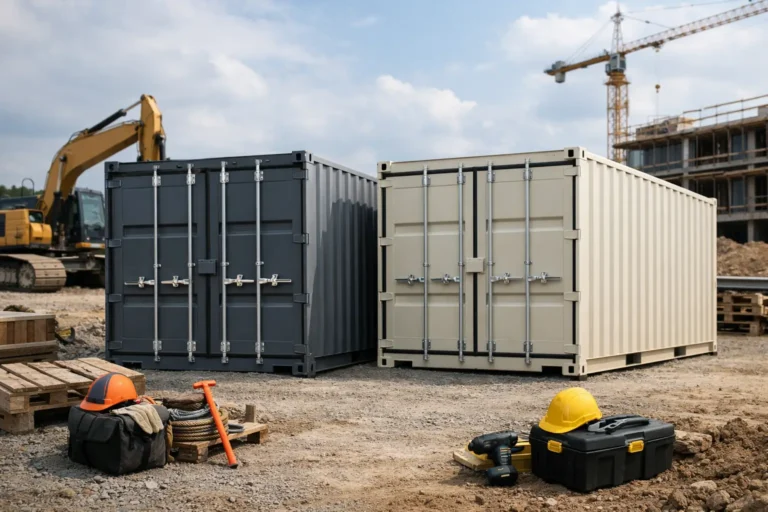
A standard container is usually better if your priority is secure, affordable, enclosed storage. General contractors in Raleigh and across North Carolina often choose standard units for tools, fasteners, generators, compressors, fixtures, and materials that do not need side loading.
Homeowners and farms also tend to do well with standard containers. If you are storing seasonal items, feed, equipment, furniture, or household goods, end-door access is usually enough. You can improve usability with shelving, pallets, vents, lockboxes, and a clear aisle.
Standard containers are also the better first choice for export buyers. They are easier to source as Cargo Worthy units, easier to document, and more familiar to carriers.
Choose standard if:
- You want the lowest practical cost for secure storage.
- You do not need forklift access along the long side.
- You want broad availability in 20ft, 40ft, or High Cube sizes.
- You need a simpler unit with fewer doors and seals to maintain.
- You may use the container for shipping or intermodal transport.
Who should choose an open side container?
An open side container is better when access creates measurable value. If your crew loses time unloading, rearranging, or climbing over materials, the side-opening design can save labor and reduce damage.
Small businesses may choose open side containers for retail pop-ups, mobile inventory rooms, event equipment, or customer-facing displays. Developers and modular builders may choose them when wide openings reduce fabrication work. Farms may use them for supplies that need side access, especially when loading with compact equipment.
Open side containers also work well when the container will act less like a sealed box and more like a flexible workspace. If you want to open the side during business hours and close it after hours, this configuration is built for that pattern.
Choose open side if:
- You need to access materials across the full length of the container.
- You load pallets, fixtures, or bulky items from the side.
- You are planning a retail, event, or showroom-style setup.
- You want a modification-friendly opening without cutting a standard wall.
- You have enough site clearance for the side doors to open safely.
Pro-Tip: prepare the site differently for open side containers
Site preparation is important for every shipping container, but it is especially important for open side units. Multiple long-side doors need the container to sit level and square. If the container twists because the ground is uneven, doors can bind, seals can wear unevenly, and water can find weak points.
For most Raleigh-area sites, a compacted gravel pad is a practical starting point because it supports drainage better than bare soil. Concrete slabs, concrete piers, or engineered footings may be better for permanent installations, heavy use, or modified containers. The main goal is to support the corner castings evenly and prevent one corner from sinking.
Leave enough clearance on the long side for the doors to swing and for people or equipment to move safely. A standard container mainly needs clear access at the end doors, but an open side container needs usable working space along the side. That can affect where you place it on a driveway, jobsite, farm lane, or commercial lot.
Before delivery, check local zoning, HOA rules, and permit requirements. In Raleigh, Wake County, and surrounding municipalities, requirements can vary based on property type, visibility, duration, foundation, and intended use. If utilities, grading, anchoring, or trenching are involved, contact 811 before digging. For more detailed planning, review our guide to shipping container delivery requirements.
Open side vs standard by buyer type
Different buyers value different features. A general contractor may care most about security and speed. A retailer may care about presentation. A logistics manager may care about certification and transport acceptance.
| Buyer type | Better choice most of the time | Why |
|---|---|---|
| General contractors and home builders | Standard for tools, open side for staged materials | Standard is secure and cost-effective, open side speeds access to bulky supplies |
| Small business owners | Open side for retail and events, standard for overflow storage | Open side improves visibility and access, standard lowers storage cost |
| Homeowners | Standard | Simpler, more affordable, easier to secure for household storage |
| Agriculture and farms | Depends on access needs | Standard works for general storage, open side helps with side-loaded supplies |
| Real estate developers | Open side or High Cube standard | Open side can reduce fabrication for wide openings, High Cube helps with finished height |
| Logistics managers | Standard Cargo Worthy | Easier export documentation and intermodal acceptance |
Five questions to ask before deciding
Use these questions before requesting a quote:
- Will you access the container daily, weekly, or only occasionally?
- Do you need forklift or pallet access from the side?
- Is the container for stationary storage, modification, retail use, or shipping?
- Do you have enough long-side clearance for an open side unit to operate safely?
- Which grade fits your risk level: One-Trip, Cargo Worthy, or Wind and Watertight?
If most of your answers point to access, visibility, and fast handling, open side deserves serious consideration. If your answers point to security, budget, and simple storage, standard is usually the better buy.
Frequently Asked Questions
Is an open side container more expensive than a standard container? Usually, yes. Open side containers are specialty units with additional doors, hardware, seals, and reinforced framing. They are also less common than standard containers, which can increase price and lead time.
Are open side containers waterproof? A good open side container should be wind and watertight when properly closed, but it has more gasket lines and door hardware than a standard container. Inspect seals, hinges, lock rods, and the lower door edges carefully, especially for used units.
Can an open side container be Cargo Worthy? Yes, but only if it meets the required structural standards and has the proper inspection status and documentation. If you plan to ship cargo, verify the CSC plate, survey status, and carrier acceptance before buying.
Is a standard container better for jobsite storage? For most jobsite tool and equipment storage, yes. Standard containers are secure, widely available, and cost-effective. Open side units make more sense when crews need frequent side access to long, bulky, or palletized materials.
Should I buy a One-Trip open side container or a used open side container? One-Trip is often preferred for open side units because the door system, gaskets, paint, and interior are newer. Used open side containers can be a good value, but they require a careful inspection of every door panel and seal.
Do open side containers come in High Cube sizes? Many specialty containers, including open side models, can be available in High Cube configurations, especially 40ft High Cube. Availability varies by market, so confirm current inventory, dimensions, and grade before planning your layout.
Talk with Lease Lane Containers before you choose
If you are deciding between an open side container and a standard container, the best next step is to match the unit to your access needs, grade requirements, delivery site, and budget. Lease Lane Containers LLC helps buyers in Raleigh, across North Carolina, throughout the Southeast, and nationwide compare practical options without guessing.
For current availability, clear pricing, and delivery planning support, contact our sales team at sales@leaselanecontainers.com or visit the Raleigh office. We can help you choose the right size, confirm One-Trip, Cargo Worthy, or WWT condition, and plan a drop spot that works the first time.