Shipping Container With Side Doors: Pros and Tradeoffs
A shipping container with side doors solves one of the biggest complaints about standard containers: access. Instead of walking through one end and digging past everything in front, you can open a full side wall and reach tools, pallets, materials, retail displays, or equipment directly.
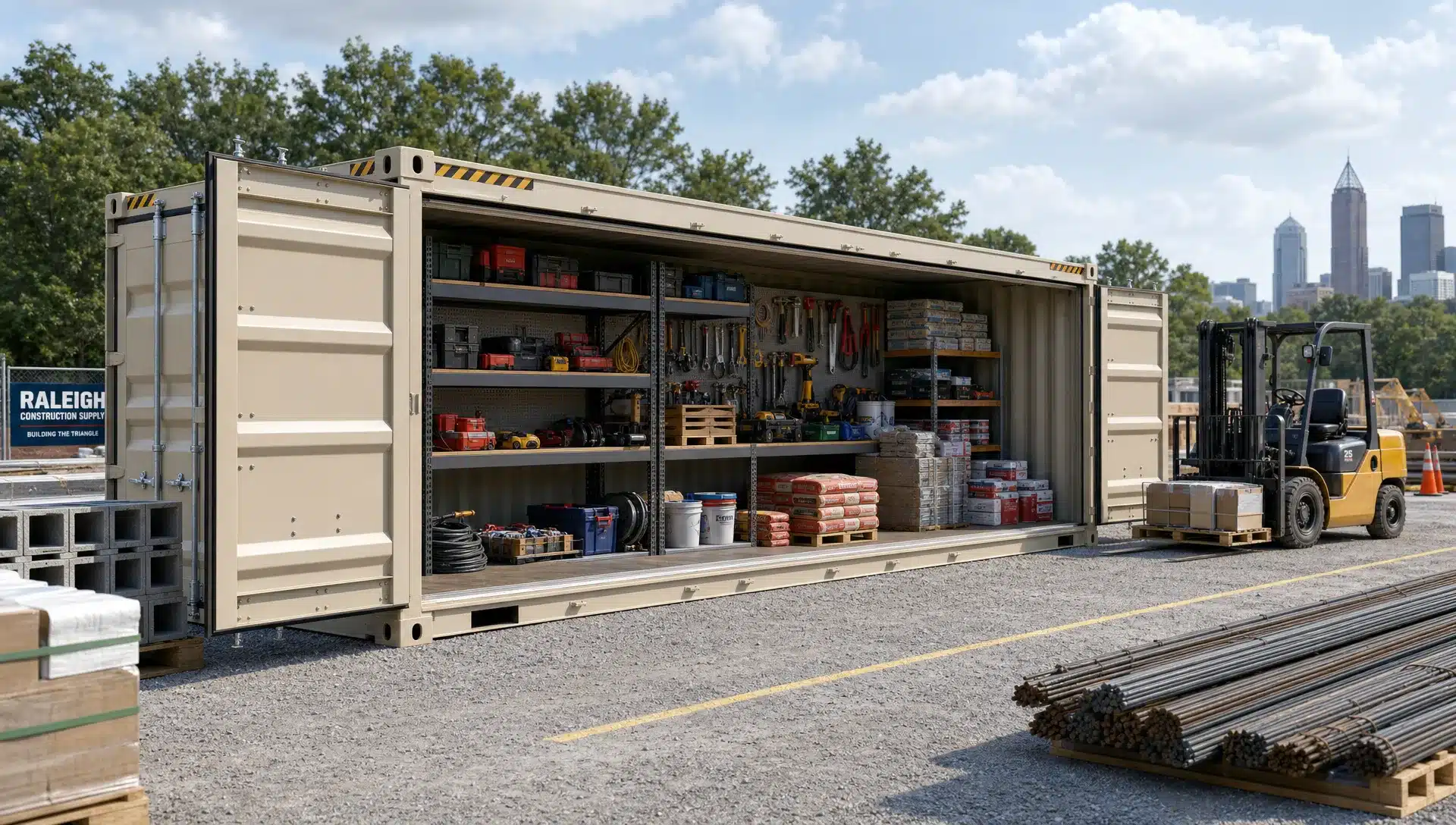
That convenience is especially valuable on busy construction sites around Raleigh, North Carolina, where crews need fast access to high-value tools and building materials without losing time unloading half the container. It also works well for small businesses, agricultural storage, event vendors, and logistics teams that need flexible loading from a forklift or pallet jack.
But side-door containers also come with tradeoffs. They often cost more than standard units, require more clearance around the drop spot, and introduce additional hinges, gaskets, lock rods, and sealing points that need inspection. Before you choose one, it helps to understand what you gain, what you give up, and which grade of container is right for the job.
What Is a Shipping Container With Side Doors?
A shipping container with side doors is typically called an open side container or full side access container. Instead of relying only on the standard double cargo doors at one end, it includes large doors along the long side of the container. Some models open the full side wall, while others provide partial side access.
Most full side access containers are built from Corten Steel, the weathering steel commonly used in ISO shipping containers because it develops a protective surface layer when exposed to the elements. The container frame, corner castings, floor system, and door hardware are engineered to maintain strength while allowing side access.
The key distinction is whether the side doors were factory-built or added later as a modification. Factory-built open side containers are designed with reinforced framing from the start. Aftermarket side openings can be useful, but they must be reinforced properly and may affect structural ratings, weather resistance, and shipping certification.
If you are comparing this style against a traditional unit, Lease Lane has a deeper guide on container open side vs standard options that explains the access and cost differences in more detail.
The Main Pros of Side-Door Containers
The biggest benefit is simple: you can get to what you need without unloading everything in front of it. For contractors, that can mean grabbing a specific generator, saw, fastener bin, or bundle of material without disrupting the whole jobsite storage plan.
For small businesses, side access can make a container feel more like a walk-up stockroom or pop-up retail space. Instead of a dark tunnel, the side opening creates a wide service area for staging inventory, displaying merchandise, or loading orders.
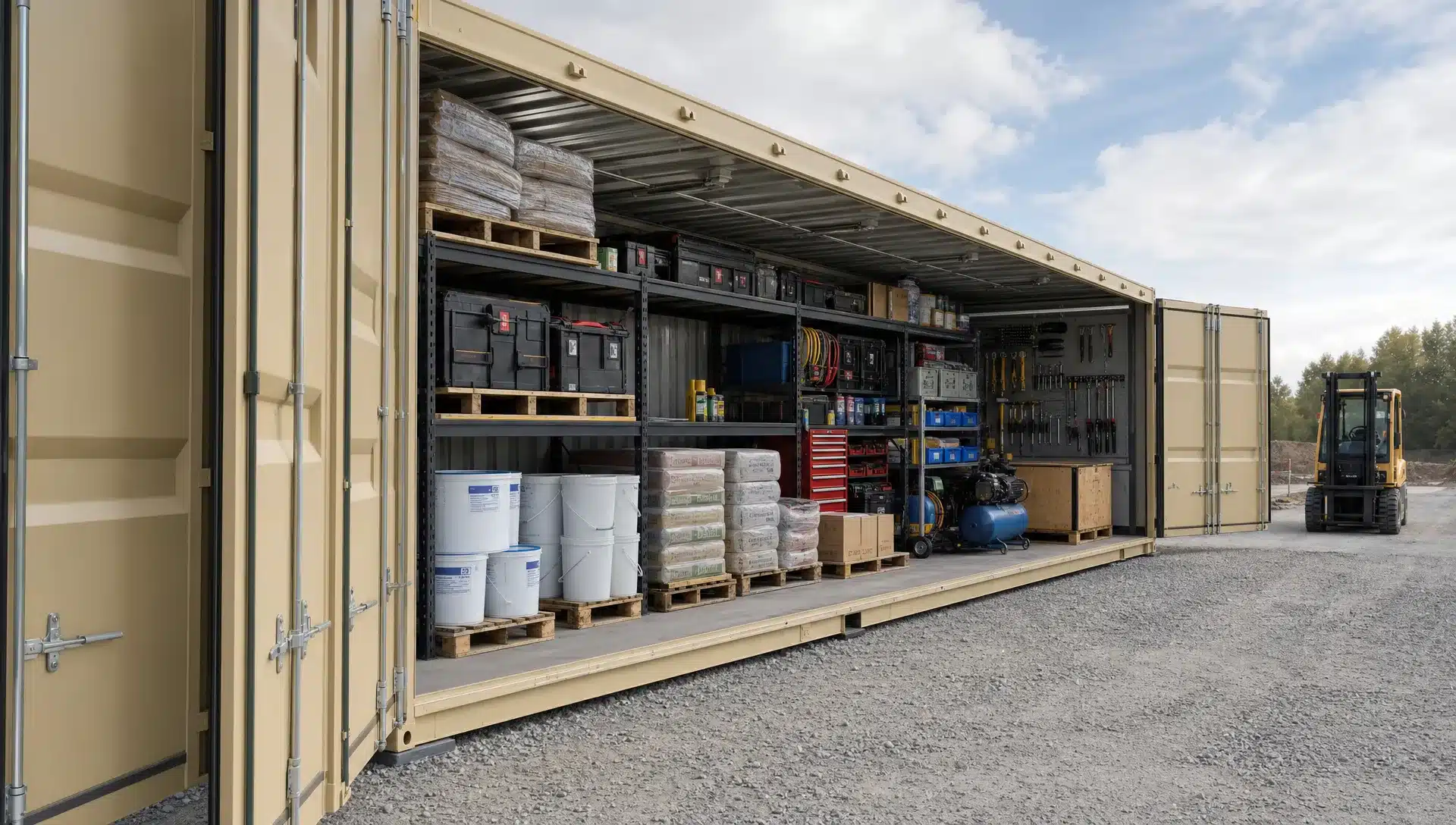
For farms and rural properties across the Southeast, full side access is useful for storing feed, fencing, tools, seed, irrigation parts, or seasonal equipment. You can organize by zone and retrieve items quickly, even if the container is packed.
Side-door containers also improve forklift loading. A standard container loads through the end, which often forces long aisles or careful sequencing. With side doors, pallets can be loaded across the width in sections, making it easier to place heavy items exactly where they belong.
The Tradeoffs to Consider Before Buying
A shipping container with side doors is not automatically better for every buyer. The main tradeoff is cost. Open side containers are specialty units, so they are usually more expensive than comparable standard containers of the same size and grade. Availability can also be tighter, especially if you want a specific size, High Cube height, or One-Trip condition.
Security is another factor. Standard containers have one primary door set. Side-door units have more door hardware, which means more locking points to secure and inspect. A lockbox, high-security padlock, and disciplined closing routine are important if you are storing tools, equipment, or inventory.
Weather sealing deserves attention too. More doors mean more gaskets and more opportunities for water intrusion if seals are worn, misaligned, or damaged. A quality unit should still keep contents protected, but you should inspect every hinge, gasket, lock rod, and lower door edge before purchase.
Finally, side doors require space. Full side access is only useful if the doors can swing open safely. On a tight residential lot, narrow farm lane, or crowded Raleigh jobsite, a standard unit or tunnel container may be easier to place.
| Factor | Benefit | Tradeoff to Check |
|---|---|---|
| Access | Reach contents from the side without unloading the front | Requires clear space along the container side |
| Loading | Easier forklift access for pallets and long materials | Placement must allow equipment approach |
| Organization | Better zoning for tools, inventory, or retail stock | More doors and locks to manage |
| Weather protection | Factory-built units can still be wind and watertight | More gaskets and seals to inspect |
| Cost | Higher workflow value for frequent access | Usually costs more than a standard container |
Choosing the Right Size: 20ft, 40ft, or High Cube
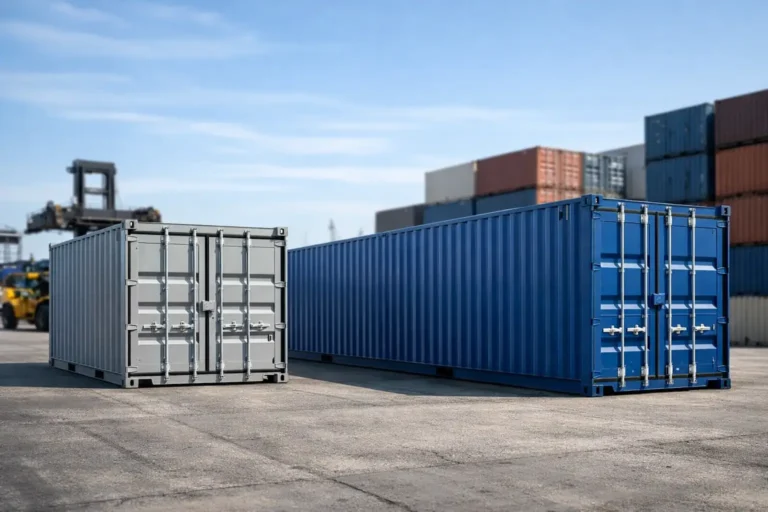
A 20ft side-door container is often the practical choice for residential properties, small farms, and active construction sites where space is limited. It is easier to place than a 40ft unit and still provides a wide opening for tools, shelves, compact equipment, and jobsite materials. For buyers who need full side access in a smaller footprint, the 20Ft Open Side/ Full Side Access Shipping Container is the kind of format that can make loading and daily retrieval much more efficient.
A 40ft side-door container makes sense when you need more cubic capacity or need to stage longer materials. Lumber, pipe, fixtures, event equipment, bulk inventory, and multi-pallet storage are all strong fits. The added length lets you create zones, such as tools on one end, consumables in the middle, and seasonal or overflow items on the other end.
High Cube containers add another advantage: height. A High Cube unit is 9 feet 6 inches tall externally, compared with the standard 8 feet 6 inches height. That extra foot can matter for tall equipment, stacked inventory, taller shelving, or mobile workspace conversions. If vertical clearance is important, a 40ft High Cube (9′ 6″ high) Full Side Access Container can be a strong fit for larger commercial, construction, and storage applications.
Container Grades Matter More With Side Doors
When buying any shipping container, grade matters. With side-door containers, it matters even more because door alignment, sealing, and frame condition affect day-to-day performance.
One-Trip containers are typically the cleanest and newest option. They are manufactured overseas and used for one cargo trip before being sold. They usually have minimal wear, newer door gaskets, cleaner floors, and better cosmetic condition. For open side units, One-Trip is often preferred because specialty side-door models are commonly sourced as newer units.
Cargo Worthy containers are used containers that are structurally sound enough for cargo transport when properly inspected and certified. A Cargo Worthy rating generally means the frame, doors, floor, corner castings, and weather resistance meet transport expectations. If you plan to use a container for international shipping or intermodal transport, ask specifically about current certification and whether the side-door configuration affects eligibility.
Wind and Watertight (WWT) containers are typically retired from shipping service but still suitable for stationary storage. They should keep out rain and wind under normal conditions, but they are not represented as currently cargo certified. WWT can be cost-effective for farms, contractors, and homeowners who need secure ground storage and do not plan to ship the unit.
| Grade | Best For | What to Inspect |
|---|---|---|
| One-Trip | Clean storage, retail use, offices, long-term business use | Minor cosmetic dents, door alignment, factory seals |
| Cargo Worthy | Transport, logistics, export, heavy-duty commercial use | Current certification, corner castings, floor, structural rails |
| WWT | Stationary storage for tools, equipment, and property needs | Roof, lower door edges, gaskets, rust, daylight gaps |
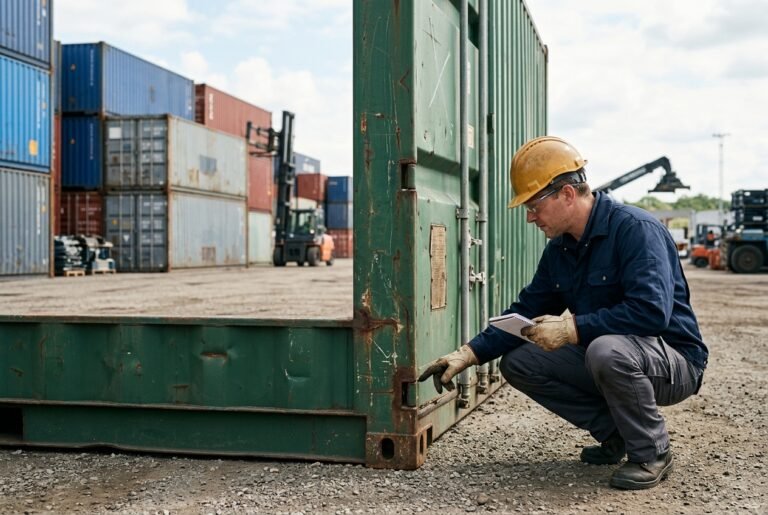
For side-door units, always open and close every door. The doors should swing without severe binding, lock rods should engage, and gaskets should compress evenly. Surface rust is common on used containers, but deep corrosion around the bottom rails, door frames, or hinge areas needs closer evaluation.
Best Uses for a Shipping Container With Side Doors
Side-door containers are most valuable when access speed matters. They are less about simply storing more and more about reducing wasted motion.
General contractors and home builders can use them as a secure, organized jobsite warehouse. Instead of stacking expensive tools and materials in a way that blocks access, crews can organize the container by trade, project phase, or frequency of use.
Small business owners can use side-door containers for inventory overflow, seasonal stock, mobile retail, or event operations. The wide opening makes it easier to turn the container into a serviceable front, though any retail or office conversion should account for insulation, ventilation, electrical work, code requirements, and local permits.
Agricultural users can store equipment, parts, fencing, feed supplies, or maintenance tools with direct access to different sections. In humid North Carolina and Southeast conditions, ventilation and condensation management should be considered if you are storing moisture-sensitive goods.
Logistics managers may use side-door containers when loading flexibility is more important than standard end-door sequencing. However, if the container will move through international shipping lanes, confirm Cargo Worthy status, CSC documentation where applicable, and whether the exact configuration meets carrier requirements.
If you are still exploring options, Lease Lane’s overview of open side shipping containers and their best uses offers a broader comparison of common applications.
When a Standard Container May Be the Better Choice
A side-door container is not always the most economical or practical solution. If you only need basic storage and access items occasionally, a standard 20ft or 40ft container may provide better value. Standard containers are more widely available, often less expensive, and simpler to secure.
Standard units also work well when the container will be placed against a fence, building, tree line, or property boundary. If the long side cannot open, paying for side doors does not make sense.
For some buyers, a roll-up door or personnel door modification may solve the access problem at a lower cost than full side access. That said, modifications must be done carefully because cutting openings into Corten Steel walls changes the container structure. If you are weighing side doors against a modification, review the practical tradeoffs of adding a roll-up door for shipping container use before deciding.
Pro-Tip: Prepare the Site Before Delivery
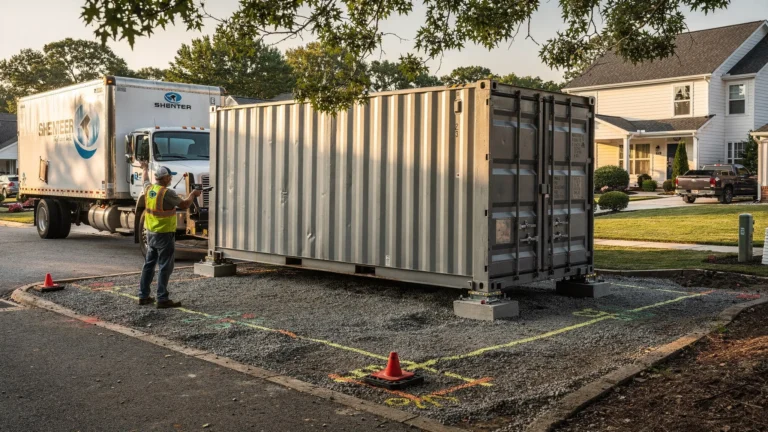
A shipping container performs best when it sits level, drains properly, and has enough clearance for delivery. This is especially important with side-door containers because uneven placement can twist the frame slightly and make the side doors harder to operate.
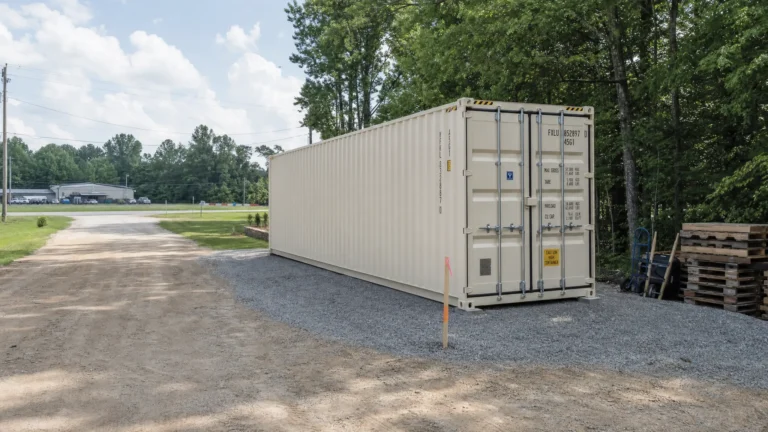
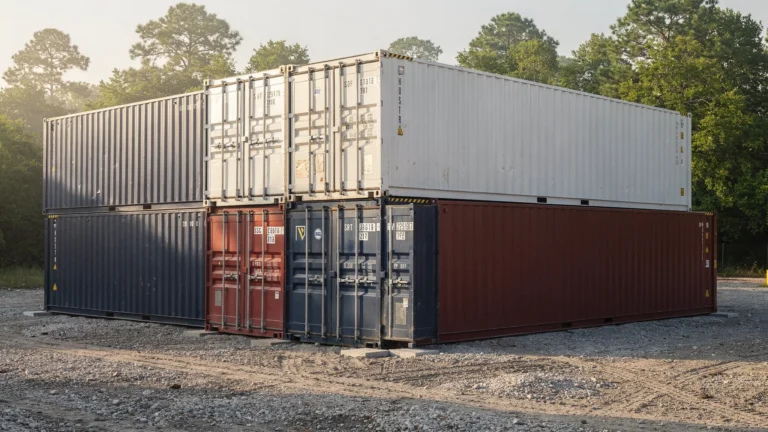
For most sites in Raleigh and across North Carolina, a compacted gravel pad is a smart starting point. Gravel helps manage rainwater, reduces mud around the entrance, and limits ground contact that can accelerate corrosion. Railroad ties, concrete blocks, or concrete piers can also work when placed correctly, but the container must be supported at strong structural points and remain level.
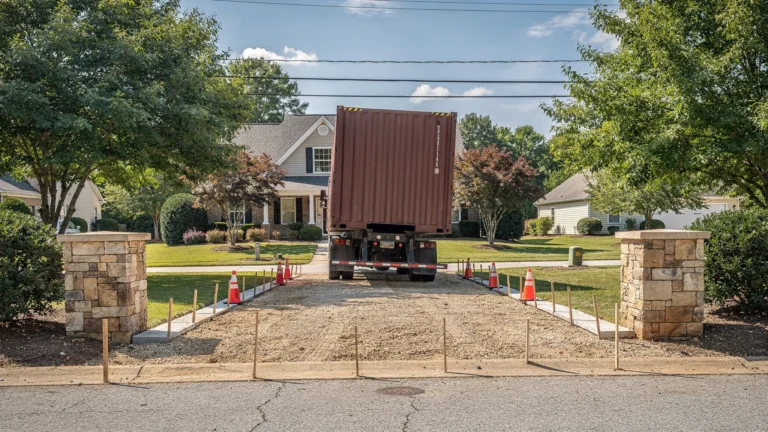
Leave enough room for the delivery truck, tilt-bed trailer, or crane if needed. Also leave enough lateral clearance for the side doors to swing open and for forklifts or skid steers to approach safely. If the container will be placed in a residential area, near a right-of-way, or on a commercial site, check local permit rules before scheduling delivery. Raleigh, Wake County, and nearby municipalities may treat containers differently depending on use, duration, zoning, and whether the unit is temporary or permanent.
Buying Checklist for Side-Door Containers
Before committing to a side-door unit, ask the seller clear questions and inspect the details that affect long-term usability.
- Confirm whether the unit is One-Trip, Cargo Worthy, or WWT.
- Ask whether the side doors are factory-built or aftermarket modifications.
- Open and close every side door and end door during inspection when possible.
- Check gaskets, hinges, lock rods, lower rails, roof condition, and flooring.
- Measure the drop site for container length, truck access, and side-door swing clearance.
- Ask how delivery works for your property type, especially if the site is narrow, sloped, soft, or in a dense urban area.
A transparent supplier should explain the grade, expected cosmetic condition, delivery method, and site requirements before you buy. That clarity is what protects you from paying for access you cannot use or buying a container that does not match your storage, transport, or conversion plans.
Frequently Asked Questions
Is a shipping container with side doors worth it? It is worth it when you need frequent access to many items, forklift loading, inventory staging, or a more open layout. If you only need low-cost storage and rarely access contents, a standard container may be more cost-effective.
Are side-door containers wind and watertight? Many are, but condition and grade matter. One-Trip units usually have newer seals and less wear. WWT units should protect contents in normal weather, but you should inspect all gaskets, door edges, hinges, and roof seams before buying.
Can a side-door container be used for shipping? It depends on the unit, configuration, and certification. A Cargo Worthy container may be suitable for transport when properly inspected and documented, but side-door designs or aftermarket modifications can affect approval. Always confirm certification before using it for cargo movement.
How much clearance do side doors need? Clearance depends on the door design, but you should plan generous open space along the full side of the container. Also account for people, forklifts, pallet jacks, vehicles, and safe working room around the open doors.
Is a High Cube side-door container better than a standard-height unit? A High Cube is better when you need extra vertical space for tall equipment, shelving, stacked inventory, or workspace conversions. If height is not important and site clearance is limited, a standard-height unit may be sufficient.
Talk With a Local Container Team Before You Buy
A shipping container with side doors can save time, improve organization, and make your container far more usable, but only if the size, grade, door configuration, and site plan match your real-world needs.
Lease Lane Containers LLC supplies new One-Trip and used shipping containers, including standard, High Cube, refrigerated, WWT, Cargo Worthy, and full side access options, with guidance for buyers in Raleigh, across North Carolina, throughout the Southeast, and nationwide.
To compare current side-door container options, plan your delivery site, or confirm the right grade for storage or transport, contact the sales team at sales@leaselanecontainers.com or visit the Raleigh office to speak with a local container specialist.