How to Choose a Reliable Shipping Container Supplier
A shipping container is a long-term asset, not just a steel box. The right supplier can help you get secure storage, export-ready equipment, or a modular foundation that performs for years. The wrong supplier can leave you with a leaking unit, a failed delivery, unclear paperwork, or a container grade that does not match your use case.
For buyers in Raleigh, across North Carolina, and throughout the Southeast, choosing a reliable shipping container supplier comes down to more than comparing the lowest advertised price. You need a company that understands container grades, delivery logistics, site preparation, and the difference between a container built for storage and one suitable for freight.
Here is how to evaluate suppliers with confidence before you commit.
Start with your intended use, not the price tag
A reliable supplier should first ask how you plan to use the container. A general contractor storing tools on a Raleigh jobsite has different needs than a logistics manager buying an export-ready unit, a farmer adding secure equipment storage, or a small business owner planning a retail pop-up.
For basic on-site storage, a Wind & Watertight unit may be enough if the doors seal properly and the roof keeps out rain. For international or regional freight, you should be discussing Cargo Worthy condition, ISO standards, and whether any required inspection or CSC plate considerations apply. For customer-facing or modification projects, a One-Trip container often makes more sense because it has less wear, cleaner floors, and better cosmetic appeal.
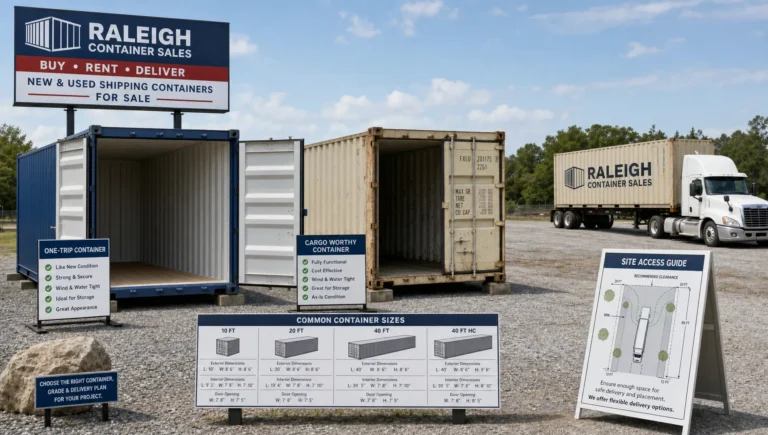
Size matters as well. A 20ft container is easier to place on tighter residential, farm, and urban sites, while a 40ft container provides more storage per square foot when space allows. If you are still weighing dimensions, access, and use case, Lease Lane’s guide on how to choose shipping container size can help you narrow the decision before requesting quotes.
Verify that the supplier understands container types
A dependable shipping container supplier should be able to explain more than length and price. They should know the practical differences between Standard, High Cube, Refrigerated, new, and used containers.
Most general-purpose shipping containers are built with Corten Steel, a weathering steel designed to resist atmospheric corrosion better than ordinary carbon steel. That does not make a used container rust-proof, but it does help explain why quality containers can keep performing after years of transport and outdoor storage.
A supplier should also understand ISO standards. Standard ISO freight containers have consistent corner castings, dimensions, and structural features that allow them to be moved by cranes, chassis, forklifts, and intermodal equipment. This matters for logistics buyers, but it also matters for storage buyers because ISO-standard containers are designed for strength, stacking, and transport.
High Cube containers deserve special attention. A High Cube unit is typically 9 feet 6 inches tall on the exterior, giving about one extra foot of height compared with a standard-height container. That added clearance can be valuable for mobile offices, workshop conversions, shelving, agriculture storage, and bulky contractor materials.
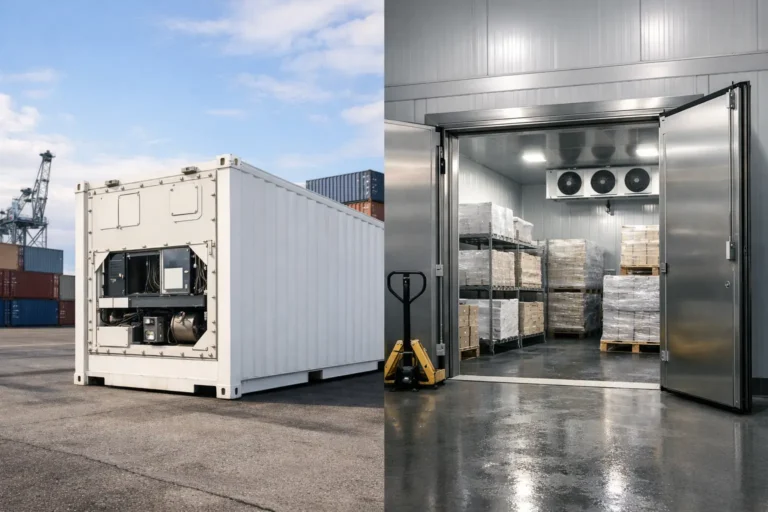
Refrigerated containers, often called reefers, are a more specialized purchase. A supplier should be able to discuss power requirements, operating condition, insulation, and whether the unit is intended for active cold storage or non-running insulated storage.
Insist on clear container grade definitions
Container grading is one of the easiest places for buyers to get misled. Terms like “good condition” or “storage grade” are not enough. A trustworthy supplier should define the grade in plain language and explain what it does, and does not, guarantee.
| Grade | What it generally means | Best suited for | Key buyer question |
|---|---|---|---|
| One-Trip | New or near-new container that has typically made one cargo trip from the factory | Customer-facing projects, modifications, premium storage, businesses wanting clean appearance | Has the unit only made one trip, and can I see current photos? |
| Cargo Worthy | Structurally sound container suitable for cargo transport when properly inspected and documented | Export, intermodal use, regional freight, buyers needing structural confidence | Is documentation or inspection available for my shipping requirements? |
| Wind & Watertight | Used container that keeps out wind and water but may have dents, surface rust, patches, or cosmetic wear | Jobsite storage, farm storage, equipment storage, household overflow | Are the roof, door gaskets, floor, and seams confirmed leak-free? |
One-Trip containers are usually the cleanest and most consistent option. They are commonly chosen for retail conversions, mobile offices, residential storage where appearance matters, and buyers who want fewer surprises.
Cargo Worthy containers are not necessarily beautiful, but they should be structurally fit for transport. If you plan to ship goods, ask specifically about inspection requirements, documentation, and whether the container meets the standards needed by your carrier, freight forwarder, or port.
Wind & Watertight containers are often the most cost-effective option for static storage. The key is understanding that WWT does not mean cargo certified. It means the container should protect contents from weather when placed properly and kept closed. If you are considering this grade, review the practical checks in Lease Lane’s guide to what smart buyers inspect on used containers.
Look for proof, not vague promises
A reputable supplier should be willing to provide current photos, accurate condition descriptions, and a clear explanation of what is included in the quote. Stock photos are not automatically a problem, especially for One-Trip inventory, but buyers should know whether they are seeing a representative photo or the exact unit being delivered.
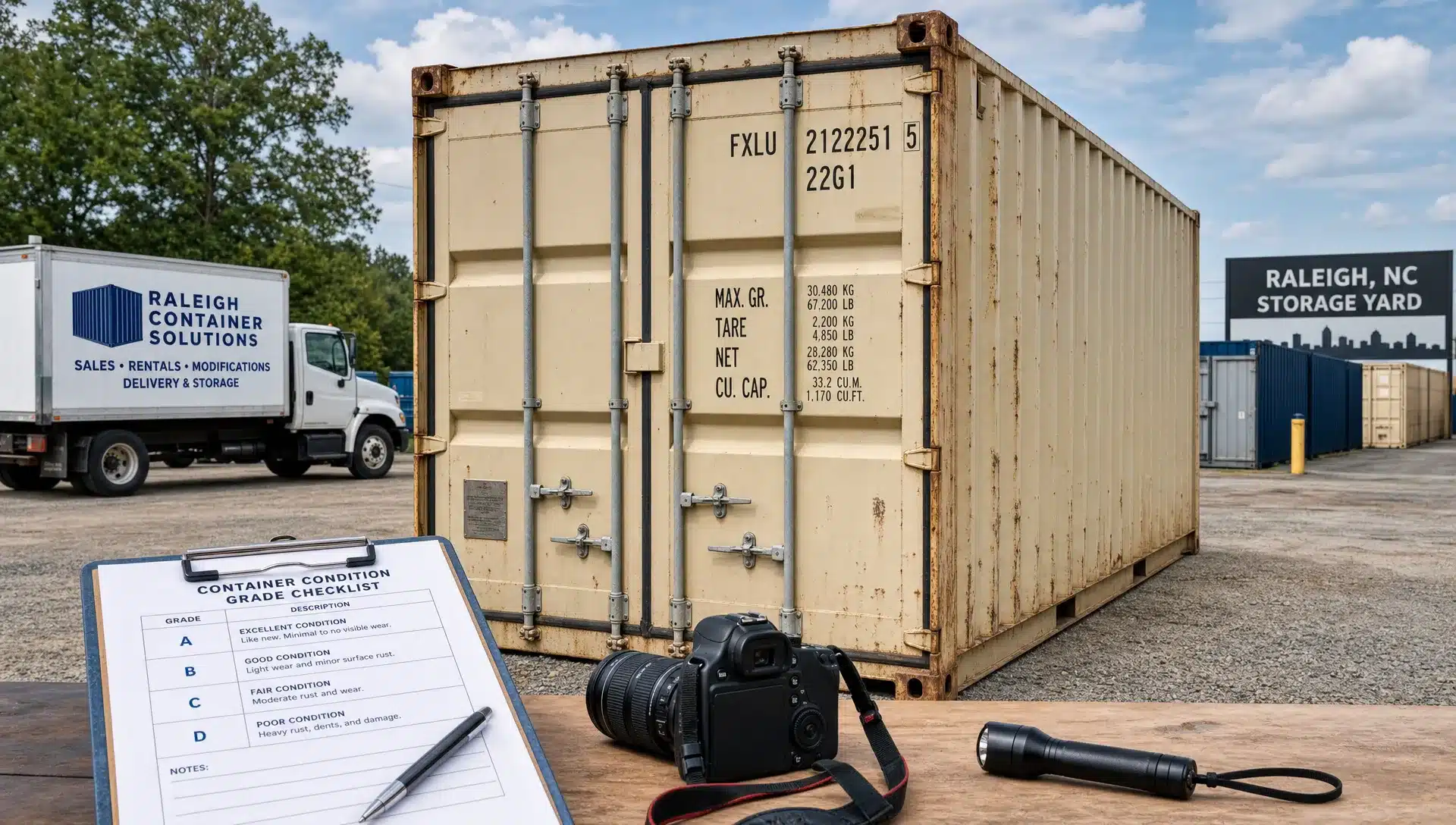
For used containers, current visuals matter. Look for photos of the doors, corner posts, roof line, side panels, floor, underside if available, lock rods, gaskets, and any repairs. Surface rust is common on used shipping containers and is not always a concern. Deep corrosion, significant holes, badly warped doors, heavy floor damage, and severe structural distortion are different issues.
A reliable supplier will not pretend every used container is perfect. They will help you understand the trade-off between condition, grade, price, and purpose.
Evaluate delivery capability before you buy
Many container problems are really delivery problems. A supplier can sell the right unit, but if the truck cannot access the site safely, the project still fails.
In Raleigh and the surrounding Triangle region, delivery sites vary widely. A downtown infill lot, a suburban driveway in Cary, a rural property outside Wake County, and a commercial construction site near Research Triangle Park all require different planning. Across the Southeast, rain, clay soils, slopes, tree cover, and narrow rural roads can also affect delivery.
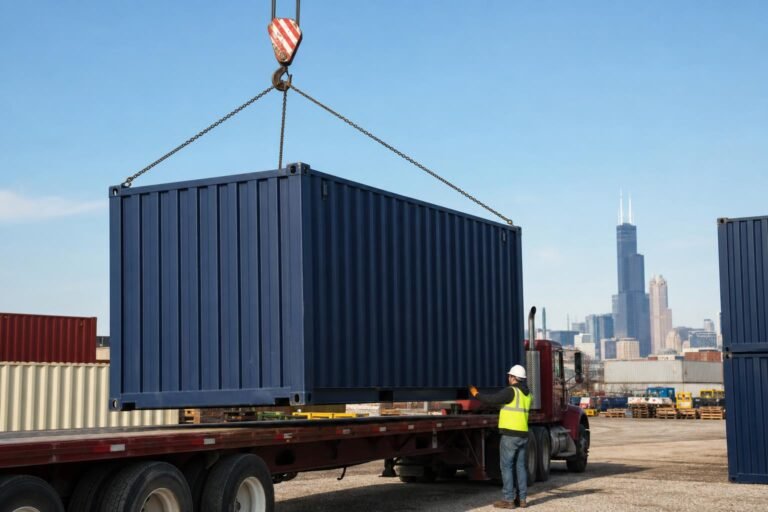
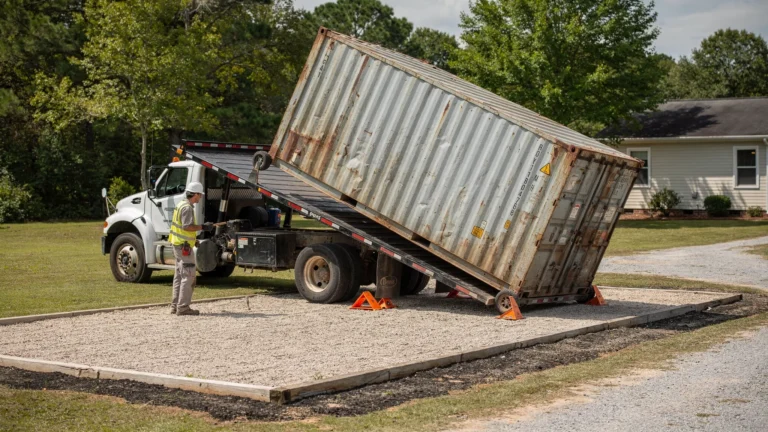
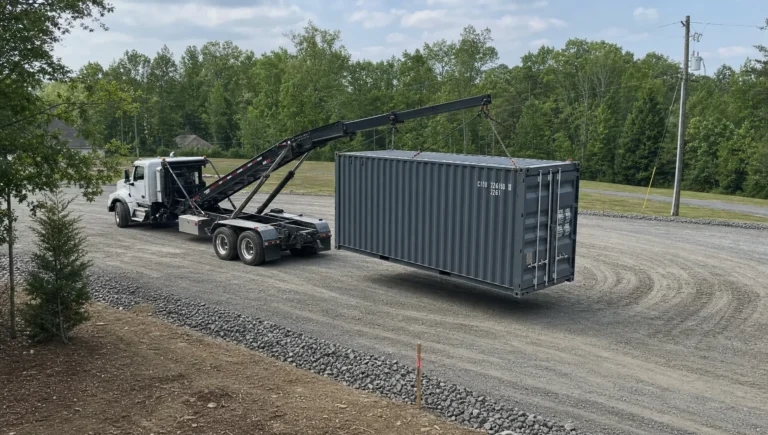
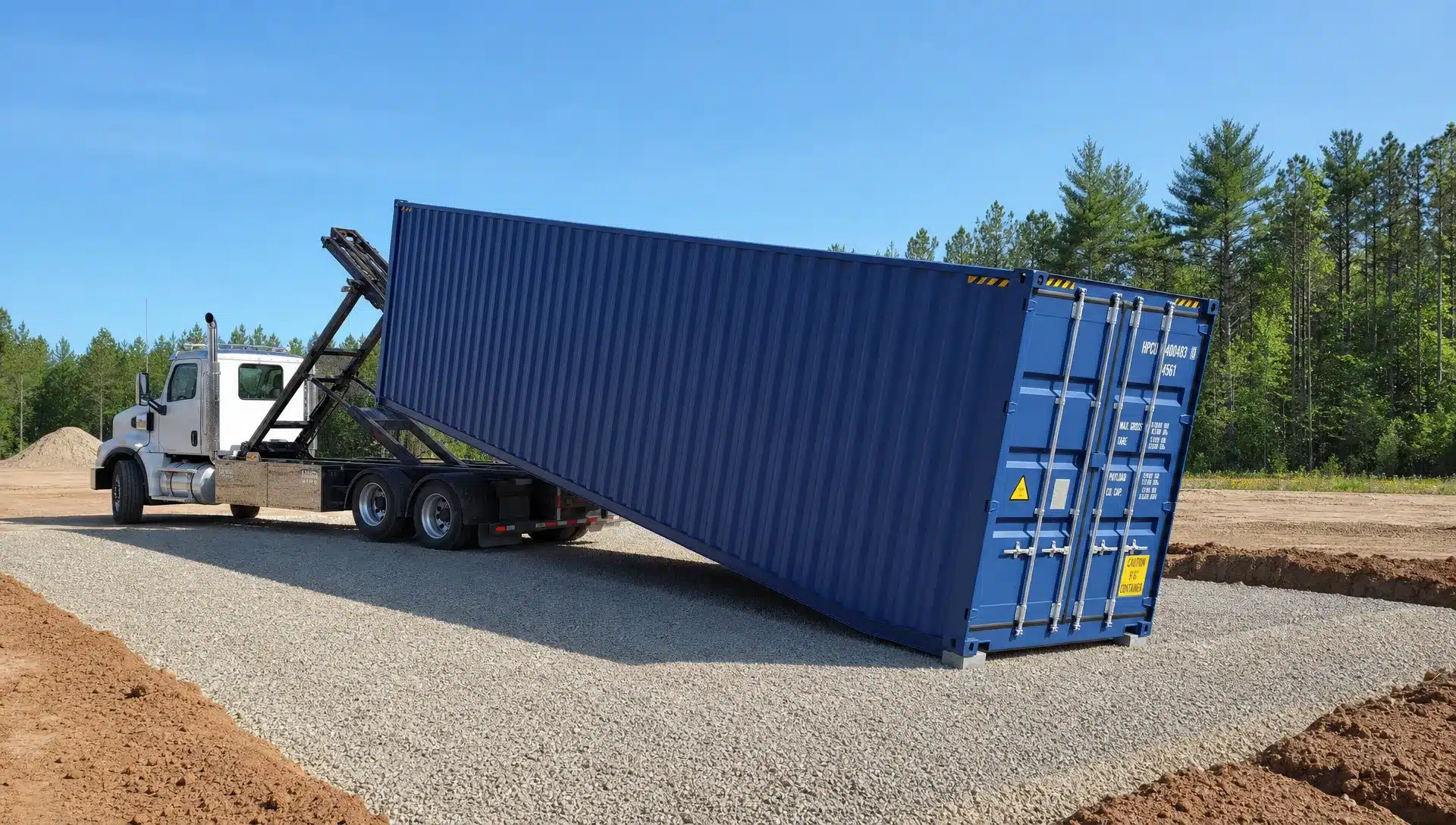
Ask how the container will be delivered. Ground-level delivery commonly uses a tilt-bed or roll-off style truck that backs into position and slides the container onto the prepared surface. This requires enough straight-line clearance, overhead clearance, and turning room. Chassis delivery may be appropriate for freight and yard operations, but it is not the same as placing a container directly on the ground.
Your quote should clearly state the delivery location, delivery method, container orientation, and any assumptions about access. If the driver needs to place the doors facing a specific direction, say that before dispatch.
Pro-Tip: prepare the site before the truck arrives
The best container delivery starts with a level, firm, well-drained pad. A compacted gravel pad is often a smart choice because it reduces standing water, helps distribute weight, and keeps the container off soft soil. Concrete, asphalt, railroad ties, or properly placed blocking may also work depending on the site and load.
Avoid placing a loaded container directly on muddy ground, steep slopes, or areas where water collects. A container that twists because the ground is uneven can develop door alignment problems, making it difficult to open and close. Even a high-quality Corten Steel container needs proper drainage and stable support to perform well over time.
Before delivery, check overhead obstructions such as power lines and tree limbs, confirm the truck has room to maneuver, and verify local rules. Permit requirements can vary between Raleigh, Wake County, nearby municipalities, rural counties, business parks, and HOAs. When in doubt, call the local planning or zoning office before scheduling delivery.
Compare supplier accountability, not just supplier type
You can find containers through local container companies, national suppliers, brokers, auction listings, and online marketplaces. The safest option is usually the one that provides the clearest accountability.
A dedicated container company should be able to explain grading, coordinate delivery, answer technical questions, and resolve issues if the container arrives in a condition that does not match the agreement. Marketplace listings may look cheaper, but they can carry risks such as unverifiable photos, unclear ownership, fake listings, vague delivery terms, and limited post-sale support.
If you are deciding between a container company and a marketplace listing, this comparison of a container company vs marketplace explains why supplier accountability is often worth more than a small upfront discount.
Check communication and online credibility
A reliable supplier communicates clearly before asking for payment. You should be able to find a real business presence, direct contact information, service areas, product explanations, and educational content that helps you buy intelligently.
A professional website is not the only proof of trust, but it is a useful signal. Clear pages about container sizes, grades, delivery, and buying steps show that a supplier is willing to educate customers instead of hiding behind vague listings. The same principle applies in other industries too, where companies often work with partners that build high-converting Webflow and Framer websites for SMBs to make services, proof, and contact paths easier to evaluate.
For container buyers, good communication should continue after the first call. Your supplier should explain timelines, delivery limitations, payment expectations, and what happens if the site is not ready when the truck arrives.
Ask the right questions before paying a deposit
A trustworthy supplier will welcome informed questions. If the answers are evasive, inconsistent, or overly rushed, keep looking.
- What exact grade am I buying: One-Trip, Cargo Worthy, or Wind & Watertight?
- Is the container ISO standard, and is it appropriate for storage, transport, or modification?
- Can I see current photos of the unit or a representative unit from the same batch?
- Does the quoted price include delivery to my ZIP code in Raleigh, North Carolina, or another location?
- What delivery equipment will be used, and how much space does the truck need?
- What site preparation do you recommend for my soil, slope, and planned load?
- If I need export use, what documentation or inspection should I confirm before purchase?
- What is the process if the delivered container does not match the agreed grade?
These questions help separate professional suppliers from casual resellers. They also help the supplier recommend the right container instead of guessing.
Watch for common red flags
The lowest price in the market is not always a bargain. Shipping containers are heavy, expensive to move, and condition-sensitive. Scams and bait-and-switch listings exist, especially when buyers shop only by price.
Be cautious if a seller cannot define the grade, refuses to provide photos, avoids discussing delivery access, pressures you to pay immediately, or offers a price that seems far below comparable local quotes. Also be careful with sellers who use the same photos for every listing without explaining whether the image is representative.
Another red flag is a supplier who says every container is “cargo worthy” without asking whether you actually need freight use. Cargo Worthy is an industry condition standard, not a generic compliment. Likewise, Wind & Watertight should be backed by an actual condition check, not used as a vague sales phrase.
Use a simple supplier scorecard
When comparing quotes, organize your decision around measurable criteria instead of emotion or pressure. A slightly higher quote from a better supplier may save money if it prevents delivery failure, leaks, door issues, or export documentation problems.
| Evaluation factor | What a reliable supplier provides | Why it matters |
|---|---|---|
| Grade transparency | Clear definitions for One-Trip, Cargo Worthy, and WWT | Prevents buying the wrong condition for the job |
| Inventory knowledge | 20ft, 40ft, Standard, High Cube, Reefer, and used options explained accurately | Helps match the unit to storage, freight, or modification needs |
| Delivery planning | Site access questions, placement guidance, and clear delivery terms | Reduces failed deliveries and unexpected fees |
| Regional experience | Familiarity with Raleigh, North Carolina, and Southeast site conditions | Improves planning for local roads, soils, and property constraints |
| Documentation | Written quote with size, grade, delivery location, and expectations | Protects both buyer and seller |
| Support after sale | Clear process for resolving condition or delivery concerns | Adds accountability beyond the transaction |
Why local expertise still matters with nationwide delivery
Nationwide delivery is valuable, especially for developers, logistics teams, and multi-site businesses. Still, local knowledge matters. A supplier headquartered in Raleigh should understand the needs of North Carolina contractors, homeowners, farms, and businesses, while also coordinating container moves across the wider USA.
That balance is important. Local buyers benefit from a team that understands the region, but national buyers still need consistent grading, clear pricing, and reliable delivery coordination. Whether you need a single 20ft WWT container for a jobsite or multiple 40ft High Cube units for a modular project, the supplier’s process should feel organized from first quote to final placement.
Lease Lane Containers LLC focuses on high-quality new One-Trip and used shipping containers, including 20ft and 40ft Standard, High Cube, and Refrigerated options. The goal is straightforward: help buyers choose the right grade, prepare the drop site, and understand the full delivery plan before the container arrives.
Frequently Asked Questions
What is the most important factor when choosing a shipping container supplier? Grade transparency is one of the most important factors. A reliable supplier should clearly explain whether the unit is One-Trip, Cargo Worthy, or Wind & Watertight, and why that grade fits your intended use.
Is a One-Trip container worth the higher price? It can be worth it for modifications, customer-facing uses, mobile offices, retail pop-ups, and buyers who want cleaner cosmetics. For basic storage, a properly inspected WWT used container may be more cost-effective.
What is the difference between Cargo Worthy and Wind & Watertight? Cargo Worthy means the container is structurally suitable for cargo transport when properly inspected and documented. Wind & Watertight means the container should keep out weather for storage, but it is not necessarily certified for shipping.
Do I need a permit for a shipping container in Raleigh? Permit rules depend on the exact property, zoning, duration, use, and local jurisdiction. Check with the City of Raleigh, Wake County, your municipality, business park, or HOA before delivery.
Can a supplier deliver a container directly to my property? In many cases, yes, but delivery depends on truck access, surface conditions, overhead clearance, turning space, and placement requirements. Share photos and measurements with your supplier before scheduling.
Ready to choose a supplier with confidence?
If you are comparing shipping container suppliers in Raleigh, North Carolina, the Southeast, or anywhere in the USA, Lease Lane Containers LLC can help you choose the right size, grade, and delivery plan without guesswork.
For clear pricing, expert site preparation advice, and help comparing One-Trip, Cargo Worthy, and Wind & Watertight containers, contact the sales team at sales@leaselanecontainers.com or visit the Lease Lane Containers LLC Raleigh office.